Castro Marim Castle
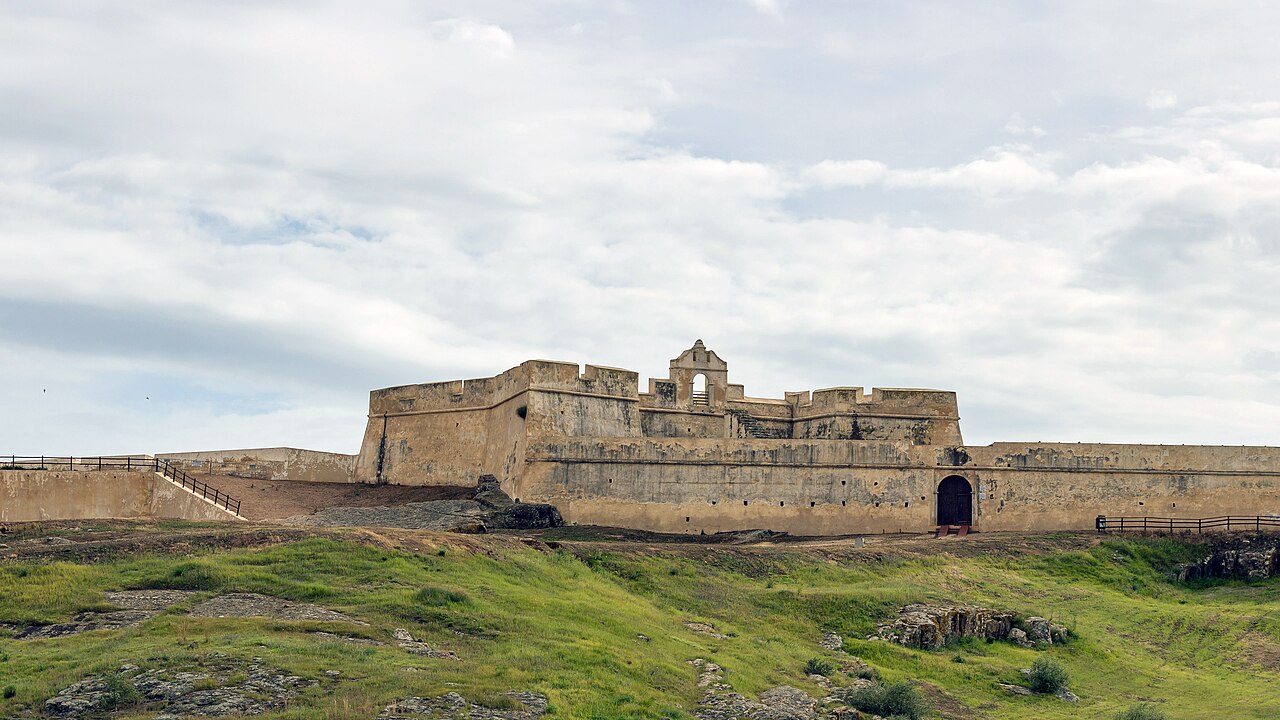
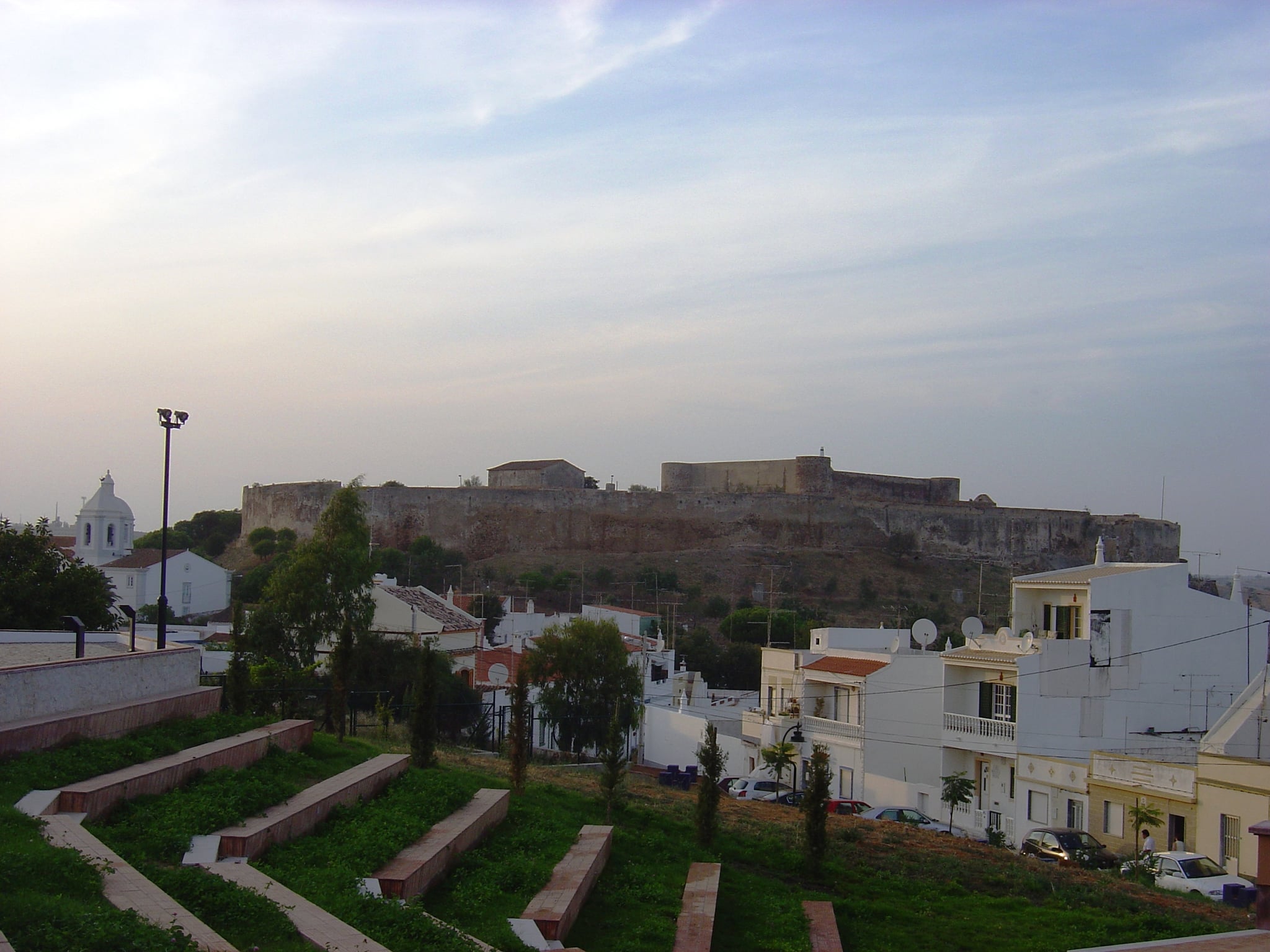
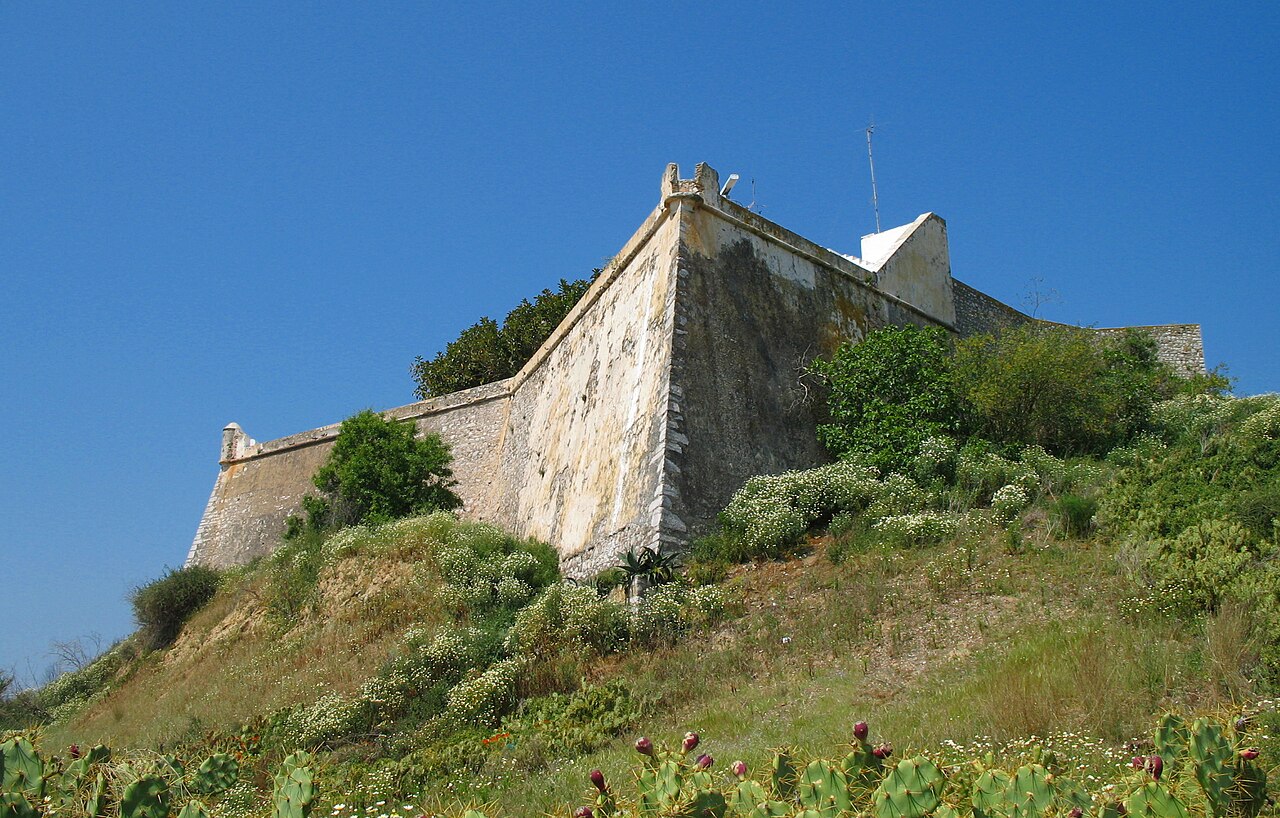
Castro Marim Castle, known locally as Castelo de Castro Marim, is a historic fortress located in the village of Castro Marim in the Algarve region of Portugal. This castle occupies a strategic position between two hilltops, each crowned by significant fortifications: the castle itself and Fort São Sebastião. The site lies just about 2 kilometers west of the Guadiana River, which forms the border with Spain, marking its importance as a border defense point through several centuries.
Historical origins and early significance
The area around Castro Marim has been inhabited since ancient times, serving as an important port during the Phoenician and Roman periods. The Romans referred to the settlement as Baesuris, indicating its longstanding maritime and commercial significance. The castle itself is believed to have originated as a Moorish fortress, constructed to protect the Portuguese coast from incursions. Its rectangular layout with four round corner towers and two main entrances reflects typical Islamic military architecture adapted for coastal defense.
Christian reconquest and medieval fortifications
In 1242, the castle was captured from the Moors by the knight Don Paio Peres Correia during the reign of King Alfonso III of Portugal. Following the Christian conquest, the castle underwent significant rebuilding and reinforcement. New battlements were constructed around the hilltop, creating a fortified perimeter that effectively enclosed the original castle, which became known as Cacela Velha or the "Old Castle." This design resulted in a "castle within a castle" configuration, enhancing the defensive capability of the site against attacks from the east, particularly from Castile and Moorish forces from North Africa.
Enhancements under King Denis and later monarchs
In 1319, King Denis ordered further strengthening of the castle's defenses. At this time, Castro Marim Castle was designated as the headquarters of the Military Order of Christ, a successor organization to the dissolved Knights Templar. Subsequent restorations and improvements were carried out under King Ferdinand I and later in 1504 by King Manuel I. These efforts maintained the castle's strategic importance during the late medieval period.
Early modern fortifications and the construction of Fort São Sebastião
In the context of the Portuguese Restoration War and ongoing border tensions, King John IV ordered the construction of Fort São Sebastião in 1641 on the hilltop opposite Castro Marim Castle to the south. This new fortification was connected to the castle by walls that enclosed the village between the two strongholds, forming an integrated defensive complex. This arrangement allowed for coordinated defense against Spanish incursions and other military threats.
Architectural features of the fortifications
The castle's rectangular plan with round corner towers is characteristic of medieval military architecture, designed to provide overlapping fields of fire and strong defensive positions. The connecting walls that linked Castro Marim Castle to Fort São Sebastião enclosed the village, creating a fortified urban area. Although much of these walls and the forts themselves have fallen into ruin, the remains still illustrate the evolution of border fortifications from the medieval through the early modern period.
Current condition and visitor information
Today, both Castro Marim Castle and Fort São Sebastião lie largely in ruins, with significant portions of the connecting walls disappeared. Despite this, the site offers valuable insight into centuries of military architecture and border defense in southern Portugal. Visitors can explore Castro Marim Castle for a modest entrance fee, while Fort São Sebastião is accessible free of charge but only through guided group tours arranged by prior appointment.
Significance for heritage and tourism
Castro Marim Castle stands as a notable example of how fortifications adapted over time to meet changing military needs, from its Moorish origins through medieval Christian reconquest and into the early modern era. Its location near the Spanish border and the Guadiana River highlights its strategic role in controlling access and protecting the region. The castle and surrounding ruins attract visitors interested in military history, medieval architecture, and the cultural heritage of the Algarve.
Frequently asked questions (FAQ)
- How do I get to Castro Marim Castle?
- Castro Marim Castle is located in the village of Castro Marim in the Algarve region of Portugal. It is accessible by car and local buses from nearby towns such as Tavira and Vila Real de Santo António. The castle is situated on a hilltop and involves some walking to reach the entrance.
- What is the best time to visit Castro Marim Castle?
- The castle is open daily from 09:00 to 18:00. Spring and autumn offer pleasant weather and fewer crowds, making these seasons ideal for visiting. Summer can be hot, so visitors should bring water and sun protection.
- Can I visit Fort São Sebastião as well?
- Fort São Sebastião is located on the opposite hilltop and can be visited free of charge. However, visits are only possible in groups and by prior appointment through the local tourism office.
- What architectural styles are present at Castro Marim Castle?
- The castle exhibits a mixture of architectural styles due to its long history, including <strong>Moorish military design</strong> from its origins and later <strong>medieval and early modern fortification features</strong> added by Portuguese monarchs.
- Is the castle suitable for families with children?
- Yes, the castle grounds are suitable for families. The site offers open spaces for exploration, but visitors should be cautious on uneven terrain and near ruins. There are no specific facilities for children, so supervision is advised.
Information
Opening hours
09:00-18:00, daily
Ticket prices
€3 adult, €1.5 child
Current owner
Municipality
Address
Travessa do Castelo, Castro Marim, Portugal
Loading map...
Visitor reviews
No reviews yet. Been here? Write the first review and help other travelers!
Write the first reviewVisited this castle? Share your experience
Your review helps other travelers and adds first-hand knowledge to our encyclopedia.