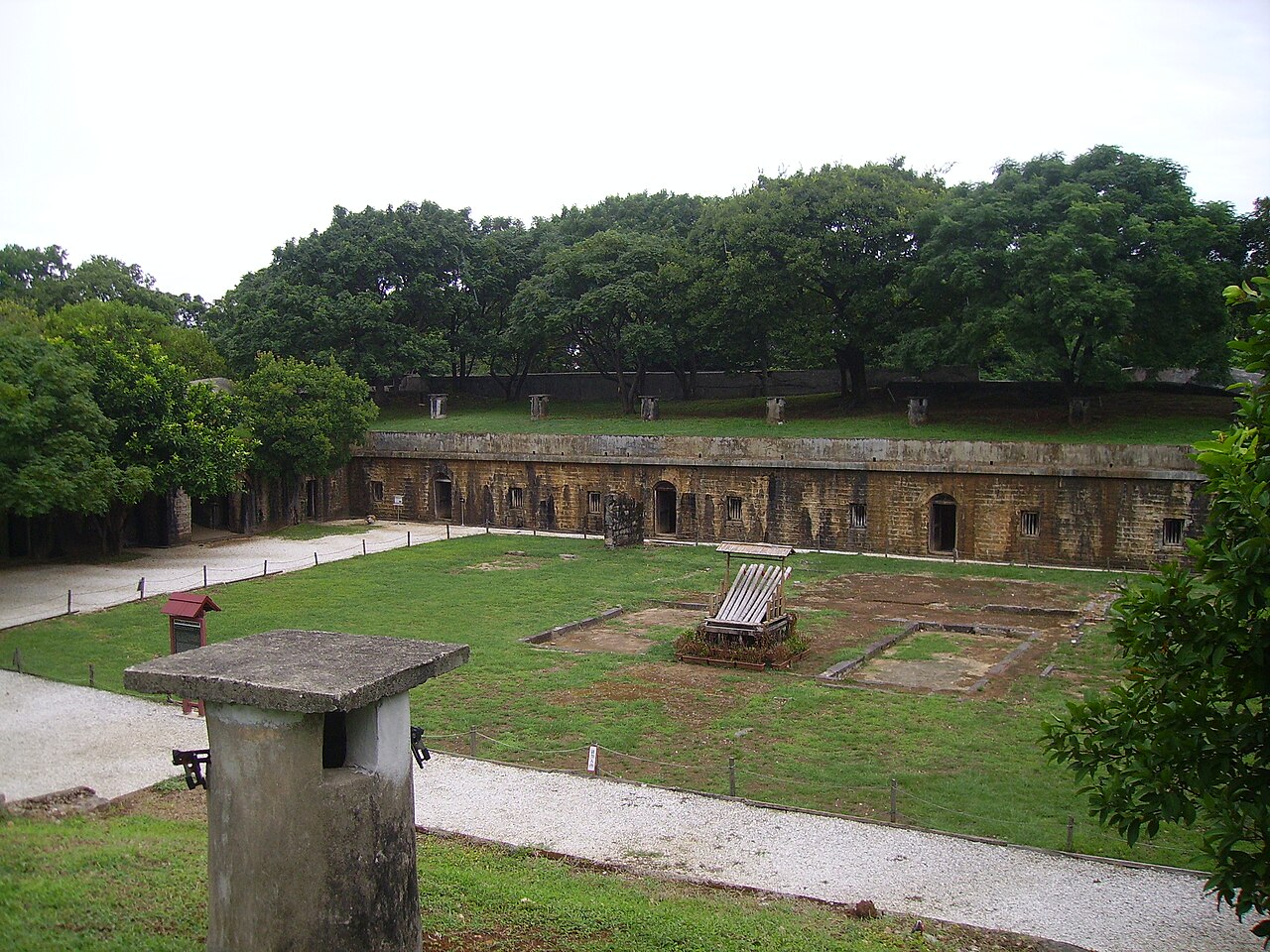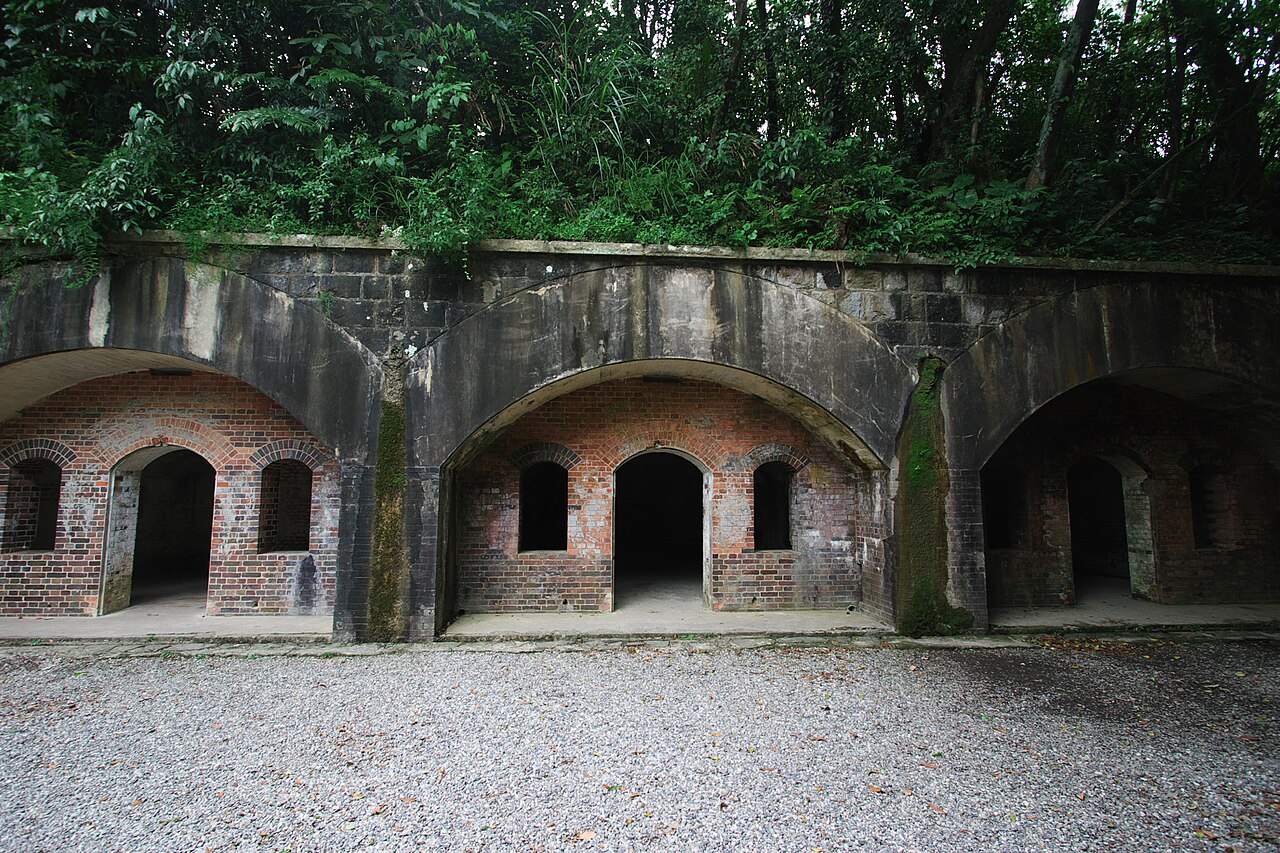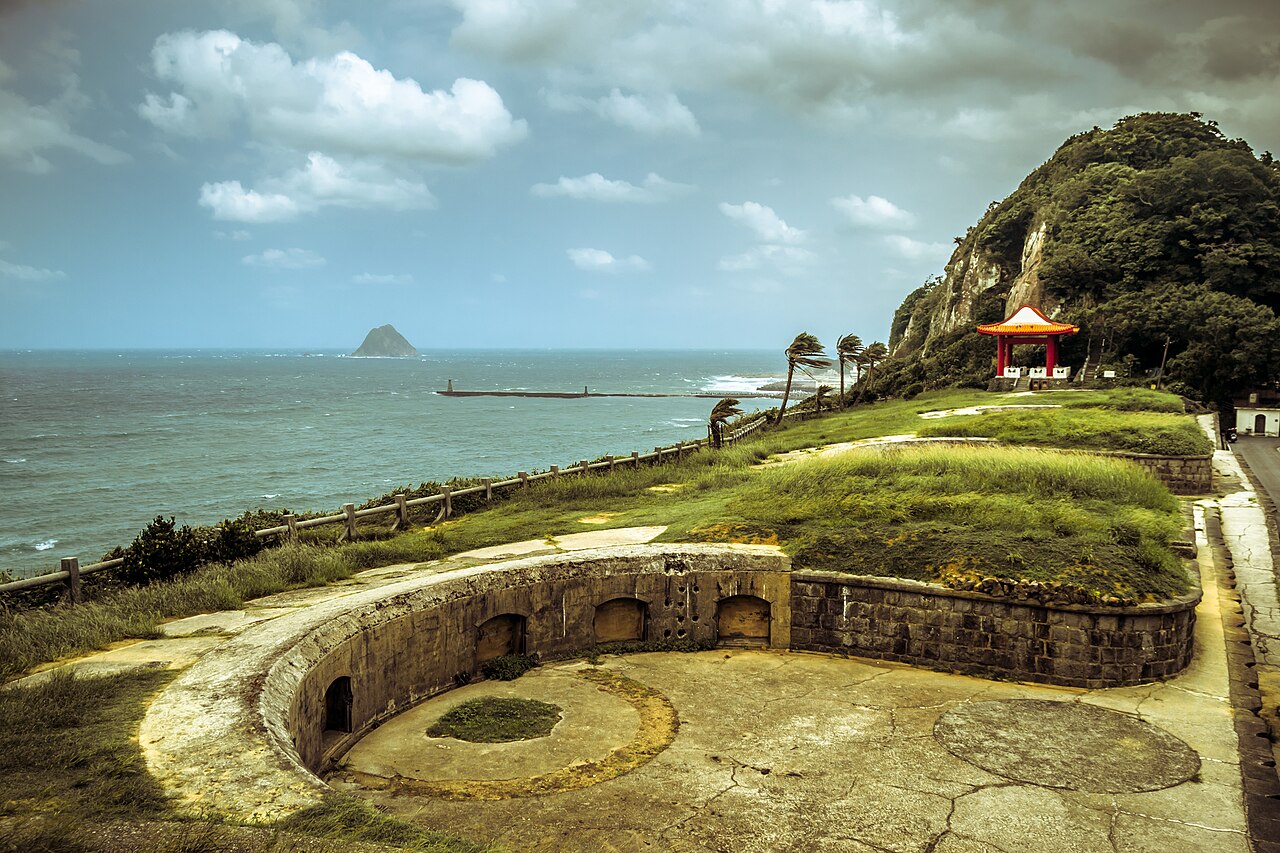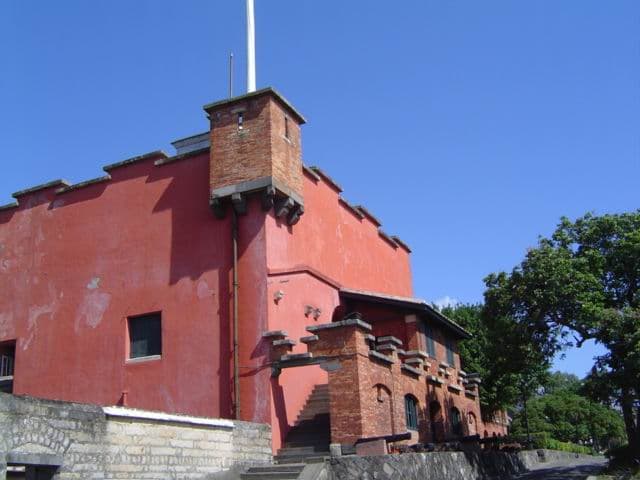
Fort Santo Domingo stands as a prominent historical fortress located in the Tamsui District of New Taipei City, Taiwan. Originally established as a wooden fortification in 1628 by the Spanish East Indies, it was named el Fuerte de Santo Domingo (the Fort of Saint Dominic). This initial construction marked the Spanish Empire's strategic presence in the region during the Renaissance period. The fort was soon rebuilt in stone to strengthen its defenses, reflecting the military architectural trends of the early 17th century.
Despite these efforts, the Spanish administration under Governor-General Sebastián Hurtado de Corcuera ordered the fort's dismantling around 1637 due to economic constraints and strategic retrenchment. This decision left the site vulnerable, and the rival Dutch East India Company (VOC) seized the opportunity to invade in 1641, culminating in their victory at the Second Battle of San Salvador in 1642. Following their conquest, the Dutch reconstructed the fort in 1644, renaming it Fort Antonio in honor of Governor-General Antonio van Diemen. The fort became known locally as "Red Hair Fort" (紅毛城, Âng-mn̂g-siâⁿ) due to the Dutch nickname "Red-haired people" (紅毛, Âng-mn̂g), a term used by the Han Chinese immigrants of the period.
Architectural evolution and strategic significance
The fort exemplifies the bastioned fortress typology, a style that emerged during the Renaissance to counter advances in artillery warfare. Its thick stone walls, angled bastions, and cannon placements reflect the military engineering principles designed to maximize defensive coverage and resistance to siege artillery.
In 1724, the Qing government undertook significant repairs and enhancements, including the construction of a perimeter wall featuring four gates. These additions integrated traditional Chinese architectural elements, notably the south gate, constructed from Guangin stones, which remains the only Chinese-style structure within the complex. This fusion of Western military architecture and Chinese design elements illustrates the fort's layered history and cultural intersections.
British consular period and later history
From 1868 onwards, the fort was leased to the British government to serve as its consulate in Taiwan. During this period, a new two-story building was erected adjacent to the main fortress to function as the British consul's residence. This English-style building represents colonial architectural influence and stands on the eastern side of the fort.
The fort continued to operate as the British consulate during the Japanese colonial era but was briefly closed during the Pacific War. After World War II, control reverted to the British until 1972, despite the termination of official diplomatic relations between the Republic of China (Taiwan) and the United Kingdom in 1950. Subsequently, the fort was temporarily managed by Australia and the United States before being returned to the Taiwanese government in 1980.
Current status and cultural heritage
Today, Fort Santo Domingo is recognized as a National Historical Site and is open to tourists and researchers. The site comprises the main fortress, the former British consul's residence, and the Qing-era south gate, each representing distinct historical phases and architectural styles. The main fortress is among the oldest surviving buildings on Taiwan Island, notable for its original cannons dating back to the Jiaqing era.
The fort's location near Hobe Fort, a late Qing defensive structure, highlights the area's longstanding military importance. Fort Santo Domingo is under consideration as a potential World Heritage Site, reflecting its significance as a cultural and historical landmark embodying centuries of colonial and local history.
Architectural features and layout
The fort's design incorporates hallmark features of 17th-century bastioned fortifications, including robust stone walls with angled bastions that provided overlapping fields of fire. The positioning of the four original cannons at the fortress front was strategic for controlling access and defending against naval threats.
The British consul's residence contrasts with the fortress's military architecture, showcasing English colonial residential design with its two-story layout and functional elegance. The Qing-built south gate adds a unique cultural layer, constructed using traditional Chinese masonry techniques and materials.
Military architecture and defense systems
The fort's bastions allowed defenders to cover adjacent walls with cannon and musket fire, a critical innovation of Renaissance military architecture. The thick walls and limited entry points minimized vulnerabilities. The perimeter wall with four gates built during the Qing era further enhanced the fort's defensibility and controlled movement within the complex.
Integration of cultural influences
Fort Santo Domingo is a rare example of architectural syncretism, blending Spanish, Dutch, Chinese, and British elements. This amalgamation reflects the fort's complex history of conquest, occupation, and diplomatic use, making it a unique study subject in colonial and military architecture.
Frequently asked questions (FAQ)
- How do I get to Fort Santo Domingo?
- Fort Santo Domingo is accessible via public transportation, with buses and taxis readily available from major cities in Taiwan. If you are coming from Taipei, you can take a train to Tamsui Station and then catch a local bus or taxi to the fort.
- What is the historical significance of Fort Santo Domingo?
- Fort Santo Domingo was built by the Spanish in the 17th century and later taken over by the Dutch and the Qing Dynasty. It played a pivotal role in Taiwan's colonial history and serves as a testament to the island's diverse cultural influences.
- When was Fort Santo Domingo built?
- Construction of Fort Santo Domingo began in 1629 by the Spanish and was completed in 1635. The fort has undergone various renovations and modifications since its original construction, reflecting the changes in control and architecture over the centuries.
- Can I take guided tours at Fort Santo Domingo?
- Yes, guided tours are available at Fort Santo Domingo, providing visitors with in-depth knowledge about its history and architecture. Tours are offered in several languages, and it is advisable to check the schedule in advance for availability.
- Why is Fort Santo Domingo a popular tourist attraction?
- Fort Santo Domingo attracts visitors due to its rich history, stunning views of the Tamsui River, and well-preserved architecture. It offers a unique glimpse into Taiwan's colonial past and serves as a beautiful spot for photography and exploration.
- Is it possible to visit Fort Santo Domingo year-round?
- Yes, Fort Santo Domingo is open to visitors year-round, although opening hours may vary. It is advisable to check the official website or local listings for any seasonal changes or special events that may affect visiting times.
- What are the ticket prices for Fort Santo Domingo?
- Entrance to Fort Santo Domingo is generally affordable, with tickets priced at a reasonable rate for adults and discounted rates for students and seniors. Children under a certain age may enter for free, making it an accessible destination for families.
- What is the best time to visit Fort Santo Domingo?
- The best time to visit Fort Santo Domingo is during the spring and autumn months when the weather is mild and comfortable for outdoor exploration. Additionally, visiting during weekdays may help you avoid large crowds, allowing for a more enjoyable experience.
- Are there any nearby attractions to visit after Fort Santo Domingo?
- Yes, there are several nearby attractions, including the Tamsui Old Street, where you can enjoy local snacks and shopping. The Fisherman's Wharf and the beautiful sunset views at Lover's Bridge are also popular spots to explore after visiting the fort.
Photo gallery

Information
Loading map...
Visitor reviews
No reviews yet. Been here? Write the first review and help other travelers!
Write the first reviewVisited this castle? Share your experience
Your review helps other travelers and adds first-hand knowledge to our encyclopedia.