Dawulun Fort — Taiwan castle

Dawulun Fort

Dawulun Fort in Keelung, Taiwan
Keelung, Taiwan
Modern (19th–20th c.)
Partially Preserved

Dawulun Fort, also known as Ta Wu Lun Fort, is a historic military fortress located on Mount Dawulun in the Anle District of Keelung, Taiwan. Constructed in the 19th century during the modern period, this fort represents a significant example of bastioned fortress architecture in East Asia, reflecting the military engineering practices of the time.

Historical context and strategic importance

The fort was built as part of Taiwan's coastal defense system during a period of increased foreign naval threats and regional conflicts. Situated on a prominent hill overlooking the Keelung Harbor, Dawulun Fort's location was chosen for its commanding views and strategic advantage in controlling maritime access. The fort played a crucial role in protecting the harbor and surrounding areas from potential naval assaults.

Architectural features and design

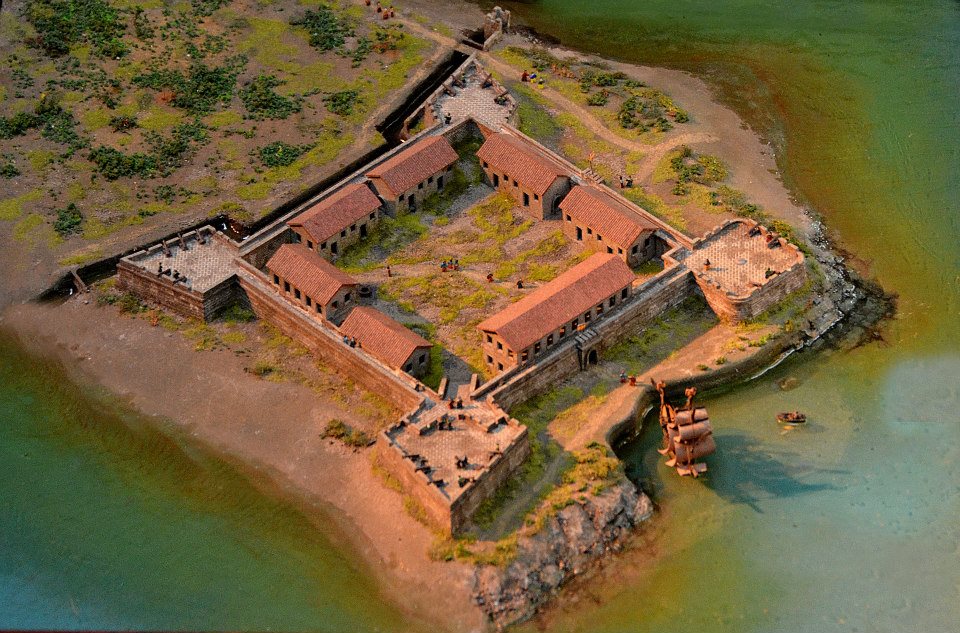
Dawulun Fort is classified as a bastioned fortress, a style characterized by angular bastions projecting outward from the main walls, designed to provide overlapping fields of fire and eliminate blind spots. This design reflects European military architectural influence adapted to local terrain and defensive needs. The fort's walls are constructed from robust stone and brick materials, intended to withstand artillery bombardment.

Bastions and defensive structures

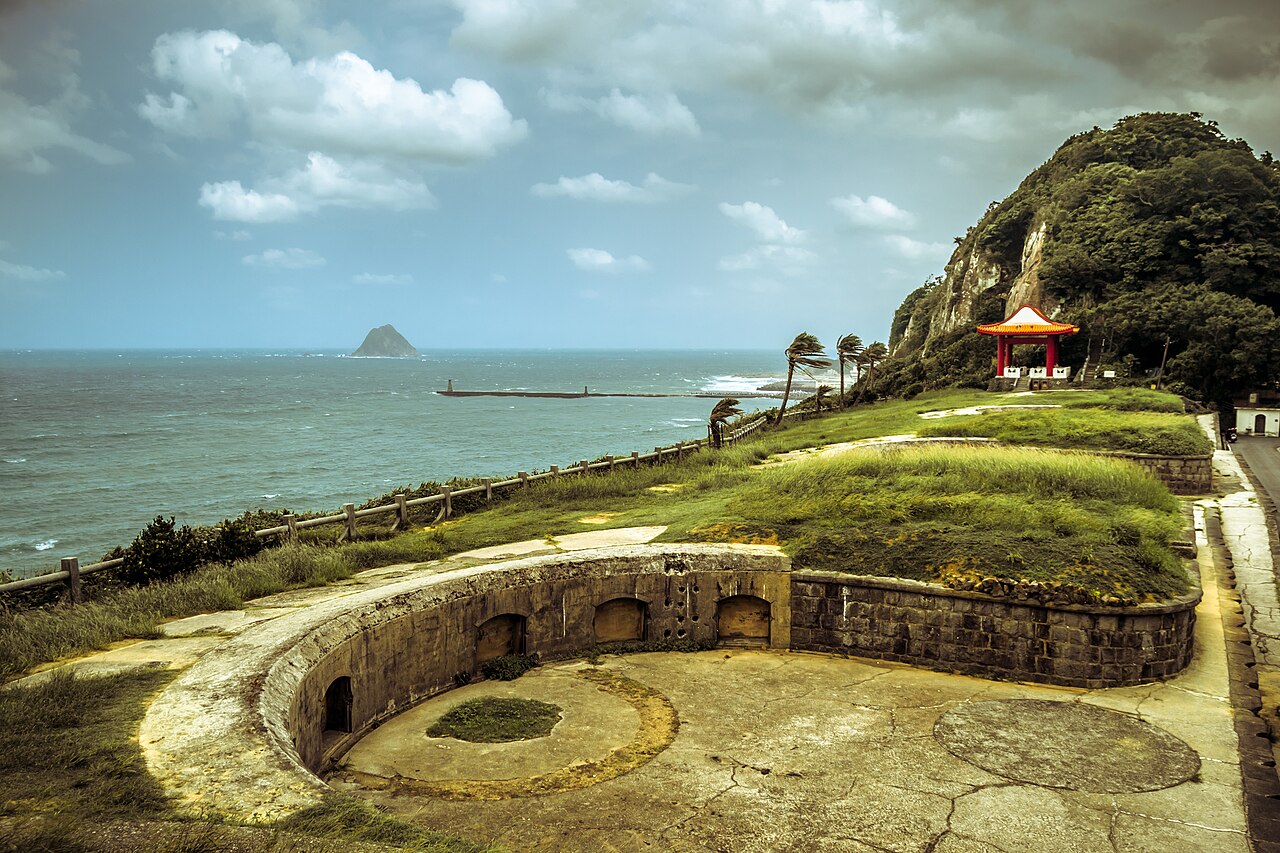
The fort includes several bastions strategically positioned to cover all approaches. These bastions allowed defenders to mount cannons and other artillery pieces, providing a formidable defense against enemy ships and troops. The fort's layout incorporates thick ramparts, embrasures for cannon fire, and protected gun platforms.

Internal facilities and layout

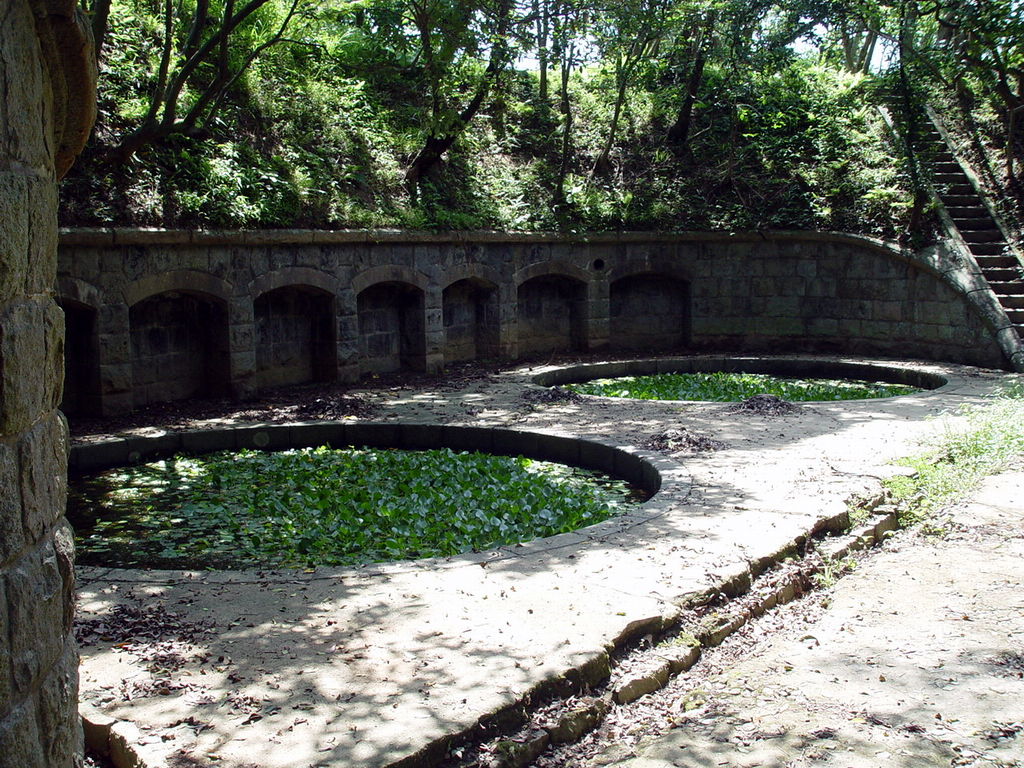
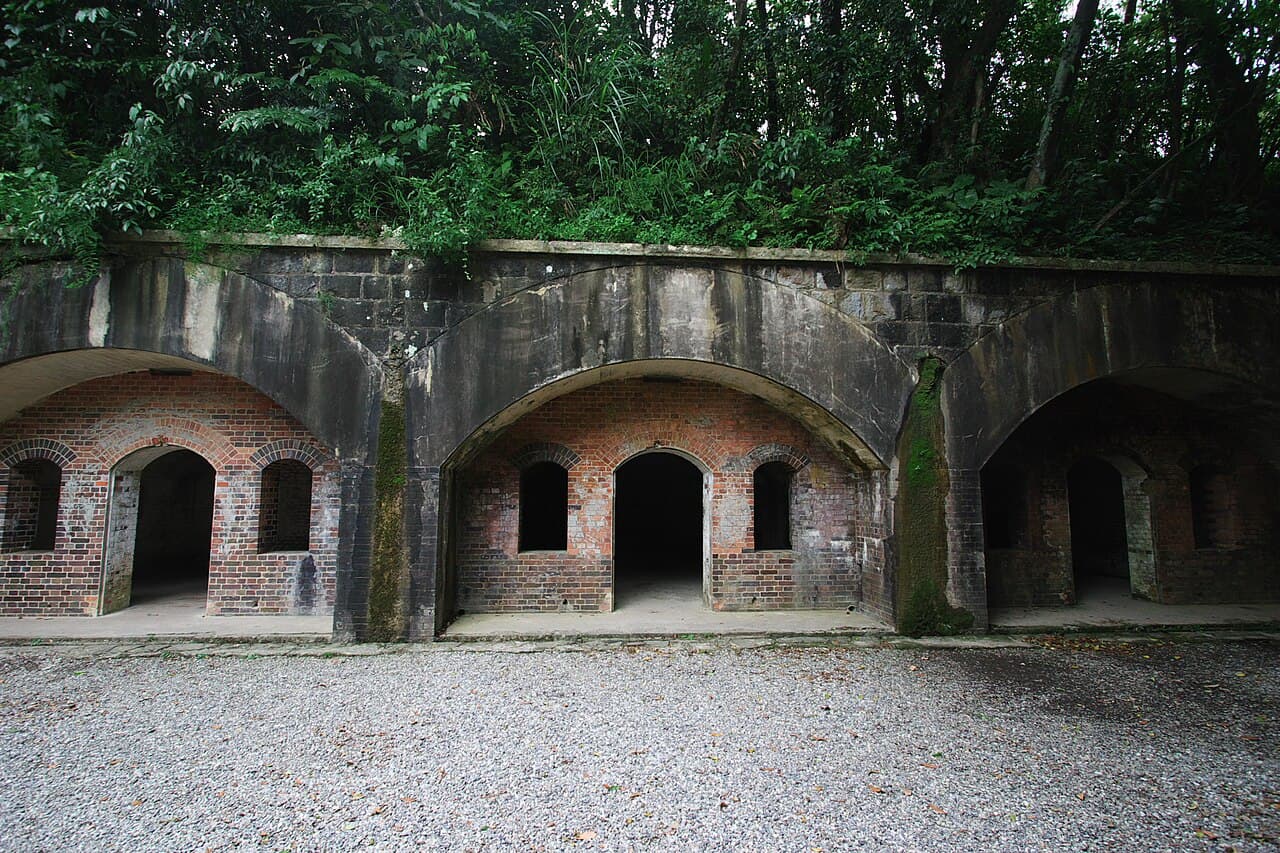
Inside the fort, there were barracks for soldiers, ammunition storage rooms, and command posts. The internal courtyard facilitated movement and coordination during military operations. Although much of the original internal structures have been altered or deteriorated over time, remnants of these facilities remain visible, offering insights into the fort's operational capacity.

Role in Taiwan's military history

Throughout its active use, Dawulun Fort was involved in various military engagements, particularly during conflicts involving foreign powers in the late 19th and early 20th centuries. Its presence contributed to the defense of Keelung, which was a key port city. The fort witnessed changes in control and military technology, reflecting Taiwan's complex colonial and wartime history.

Current condition and preservation

Today, Dawulun Fort stands as a partially preserved historical site. While some structures have suffered from weathering and human impact, efforts have been made to maintain and restore parts of the fort for public education and tourism. Visitors can explore the remaining bastions, walls, and some internal features, gaining a tangible connection to Taiwan's coastal defense heritage.

Visiting Dawulun Fort

The fort is accessible to the public and serves as a cultural and historical attraction in Keelung. It offers panoramic views of the surrounding landscape and harbor, making it a popular spot for history enthusiasts and tourists alike. Interpretive signage and guided tours help visitors understand the fort's significance and architectural details.

Frequently asked questions

  • When was Dawulun Fort built? Dawulun Fort was constructed in the 19th century as part of Taiwan's coastal defense system during the modern period.
  • What type of fortress is Dawulun Fort? It is a bastioned fortress, featuring angular bastions designed for improved defense and artillery placement.
  • Is Dawulun Fort open to visitors? Yes, the fort is open to the public and offers historical exhibits and scenic views.
  • Where is Dawulun Fort located? The fort is located on Mount Dawulun in the Anle District of Keelung, Taiwan.
  • What is the current condition of the fort? Dawulun Fort is partially preserved, with some restoration efforts to maintain its historical structures.
  • Can I see the original military structures inside the fort? Some internal features like barracks and ammunition rooms remain visible, though parts have deteriorated over time.
  • Why was the bastioned design used? The bastioned design allowed defenders to cover all approaches with overlapping fields of fire, enhancing the fort's defensive capabilities.

Frequently asked questions (FAQ)

How do I get to Dawulun Fort?
Dawulun Fort is located in Keelung, Taiwan, and can be accessed via public transportation or by car. If traveling by bus, take a route that stops at Keelung, and then use local taxis or ride-sharing services to reach the fort.
What is the historical significance of Dawulun Fort?
Dawulun Fort, built during the Qing Dynasty, played a crucial role in coastal defense against foreign invasions. It is a testament to Taiwan's military history and showcases the strategic importance of Keelung's harbor.
When was Dawulun Fort constructed?
Dawulun Fort was constructed in 1885, during the Qing Dynasty. It was part of a series of fortifications built to protect Taiwan’s coastline from potential threats.
Can I enter Dawulun Fort with a ticket?
Yes, entry to Dawulun Fort usually requires a ticket. Ticket prices are quite affordable, and children often receive discounts, making it accessible for families and tourists alike.
Why is Dawulun Fort considered an architectural marvel?
Dawulun Fort is renowned for its unique blend of military and traditional Chinese architectural styles. The fort's design incorporates natural landscapes, making it both functional and aesthetically pleasing.
Is it possible to visit Dawulun Fort year-round?
Yes, Dawulun Fort is open to visitors year-round, although hours may vary seasonally. It's advisable to check the official website for the latest information on opening hours before your visit.
What is the best time to visit Dawulun Fort?
The best time to visit Dawulun Fort is during the spring and autumn months when the weather is mild and pleasant. This allows visitors to fully enjoy the outdoor surroundings and historical insights without the discomfort of extreme weather.
Are there any nearby attractions to explore?
Yes, nearby attractions include Keelung's Night Market and the scenic Yehliu Geopark, both of which offer additional cultural and natural experiences. Combining these visits can enhance your trip to the area.
What are the opening hours for Dawulun Fort?
Dawulun Fort typically opens at 9 AM and closes at 5 PM, but specific hours may change on holidays or during special events. It’s recommended to verify the opening hours before planning your visit.

Photo gallery

Dawulun Fort
Click to view

Photo by Jimmy Yao from Taipei, Taiwan•CC BY-SA 2.0

1 photo • Click any image to view in full screen

Information

Bastioned Fortress

Loading map...

Visitor reviews

No reviews yet. Been here? Write the first review and help other travelers!

Write the first review

Visited this castle? Share your experience

Your review helps other travelers and adds first-hand knowledge to our encyclopedia.
Write a review

(5/5)

0/2000 characters

Your review will be visible after admin approval

Nearby castles

3.4 km
Baimiweng Fort — Taiwan castle

Baimiweng Fort

Keelung, Taiwan

Baimiweng Fort (traditional Chinese: 白米甮砲台; simplified Chinese: 白米瓮炮台; pinyin: Báimǐwèng Pàotái), also referred to as Holland Castle or the Gun Emplacement of Fort Holland, is a historically significant bastioned fortress located in the Zhongshan District of Keelung, Taiwan. This fortification is notable for its colonial military architecture and strategic coastal defense position. It stands as a reminder of the complex history of Taiwan, particularly during periods of European influence and Japanese occupation. Historical background and strategic importance The construction of Baimiweng Fort dates back to the period when Taiwan was a focal point of military and colonial interests. While the exact date of its construction is not definitively recorded, the fort is associated with the era of European colonial expansion in East Asia, particularly the Dutch presence in Taiwan during the 17th century. The fort's alternative name, Holland Castle, reflects this connection to Dutch colonial forces, who built or reinforced fortifications to protect their trading posts and military footholds. Situated in Keelung, a major port city on Taiwan's northern coast, Baimiweng Fort was strategically positioned to guard the harbor and surrounding waterways. Its location allowed control over naval access and provided a vantage point to monitor approaching ships, making it a critical defensive installation during periods of conflict and foreign occupation. Architectural features and design Baimiweng Fort exemplifies the characteristics of a bastioned fortress, a style of fortification that became prominent in the early modern period for its ability to withstand artillery sieges. The fort's design incorporates angled bastions that project outward from the main walls, allowing defenders to cover adjacent walls with overlapping fields of fire. This design minimized blind spots and enhanced the fort's defensive capabilities against attackers. The fort's construction materials and techniques reflect both local resources and European military engineering principles. The walls are robust, built to endure cannon fire, and the layout includes gun emplacements strategically placed to maximize coverage of the surrounding sea approaches. The integration of these features demonstrates the adaptation of European fortification methods to the geographical and tactical context of Taiwan's coastline. Gun emplacements and defensive structures The gun emplacements at Baimiweng Fort were designed to house artillery pieces capable of defending the harbor and repelling naval assaults. These emplacements are positioned to provide overlapping fields of fire, ensuring that any enemy vessel attempting to enter the harbor would face concentrated cannon fire from multiple angles. The fort's design also includes protective parapets and embrasures to shield the artillery crews while allowing effective operation of the guns. Role during historical conflicts Throughout its history, Baimiweng Fort played a key role in the defense of Keelung and the broader region. The fort saw various phases of use and modification under different regimes, including the Dutch colonial period, Qing dynasty rule, and Japanese occupation. Each of these periods brought changes to the fort's structure and armament to suit evolving military technologies and strategic needs. During the Japanese era, the fortifications in Keelung, including Baimiweng Fort, were integrated into a broader network of coastal defenses. The fort's strategic location continued to be valued for controlling access to the northern ports of Taiwan, especially as naval warfare advanced in the 19th and early 20th centuries. Current status and cultural significance Today, Baimiweng Fort remains a partially preserved historical site that attracts visitors interested in Taiwan's colonial and military history. While some sections of the fort have deteriorated over time, restoration efforts have aimed to maintain its structural integrity and interpretive value. The site offers insight into the military architecture of the bastioned fortress style and the layered history of foreign influence in Taiwan. The fort is accessible to the public and serves as an educational resource, illustrating the complexities of Taiwan's past and the strategic importance of Keelung as a maritime gateway. Its preservation contributes to the cultural heritage of the region and highlights the enduring legacy of historical fortifications in East Asia. Visitor information Baimiweng Fort is located in the Zhongshan District of Keelung City, making it accessible to travelers exploring northern Taiwan. Visitors can explore the remaining walls, bastions, and gun emplacements while enjoying views of Keelung Harbor. The site offers a tangible connection to Taiwan's colonial past and military history. While specific visiting hours and ticket prices may vary, the fort is generally open to the public. Visitors are encouraged to check local resources or tourism information centers in Keelung for the latest details on access and guided tours.

Details
6.3 km
Fort San Salvador — Taiwan castle

Fort San Salvador

, Taiwan

Fort San Salvador is a significant example of a 17th-century bastioned fortress located in Taiwan. Constructed during the Renaissance period, this fortress exemplifies the military architectural innovations that emerged in response to the evolution of artillery and siege warfare. The design of Fort San Salvador reflects the principles of the bastioned fortification system, which was developed to provide improved defensive capabilities against cannon fire. Historical context and strategic importance During the 17th century, Taiwan was a contested territory influenced by various colonial powers, including the Dutch, Spanish, and later the Qing dynasty. Fort San Salvador was built as part of the efforts to establish and maintain control over the island, serving both as a military stronghold and a symbol of colonial authority. Its location was chosen to oversee and protect key maritime routes and settlements. Architectural features and design Bastioned fortification system The fortress is characterized by its angular bastions projecting from the main walls, allowing defenders to cover adjacent walls with overlapping fields of fire. This design minimized blind spots and made direct assaults more difficult. The walls were constructed with thick masonry to absorb cannon impacts, and the fortress likely included a surrounding moat or ditch as an additional defensive measure. Layout and internal structures Inside the fort, there would have been casemates or vaulted chambers for storing ammunition and housing troops. The central courtyard provided space for assembling soldiers and organizing supplies. The entrance was typically fortified with a gatehouse and possibly a drawbridge, enhancing security against attackers. Materials and construction techniques The construction of Fort San Salvador utilized local stone and brick materials, combined with lime mortar, which was common in Renaissance military architecture. The builders applied geometric precision in the layout to optimize defensive coverage and structural stability. The fortress's robust construction has contributed to its preservation over centuries. Preservation and current status Today, Fort San Salvador remains a notable historical monument in Taiwan, representing the island's colonial past and the military architectural advancements of the Renaissance era. While the exact condition may vary, bastioned fortresses of this period often survive as partially preserved or restored sites, attracting historians, architects, and tourists interested in military history and colonial heritage. Significance in military architecture Fort San Salvador illustrates the transition from medieval castle designs to early modern fortifications adapted for gunpowder weaponry. Its bastioned design served as a model for many coastal and colonial forts worldwide, demonstrating the global spread of Renaissance military engineering principles.

Renaissance (15th–17th c.)
Details
7.3 km
Gongzi Liao Fort — Taiwan castle

Gongzi Liao Fort

Keelung, Taiwan

The Gongzi Liao Fort (Gàngzi Liáo Pàotái) is a significant 20th-century bastioned fortress located in the Xinyi District of Keelung, Taiwan. Built during the contemporary period, this fort was part of Taiwan's coastal defense system, designed to protect the strategic port city of Keelung from naval threats. The fort's architecture reflects military engineering principles tailored to modern artillery warfare, distinguishing it from earlier medieval castles and fortifications. Historical context and strategic importance Constructed in the 20th century, the Gongzi Liao Fort served as a key military installation during a period when Taiwan faced various external threats, particularly from naval forces. Keelung's status as a vital harbor made it essential to fortify the coastline with robust defensive structures. The fort's location in the Xinyi District provided a vantage point for monitoring maritime approaches and defending against potential invasions. Architectural features and design The fort is classified as a bastioned fortress, a style characterized by angular bastions protruding from the main walls, allowing defenders to cover adjacent walls with overlapping fields of fire. This design was adapted in the Gongzi Liao Fort to accommodate modern artillery, with reinforced concrete and strategic placements for cannon emplacements. The layout includes thick defensive walls, gun emplacements, observation posts, and underground chambers for ammunition storage. The use of concrete and steel reflects the contemporary architectural style of military fortifications, focusing on durability and resistance to bombardment. Defensive structures The bastions at Gongzi Liao Fort were designed to eliminate blind spots and provide comprehensive coverage of the surrounding waters. The fort's walls are reinforced to withstand shelling, and the gun platforms were positioned to maximize firing range and accuracy. Additionally, the fort included facilities for troops stationed there, such as barracks and command posts. Role in Taiwan's military history Throughout its operational period, the Gongzi Liao Fort played a defensive role during times of heightened military tension in the region. While it did not witness major battles, its presence contributed to the deterrence of naval attacks and helped secure the Keelung harbor area. After its decommissioning, the fort has become a point of historical interest, reflecting Taiwan's military evolution in the 20th century. Current condition and preservation Today, the Gongzi Liao Fort remains partially preserved. Some of its original structures, including bastions and gun emplacements, are still visible, offering visitors a glimpse into early modern military architecture in Taiwan. Preservation efforts focus on maintaining the integrity of the remaining features and promoting awareness of the site's historical significance. Visiting the Gongzi Liao Fort Visitors to the fort can explore the outdoor areas and observe the fortifications from vantage points within the site. The fort is accessible to the public, providing educational opportunities about Taiwan's coastal defenses. While some areas may be restricted due to safety concerns, the site offers a valuable experience for those interested in military history and architecture. Nearby attractions The fort's location in Keelung allows visitors to also explore other historical and cultural sites in the city, including the Keelung Harbor, local temples, and museums that showcase Taiwan's maritime heritage.

Contemporary (20th–21st c.)
Details