Fort Saint Anthony (Axim)
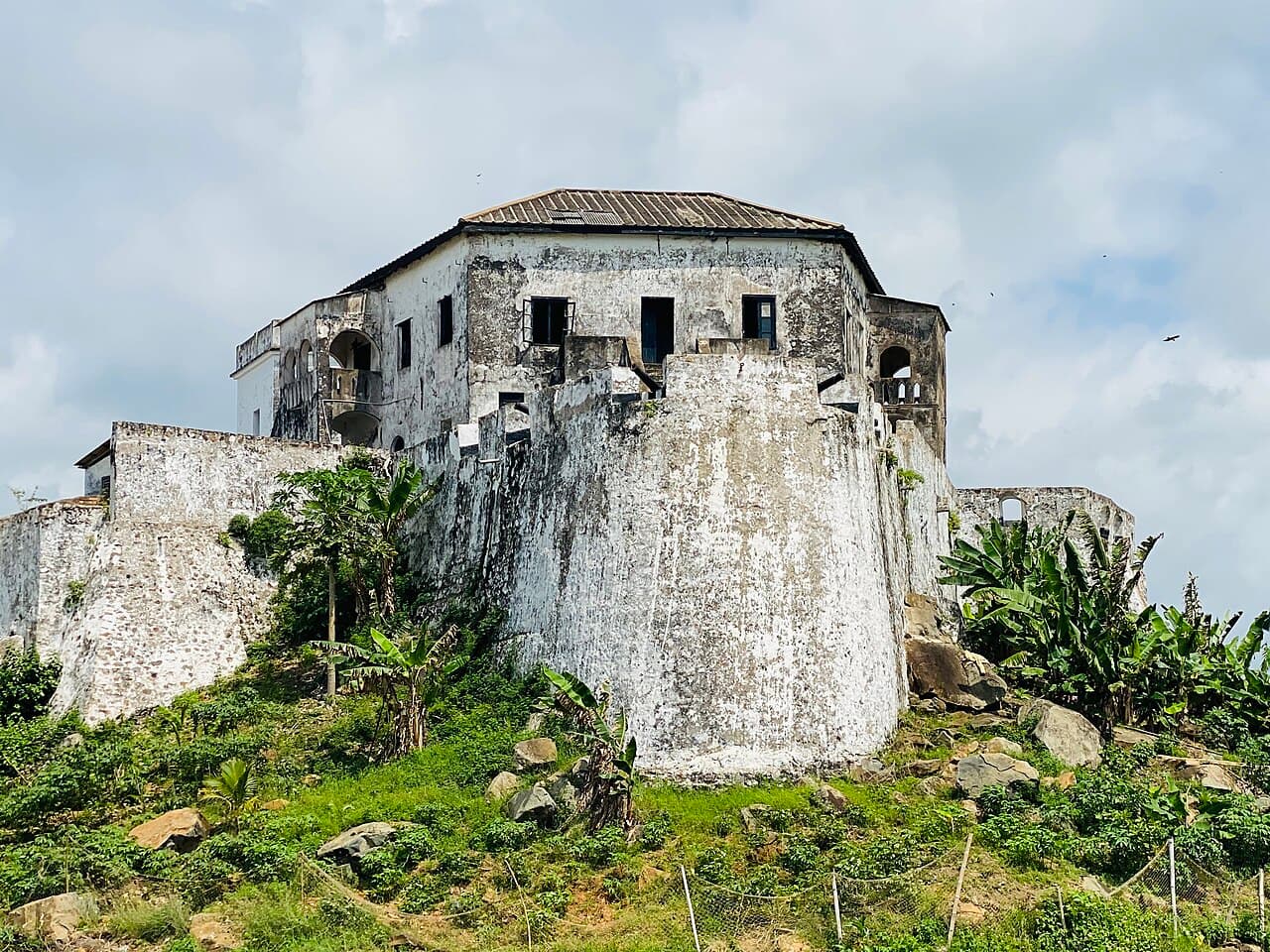
Fort Saint Anthony (Portuguese: Forte de Santo António; Dutch: Fort Sint Anthony) stands as a significant bastioned fortress located near the town of Axim on the western coast of present-day Ghana. Constructed in 1515 by the Portuguese, it was one of the earliest European fortifications established on the Gold Coast during the Renaissance period. The fort was strategically positioned to control trade routes and served as a vital point for provisioning ships with fresh water and supplies.
Portuguese origins and architectural features
The original fort was built by the Portuguese as part of their efforts to secure trading posts along the West African coast. Fort Saint Anthony was designed as a bastioned fortress, a style that emerged in response to the development of artillery and gunpowder warfare in Europe. This architectural form featured angled bastions projecting from the main walls, allowing defenders to cover adjacent walls with cannon fire and eliminate blind spots.
The fort's layout included thick stone walls, bastions at the corners, and a central courtyard. The construction utilized local materials combined with European masonry techniques. The design reflected Renaissance military engineering principles, emphasizing both defense and functionality for trade activities.
Dutch expansion and control
In 1642, the fort was captured by the Dutch West India Company as part of their campaign to wrest control of the Gold Coast from the Portuguese. The Dutch expanded and reinforced the fort significantly, adapting it to their needs and enhancing its defensive capabilities. Their modifications included strengthening the bastions, adding additional gun emplacements, and improving living quarters for soldiers and administrators.
During the Dutch period, Fort Saint Anthony became the westernmost fort in the Dutch Gold Coast possessions. It served as the first point of contact for Dutch traders arriving from Europe. The fort was essential for resupplying ships with fresh water and provisions, making it a critical logistical hub.
Role in Dutch colonial administration
The commandant of Fort Saint Anthony held a prominent position within the Dutch colonial hierarchy. Alongside commandants from other forts such as Fort Nassau at Moree and Fort Crèvecoeur at Accra, the commandant participated in the Colonial Council in Elmina. This council oversaw Dutch interests on the Gold Coast, including trade regulation and military defense.
Unlike many other Dutch forts on the Gold Coast, Fort Saint Anthony was never abandoned during the 19th century. It remained continuously occupied until the transfer of Dutch possessions to the British in 1872.
British possession and modern status
After the Dutch ceded their Gold Coast territories to the British in 1872, Fort Saint Anthony became part of the British colonial holdings. The fort's military importance declined with the advent of new technologies and changes in colonial administration.
Today, the fort is owned by the Ghanaian state and is open to the public. It is recognized for its historical significance in the context of European pre-colonial and colonial trade and exploitation along the West African coast.
UNESCO World Heritage designation
In 1979, Fort Saint Anthony was inscribed on the UNESCO World Heritage List along with several other castles and forts in Ghana. This designation highlights its value as a cultural heritage site that bears witness to the complex interactions between European powers and African societies during the era of Atlantic trade.
The fort's preservation allows visitors to explore its bastions, walls, courtyards, and other architectural features that illustrate the military and commercial strategies employed over centuries. It remains a key site for understanding the history of the Gold Coast and the broader dynamics of colonialism in West Africa.
Frequently asked questions (FAQ)
- When was Fort Saint Anthony built and by whom?
- Fort Saint Anthony was built in 1515 by the Portuguese near Axim on the Gold Coast of present-day Ghana.
- What architectural style characterizes Fort Saint Anthony?
- Fort Saint Anthony is a bastioned fortress, featuring angled bastions designed to improve defense against artillery, typical of Renaissance military architecture.
- Who controlled Fort Saint Anthony after the Portuguese?
- The Dutch captured the fort in 1642, expanded it, and controlled it until 1872 when it was ceded to the British.
- Is Fort Saint Anthony open to visitors today?
- Yes, Fort Saint Anthony is owned by the Ghanaian state and is open to the public as a historic site.
- Why is Fort Saint Anthony significant in Ghana's history?
- The fort played a critical role in European trade and colonial administration on the Gold Coast and is part of the UNESCO World Heritage List for its cultural importance.
Photo gallery

Information
Current owner
Ghanaian state
Loading map...
Visitor reviews
No reviews yet. Been here? Write the first review and help other travelers!
Write the first reviewVisited this castle? Share your experience
Your review helps other travelers and adds first-hand knowledge to our encyclopedia.