Fort Ruychaver
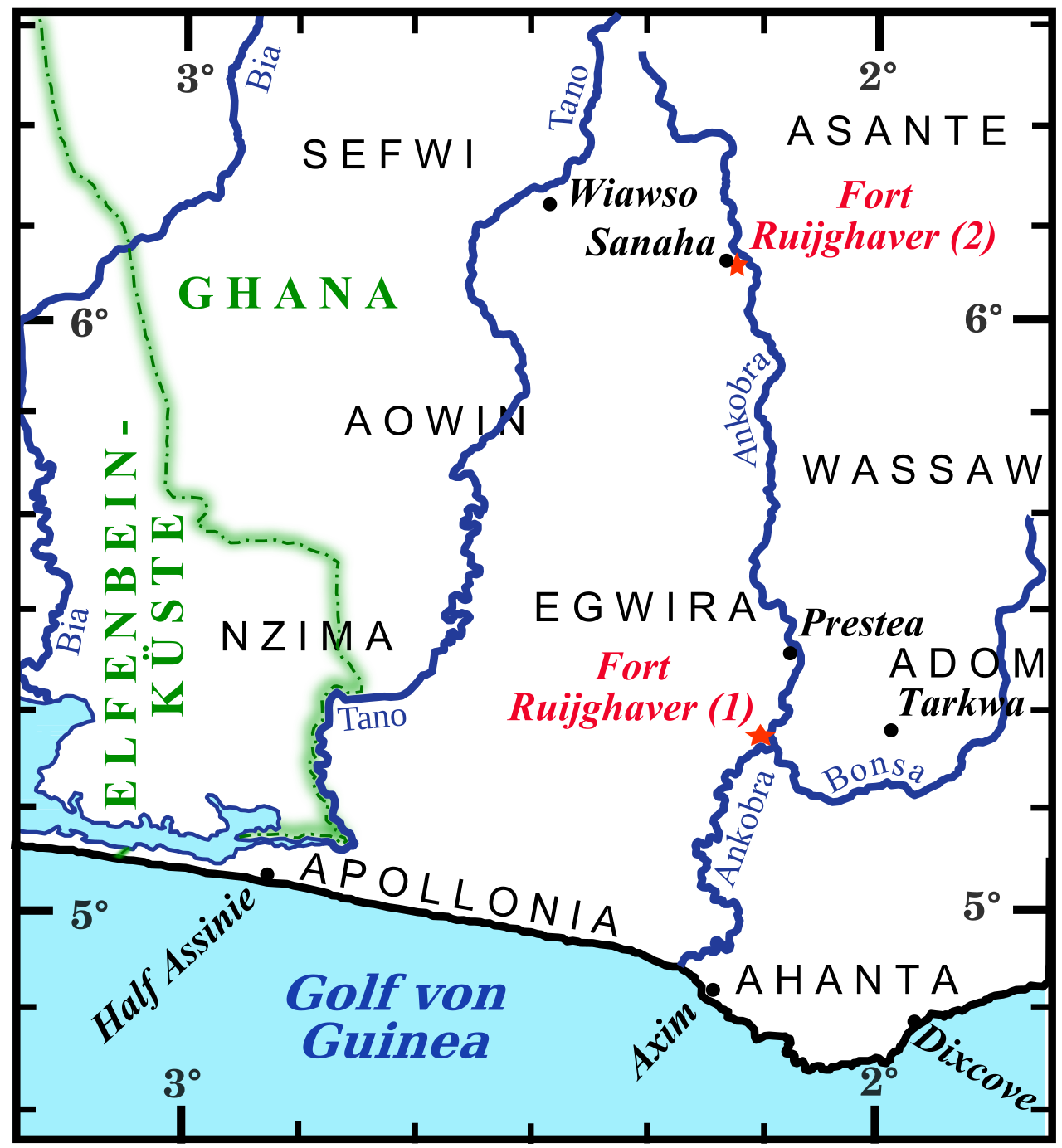
Fort Ruychaver, also known as Fort Ruijghaver, was a Dutch trading post established in the mid-17th century on the banks of the Ankobra River in what is now Ghana. Founded in 1654 under the direction of Jacob Ruijghaver, the director of the Dutch West India Company's possessions on the Gold Coast, the post was part of the Dutch efforts to expand their influence and control over the lucrative gold trade in the region.
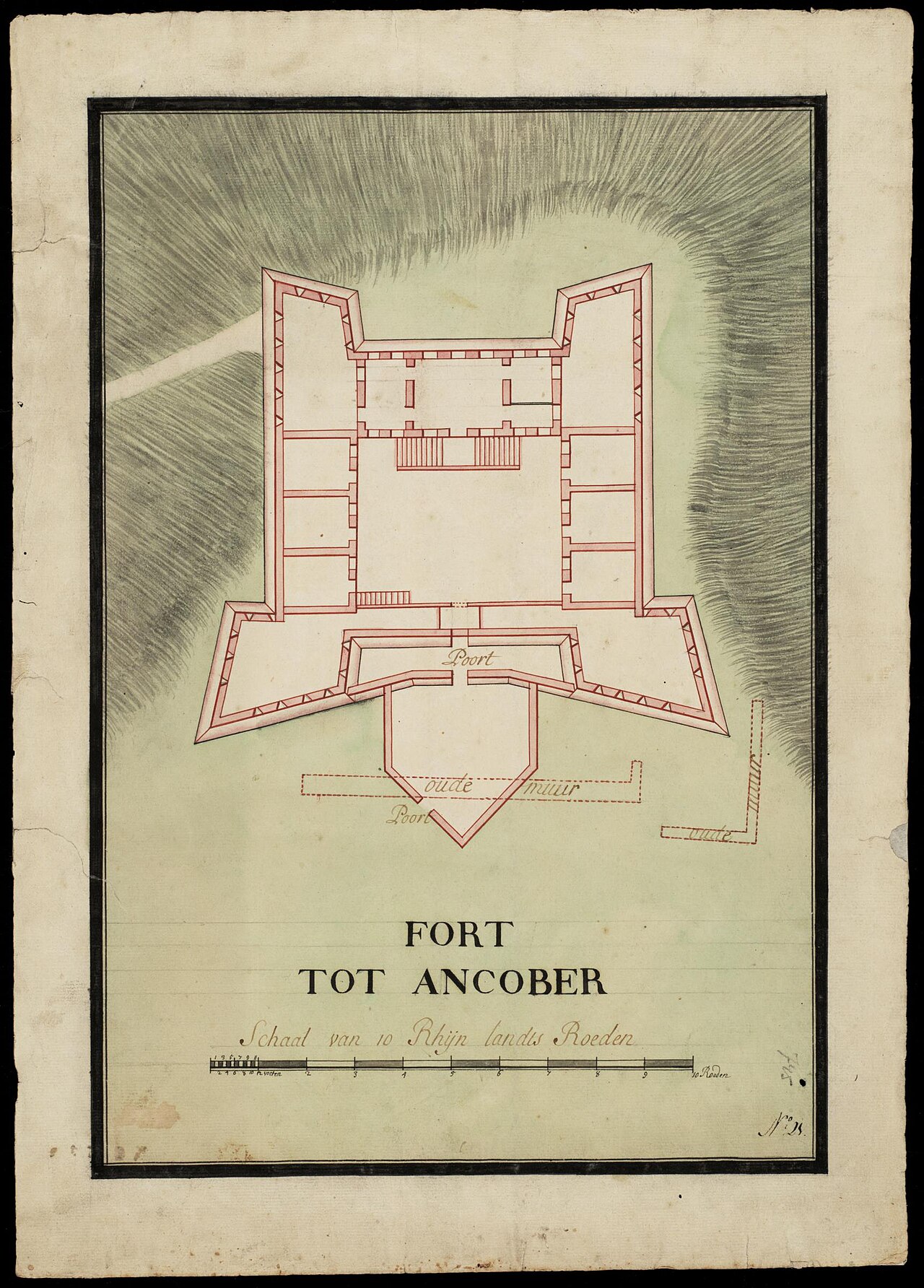
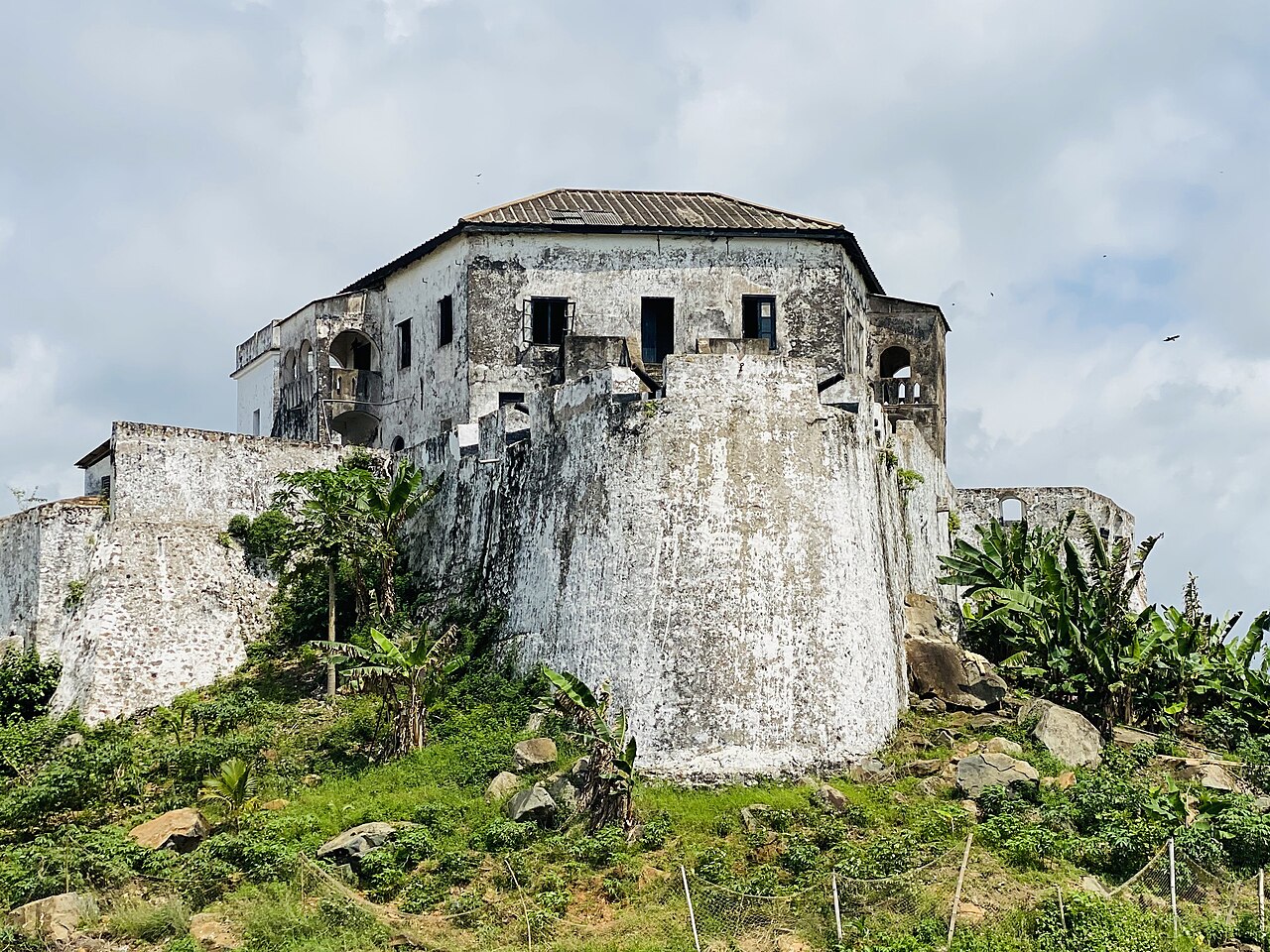
The trading post existed for a brief period, from 1654 to 1660, and was situated in the hinterland of the Gold Coast, an area locally renowned for its gold mines. Unlike the coastal forts typically built by European powers during this period, Fort Ruychaver was not a heavily fortified structure. Modern scholarship suggests that the term "fort" applied to Ruychaver is somewhat misleading, as the site likely consisted of a simple lodge and a few auxiliary huts rather than substantial defensive walls or bastions.
Historical context and purpose
During the Renaissance period, European powers were intensifying their efforts to control trade routes and resources in West Africa. The Dutch West India Company sought to establish trading posts inland to secure direct access to gold sources, reducing reliance on intermediaries. Fort Ruychaver was one such initiative aimed at strengthening Dutch commercial interests beyond the coastal forts like Elmina and Fort Orange.
The post's strategic location along the Ankobra River allowed access to the interior goldfields, facilitating the transport of gold to the coast for export to Europe. This inland presence was intended to enhance the Dutch monopoly on gold trade and compete with Portuguese and English interests in the region.
Architectural characteristics and fortifications
Despite its designation as a fort, Fort Ruychaver did not exhibit the typical characteristics of a bastioned fortress. There is no evidence of significant defensive walls, bastions, or artillery placements. Instead, the site likely comprised a modest lodge serving as the main trading center, with several smaller huts for storage and accommodation.
This simpler construction reflects the challenges of establishing permanent European structures in the interior, including logistical difficulties and potential hostilities. The absence of substantial fortifications suggests that the Dutch relied more on diplomacy and trade relationships with local communities for protection rather than military defense.
Decline and legacy
Fort Ruychaver was abandoned around 1660, after only six years of operation. The reasons for its short lifespan include difficulties in maintaining the post, resistance from local groups, and competition from other European powers. The limited physical remains and documentation make it challenging to reconstruct the fort's exact layout and operations.
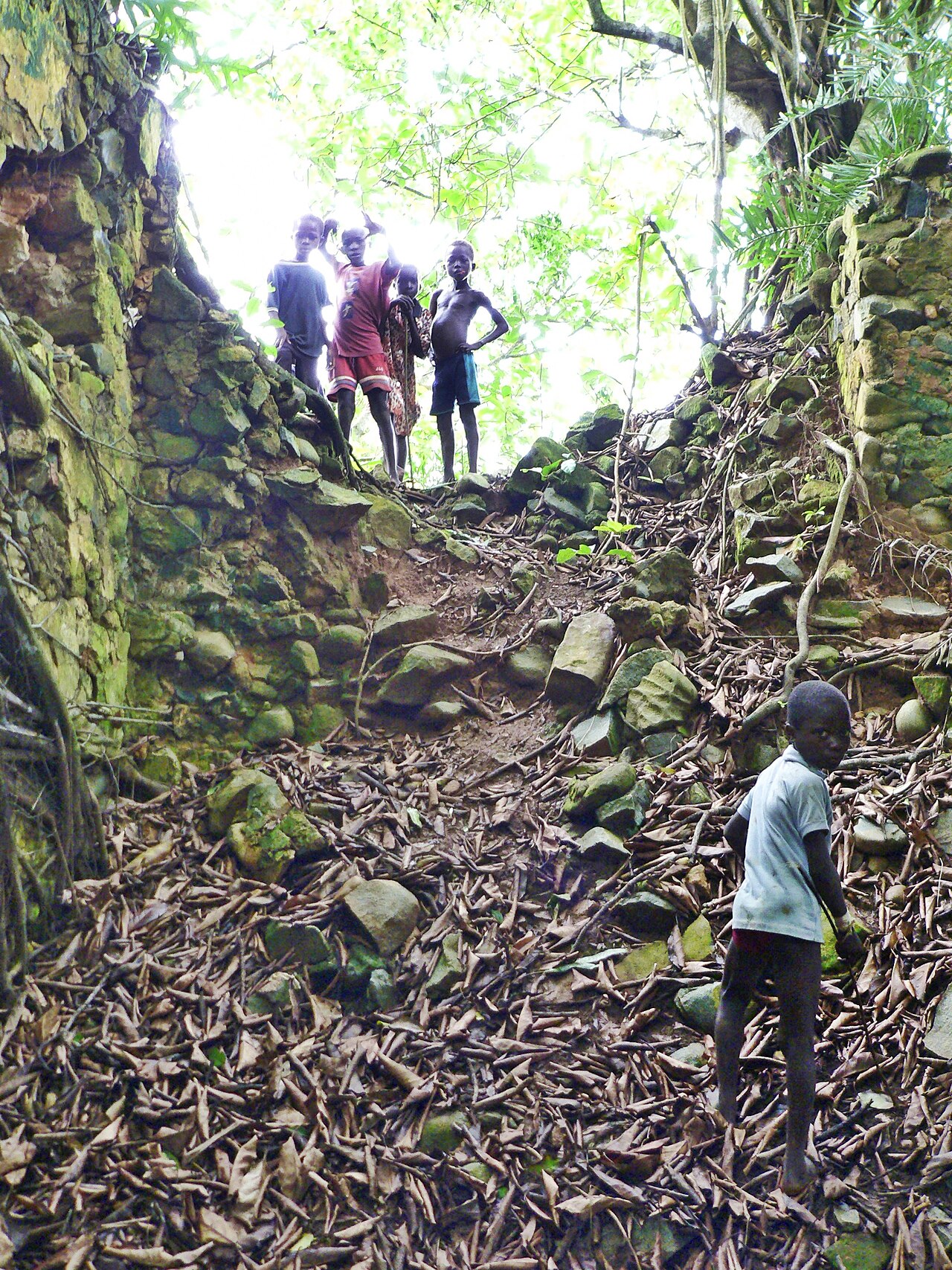
Today, Fort Ruychaver is primarily of historical interest as an example of Dutch inland trading efforts during the 17th century on the Gold Coast. It illustrates the complexities of European expansion into West Africa's interior and the importance of the gold trade in shaping colonial strategies.
Significance in West African colonial history
Fort Ruychaver represents a rare example of a European trading post established away from the coast during the early modern period. Its existence highlights the Dutch West India Company's attempts to extend influence beyond traditional coastal strongholds. Although the post was short-lived and modest in construction, it underscores the economic motivations driving European engagement in West Africa.
The fort's history contributes to understanding the dynamics of trade, diplomacy, and conflict in the region during the Renaissance and early colonial periods. It also provides insight into the interactions between European traders and indigenous societies, particularly regarding access to valuable resources like gold.
Frequently asked questions (FAQ)
- What was the primary purpose of Fort Ruychaver?
- Fort Ruychaver was established as a Dutch trading post to enhance the trade in gold by accessing inland gold mines along the Ankobra River in Ghana.
- Is Fort Ruychaver a heavily fortified structure?
- No, despite being called a fort, Fort Ruychaver was likely a simple lodge with a few huts, lacking substantial defensive walls or bastions.
- When was Fort Ruychaver operational?
- Fort Ruychaver operated between 1654 and 1660 before being abandoned due to logistical challenges and local resistance.
- Can visitors explore Fort Ruychaver today?
- Fort Ruychaver exists mainly as ruins with limited physical remains, and there is no established visitor infrastructure at the site.
- Why was Fort Ruychaver established inland rather than on the coast?
- The Dutch established Fort Ruychaver inland to gain direct access to the gold mines and reduce reliance on coastal intermediaries in the gold trade.

Information
Loading map...
Visitor reviews
No reviews yet. Been here? Write the first review and help other travelers!
Write the first reviewVisited this castle? Share your experience
Your review helps other travelers and adds first-hand knowledge to our encyclopedia.