Fort Paté
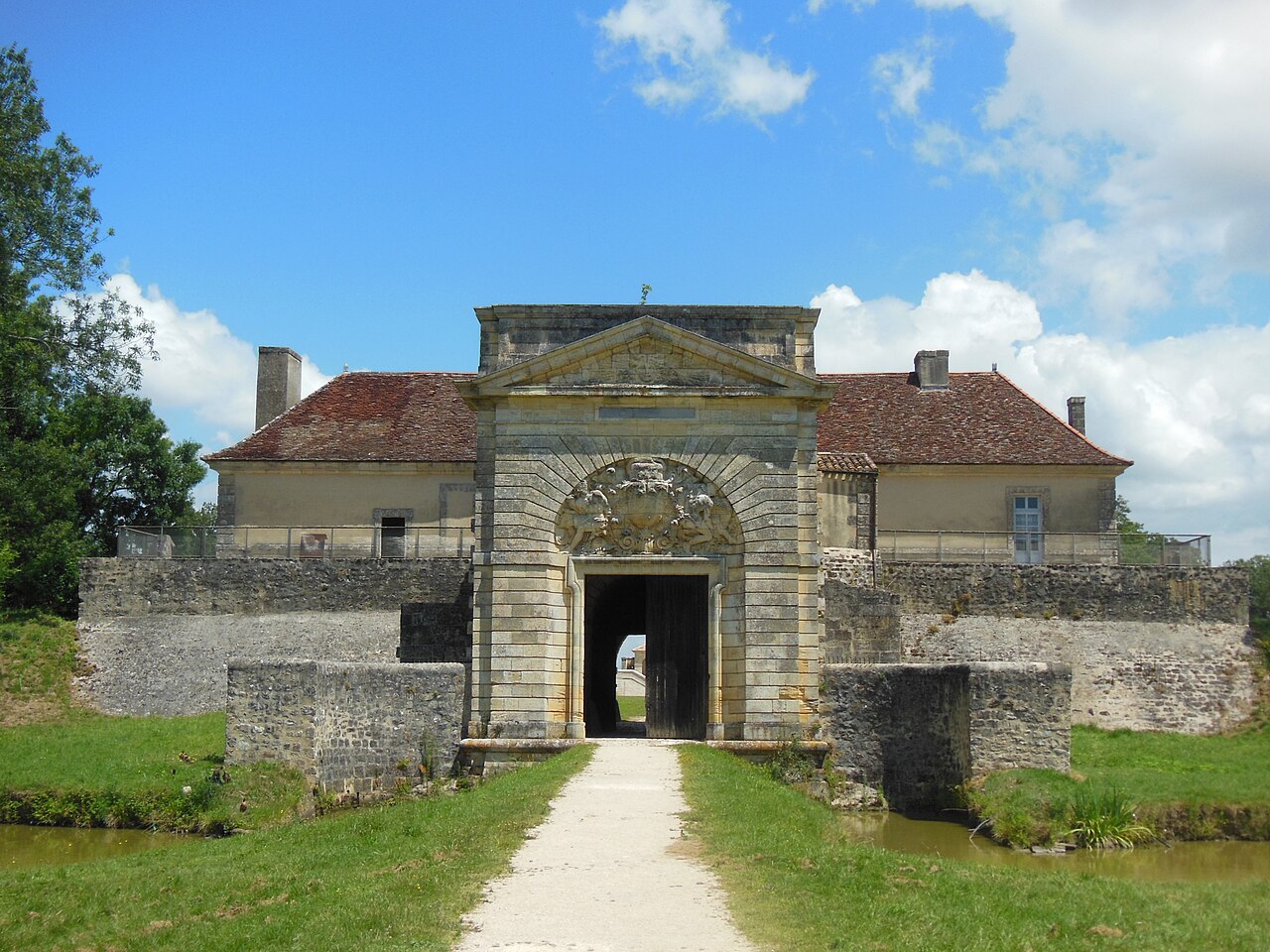
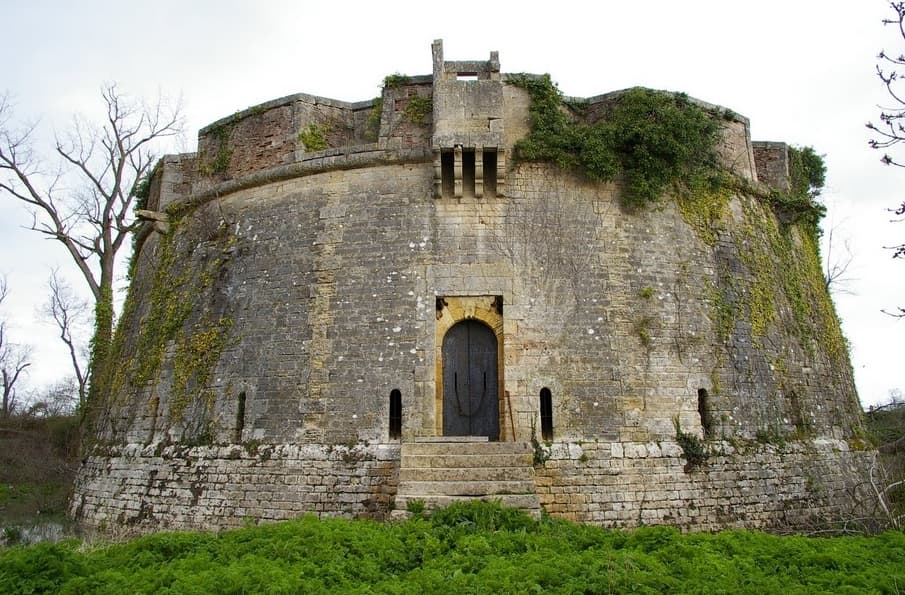
Fort Paté is a distinctive bastioned fortress located on a small oval island in the middle of the Gironde estuary near Blaye, France. Constructed between 1685 and 1693, it forms a critical component of the verrou de Blaye, a tripartite defensive system designed to secure the river against hostile naval forces. This system includes Fort Paté on the island, the citadel of Blaye on the right bank, and Fort Médoc on the left bank, collectively protecting the strategic port city of Bordeaux from maritime attack.
Strategic role and historical context
The fort was built during the Renaissance period under the guidance of the renowned military engineer Vauban, who revolutionized fortress design in France. Fort Paté's location in the estuary was carefully chosen to support the river batteries at Blaye and Fort Médoc, creating overlapping fields of fire to seal the river from enemy ships. This defensive network was part of France's broader efforts to secure its borders and key waterways during a time of frequent European conflicts in the late 17th century.
Architectural design and construction techniques
Fort Paté is notable for its round, tower-like design characteristic of Vauban's fortifications, optimized for artillery defense. The small island on which it stands was prone to flooding during very high tides and subject to erosion by river currents, which posed significant challenges for construction and long-term stability.
Foundation engineering
To prevent the fort from sinking into the muddy riverbed, a specialized foundation was engineered by François Ferry, working under Vauban's advice. A grid of wooden pilings was driven into the mud, forming a raft that distributed the weight of the fortress evenly. This raft rested on wooden stakes, creating a stable platform for the masonry structure above. Additionally, a similar wooden grid was installed around the island to stabilize its perimeter against erosion.
Despite these efforts, by around 1705 the fort had sunk approximately two meters into the mud, rendering the lower embrasures unusable, though the upper parts remained operational. Further stabilization work was undertaken in 1730 as the island's size diminished due to river currents. This technique of wooden raft foundations was common in the region, also seen at Brouage, Fort Chapus, and the Corderie Royale in Rochefort.
Architectural features and layout
The fort's compact oval shape maximizes defensive coverage with thick walls and bastions designed to mount artillery pieces. Its bastioned design allows for enfilading fire along the walls, minimizing blind spots and enhancing its defensive capabilities against naval assault. The interior was just large enough to accommodate the garrison stationed to defend the fort, with essential facilities for soldiers and artillery.
Defensive network integration
Fort Paté's role was integrally linked to the adjacent fortifications. Together with the citadel of Blaye and Fort Médoc, it formed a crossfire zone controlling access to Bordeaux via the Gironde river. This strategic coordination exemplifies Vauban's approach to fortress systems, where multiple strongpoints create a layered defense.
Preservation and cultural significance
Today, Fort Paté remains a well-preserved example of Vauban's military architecture and is recognized as part of the UNESCO World Heritage Site designated in 2008 for the fortifications of Vauban. This listing underscores the historical importance of these structures in the evolution of military engineering during the 17th and 18th centuries.
The fort's unique location on an island and its specialized foundation make it an important case study for the challenges of building durable fortifications in dynamic river environments. Its survival and maintenance reflect ongoing efforts to preserve France's rich military heritage.
Visiting Fort Paté
Visitors to the region interested in military history and architecture often seek to explore Fort Paté alongside the citadel of Blaye and Fort Médoc. The fort's remote island location means access is limited, typically requiring boat transport. Its compact size offers an intimate glimpse into the life of a riverine fortress garrisoned during a pivotal era in French history.
Frequently asked questions (FAQ)
- How do I visit Fort Paté?
- Fort Paté is located on an island in the Gironde estuary, accessible only by boat. Visitors typically arrange boat tours from Blaye or nearby towns to reach the fort. Due to its protected status, visiting hours may be limited and guided tours are recommended.
- What is the historical significance of Fort Paté?
- Fort Paté was built in the late 17th century as part of Vauban's defensive system to protect Bordeaux from naval attacks. Its strategic position in the Gironde estuary allowed it to work in concert with Fort Médoc and the citadel of Blaye to control river access.
- When was Fort Paté constructed?
- Construction of Fort Paté took place between 1685 and 1693 under the supervision of engineer François Ferry, following Vauban's designs.
- What architectural style is Fort Paté built in?
- Fort Paté exemplifies the bastioned fortress style typical of the Renaissance period and Vauban's military engineering principles, featuring thick walls and a rounded bastioned layout optimized for artillery defense.
- Is Fort Paté well preserved?
- Yes, Fort Paté is well preserved and maintained as part of the UNESCO World Heritage Site dedicated to Vauban's fortifications, showcasing 17th-century military architecture.
- Can I visit the other forts in the verrou de Blaye system?
- Yes, visitors can explore the citadel of Blaye and Fort Médoc, which along with Fort Paté form the verrou de Blaye defensive system. These sites offer complementary insights into Vauban's fortress network.
Photo gallery

Information
Current owner
French government
Loading map...
Visitor reviews
No reviews yet. Been here? Write the first review and help other travelers!
Write the first reviewVisited this castle? Share your experience
Your review helps other travelers and adds first-hand knowledge to our encyclopedia.