Fort Médoc
Fort Médoc stands as a prominent example of late 17th-century military architecture designed by the renowned French military engineer Sébastien Le Prestre de Vauban. Constructed between 1689 and 1690 on marshy, alluvial land along the Left Bank of the Gironde estuary, this fortress formed a critical component of a three-point defense system aimed at protecting the vital port city of Bordeaux from naval invasion. Together with Fort Paté on the river island and the Citadel of Blaye on the opposite bank, Fort Médoc controlled river access, effectively creating a fortified "lock" to block enemy ships.
The fort's location on low-lying, marshy terrain necessitated innovative construction techniques to ensure stability and defense. Rather than relying on underground vaults, which were unsuitable for the saturated soil, the design emphasized robust, above-ground fortifications including thick curtain walls and bastions. The fort's layout is a trapezoidal bastioned enclosure oriented perpendicular to the riverbank, featuring four angular bastions connected by curtain walls. These defenses were surrounded by a water-filled moat system fed by sluices from the estuary, supplemented by a covered way and an outer moat forming a demi-lune, creating multiple layers of protection.
Architectural design and defensive features
Fort layout and bastions
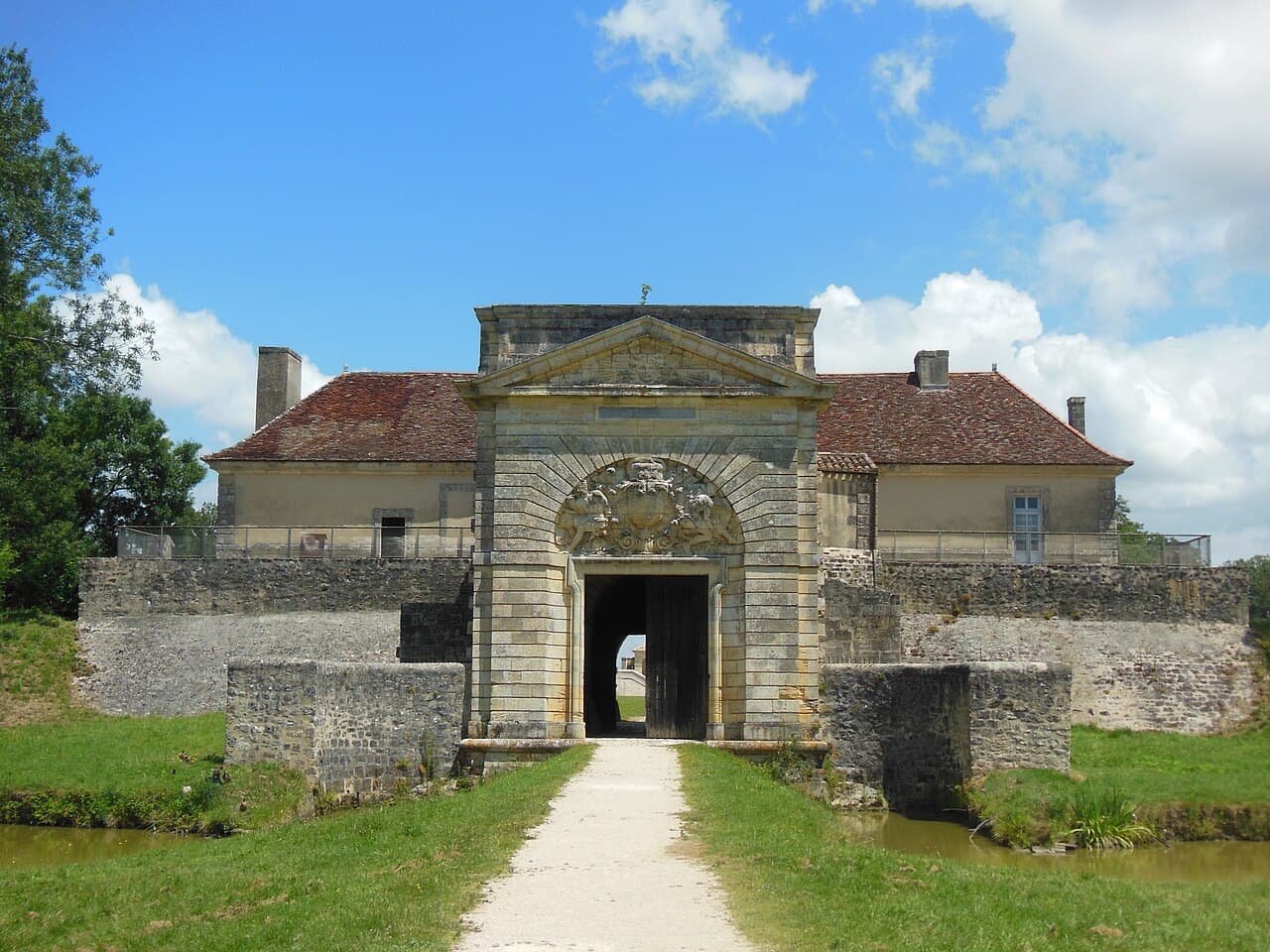
The fort's square-shaped plan with bastions at each corner allowed for overlapping fields of fire, a hallmark of Vauban's fortification principles. The bastions provided platforms for artillery batteries aimed primarily at controlling river traffic and defending against land assaults. The Porte Royale, the main gate on the western side, was heavily fortified and adorned with elaborate sculptural decorations by Pierre Berquin, including a pediment bearing the effigy of the Sun King Louis XIV, royal shields, and symbolic figures representing the king's power and divine right.
Moats and water defenses
Fort Médoc's moats were integral to its defense, with a main moat capable of being flooded by estuarine water via sluices, creating a formidable barrier against attackers. Beyond this was a covered way allowing defenders to move safely around the perimeter and an outer moat forming a demi-lune, enhancing the fort's isolation. The fort's position on a narrow strip of land surrounded by water further emphasized its island-like defensive character.
Internal structures and facilities
Inside the fort, two parallel barracks housed soldiers in multiple rooms, designed to accommodate up to 300 men, though this capacity was rarely reached. The barracks have suffered damage over time but remain a key feature of the site. Other essential buildings included a chapel (partially reconstructed in 1994), a bakery with two ovens capable of producing 400 daily rations, a powder magazine with thick walls and vaulted ceilings to safely store gunpowder, and quarters for the military surgeon.
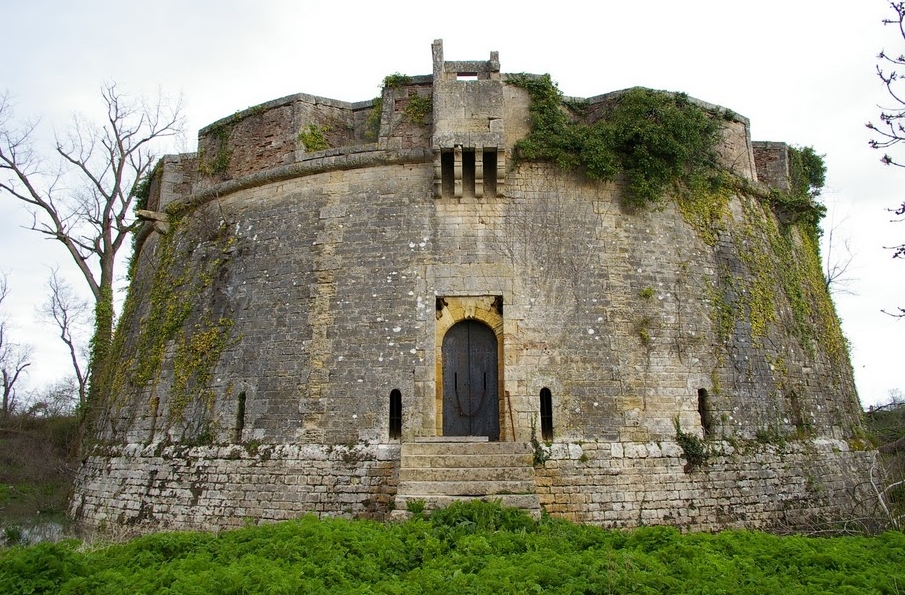
The Corps de garde de la Mer, a raised guardhouse overlooking the estuary, served as a lookout and defensive position, featuring firing slits and arched openings. A nearby postern gate allowed discreet communication with the riverbank, closed except in times of conflict.
Historical context and military role
Fort Médoc was commissioned during the reign of King Louis XIV as part of a broader strategy to secure France's southwestern frontier and protect Bordeaux, a key commercial and naval hub. Designed under Vauban's supervision with architect Pierre Duplessy-Michel and engineer Ferry, the fort exemplifies the Renaissance military engineering principles adapted to the challenges of marshy terrain.
Despite its strategic importance, Fort Médoc never saw active combat. By 1716, it was armed with thirteen cannons firing 6- and 8-pound shot, but its military significance declined over the 18th century. By the time of the French Revolution in 1789, the garrison was minimal, mostly disabled veterans with only three old cannons. The fort was maintained sporadically, with artillery upgrades around the turn of the 20th century reflecting changing military technology after the Franco-Prussian War.
The fort was officially decommissioned by the military in 1916 and transferred to the municipality of Cussac in 1930. Since then, efforts have focused on preservation and restoration, including the reconstruction of the chapel and bakery, and conservation of soldiers' graffiti in the guardhouse, which provide tangible links to its past.
Preservation and UNESCO recognition
Fort Médoc's architectural and historical significance was recognized with its classification as a historic monument in 1956 and its inscription as a UNESCO World Heritage Site in 2008 as part of the "Fortifications of Vauban" group. This designation includes the Citadel of Blaye and Fort Paté, highlighting Vauban's comprehensive defensive network guarding the Gironde estuary and Bordeaux.
Today, the site covers approximately 25 hectares and features a combination of well-preserved and partially restored structures. Modern conservation efforts are led by local associations dedicated to maintaining the fort's legacy and promoting public understanding of Vauban's military architecture.
Architectural innovations and adaptations
Building on marshy, unstable ground required innovative solutions. The fort avoided subterranean vaults, instead relying on thick, earth-covered walls and robust above-ground buildings to withstand artillery fire and environmental challenges. The integration of water management systems, including sluices and moats, demonstrated advanced hydraulic engineering to maintain defensive water barriers.
The fort's design reflects Vauban's principles of maximizing defensive firepower while minimizing blind spots and vulnerabilities. The bastions allowed enfilading fire along the curtain walls, and the covered way provided protected movement for troops. The use of symbolic royal iconography on the gate reinforced the fort's role as a manifestation of royal authority and military might.
Visitor experience and cultural significance
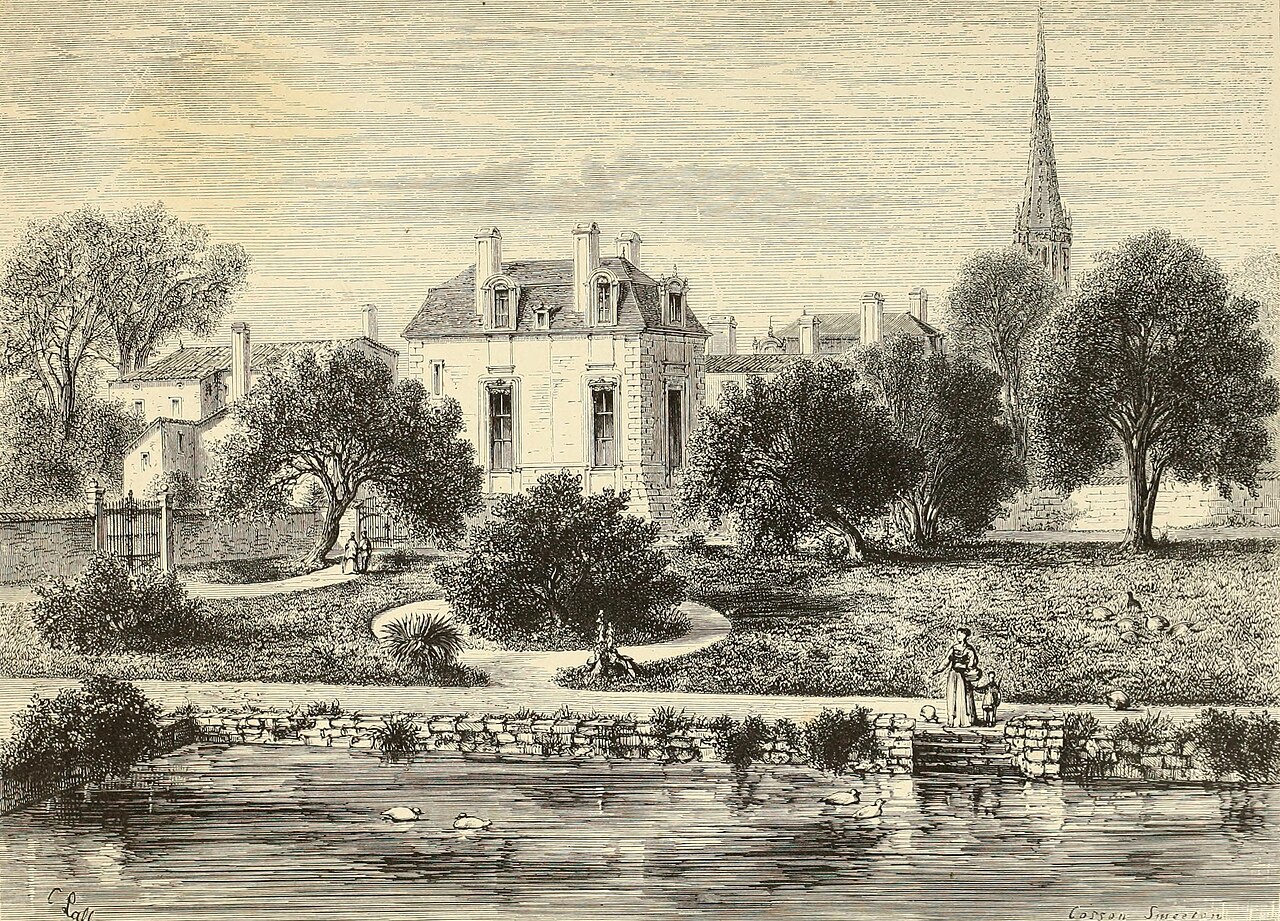
Visitors to Fort Médoc can explore the extensive fortifications, including the bastions, moats, and the richly decorated Porte Royale. The partially reconstructed chapel and bakery offer insights into the daily lives of soldiers stationed at the fort. The site also preserves historical graffiti, adding a personal dimension to the military history.
Fort Médoc remains a key heritage site illustrating the evolution of military architecture in the late Renaissance and the strategic defense of France's borders. Its inclusion in the UNESCO listing underscores its importance within the broader context of Vauban's fortification system, which shaped European military engineering for centuries.
Frequently asked questions (FAQ)
- How do I get to Fort Médoc?
- Fort Médoc is located in Cussac-Fort-Médoc, France, and is easily accessible by car. You can reach it via the D2 road, and there is parking available nearby for visitors. Public transportation options include taking a train to nearby towns and then a short taxi ride to the fort.
- What is the historical significance of Fort Médoc?
- Fort Médoc, built in the 17th century, is an impressive example of military architecture designed to protect the entrance to the Gironde estuary. It played a crucial role during various conflicts, including the Napoleonic Wars, and is now recognized as a historic monument. The fort's strategic location and design reflect the military innovations of its time.
- When was Fort Médoc constructed?
- Construction of Fort Médoc began in 1691 and was completed in 1699. It was part of a defensive system designed by Vauban, a renowned military engineer, to protect the French coastline. The fort has since undergone various renovations but retains much of its original structure.
- Can I visit Fort Médoc with children?
- Yes, Fort Médoc is a family-friendly destination with plenty of space for children to explore. Guided tours and educational activities are available to engage younger visitors and help them learn about the history of the fort. Make sure to supervise children near the fort's walls and staircases for their safety.
- Why is Fort Médoc a popular tourist attraction?
- Fort Médoc attracts visitors for its historical significance, stunning architecture, and beautiful views of the Gironde estuary. The fort's rich history and well-preserved structure provide a fascinating glimpse into 17th-century military life. Additionally, its picturesque surroundings make it a perfect spot for photography and leisurely walks.
- Is it possible to enter the fort without a guided tour?
- Yes, visitors can explore Fort Médoc on their own during opening hours. However, guided tours are highly recommended as they provide deeper insights into the fort's history and architecture. Self-guided visitors can still enjoy the scenic views and informative displays available throughout the site.
- What are the opening hours for Fort Médoc?
- Fort Médoc typically opens to visitors from April to October, with hours varying by season. During peak tourist months, the fort is usually open from 10 AM to 6 PM. It’s advisable to check the official website for specific opening hours and any seasonal changes before planning your visit.
- What are the ticket prices for visiting Fort Médoc?
- Ticket prices for Fort Médoc are generally affordable, with discounts available for children, students, and seniors. Admission fees help support the maintenance and preservation of the fort. Check the official website for the most current pricing and any special events that may offer reduced rates.
- What are some nearby attractions to Fort Médoc?
- In addition to Fort Médoc, visitors can explore the beautiful vineyards of the Médoc region and enjoy wine tasting tours. The nearby city of Bordeaux is also a must-visit, offering a rich array of cultural attractions, shopping, and dining. The scenic landscapes around the fort are perfect for outdoor activities such as hiking and cycling.
Photo gallery

Information
Website
Visit websiteSources & official resources
Verify the information above using these authoritative references.
Loading map...
Visitor reviews
No reviews yet. Been here? Write the first review and help other travelers!
Write the first reviewVisited this castle? Share your experience
Your review helps other travelers and adds first-hand knowledge to our encyclopedia.