Fort Oranje (Sint Eustatius)
Fort Oranje is a significant bastioned fortress situated in Oranjestad, the capital of Sint Eustatius in the Dutch Caribbean. Perched on a cliff overlooking Oranje Bay, the fort commands a strategic position that was crucial for controlling maritime access and protecting the island during the colonial era. Named after the House of Oranje, the royal family of the Netherlands, Fort Oranje reflects the military and colonial ambitions of the Dutch in the Caribbean during the 17th century.
Early construction and strategic importance
The original fortification on the site was constructed by the French in 1629, but it was the Dutch West India Company that established the current fort in 1636. This development marked the beginning of the fort’s role as a key defensive structure in the region. Fort Oranje was designed to protect the valuable harbor and the island’s thriving trade, which included commodities such as sugar, tobacco, and enslaved people, reflecting the complex and often harsh realities of colonial commerce.
Architectural features and renovations
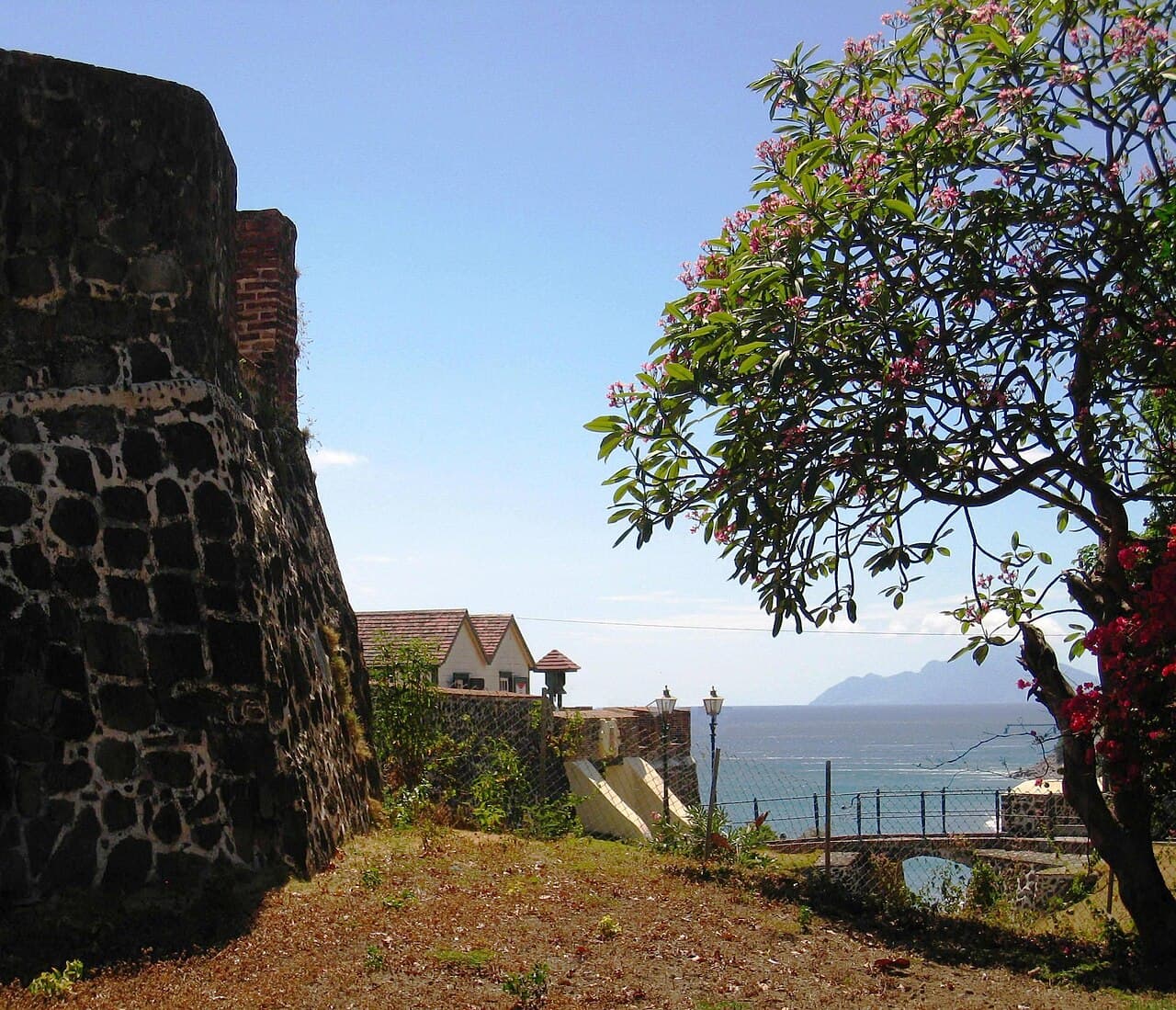
Fort Oranje exemplifies the Renaissance military architecture style adapted for tropical environments, characterized by its bastioned design. This design includes angled bastions that allowed defenders to cover all approaches with overlapping fields of fire, a common feature in European fortifications of the period. The fort’s walls are constructed from local stone and coral, materials chosen for their availability and durability in the Caribbean climate.
Over the 17th and 18th centuries, Fort Oranje underwent several renovations and rebuilds to enhance its defenses and accommodate changing military technologies. These modifications included strengthening the curtain walls, updating the bastions, and improving the gun emplacements. Despite these updates, the fort maintained its original layout and strategic purpose throughout its active use.
Historical context and changes of control
The island of Sint Eustatius and Fort Oranje changed hands multiple times between the Dutch, English, and French colonial powers. These shifts reflect the broader geopolitical struggles in the Caribbean during the colonial period. Fort Oranje was a focal point during several military engagements, including attacks and sieges, as control of the island was crucial for dominance over regional trade routes.
One notable event was the British capture of Sint Eustatius in 1781 during the Fourth Anglo-Dutch War, which temporarily ended Dutch control of the fort. The British occupation was marked by the seizure of valuable goods and the disruption of Dutch trade networks. After the war, the fort returned to Dutch hands but gradually lost military significance as colonial conflicts evolved and new military technologies emerged.
Current status and cultural significance
Today, Fort Oranje stands as a well-preserved historical monument and is one of the protected heritage sites in Sint Eustatius. The fort is accessible to visitors who can explore its bastions, walls, and the surrounding area to gain insight into the island’s colonial past and military architecture. Its location on a cliff offers panoramic views of Oranje Bay and the Caribbean Sea.
The fort is an important symbol of the island’s complex history involving European colonial powers, trade, and cultural exchanges. Preservation efforts have focused on maintaining the fort’s structural integrity and promoting its educational value for both locals and tourists. Fort Oranje contributes to the understanding of the Caribbean’s colonial heritage and the role of military architecture in shaping the region’s history.
Photo gallery

Information
Loading map...
Visitor reviews
No reviews yet. Been here? Write the first review and help other travelers!
Write the first reviewVisited this castle? Share your experience
Your review helps other travelers and adds first-hand knowledge to our encyclopedia.