Fort Amsterdam (Sint Maarten)
Fort Amsterdam is a prominent 17th-century bastioned fortress located on the island of Saint Martin, within the Dutch territory of Sint Maarten. Situated near the town of Philipsburg, the fort was constructed during the Renaissance period as part of the island's strategic defense system against European rivals and piracy in the Caribbean.
Historical background and strategic importance
The fort was built by the Dutch West India Company shortly after they took control of the southern part of the island in the early 1600s. Its primary purpose was to protect the harbor of Philipsburg, which served as a vital port for trade and naval operations. Fort Amsterdam played a key role in the colonial conflicts between the Dutch, Spanish, French, and English powers that contested the Caribbean throughout the 17th and 18th centuries.
Throughout its history, the fort witnessed several military engagements and changes in control, reflecting the turbulent geopolitical landscape of the Caribbean. Its location on a hill overlooking Great Bay allowed defenders to monitor approaching ships and control access to the harbor, making it a critical military installation for the Dutch colonial administration.
Architectural features and design
Fort Amsterdam exemplifies Renaissance military architecture adapted to the Caribbean environment. Its design follows the principles of a bastioned fortress, characterized by angular bastions projecting from the main walls to provide overlapping fields of fire against attackers. This design allowed defenders to cover all approaches with cannon and musket fire, minimizing blind spots.
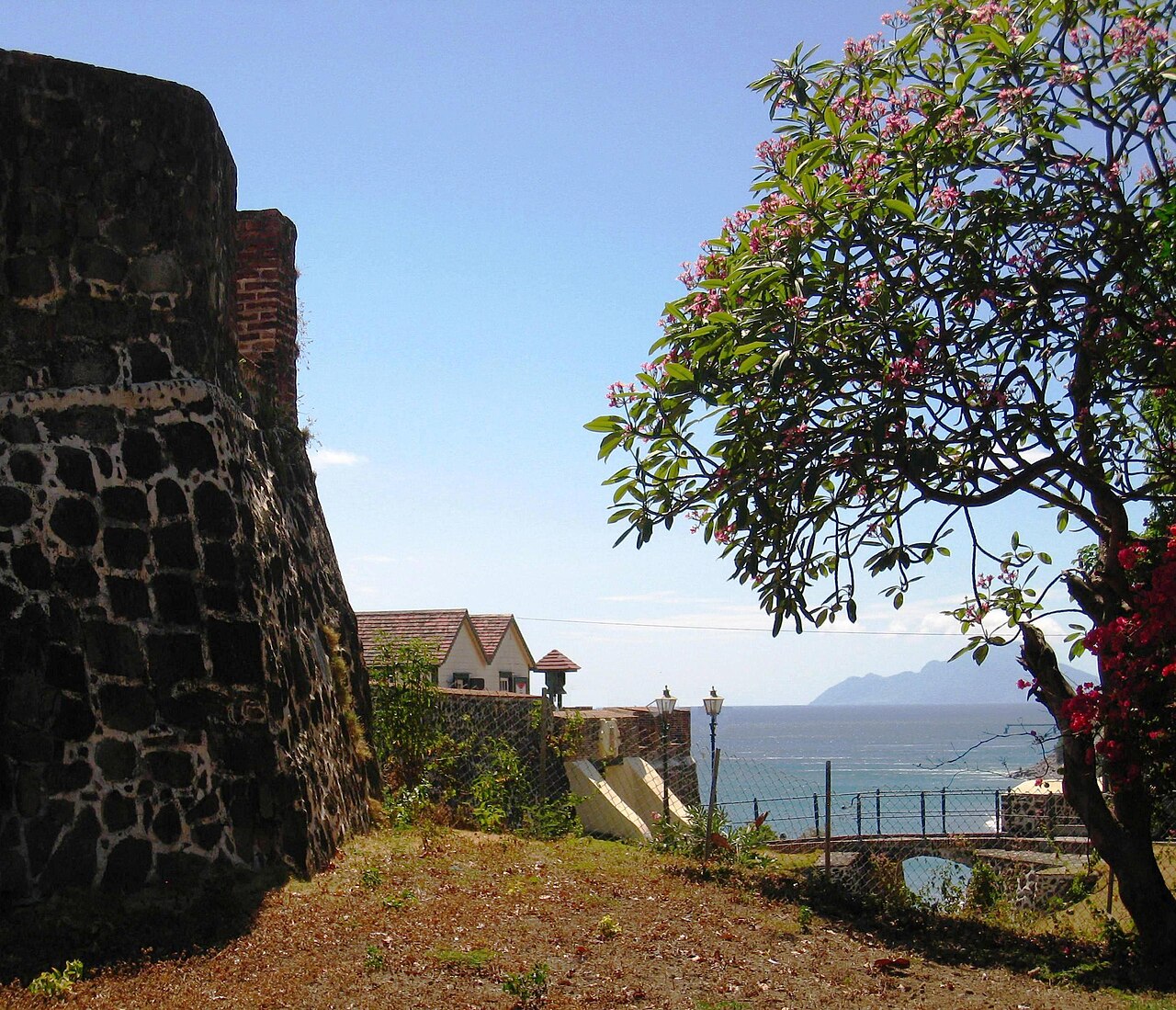
The fort's walls were constructed from locally sourced coral stone and lime mortar, materials chosen for their durability and resistance to the tropical climate. The bastions are connected by curtain walls enclosing a roughly triangular or star-shaped layout, typical of bastioned forts of the period. The fort included features such as embrasures for artillery, a central courtyard, barracks, a powder magazine, and cisterns for water storage.
Despite centuries of exposure to weather and conflict, significant portions of the fort's walls and bastions remain intact, offering valuable insights into 17th-century fortification techniques in the Caribbean.
Role in regional defense and colonial history
Fort Amsterdam was central to the defense of the Dutch colony against foreign invasions and pirate attacks. Its artillery batteries guarded the entrance to Great Bay, deterring enemy ships from approaching Philipsburg. The fort was part of a network of fortifications on the island, including Fort Willem and Fort Louis, which together formed a defensive system controlling the strategic waterways.
During the colonial era, the fort witnessed multiple sieges and skirmishes, reflecting the ongoing struggle for control over the island. The fort's military significance declined in the 19th century as naval technology and political circumstances evolved, leading to its eventual abandonment as an active military post.
Preservation and current status
Today, Fort Amsterdam stands as a partially preserved historical monument and tourist attraction. Restoration efforts have aimed to stabilize the remaining structures and interpret the site for visitors interested in the island's colonial past. The fort offers panoramic views of Philipsburg and Great Bay, making it a popular destination for history enthusiasts and photographers.
Visitors can explore the surviving bastions, walls, and interior spaces, gaining a tangible connection to the island's complex history of European colonization and Caribbean maritime defense.
Visiting Fort Amsterdam
The fort is accessible to the public, with pathways leading through the ruins and informational signage explaining its historical context. Its location near Philipsburg allows easy access from the town center, and its elevated position provides excellent vantage points for sightseeing and photography.
Fort Amsterdam remains an important cultural heritage site that illustrates the military architecture and colonial dynamics of the Caribbean during the Renaissance period. Its enduring presence enriches the historical landscape of Sint Maarten and offers insight into the island's strategic role in European imperial competition.
Photo gallery

Information
Loading map...
Visitor reviews
No reviews yet. Been here? Write the first review and help other travelers!
Write the first reviewVisited this castle? Share your experience
Your review helps other travelers and adds first-hand knowledge to our encyclopedia.