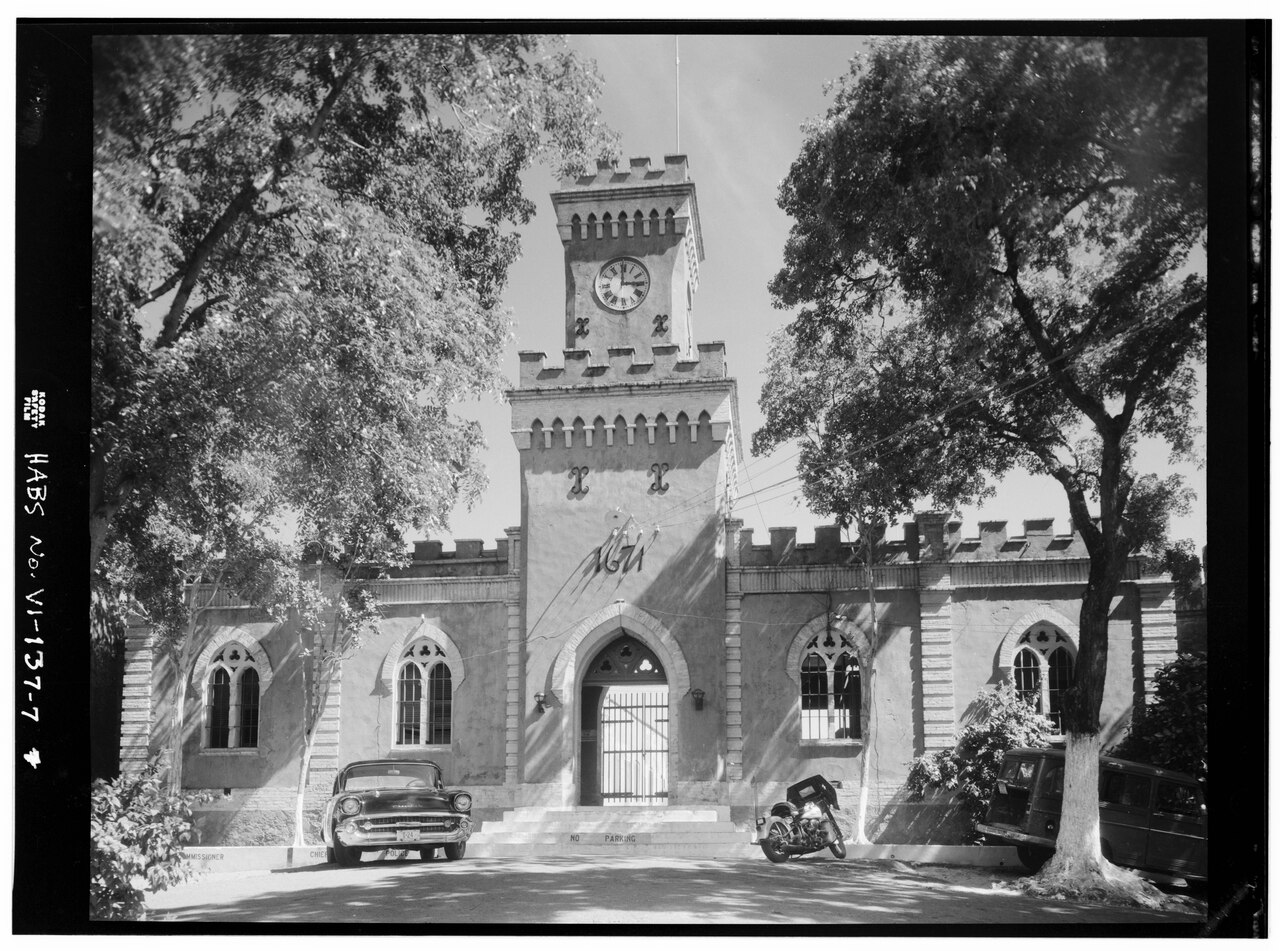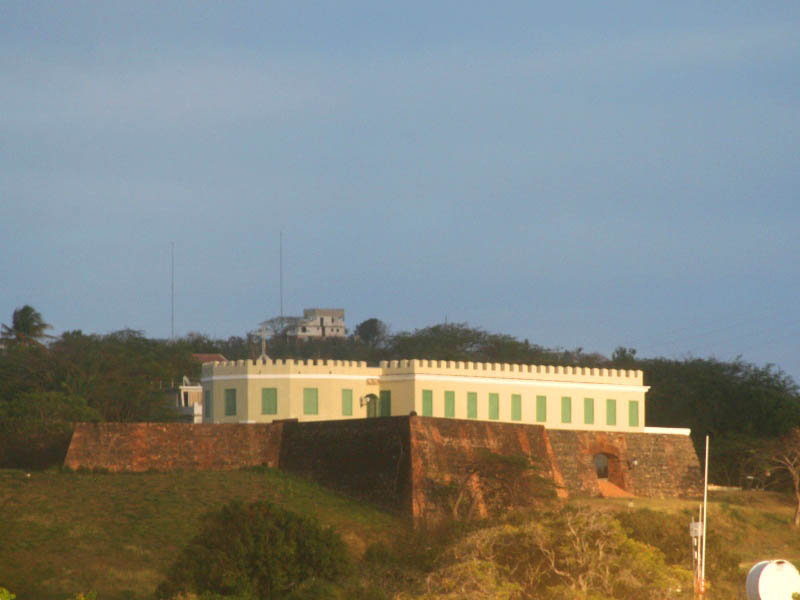
Fort Frederik
Fort Frederik, also known as Frederiksfort, is a prominent bastioned fortress located in Frederiksted on the island of St. Croix, part of the United States Virgin Islands. Constructed between 1752 and 1760 by the Denmark-Norway colonial administration, the fort was built to protect the valuable deep-water port of Frederiksted and safeguard the economic interests of the colony. Its strategic location at the north end of Frederiksted allowed it to command the harbor and defend against threats such as piracy and unauthorized shipping activities.
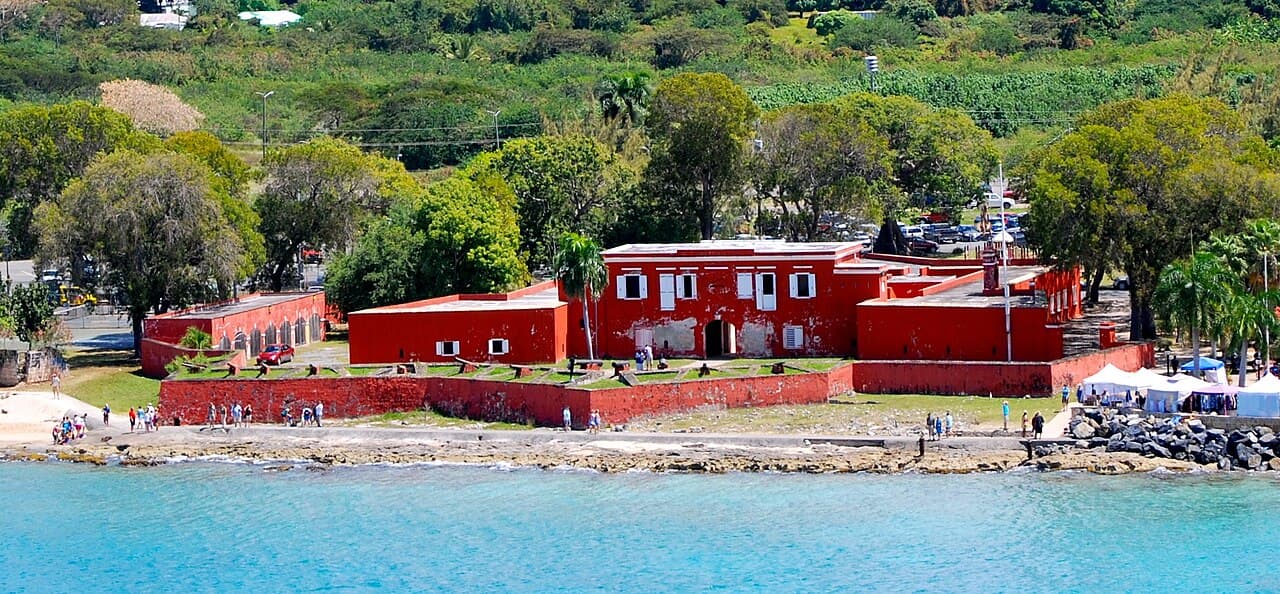
The fort's distinctive red and white painted walls set it apart visually from other nearby fortifications, such as Fort Christiansværn, which features yellow and white walls. This color scheme not only enhanced its visibility but also symbolized its military function and colonial authority. The fort's design embodies the principles of post-Renaissance bastioned fortifications, featuring angled bastions that allowed for overlapping fields of fire, maximizing defensive coverage against naval and land attacks.
Architectural features and military design
Fort Frederik is a classic example of an 18th-century bastioned fortress, a style that evolved to counter the increasing power of artillery. Its thick masonry walls and angular bastions were engineered to deflect cannonballs and provide secure firing positions for the fort's own artillery. The fort includes several bastions connected by curtain walls, enclosing a central courtyard that housed barracks, powder magazines, and other military facilities.
The fort's placement at the harbor entrance enabled it to serve as a water battery, controlling the anchorage and ensuring that ships entering the port complied with customs regulations. As noted by historian Westergaard, the absence of such a battery had previously allowed ships to evade customs duties by slipping away under cover of darkness. The fort's cannons were positioned to command the roads where ships anchored, effectively enforcing Danish-Norwegian maritime law.
Historical significance and key events
Early colonial defense and maritime control
During its early years, Fort Frederik played a critical role in securing the Danish colonial foothold in the Caribbean. Its construction reflected the broader European competition for control of lucrative trade routes and colonial possessions in the region. The fort's presence deterred pirate attacks and unauthorized trading, thereby protecting the economic interests tied to the port of Frederiksted.
The first salute to the united states
In a notable historical moment, Fort Frederik fired the first salute from foreign soil to the newly independent United States of America in 1776. This salute honored the raising of the American flag on an American brigantine docked in Frederiksted's port. Although this act technically violated Denmark-Norway's neutrality laws during the American Revolutionary War, it reflected the islands' sympathetic stance toward the American colonists and helped cement friendly relations between the two territories.
Emancipation proclamation and social impact
Perhaps the most significant event associated with Fort Frederik is its connection to the emancipation of slaves in the Danish West Indies. On 3 July 1848, Danish Governor-General Peter von Scholten proclaimed the emancipation of all slaves from the fort's walls. This proclamation came after a massive freedom march led by John Gottliff (also known as Moses Gotlieb, General Bordeaux, or Buddhoe), who rallied approximately 8,000 enslaved and free black inhabitants to march on Frederiksted demanding freedom.
At the time, the island of St. Croix had an estimated 17,000 slaves and 5,000 free blacks. The emancipation proclamation issued from Fort Frederik marked a pivotal moment in the island's social history, ending centuries of slavery and altering the demographic and economic landscape of the colony.
Modern use and cultural heritage
Today, Fort Frederik functions as a museum and art gallery, preserving and showcasing the rich history of the fortress and the island. Visitors can explore exhibits related to the fort's military past, colonial history, and the emancipation movement. The fort is open to the public on weekdays from 8:30 am to 4:00 pm and on Saturdays from 1:00 pm to 4:00 pm. Admission fees have increased from $3 in 2015 to $10 in 2026, reflecting its status as a significant cultural attraction.
The fort is part of the Frederiksted Historic District and was individually listed on the National Register of Historic Places in 1996. It gained further recognition as a U.S. National Historic Landmark in 1997, underscoring its importance as a site of historical and architectural value.
Surrounding landmarks and community role
Fort Frederik overlooks the Eliza James-McBean Clock Tower and Emancipation Park, a public town park that commemorates the legacy of the 1848 emancipation proclamation and honors key figures in Virgin Islands history. The park features statues of important local leaders, including General Buddhoe, and is shaded by large mahogany trees and fragrant flowers. It serves as a community gathering place with benches, a gazebo, and hosts events such as the monthly "Jazz in the Park" concerts.
This integration of the fort with the surrounding cultural landscape highlights its continuing role as a symbol of freedom and heritage for the people of the United States Virgin Islands.
Visiting information and practical details
- Location: North end of Frederiksted, St. Croix, near the junction of Mahogany Road and VI 631.
- Opening hours: Weekdays 8:30 am - 4:00 pm; Saturdays 1:00 pm - 4:00 pm.
- Admission: $10 (2026).
- Facilities: Museum, art gallery, park access.
- Accessibility: The site is accessible to visitors interested in colonial history, military architecture, and African-American heritage.
Frequently asked questions (FAQ)
- How do I get to Fort Frederik?
- Fort Frederik is located in Christiansted, U.S. Virgin Islands. Visitors can reach the castle by car or taxi, and there are public transportation options available from various parts of the island. The site is well-signposted, making it easy to find.
- What is the historical significance of Fort Frederik?
- Fort Frederik was built in the 18th century to protect the Danish West India Company’s interests in the Caribbean. It played a crucial role during various conflicts and served as a military fortification, reflecting the colonial history of the region. Today, it stands as a testament to the architectural and historical heritage of the U.S. Virgin Islands.
- When was Fort Frederik constructed?
- Construction of Fort Frederik began in 1755 and continued over several decades, with significant modifications made throughout the 19th century. The fort was officially completed in 1760 and has since undergone restoration to preserve its historical integrity. Its enduring presence makes it a key landmark in the area.
- Can I enter Fort Frederik?
- Yes, visitors can enter Fort Frederik and explore its historic grounds. The site offers guided tours that provide insights into its history and architecture, making it an engaging experience for all ages. Be sure to check for any special events or programs that may enhance your visit.
- Why is Fort Frederik an architectural highlight?
- Fort Frederik showcases a mix of colonial military architecture, characterized by its sturdy stone walls and strategic design. The fort’s layout and construction techniques reflect the European influence and adaptation to the Caribbean environment. Its preservation allows visitors to appreciate the craftsmanship of the time.
- Is it possible to access Fort Frederik with a wheelchair?
- Fort Frederik is committed to accessibility, with efforts made to accommodate visitors with mobility challenges. While some areas may present difficulties due to uneven terrain, staff is available to assist where possible. It's advisable to contact the site ahead of your visit for specific accessibility information.
- What are the opening hours for Fort Frederik?
- Fort Frederik is typically open to visitors from 9 AM to 5 PM, Monday through Saturday. On Sundays, it may have reduced hours or be closed, so it's best to check the official website for the most up-to-date information. Planning your visit during these hours will ensure you have ample time to explore.
- What are the ticket prices for Fort Frederik?
- Admission to Fort Frederik is generally affordable, with discounted rates available for children, seniors, and groups. Tickets can be purchased at the entrance or online through the official website. Keeping an eye on special promotions or events can also provide opportunities for free admission.
- When is the best time to visit Fort Frederik?
- The best time to visit Fort Frederik is during the dry season, from December to April, when the weather is more pleasant and conducive for outdoor exploration. Additionally, visiting during weekdays can help you avoid larger crowds, allowing for a more enjoyable experience. Consider checking the local calendar for any events that might enhance your visit.
- What nearby attractions can I explore after visiting Fort Frederik?
- After visiting Fort Frederik, you can explore nearby attractions such as Christiansted National Historic Site and the beautiful beaches of the U.S. Virgin Islands. The vibrant local shops and restaurants in Christiansted also offer a chance to experience the local culture. Make sure to allocate time for these enriching experiences during your visit.
Photo gallery

Photo by This image or media was taken or created by Matt H. Wade. To see his entire portfolio, click here.@thatmattwade This image is protected by copyright! If you would like to use it, please read this first.•CC BY-SA 3.0
Information
Loading map...
Visitor reviews
No reviews yet. Been here? Write the first review and help other travelers!
Write the first reviewVisited this castle? Share your experience
Your review helps other travelers and adds first-hand knowledge to our encyclopedia.