Fort Nelson, Portsmouth
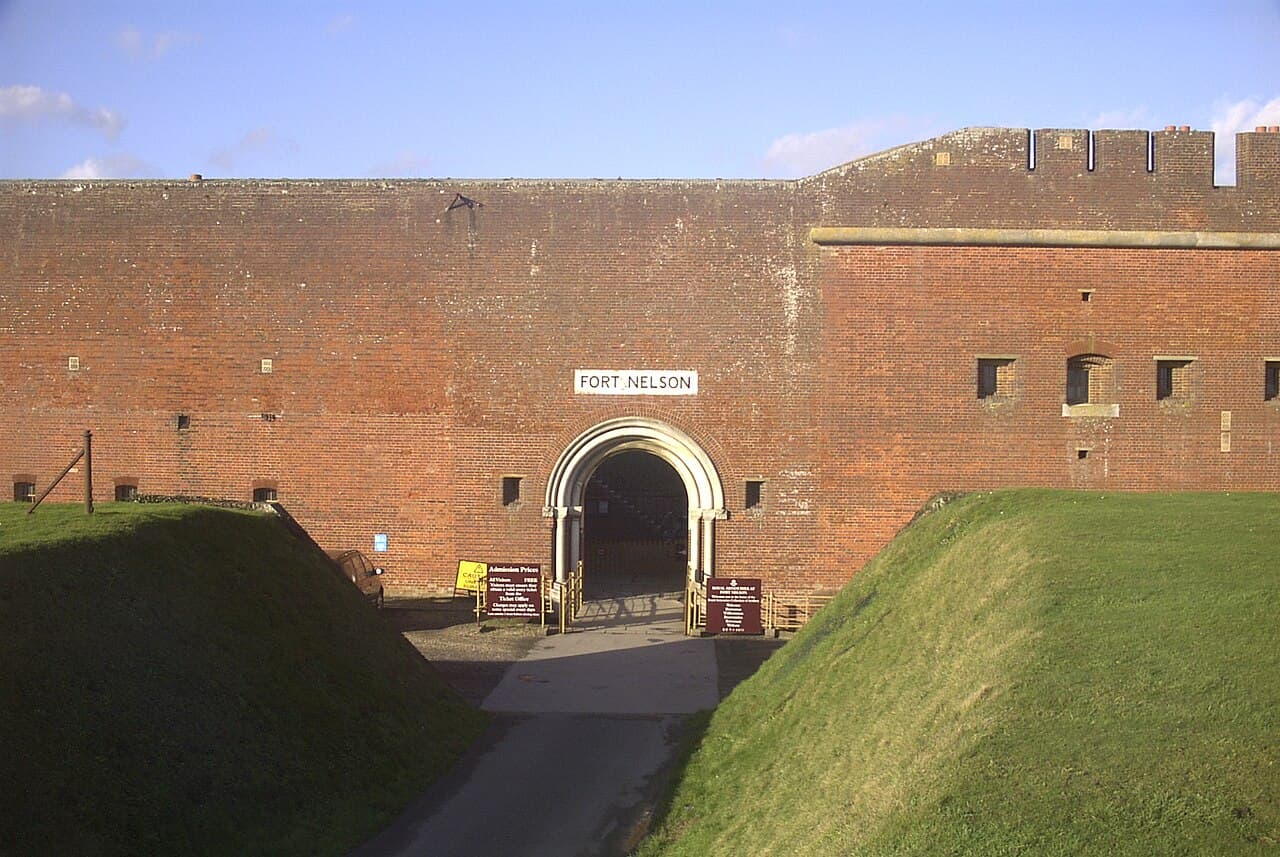
Fort Nelson is a prominent bastioned fortress located on Portsdown Hill overlooking the strategic naval base of Portsmouth in Hampshire, England. Constructed in the 19th century as part of a series of five forts, Fort Nelson was designed to protect Portsmouth from potential landward attacks during a period of heightened military tension in the Victorian era. Today, it stands as a Grade I Listed Building and serves as a museum under the care of the Royal Armouries, housing an extensive collection of artillery and arms.
Historical context and strategic importance
In the mid-19th century, concerns over the threat of invasion, particularly from France under Napoleon III, led to the construction of the so-called "Palmerston Forts" around key naval installations. Fort Nelson was one of these defensive works, built between 1860 and 1871 as part of the comprehensive fortification of the Portsmouth area. These forts were established on Portsdown Hill, a commanding ridge that provided a vantage point over the city and the naval dockyards, enabling defenders to repel any advancing forces.
The fortifications were intended to supplement the existing sea defenses by guarding against attacks from the land, which had become a concern due to advances in artillery technology and changing military tactics. Fort Nelson's position allowed it to control key approaches and provide overlapping fields of fire with neighboring forts.
Architectural design and features
Fort Nelson exemplifies the bastioned fortress design typical of the Victorian period, incorporating angled bastions that allowed defenders to cover all approaches with gunfire, minimizing blind spots. The fort's layout is polygonal, with robust earthworks and stone and brick ramparts designed to absorb and deflect artillery fire.
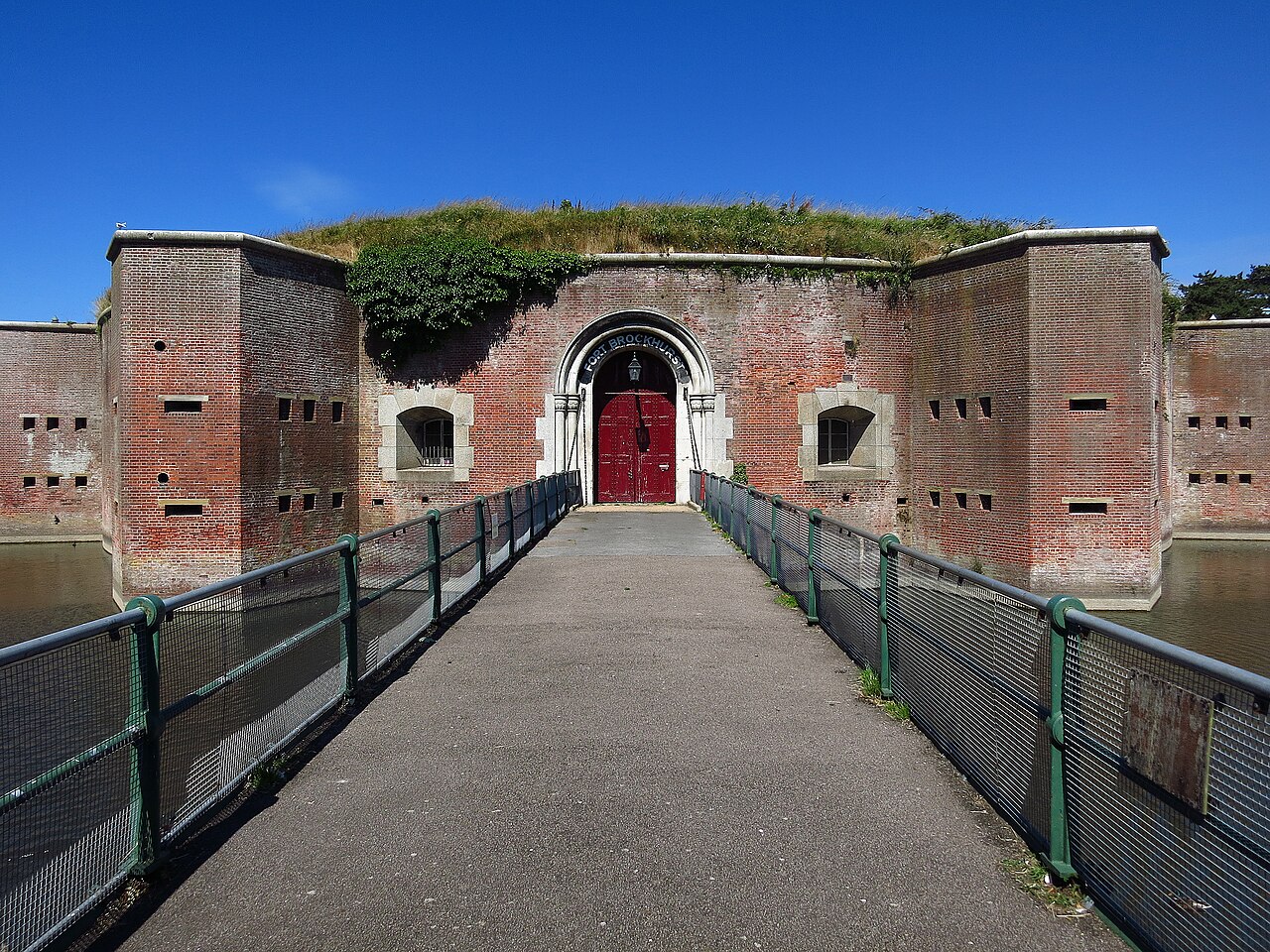
The fort originally housed heavy artillery pieces mounted on the ramparts, including rifled muzzle-loading and later breech-loading guns. Its defensive structures include a dry moat, caponiers for flanking fire, and a well-protected entrance gateway. The design reflects advances in military engineering responding to the increased power and range of contemporary artillery.
Internally, the fort contained barracks, magazines, and support buildings arranged around a central parade ground. The barracks were built to accommodate the garrison, with provisions for storage and ammunition handling carefully designed to reduce the risk of accidental explosions.
Role and evolution through history
Although Fort Nelson never saw active combat, it played a significant role as a deterrent and as part of Portsmouth’s defensive network. The fort was maintained and updated through the late 19th and early 20th centuries, adapting to new artillery technologies and military doctrines.
During both World Wars, Fort Nelson was used for training and storage rather than frontline defense. After World War II, the fort's military role diminished, and it eventually transitioned to a heritage site.
The Royal Armouries and museum function
Since the late 20th century, Fort Nelson has been managed by the Royal Armouries, the United Kingdom's national museum of arms and armour. The fort now houses the national collection of artillery, featuring a wide range of guns from various periods, including cannon, howitzers, and anti-aircraft weapons.
The museum offers visitors insight into the development of artillery technology and military history. Exhibits include interactive displays, restored guns, and educational programs. The fort's preserved architecture provides an authentic setting to explore Victorian military engineering.
Preservation and public access
Fort Nelson is a Grade I Listed Building, recognizing its architectural and historical significance. Conservation efforts have maintained the fort's structural integrity and historic features, allowing it to serve as both a museum and an educational resource.
The site is open to the public with regular visiting hours, offering guided tours and special events. Its location on Portsdown Hill provides panoramic views of Portsmouth and the Solent, enhancing the visitor experience.
Frequently asked questions (FAQ)
- What is the historical significance of Fort Nelson?
- Fort Nelson, built in the 19th century, played a crucial role in defending Portsmouth against potential naval attacks. It is part of the Palmerston Forts, which were constructed to protect Britain’s naval base during a time of heightened tensions. Today, it houses the Royal Armouries collection, showcasing significant military artifacts.
- When was Fort Nelson built?
- Construction of Fort Nelson began in 1860 and was completed in 1871. It was designed to be a modern fortification to counter the threat of invasion during a period of military reform in the United Kingdom. The fort features impressive Victorian architecture, reflecting the military engineering of its time.
- What are the opening hours of Fort Nelson?
- Fort Nelson is typically open from 10:00 AM to 5:00 PM, with extended hours during peak tourist seasons. It is advisable to check the official website for any changes in opening times, especially around holidays or special events. Planning your visit around these hours ensures you have ample time to explore the fort.
- Can I access Fort Nelson with a wheelchair?
- Yes, Fort Nelson is committed to accessibility and has facilities in place for wheelchair users. Most of the fort is accessible, including exhibitions and the main areas. However, some historical features may have limited access due to their age and design.
- What ticket prices can I expect to pay for Fort Nelson?
- Admission to Fort Nelson is generally free, making it an accessible attraction for all visitors. However, special events or guided tours may have associated costs, so it's best to check the website for the latest information on any fees. Donations are appreciated to help maintain the fort and its collections.
- When is the best time to visit Fort Nelson?
- The best time to visit Fort Nelson is during the spring and summer months when the weather is pleasant and the gardens are in bloom. Additionally, many events and activities are scheduled during this time, providing a richer experience. Visiting during weekdays can also help you avoid larger crowds.
- Are there any nearby attractions to visit along with Fort Nelson?
- Yes, Fort Nelson is conveniently located near several attractions in Portsmouth, including the historic dockyard and the Mary Rose Museum. For those interested in maritime history, the Spinnaker Tower is also within reach, offering stunning views of the area. Combining these visits can create a full day of exploration.
Photo gallery

Information
Loading map...
Visitor reviews
No reviews yet. Been here? Write the first review and help other travelers!
Write the first reviewVisited this castle? Share your experience
Your review helps other travelers and adds first-hand knowledge to our encyclopedia.