Fort Brockhurst
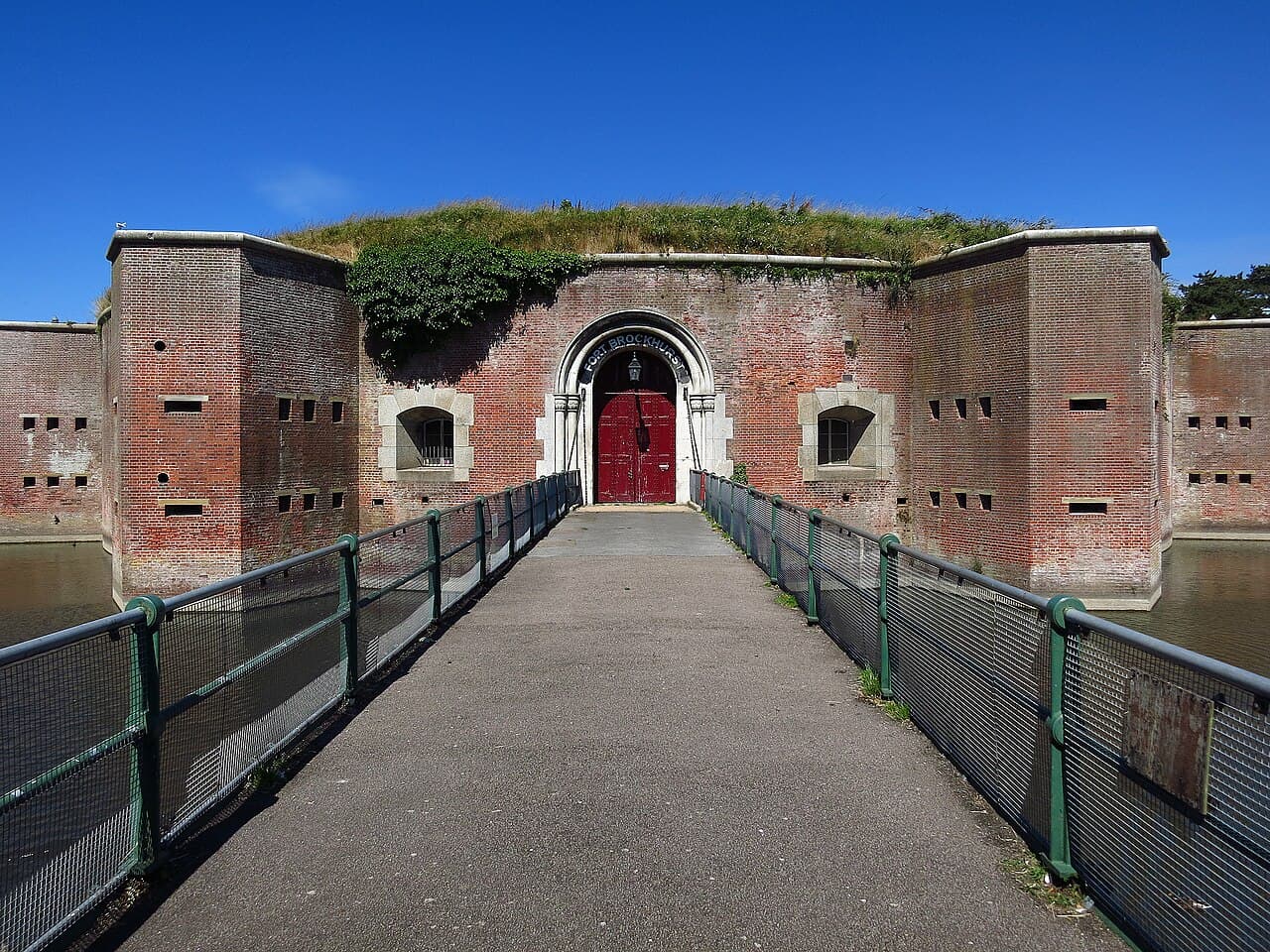
Fort Brockhurst is a significant example of a 19th-century bastioned fortress located in Gosport, England. As one of the Palmerston Forts, it was constructed in response to fears of a French invasion during the mid-19th century. The fort is a scheduled monument and currently managed by English Heritage, reflecting its importance in British military history and heritage conservation.
Historical context and purpose
Fort Brockhurst was built as part of the wider defensive strategy initiated by Prime Minister Lord Palmerston in the 1850s and 1860s. The Palmerston Forts were designed to protect the naval dockyards at Portsmouth and the surrounding areas from potential French attacks. The construction of Fort Brockhurst began in the early 1860s, with the fort completed by the late 1860s, firmly placing it in the Modern period of fortifications.
The fort's primary role was to serve as a landward defense to protect the approaches to Gosport and the critical naval facilities nearby. It formed part of a ring of forts designed to create a formidable defensive perimeter around Portsmouth Harbour.
Architectural design and features
Fort Brockhurst is classified as a bastioned fortress, a style characterized by angular bastions projecting out from the main walls, allowing defenders to cover adjacent walls with gunfire. This design was a response to advances in artillery technology and siege tactics of the 19th century.
The fort features thick masonry walls with earthen ramparts to absorb artillery fire. Its layout includes multiple bastions arranged to provide overlapping fields of fire, caponiers for flanking fire along the ditch, and a well-defended main gate. The fort also includes casemates—vaulted chambers built into the walls—used to house troops and store ammunition.
Inside, the fort contains magazines for powder storage, barracks for soldiers, and various support buildings arranged around a central parade ground. The design reflects Victorian military engineering principles aimed at maximizing defensive capabilities while accommodating the needs of a garrison.
Construction and materials
The construction of Fort Brockhurst employed brick and stone masonry combined with earthworks to create robust defensive structures. The use of earth ramparts was particularly important to absorb and deflect incoming artillery shells, a technique that became standard in fortifications of this era.
The fort's construction took place over several years in the 1860s, utilizing skilled labor and military engineers specialized in fort design. The layout was carefully planned to integrate with the surrounding landscape and other nearby forts in the defensive network.
Military use and later history
Throughout its operational life, Fort Brockhurst served as a defensive stronghold and garrison for troops tasked with protecting the Portsmouth naval base. Although it never saw active combat, its presence contributed to the deterrence strategy of the British military during the Victorian era.
In the 20th century, the fort's military importance declined with changes in warfare and technology. Eventually, it was decommissioned and transferred to civilian care. Today, it is preserved as a historic site managed by English Heritage, offering visitors insight into Victorian military architecture and coastal defense systems.
Visiting Fort Brockhurst
Fort Brockhurst is open to the public as part of the English Heritage portfolio. Visitors can explore the well-preserved bastions, ramparts, and interior buildings. The site provides educational exhibits about the Palmerston Forts and the historical context of 19th-century British coastal defenses.
The fort's location in Gosport makes it accessible for day trips from nearby Portsmouth and Southampton. Its preserved state offers a tangible connection to Britain's military past and the evolution of fortification design.
Architectural significance
Fort Brockhurst exemplifies the transition in fortification design during the Modern period, incorporating bastioned defenses adapted for the era's artillery threats. Its layout and construction techniques reflect Victorian military engineering advancements, making it an important study subject for historians and architects alike.
Preservation and status
As a scheduled monument, Fort Brockhurst is legally protected due to its historical and architectural significance. English Heritage's stewardship ensures ongoing conservation efforts and public engagement with this heritage asset.
Frequently asked questions (FAQ)
- What is the historical significance of Fort Brockhurst?
- Fort Brockhurst is a key example of Victorian military architecture, built in the mid-19th century to defend Portsmouth Harbour. It played a significant role in the UK's coastal defense strategy during its operational years, showcasing the advancements in military fortifications.
- When was Fort Brockhurst built?
- Construction of Fort Brockhurst began in 1855 and was completed in 1862. It was part of a series of coastal fortifications aimed to protect the critical naval base at Portsmouth.
- What are the opening hours for Fort Brockhurst?
- Fort Brockhurst is typically open to visitors from 10 AM to 5 PM during the summer months and may have reduced hours in the winter. It is advisable to check the official website for any seasonal changes or special events that may affect opening times.
- Can I visit Fort Brockhurst year-round?
- Yes, Fort Brockhurst is open to visitors throughout the year, although access may vary during certain holidays or maintenance periods. It's best to plan your visit in advance and check for any updates regarding accessibility.
- Is Fort Brockhurst accessible for visitors with disabilities?
- Fort Brockhurst strives to be accessible for all visitors, offering facilities for those with mobility challenges. However, some areas may have limited accessibility due to the historic nature of the site, so it is recommended to contact the venue ahead of your visit for specific details.
- What are the ticket prices for Fort Brockhurst?
- Ticket prices for Fort Brockhurst vary, with discounts available for children, seniors, and families. An adult ticket typically costs around £5, while children under a certain age may enter for free, making it an affordable outing for all.
- When is the best time to visit Fort Brockhurst?
- The best time to visit Fort Brockhurst is during the spring and summer months when the weather is pleasant and the grounds are in full bloom. Additionally, special events and guided tours are often held during these seasons, enhancing the visitor experience.
- What nearby attractions can I visit while at Fort Brockhurst?
- While visiting Fort Brockhurst, you can also explore other nearby attractions such as the Gosport Museum, the Historic Dockyard, and the beautiful coastline along Stokes Bay. These sites offer a rich historical context and beautiful scenery, making for a full day of exploration.
Photo gallery

Information
Loading map...
Visitor reviews
No reviews yet. Been here? Write the first review and help other travelers!
Write the first reviewVisited this castle? Share your experience
Your review helps other travelers and adds first-hand knowledge to our encyclopedia.