Fort Amsterdam (Ambon)
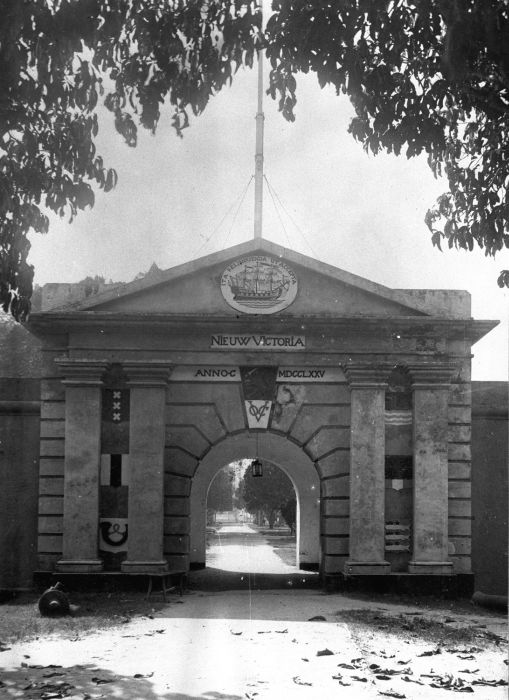
Fort Amsterdam, also historically known as Blokhuis Amsterdam, is a significant bastioned fortress located on Ambon Island in Indonesia. Constructed in the 17th century, precisely in 1637, this fortification was established by the Dutch East Indies Company (VOC) during the height of European colonial expansion in Southeast Asia. Its strategic position in the Maluku Islands was crucial for controlling the lucrative spice trade routes, particularly for cloves and nutmeg, which were highly prized commodities in Europe at the time.
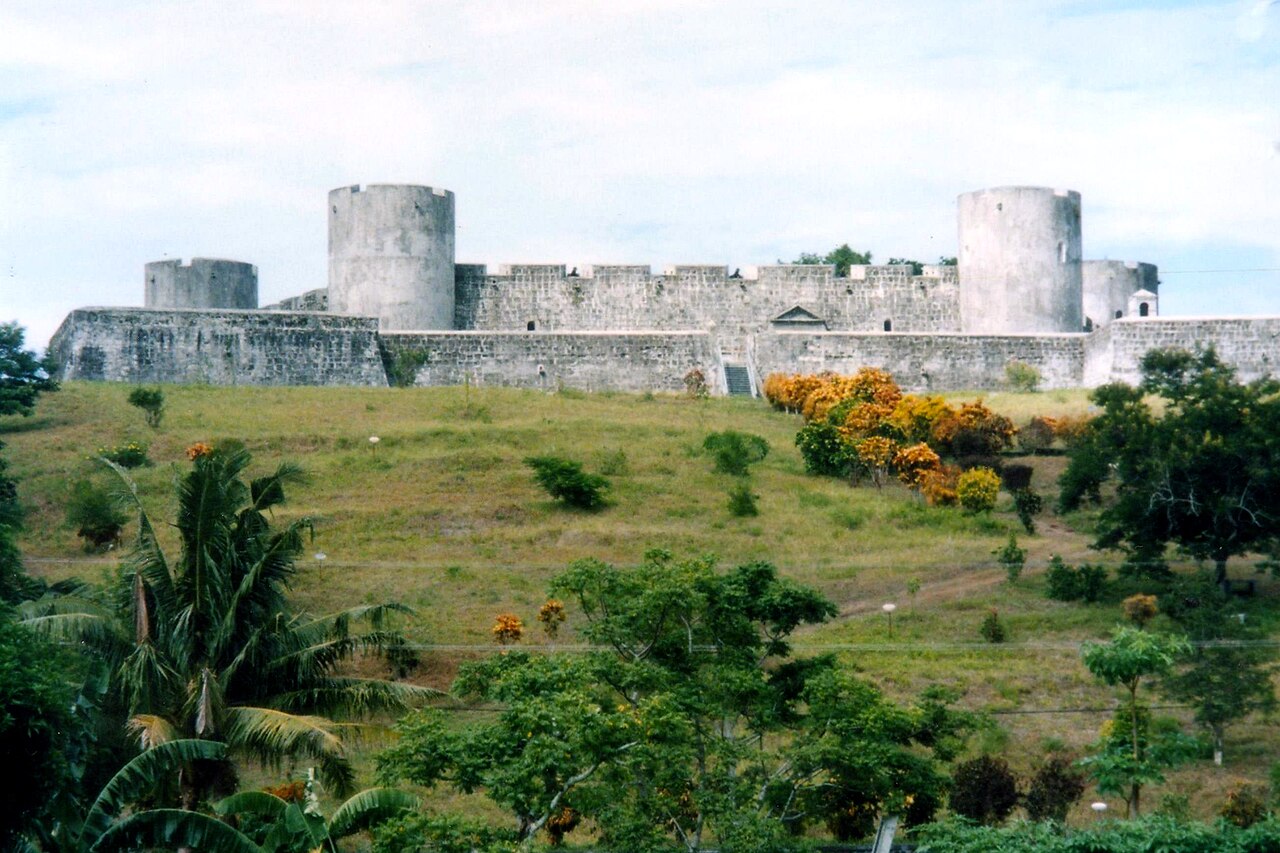
The fort is situated in the town of Hila, within the Leihitu Subdistrict of the Central Maluku Regency. It was designed as a bastioned fortress, a style that emerged during the Renaissance period and was widely adopted across European colonial territories to improve defense capabilities against artillery and infantry assaults. The bastioned design features angled bastions protruding from the main walls, allowing defenders to cover adjacent walls with crossfire, a significant advancement over earlier medieval fortifications.
Architectural features and design
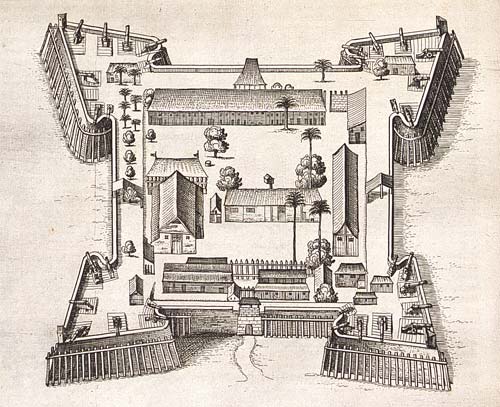
The layout of Fort Amsterdam reflects the principles of the star fort or bastioned fortification system, characterized by low, thick walls and angular bastions at the corners. This design was intended to withstand cannon fire and provide overlapping fields of fire for the fort's defenders. The walls were constructed using locally sourced materials, including coral stone and bricks, which were common in Dutch colonial architecture in the region.
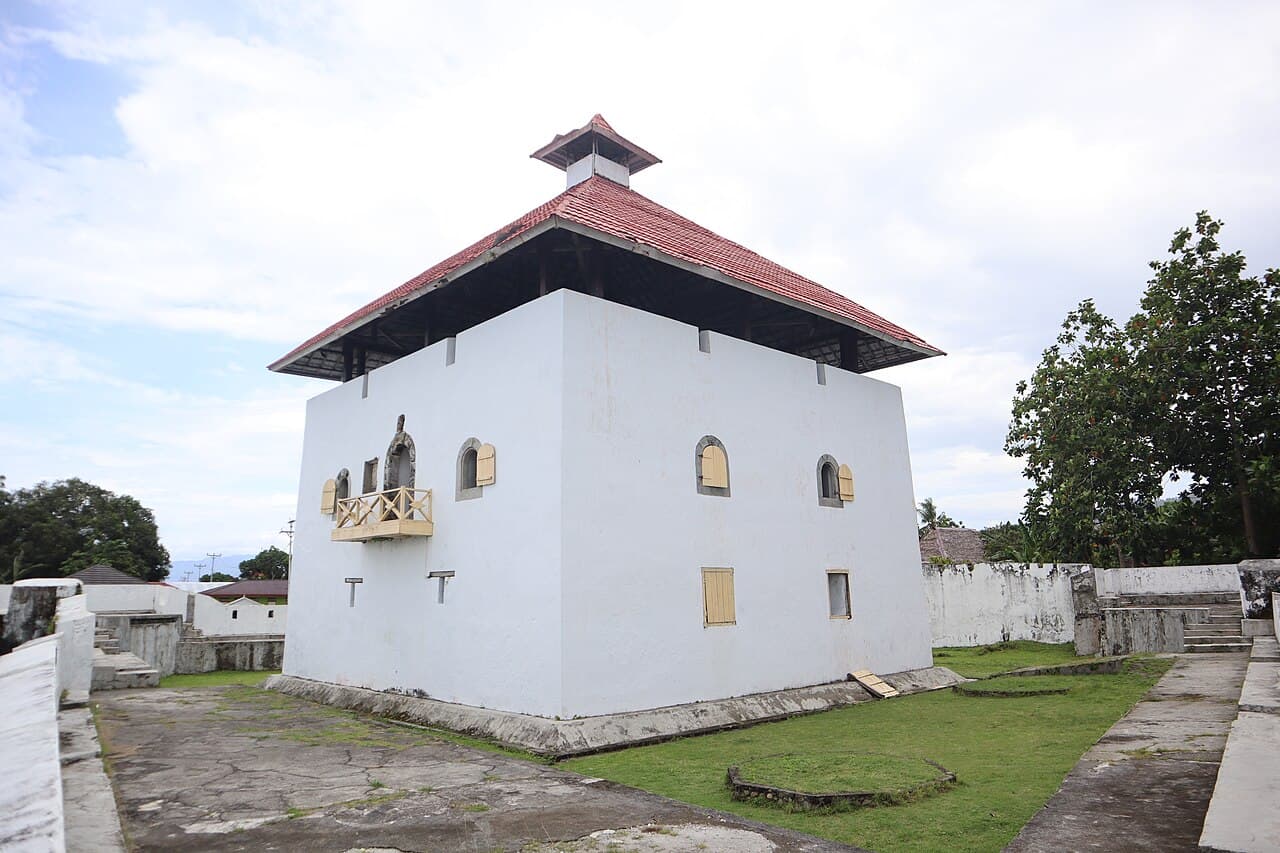
The fort includes a blockhouse, which served as a fortified barracks and a last line of defense. The blockhouse's robust construction and limited openings made it difficult for attackers to penetrate. Inside the fort, there were also storage facilities for arms and ammunition, living quarters for soldiers, and administrative offices for the VOC officials overseeing the spice trade operations.
Defensive capabilities
Fort Amsterdam's bastions allowed defenders to cover all approaches with cannon and musket fire, minimizing blind spots. The fort's moat and thick walls further enhanced its defensive strength, making it a formidable obstacle against indigenous resistance and rival colonial powers. The fort's strategic location on Ambon Island enabled the Dutch to maintain control over the surrounding seas and protect their economic interests in the Maluku archipelago.
Historical context and significance
The construction of Fort Amsterdam was part of the Dutch East Indies Company's efforts to assert dominance over the spice trade in the Maluku Islands during the early 17th century. The fort played a key role in securing Dutch control against Portuguese and local powers who contested European influence in the region. Its establishment coincided with the VOC's aggressive expansion and consolidation of trading posts and military installations throughout the Indonesian archipelago.
Throughout its history, the fort witnessed various conflicts and power shifts, including skirmishes with local resistance groups and rival colonial forces. However, it remained a central military and administrative hub for the Dutch until the decline of the VOC and eventual transfer of control to the Dutch colonial government.
Legacy and current status
Today, Fort Amsterdam stands as a partially preserved historical monument reflecting the colonial military architecture of the Renaissance period in Southeast Asia. It attracts historians, architects, and tourists interested in the colonial history of Indonesia and the global spice trade. Conservation efforts aim to maintain the structural integrity of the fort while promoting its cultural heritage significance.
The fort's location on Ambon Island makes it accessible to visitors exploring the Maluku Islands, offering insights into the complex interactions between European colonial powers and indigenous societies during the early modern period.
Visiting Fort Amsterdam
Visitors to Fort Amsterdam can explore the remains of the bastioned walls, the blockhouse, and other surviving structures. Informational plaques and guided tours provide historical context, detailing the fort's construction, military functions, and role in the spice trade. The site offers panoramic views of the surrounding landscape and the sea, emphasizing its strategic importance.
While the fort is partially preserved, ongoing preservation and archaeological studies continue to reveal new insights into its construction techniques and historical usage. Visitors are encouraged to respect the site and contribute to its preservation by following guidelines and supporting local heritage initiatives.
Frequently asked questions (FAQ)
- When was Fort Amsterdam built and by whom?
- Fort Amsterdam was built in 1637 by the Dutch East Indies Company to secure control over the spice trade in the Maluku Islands.
- What architectural style characterizes Fort Amsterdam?
- Fort Amsterdam features a bastioned fortress design typical of the Renaissance period, with angled bastions for improved defense against artillery.
- Is Fort Amsterdam open to visitors?
- Yes, Fort Amsterdam is open to visitors who can explore its partially preserved walls, blockhouse, and other structures, often with guided tours available.
- Where is Fort Amsterdam located?
- Fort Amsterdam is located in Hila town, Leihitu Subdistrict, Central Maluku Regency on Ambon Island, Indonesia.
- What was the strategic importance of Fort Amsterdam?
- The fort was crucial for controlling the spice trade routes in the Maluku Islands and defending Dutch colonial interests against rival powers and local resistance.
Photo gallery

Information
Loading map...
Visitor reviews
No reviews yet. Been here? Write the first review and help other travelers!
Write the first reviewVisited this castle? Share your experience
Your review helps other travelers and adds first-hand knowledge to our encyclopedia.