Fort Monostor
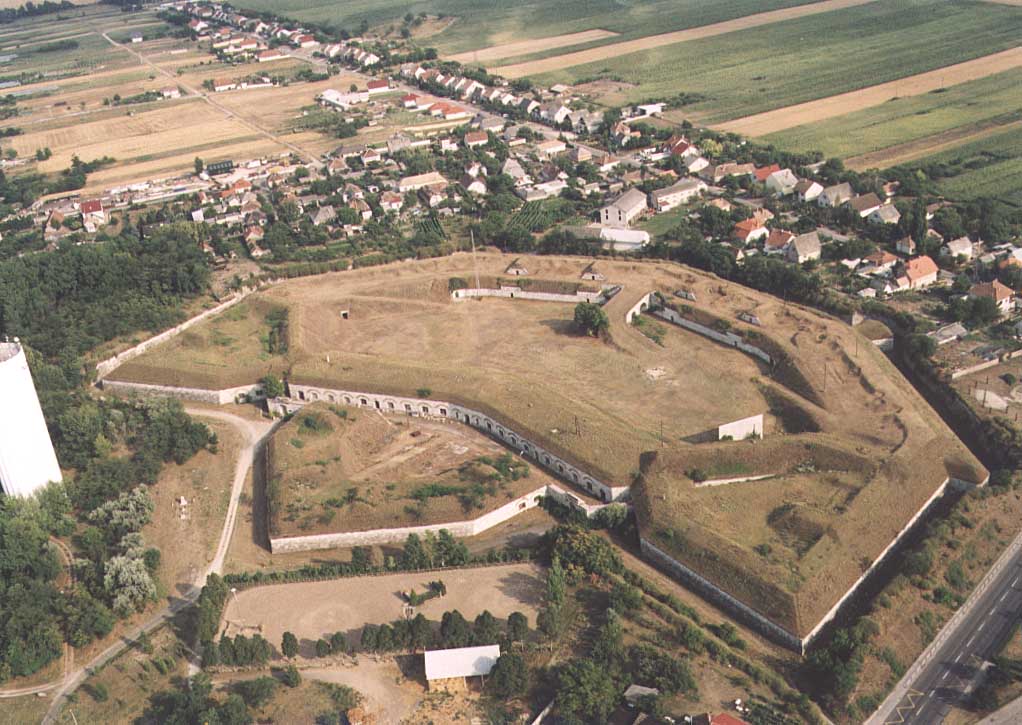
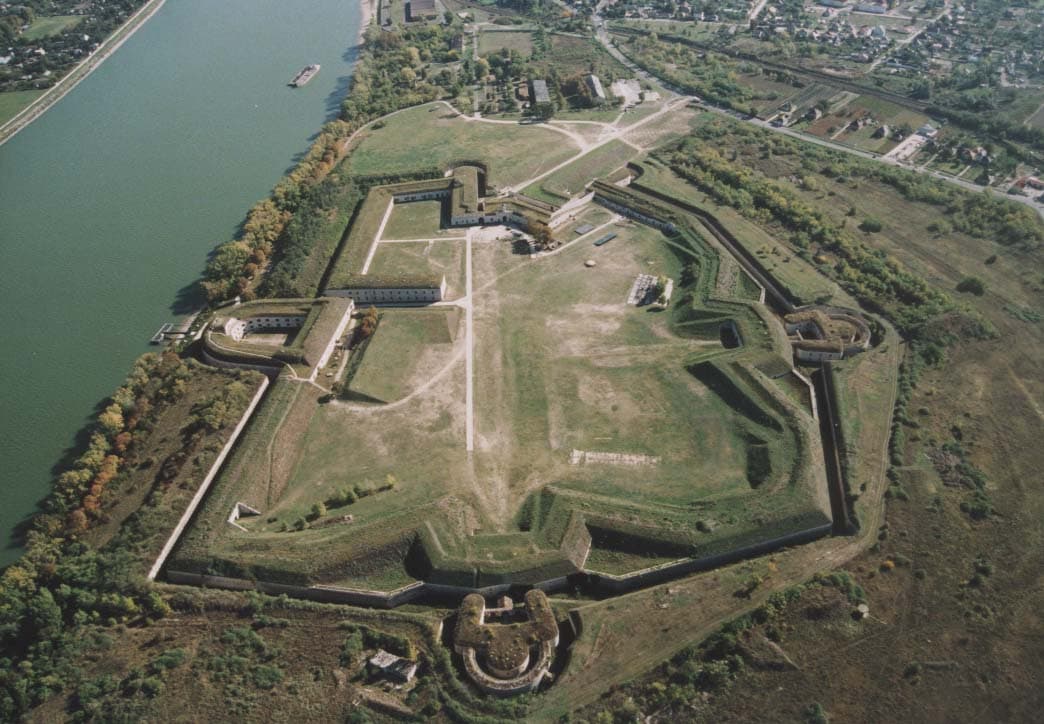
Fort Monostor, also known as Fort Sandberg, is a significant bastioned fortress located near the city of Komárom in Hungary. Constructed between 1850 and 1871, it forms part of the extensive fortification system that was developed to protect the strategic Danube river crossing and the Austro-Hungarian Empire's western borders during the Modern period.
Historical context and construction
The fortress was built in response to advances in military technology and changing warfare tactics in the mid-19th century. Its construction was part of a broader effort to modernize the defensive network around Komárom, a key military and commercial hub. The design follows the principles of bastioned fortification, a style that evolved from the Renaissance and was adapted to withstand artillery fire with angled bastions allowing for defensive crossfire.
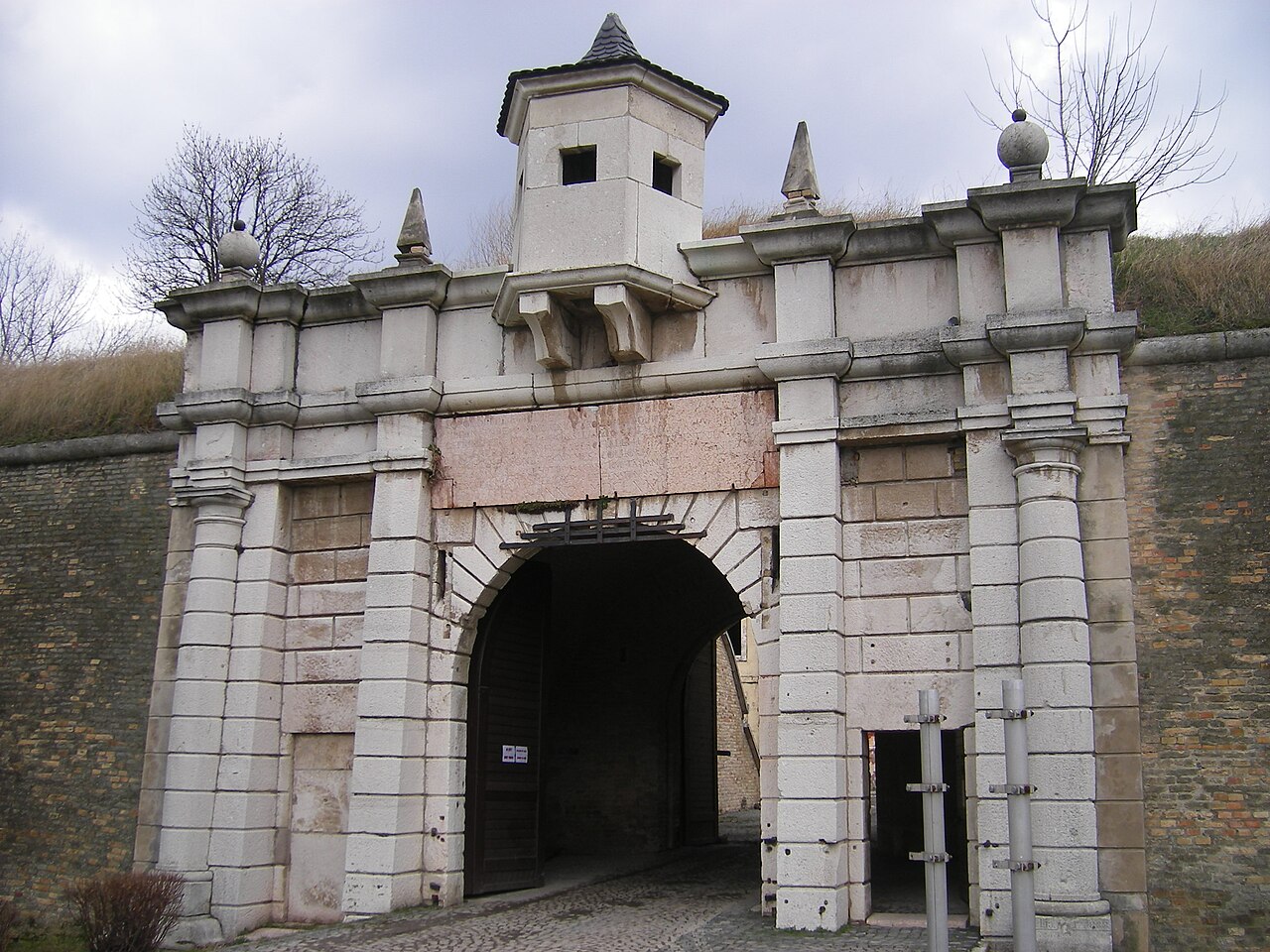
The construction spanned over two decades, reflecting the complexity and scale of the project. The fortress was strategically positioned to control the surrounding area and the vital river routes. Its robust walls, deep moats, and multiple bastions demonstrate the military engineering expertise of the era.
Architectural features and layout
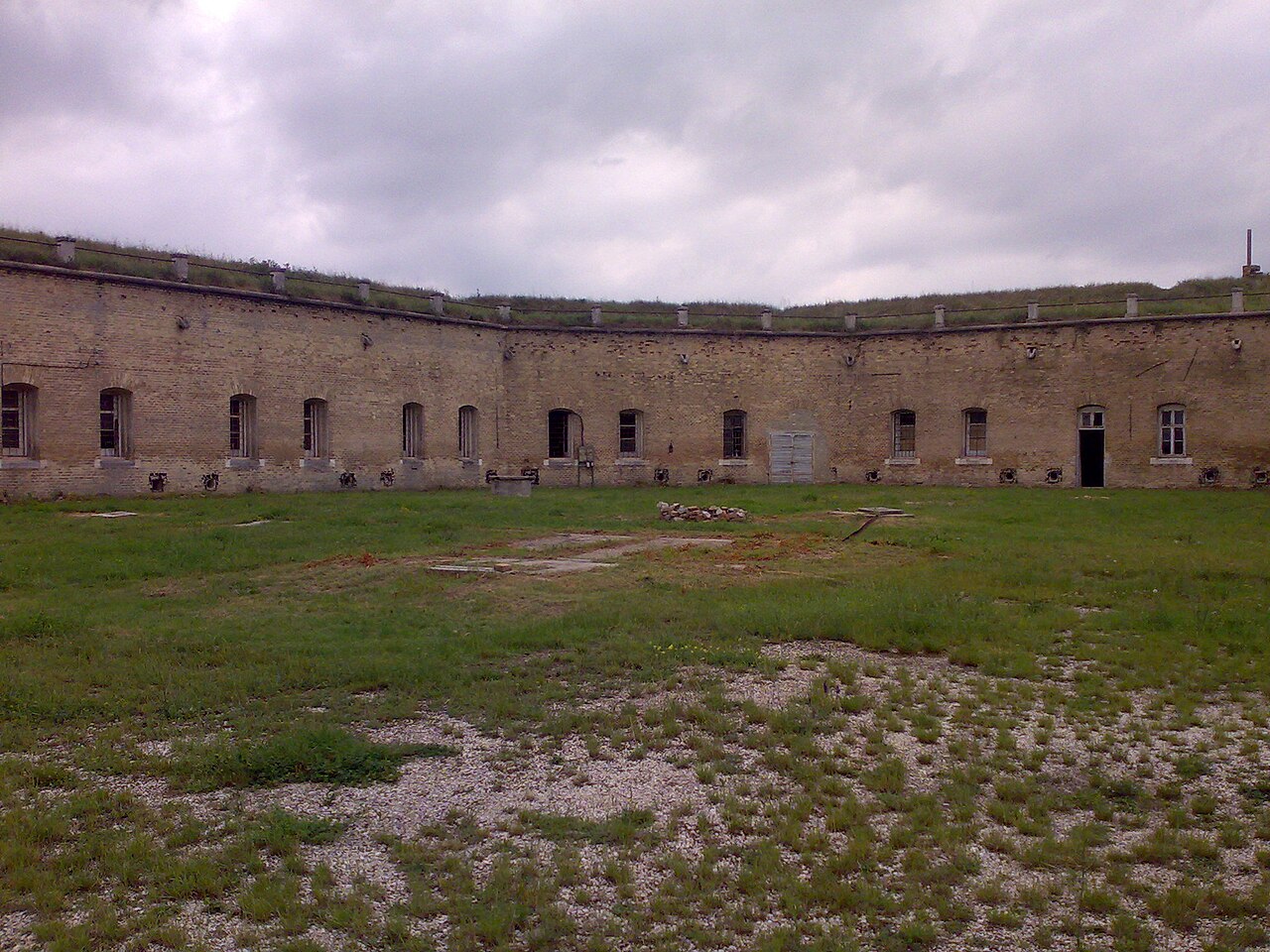
Fort Monostor features characteristic elements of bastioned fortresses, including strong curtain walls connecting angular bastions designed to eliminate blind spots and provide overlapping fields of fire. The fortress incorporates extensive underground chambers and storage areas, essential for ammunition and provisions during sieges.
The layout includes defensive ditches and ramparts, designed to slow down and expose attackers. The bastions are equipped with artillery placements, and the walls are reinforced to resist bombardment. The fortress's design balances offensive and defensive capabilities, allowing defenders to mount effective resistance against invading forces.
Role during and after World War II
Following its initial military use, Fort Monostor gained renewed strategic importance after World War II. The Soviet military utilized the fortress extensively, converting it into the largest ammunition storage site within the complex. This period saw thousands of ammunition wagons transported through the fortress, which was under strict military guard.
The Soviet presence left a significant imprint on the site, with adaptations made to accommodate modern military logistics. Despite this, the fortress's original 19th-century structure remained largely intact, preserving its historical and architectural value.
Current status and public access
Today, Fort Monostor is open to the public as a museum, offering visitors insight into its layered history from the Austro-Hungarian era through the Cold War period. The site hosts exhibitions detailing its military past, architectural features, and the role it played in regional defense.
One of the notable modern additions to the fortress grounds is the Europe Gate sculpture, made of light-transmitting concrete, symbolizing openness and unity within Europe. This contemporary artwork contrasts with the fortress's historic military architecture, creating a unique cultural experience.
Significance in military architecture and heritage
Fort Monostor exemplifies the transition in fortress design during the 19th century, blending traditional bastioned elements with adaptations for modern artillery. Its preservation offers valuable insights into military engineering and the geopolitical history of Central Europe.
The fortress is part of a network of forts around Komárom, collectively representing one of the most important fortified complexes in Hungary. Its maintenance as a museum ensures the conservation of this heritage and provides educational opportunities about military history and architecture.
Frequently asked questions (FAQ)
- What is the historical significance of Fort Monostor?
- Fort Monostor is a 19th-century bastioned fortress built between 1850 and 1871 near Komárom, Hungary, as part of a strategic defense system. It later served as the largest Soviet ammunition storage after World War II, reflecting its continued military importance.
- Can I visit Fort Monostor and what can I see there?
- Yes, Fort Monostor is open to the public as a museum. Visitors can explore its well-preserved bastioned fortifications, underground chambers, and exhibitions on its military history, including the Soviet-era ammunition storage. The site also features the Europe Gate sculpture made of light-transmitting concrete.
- What architectural style characterizes Fort Monostor?
- Fort Monostor exemplifies bastioned fortress architecture from the Modern period, featuring angled bastions, curtain walls, moats, and artillery placements designed to withstand 19th-century artillery and provide overlapping defensive fire.
- When was Fort Monostor constructed?
- Fort Monostor was constructed over two decades, from 1850 to 1871, reflecting the military engineering advancements of the 19th century.
- Why is Fort Monostor important for military history enthusiasts?
- The fortress illustrates the evolution of military architecture in the 19th century and the strategic significance of Komárom. Its use by the Soviets as a major ammunition depot after World War II adds a Cold War dimension to its history.
Photo gallery

Information
Website
Visit websiteSources & official resources
Verify the information above using these authoritative references.
Loading map...
Visitor reviews
No reviews yet. Been here? Write the first review and help other travelers!
Write the first reviewVisited this castle? Share your experience
Your review helps other travelers and adds first-hand knowledge to our encyclopedia.