Fort Csillag, Komárom
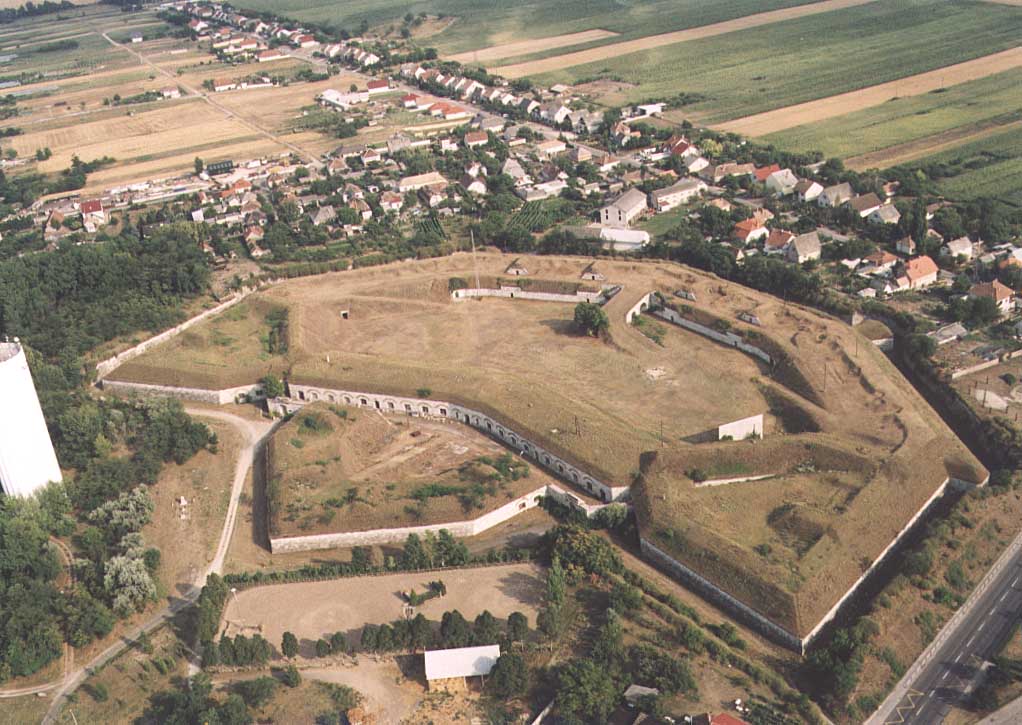
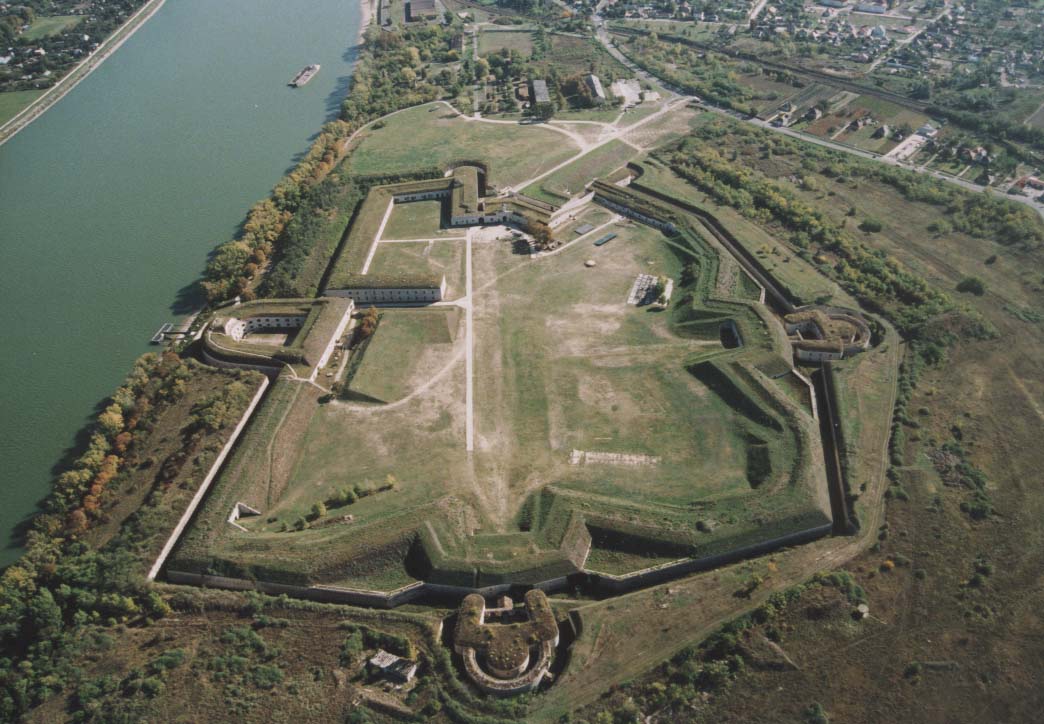
Fort Csillag, located in Komárom, Hungary, is a prominent example of a bastioned fortress that reflects the military architectural innovations of the 17th century. Its name, meaning "Star Fort," derives from its distinctive star-shaped design, characterized by angular bastions projecting outward from the main walls, a style developed to improve defensive capabilities against artillery fire.
Historical context and construction
Constructed during the turbulent period of the 17th century, Fort Csillag was part of the extensive fortification system designed to protect the strategic town of Komárom along the Danube River. This region was a contested frontier between the Habsburg Monarchy and the Ottoman Empire, necessitating strong defensive structures.
The fortress was built to replace older medieval fortifications that were less effective against the evolving artillery technology of the time. Its construction utilized the principles of the trace italienne or star fort design, which was widely adopted across Europe in response to the increased power of cannon fire.
Architectural features and design
Star-shaped layout and bastions
The fortress's layout consists of a central polygonal enclosure with multiple bastions extending outward. These bastions allowed defenders to cover adjacent walls with overlapping fields of fire, eliminating blind spots and making direct assaults extremely difficult. The walls were thick and angled to better deflect cannonballs.
Defensive elements
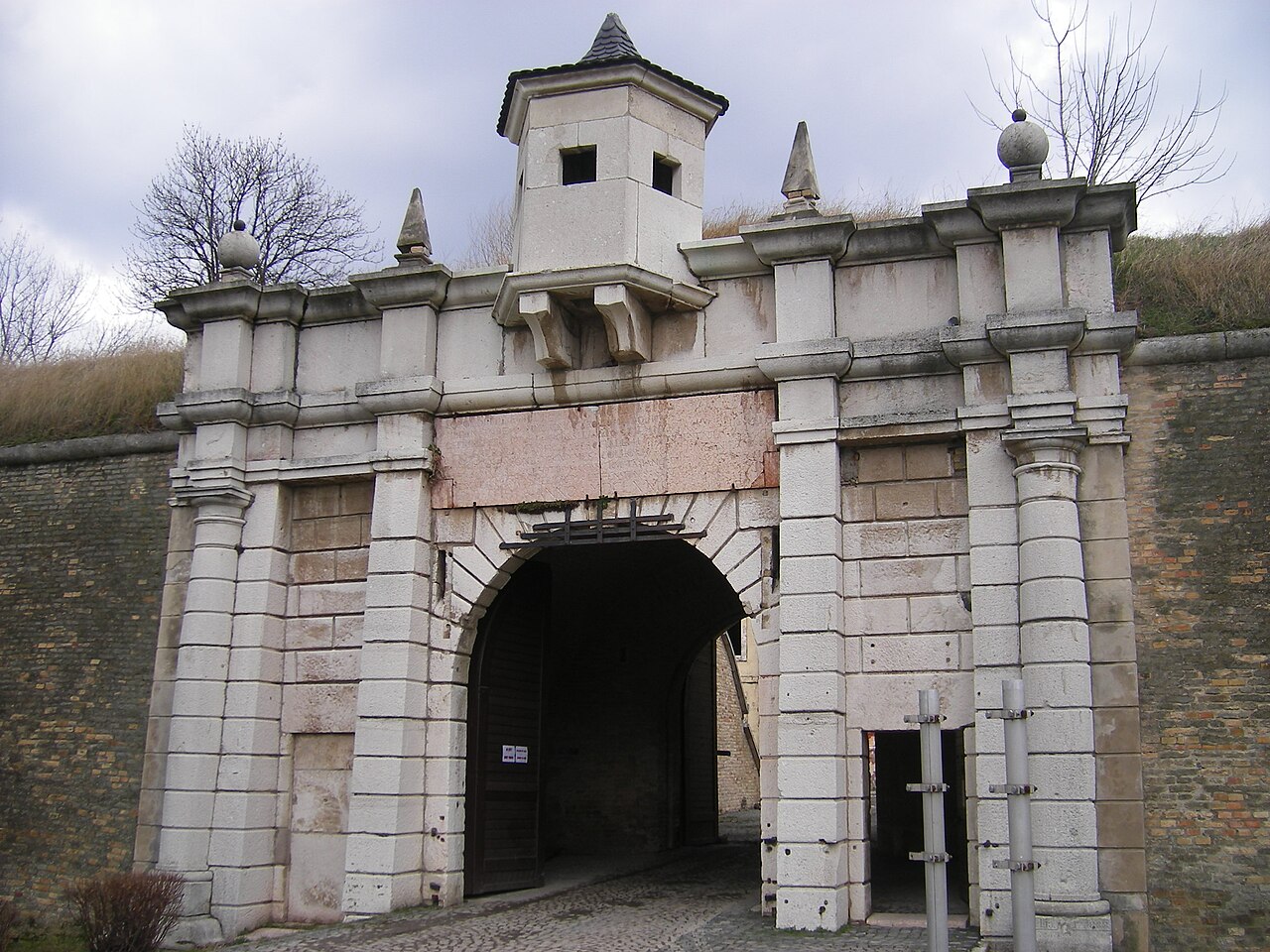
In addition to the bastions, Fort Csillag included moats surrounding the walls, which were often filled with water diverted from nearby rivers. The moat served as a barrier against infantry and siege equipment. The fortress also featured ravelins and curtain walls enhancing its layered defense. The gates were fortified with heavy doors and guardhouses, controlling access securely.
Internal structures
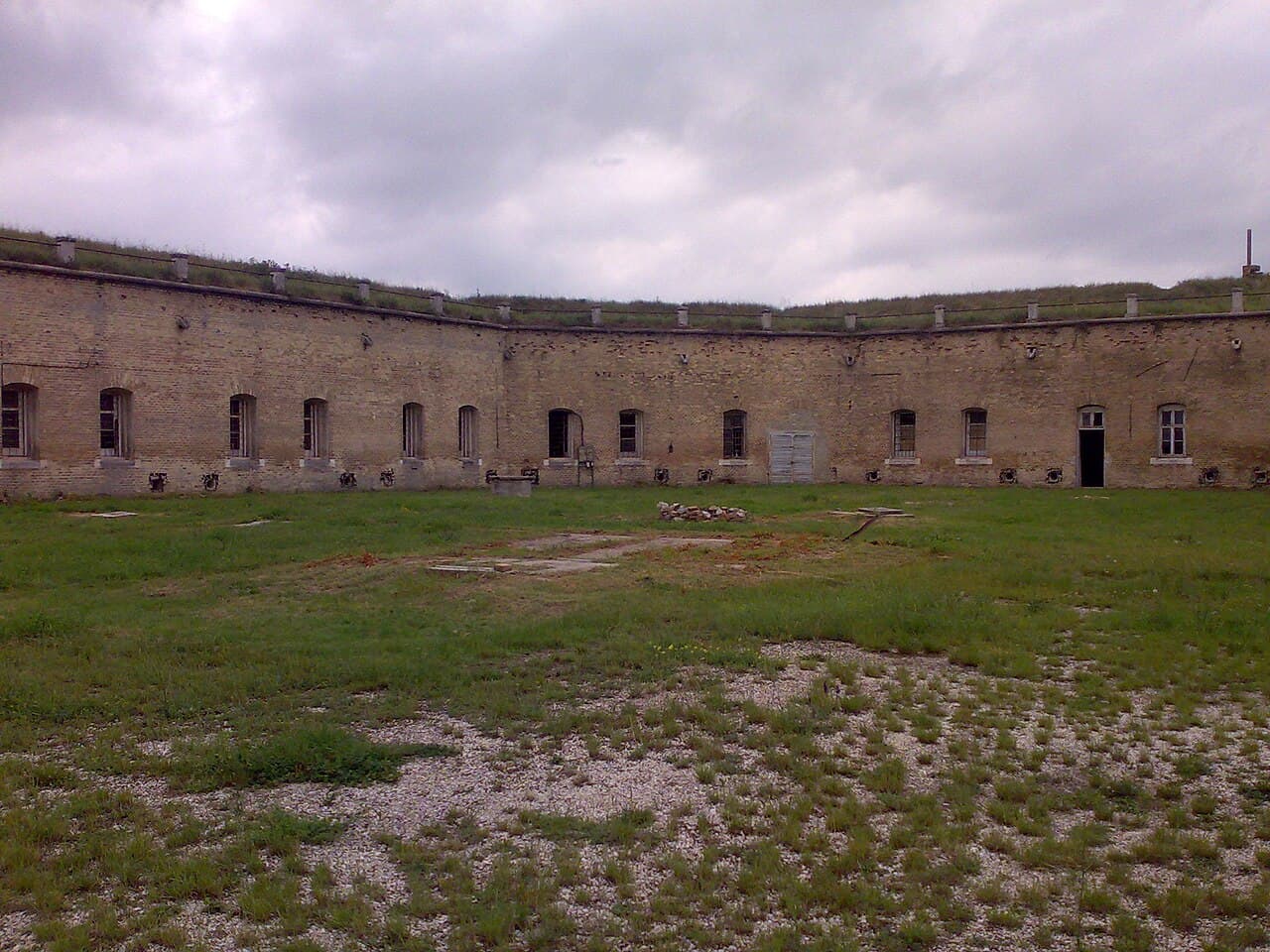
Inside the fortress, there were barracks for soldiers, storage facilities for ammunition and provisions, and command buildings. The design balanced military functionality with the need to sustain a garrison during prolonged sieges. The layout allowed efficient movement of troops and supplies within the walls.
Strategic importance and military history
Fort Csillag played a critical role in the defense of Komárom, which was a key stronghold controlling river traffic and trade routes along the Danube. Its robust construction helped withstand several sieges and military engagements during the conflicts between the Habsburgs and the Ottoman forces.
Throughout the centuries, the fortress was adapted and modernized to keep pace with advances in military technology. It remained an important military installation until the 19th century, after which its strategic value declined with changes in warfare and political borders.
Preservation and current status
Today, Fort Csillag is recognized as a significant cultural and historical monument in Hungary. Although parts of the fortress have suffered from neglect and damage over time, substantial sections remain well preserved. Restoration efforts have aimed to maintain its structural integrity and make it accessible to visitors interested in military history and architecture.
The site is often included in tours of Komárom's fortifications, allowing visitors to explore its bastions, walls, and internal buildings. Interpretive displays and guided tours provide insight into the fortress's construction, defensive features, and role in regional history.
Architectural legacy and influence
Fort Csillag exemplifies the bastioned fortress style that dominated European military architecture from the 16th to 18th centuries. Its star-shaped design influenced numerous fortifications across the continent, showcasing the adaptation to gunpowder artillery warfare.
The fortress serves as a valuable case study for understanding the evolution of military engineering and the strategic importance of river fortifications in Central Europe. Its preservation contributes to the cultural heritage of Hungary and offers educational opportunities about early modern fortification techniques.
Frequently asked questions (FAQ)
- How do I get to Fort Csillag in Komárom?
- Fort Csillag is located in Komárom, Hungary, near the Danube River. It is accessible by car and public transport from Budapest and nearby cities. Local buses and taxis can take visitors directly to the fortress entrance.
- What are the opening hours of Fort Csillag?
- The fortress is open daily from 10:00 to 17:00. It is advisable to check seasonal variations or special closures before planning your visit.
- Is Fort Csillag suitable for families with children?
- Yes, Fort Csillag offers a family-friendly environment with safe pathways and areas to explore. Educational displays and guided tours make it engaging for visitors of all ages.
- Can I take photographs inside Fort Csillag?
- Photography is generally allowed throughout the fortress grounds. Visitors are encouraged to capture the unique bastioned architecture and scenic views of the Danube.
- What is the historical significance of Fort Csillag?
- Fort Csillag was a key defensive structure in the 17th century, protecting Komárom against Ottoman invasions. Its star-shaped bastioned design represents advanced military engineering of its time.
Photo gallery

Information
Opening hours
10:00-17:00, daily
Ticket prices
€5 adult, €3 child
Current owner
Hungarian heritage authorities
Loading map...
Visitor reviews
No reviews yet. Been here? Write the first review and help other travelers!
Write the first reviewVisited this castle? Share your experience
Your review helps other travelers and adds first-hand knowledge to our encyclopedia.