Fort Manoel
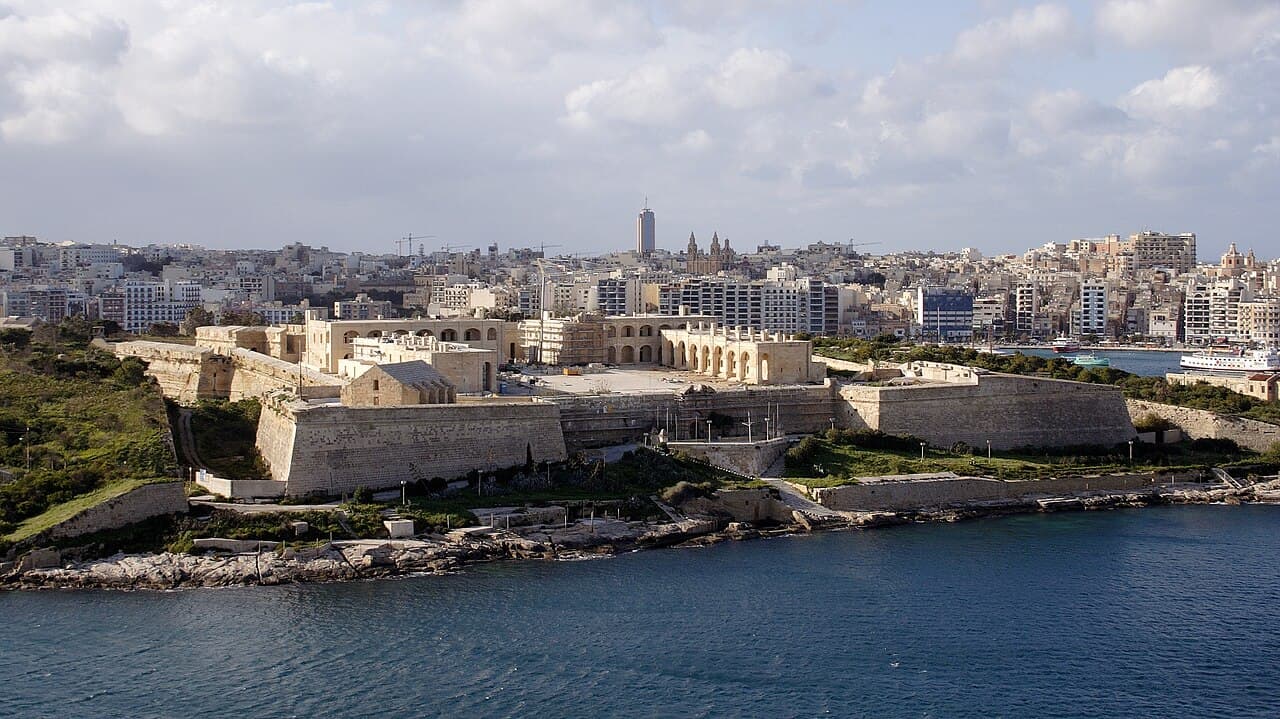
Fort Manoel stands as a prominent example of an 18th-century star fort located on Manoel Island in Malta. Constructed between 1723 and 1733 by the Order of Saint John, this fortification was designed to strengthen the defenses of the strategically vital Marsamxett Harbour and the city of Valletta. Its importance is underscored by its inclusion on Malta's tentative list of UNESCO World Heritage Sites since 1998, as part of the Knights' Fortifications around the Harbours of Malta.
The island on which Fort Manoel is built was originally known as l'Isolotto before being renamed after the fort itself. This location was recognized early on as a potential vulnerability in the harbor's defenses. As early as 1569, proposals were made to erect a small fortification to prevent enemy forces from occupying the island and establishing artillery positions. These early suggestions were reiterated by military engineers such as Scipione Campi in 1577 and Giovanni Battista in 1582, reflecting ongoing strategic concerns.
Design and construction of Fort Manoel
The final design of Fort Manoel was settled in 1723, combining the expertise of several military engineers, including the French knight René Jacob de Tigné and Charles François de Mondion, who was the Order's military engineer. The fort was commissioned and financed by the Portuguese Grand Master António Manoel de Vilhena, after whom the fort is named. Vilhena also established the Manoel Foundation, responsible for the fort's maintenance and garrison.
The fort's layout is a classic example of a star fort, featuring a square plan with four bastions at each corner and two cavaliers within the walls. Construction began with the laying of the first stone by Grand Master Vilhena on 14 September 1723. By 1727, the main defensive walls (enceinte), cavaliers, and the main gateway were completed. The ditch surrounding the fort was excavated by 1732, while the internal structures such as the chapel, barracks, magazines, and countermines were finished around 1733. The fort was fully operational and garrisoned by 1734.
Architectural features
Fort Manoel's design reflects the military architecture of the post-Renaissance period, incorporating baroque influences and advanced defensive features. The fort's bastions allowed for overlapping fields of fire, while the cavaliers provided elevated artillery positions. The fort also included a chapel with a crypt where Charles François de Mondion was buried after his death in 1733.
Strategic role and military history
Fort Manoel played a significant role in Malta's military history, particularly during the French Revolutionary Wars. When the French invaded Malta in June 1798, the fort was commanded by the Portuguese knight Gourgeau and garrisoned by the volunteer Cacciatori infantry and militia forces. Despite its strong defenses, the fort surrendered following the capitulation of Grand Master Hompesch to Napoleon, and a French garrison took control.
During the subsequent Maltese uprising against French rule, insurgents constructed batteries nearby to bombard Fort Manoel. The fort endured several attacks and counter-bombardments during this turbulent period. After Malta became a British protectorate in 1800, the fort was taken over by British forces.
British modifications and use
Under British control, Fort Manoel underwent several modifications to adapt to evolving military technology. In the late 19th century, some of the fort's echaugettes were removed to make way for gun emplacements. Significant alterations were also made to the St. Anthony Bastion, including the demolition of its gunpowder magazine to install a battery of QF 12-pounder guns. Although the fort's guns were decommissioned in 1906, it remained a military site and was rearmed during World War II with 3.7-inch heavy anti-aircraft guns mounted in concrete emplacements. The fort sustained considerable damage during aerial bombardment in the war.
Post-military history and restoration
Following its decommissioning in 1964, Fort Manoel was abandoned and fell into disrepair, suffering from vandalism and neglect. Restoration efforts began in 2001, focusing on repairing the bastions, piazza, and other key structures. The fort's chapel, which had been ruined, was completely rebuilt. Today, Fort Manoel is regarded as a well-preserved example of star fort architecture and is a significant cultural and historical landmark on Manoel Island.
Current significance
Fort Manoel's strategic location, architectural design, and rich history make it a vital part of Malta's heritage. It exemplifies the military ingenuity of the Order of Saint John during the post-Renaissance period and reflects the island's complex history of sieges, occupations, and military evolution. Its inclusion on the tentative UNESCO list highlights its value as part of the broader network of Knights' fortifications around Malta's harbours.
Frequently asked questions (FAQ)
- What is the historical significance of Fort Manoel?
- Fort Manoel, built in the 18th century, is a prime example of military architecture in Malta. It was commissioned by the Knights of St. John to enhance the defense of Valletta and has played a crucial role in various historical conflicts throughout the centuries.
- When was Fort Manoel constructed?
- Construction of Fort Manoel began in 1723 and was completed in 1755. The fort was designed by the renowned military architect Francesco Laparelli and showcases the Baroque style typical of its time.
- What are the opening hours for Fort Manoel?
- Fort Manoel is open to visitors from 9:00 AM to 5:00 PM every day, with last entries typically allowed until 4:30 PM. It is advisable to check for any seasonal changes or special events that may alter these hours.
- Can I visit Fort Manoel with children?
- Yes, Fort Manoel is family-friendly and can be enjoyed by visitors of all ages. The fort's spacious grounds and fascinating history provide an engaging experience for children and adults alike.
- Is it possible to take a guided tour of Fort Manoel?
- Yes, guided tours are available at Fort Manoel, offering visitors deeper insights into its history and architecture. These tours are led by knowledgeable guides who can enhance your understanding of the fort's significance and features.
- What are the ticket prices for visiting Fort Manoel?
- Tickets for Fort Manoel are reasonably priced, with discounts available for students and seniors. Children under a certain age may enter for free, making it an affordable outing for families.
- When is the best time to visit Fort Manoel?
- The best time to visit Fort Manoel is during the spring and autumn months when the weather is pleasant. Avoiding the peak summer heat can make your visit more enjoyable as you explore the fort's expansive grounds.
- Are there any nearby attractions to visit after Fort Manoel?
- Yes, nearby attractions include the vibrant waterfront area of Gżira, the picturesque Sliema promenade, and the historic city of Valletta. These locations offer a variety of dining, shopping, and sightseeing opportunities.
- How do I get to Fort Manoel?
- Fort Manoel is easily accessible via public transport or by car. There are bus stops nearby, and ample parking is available for those who wish to drive.
Photo gallery

Loading map...
Visitor reviews
No reviews yet. Been here? Write the first review and help other travelers!
Write the first reviewVisited this castle? Share your experience
Your review helps other travelers and adds first-hand knowledge to our encyclopedia.