Fort Mandan
Fort Mandan served as the crucial winter encampment for the Lewis and Clark Expedition during 1804–1805. This temporary fortification was established on the banks of the Missouri River, approximately twelve miles from the present-day town of Washburn, North Dakota. The site was selected to provide shelter and a strategic base for the expedition team during the harsh winter months as they prepared for further exploration of the western territories of the newly acquired Louisiana Purchase.
Historical context and significance
The construction of Fort Mandan took place in the early 19th century, a period marked by American expansion and exploration. The fort's establishment was a direct response to the need for a secure winter refuge during the expedition led by Meriwether Lewis and William Clark. Their mission was to map and explore the vast lands west of the Mississippi River, establish trade and diplomatic relations with Native American tribes, and assert American sovereignty over the region.
The fort's location near the Mandan and Hidatsa villages was strategic, allowing the expedition to engage in trade and diplomacy with these indigenous groups. These interactions were essential for the success of the expedition, providing vital supplies, information, and guides for the journey ahead.
Architectural features and construction
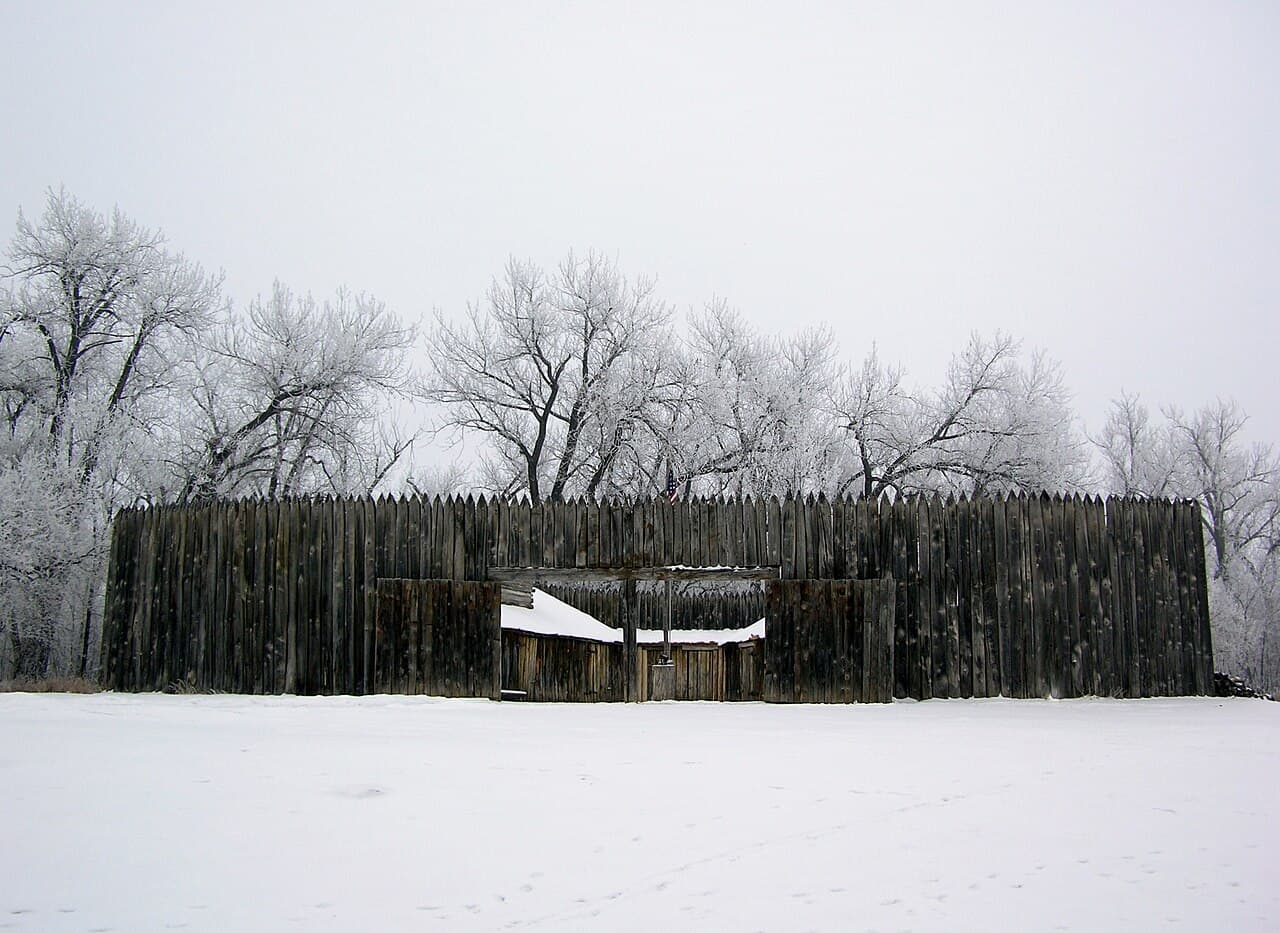
Although Fort Mandan was not a permanent fortress, it was built with defensive considerations typical of frontier forts of the era. The structure was a stockade fort, featuring a palisade of wooden logs forming a defensive wall around the encampment. Inside the stockade were various buildings including living quarters, storage facilities, and a blockhouse for defense.
The design reflected practical needs rather than elaborate architectural style, focusing on functionality to withstand potential threats and harsh weather conditions. The fort's layout was compact, facilitating communication and defense among the expedition members.
Location and current status
The exact site of the original Fort Mandan remains uncertain today. It is believed to be submerged beneath the waters of the Missouri River due to changes in the river's course over the centuries. This has complicated archaeological efforts to locate and excavate the original fort remains.
To preserve the historical legacy, a replica of Fort Mandan was constructed near the original location. This replica serves as an educational and interpretive center, offering visitors insight into the conditions faced by the expedition and the fort's role in American history.
Legacy and cultural importance
Fort Mandan holds a significant place in American heritage as a symbol of early exploration and westward expansion. It represents the challenges and achievements of the Lewis and Clark Expedition, which paved the way for subsequent settlement and development of the American West.
The fort's story is intertwined with the interactions between European-American explorers and Native American tribes, highlighting a complex history of cooperation and conflict. Today, the site and its replica attract historians, educators, and tourists interested in the pioneering era of the United States.
Visitor experience and educational opportunities
The replica fort offers guided tours, interpretive programs, and exhibits that recreate life at the fort during the winter of 1804–1805. Visitors can explore the reconstructed buildings, learn about the expedition members, and understand the fort's strategic role in American exploration.
Educational initiatives focus on the expedition's scientific discoveries, navigation techniques, and cultural exchanges with Native American tribes. The site serves as a valuable resource for understanding early 19th-century frontier life and exploration.
Frequently asked questions (FAQ)
- When was Fort Mandan built and by whom?
- Fort Mandan was constructed in the winter of 1804–1805 by the Lewis and Clark Expedition as their winter encampment during their exploration of the American West.
- Where is Fort Mandan located today?
- The original site of Fort Mandan is believed to be submerged under the Missouri River near Washburn, North Dakota. A replica fort has been built nearby for visitors.
- Can visitors tour Fort Mandan?
- Yes, visitors can tour the reconstructed replica of Fort Mandan near Washburn, which offers guided tours and educational programs about the Lewis and Clark Expedition.
- What was the purpose of Fort Mandan during the expedition?
- Fort Mandan served as a winter shelter and base of operations for the Lewis and Clark Expedition, allowing them to rest, resupply, and prepare for further exploration westward.
- Why is Fort Mandan historically significant?
- Fort Mandan is significant as the winter camp of the Lewis and Clark Expedition, marking a key moment in American exploration and the expansion into western territories.
Photo gallery

Information
Current owner
State museum
Loading map...
Visitor reviews
No reviews yet. Been here? Write the first review and help other travelers!
Write the first reviewVisited this castle? Share your experience
Your review helps other travelers and adds first-hand knowledge to our encyclopedia.