Enchanted Castle

Enchanted castle hotel and tavern in regent, north dakota
Contemporary (20th–21st c.)
Well Preserved

Enchanted Castle in Regent, North Dakota is a distinctive hotel and tavern that immerses visitors in a richly themed medieval atmosphere. Unlike traditional historic castles, this establishment is a modern construction designed to evoke the grandeur and charm of a medieval castle setting, combining hospitality with a unique entertainment experience.

The castle-like façade of the building immediately captures attention with its imposing turrets and battlement-style parapets, presenting an authentic medieval silhouette. The front area of the property features three striking large metal statues: a dragon, a knight, and a shield, which contribute to the thematic ambiance and serve as popular photo opportunities for guests and visitors.

Medieval-themed hospitality and dining

Enchanted Castle offers a full-service hotel experience where guests can enjoy the feeling of being treated like royalty. The interior continues the medieval theme with décor and design elements inspired by the Middle Ages. The centerpiece of the hospitality experience is the Medieval Tavern, located within the hotel, which provides a wide selection of beverages including top-shelf liquors, catering to those seeking a refined drinking experience.

Dining at the castle is highlighted by the Excalibur Steakhouse, a fine dining restaurant that serves a variety of dishes named with medieval flair. Signature menu items include the King's Filet Mignon, Enchanted Prime Rib, Court Jester's Shrimp, Peasant Burger, and Lord's Chicken. This creative culinary approach enhances the immersive experience, appealing to both locals and travelers looking for a unique meal in a castle-inspired setting.

Architectural and thematic design

While Enchanted Castle is not a historical fortress, its architectural design draws heavily from medieval European castle motifs. The use of metal sculptures at the entrance adds a fantastical element, blending traditional castle imagery with imaginative fantasy. The building's layout and exterior details replicate the look of a hill castle with defensive features such as crenellated walls and towers, although these are purely decorative.

The castle's location at 607 Main St, Regent, North Dakota, situates it within a small town environment, making it a local landmark and tourist attraction. It serves as a cultural and entertainment hub rather than a historic monument, celebrating medieval themes through modern hospitality.

Visitor experience and cultural significance

Visitors to Enchanted Castle can expect a blend of dining, lodging, and entertainment framed by a consistent medieval theme. The castle's unique concept appeals to families, tourists, and enthusiasts of medieval culture, offering a setting for special events, gatherings, and celebrations. Its presence contributes to the local economy by attracting visitors to Regent, while providing a memorable experience that differentiates it from typical hotels and restaurants.

The castle's design and amenities reflect a broader trend in themed hospitality, where immersive environments transport guests to different historical or fantasy worlds. Enchanted Castle successfully combines this trend with practical services, making it a notable example of modern castle-inspired architecture used for commercial purposes.

Frequently asked questions (FAQ)

What is the Enchanted Castle in Regent, North Dakota?
Enchanted Castle is a medieval-themed hotel and tavern offering lodging, dining, and entertainment in a castle-like setting.
Can I dine at the Enchanted Castle?
Yes, the castle features the Excalibur Steakhouse, serving medieval-themed dishes like King's Filet Mignon and Court Jester's Shrimp.
Are there any unique features outside the Enchanted Castle?
The property includes three large metal statues of a dragon, a knight, and a shield, enhancing the medieval ambiance.
Is the Enchanted Castle a historic castle?
No, it is a modern building designed to resemble a medieval castle for hospitality purposes.
Where is the Enchanted Castle located?
It is located at 607 Main St, Regent, North Dakota, 58650, United States.

Information

Mixed / Complex

Address

607 Main St, Regent, North Dakota, 58650, United States

Loading map...

Visitor reviews

No reviews yet. Been here? Write the first review and help other travelers!

Write the first review

Visited this castle? Share your experience

Your review helps other travelers and adds first-hand knowledge to our encyclopedia.
Write a review

(5/5)

0/2000 characters

Your review will be visible after admin approval

Nearby castles

136.7 km
Fort Mandan — United States of America castle

Fort Mandan

Washburn, United States of America

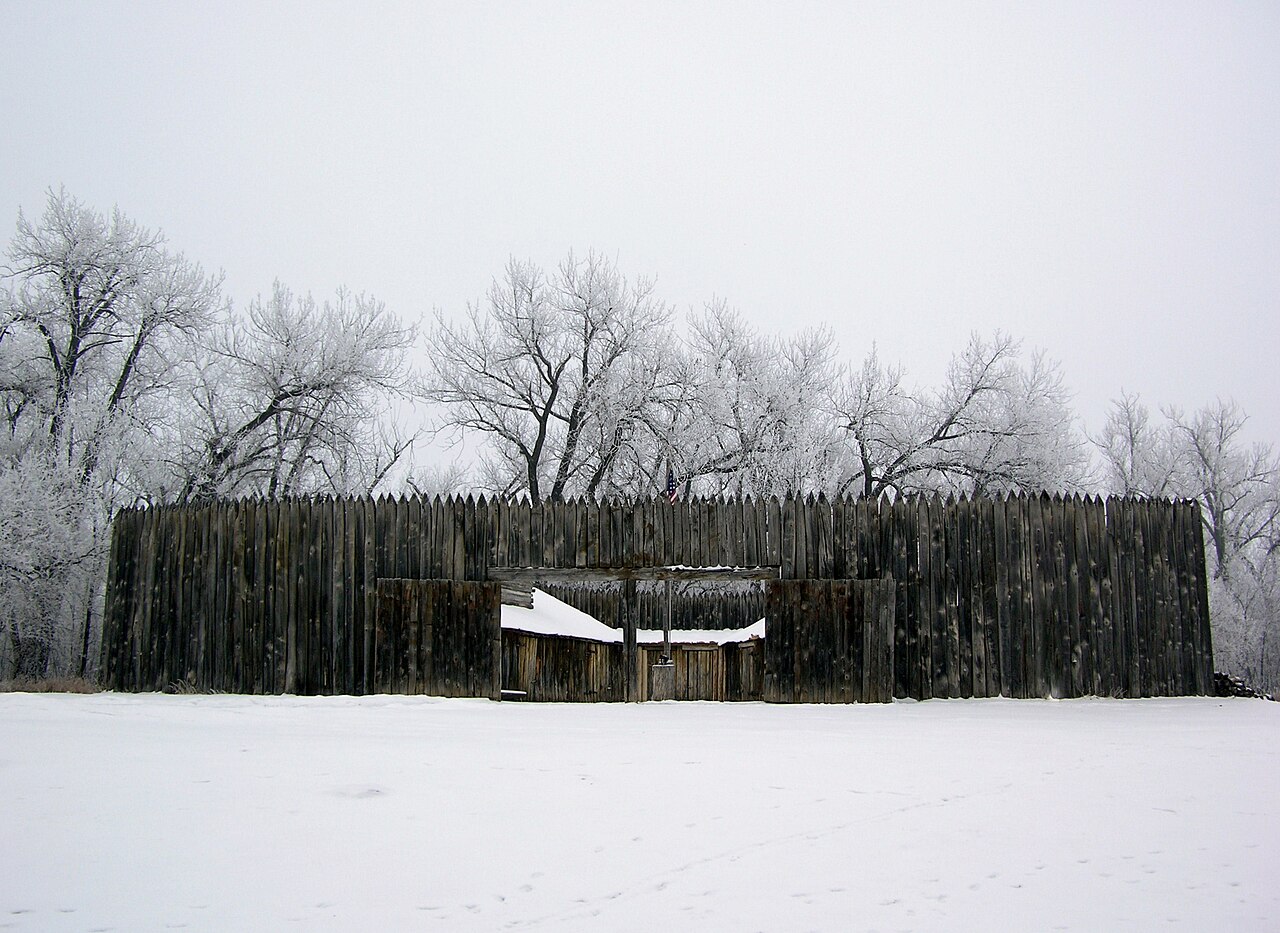
Fort Mandan served as the crucial winter encampment for the Lewis and Clark Expedition during 1804–1805. This temporary fortification was established on the banks of the Missouri River, approximately twelve miles from the present-day town of Washburn, North Dakota. The site was selected to provide shelter and a strategic base for the expedition team during the harsh winter months as they prepared for further exploration of the western territories of the newly acquired Louisiana Purchase. Historical context and significance The construction of Fort Mandan took place in the early 19th century, a period marked by American expansion and exploration. The fort's establishment was a direct response to the need for a secure winter refuge during the expedition led by Meriwether Lewis and William Clark. Their mission was to map and explore the vast lands west of the Mississippi River, establish trade and diplomatic relations with Native American tribes, and assert American sovereignty over the region. The fort's location near the Mandan and Hidatsa villages was strategic, allowing the expedition to engage in trade and diplomacy with these indigenous groups. These interactions were essential for the success of the expedition, providing vital supplies, information, and guides for the journey ahead. Architectural features and construction Although Fort Mandan was not a permanent fortress, it was built with defensive considerations typical of frontier forts of the era. The structure was a stockade fort, featuring a palisade of wooden logs forming a defensive wall around the encampment. Inside the stockade were various buildings including living quarters, storage facilities, and a blockhouse for defense. The design reflected practical needs rather than elaborate architectural style, focusing on functionality to withstand potential threats and harsh weather conditions. The fort's layout was compact, facilitating communication and defense among the expedition members. Location and current status The exact site of the original Fort Mandan remains uncertain today. It is believed to be submerged beneath the waters of the Missouri River due to changes in the river's course over the centuries. This has complicated archaeological efforts to locate and excavate the original fort remains. To preserve the historical legacy, a replica of Fort Mandan was constructed near the original location. This replica serves as an educational and interpretive center, offering visitors insight into the conditions faced by the expedition and the fort's role in American history. Legacy and cultural importance Fort Mandan holds a significant place in American heritage as a symbol of early exploration and westward expansion. It represents the challenges and achievements of the Lewis and Clark Expedition, which paved the way for subsequent settlement and development of the American West. The fort's story is intertwined with the interactions between European-American explorers and Native American tribes, highlighting a complex history of cooperation and conflict. Today, the site and its replica attract historians, educators, and tourists interested in the pioneering era of the United States. Visitor experience and educational opportunities The replica fort offers guided tours, interpretive programs, and exhibits that recreate life at the fort during the winter of 1804–1805. Visitors can explore the reconstructed buildings, learn about the expedition members, and understand the fort's strategic role in American exploration. Educational initiatives focus on the expedition's scientific discoveries, navigation techniques, and cultural exchanges with Native American tribes. The site serves as a valuable resource for understanding early 19th-century frontier life and exploration.

Modern (19th–20th c.)
Details
151.1 km
Fort Rice — United States of America castle

Fort Rice

, United States of America

Fort Rice (Lakota: Psíŋ Otȟúŋwahe, meaning "Wild Rice Village") was a significant frontier military fort established in the 19th century in what was then the Dakota Territory, now the state of North Dakota. Named after American Civil War General James Clay Rice, the fort played a crucial role in the United States' westward expansion and military presence during the turbulent post-Civil War period. Historical context and establishment The fort was constructed in 1864 during the height of the Indian Wars as part of a strategic effort to secure the northern plains and protect settlers and trade routes from Native American resistance. It was positioned near the Missouri River, a vital artery for transportation and supply. Fort Rice was built to serve as a stronghold against the Lakota and other tribes resisting encroachment on their lands. The fort's garrison included the 50th Wisconsin Infantry Regiment, which arrived in October 1865, among other military units tasked with frontier defense. The presence of these troops at Fort Rice was instrumental in maintaining U.S. control over the region during a period of frequent conflicts and treaty negotiations. Architectural design and features Fort Rice was designed as a bastioned fortress, a style that incorporates angular bastions projecting from the main walls to provide defensive fire coverage along all approaches. This design was typical of military forts built in the 19th century to withstand attacks and sieges. The fort included robust earthworks and wooden palisades, complemented by artillery placements on the bastions. The layout of the fort was organized around a central parade ground, with barracks, officers' quarters, storage facilities, and other support buildings arranged systematically. Defensive ditches and ramparts surrounded the fort, enhancing its protective capabilities against potential assaults. Military significance and operations Throughout its active years, Fort Rice served as a base for military campaigns and patrols aimed at controlling the northern plains. It was a staging ground for expeditions during the Great Sioux War of 1876-77 and other conflicts involving the Lakota and allied tribes. The fort's strategic location allowed the U.S. Army to monitor movements along the Missouri River and to project power into the surrounding territories. It also functioned as a supply depot and communication hub for military operations in the region. Decline and present condition Fort Rice was eventually abandoned as military priorities shifted and Native American resistance diminished. The fort fell into disuse by the late 19th century, and today it remains an archaeological site with remnants of its earthworks and foundations visible. Archaeological investigations have helped to uncover the fort's layout and construction techniques, providing valuable insights into frontier military architecture and life during the post-Civil War era. The site is recognized for its cultural and historical significance, reflecting the complex interactions between the U.S. government and Native American peoples during westward expansion. Legacy and cultural importance Fort Rice holds an important place in the history of the American West. It symbolizes the military efforts to control and settle the frontier and the resistance faced from indigenous populations. The fort's Lakota name, Psíŋ Otȟúŋwahe, acknowledges the native heritage and the natural environment of the region, particularly the wild rice that grew nearby. Today, Fort Rice is a subject of historical study and interest, with efforts to preserve its remains and educate the public about its role in shaping the history of North Dakota and the broader United States.

Modern (19th–20th c.)
Details
255.4 km
Fort Keogh — United States of America castle

Fort Keogh

Miles City, United States of America

Fort Keogh is a historic military post located on the southern bank of the Yellowstone River near the western edge of Miles City, Montana. Established in August 1876 by Colonel Nelson A. Miles following the Battle of the Little Bighorn, the fort played a critical role in the United States Army's efforts to control and monitor the movements of the Cheyenne and Sioux tribes during the turbulent post-Civil War western expansion period. Originally named the Tongue River Cantonment, the military installation was relocated one mile west in 1878 and renamed Fort Keogh in honor of Captain Myles Keogh, an officer killed at the Little Bighorn battle. Historical context and military significance Fort Keogh was established as a strategic base to prevent Native American groups involved in the Little Bighorn conflict from escaping northward to Canada. The fort became the headquarters of the newly formed District of the Yellowstone in 1877, a sub-unit of the Department of Dakota, under the command of Colonel Miles. This district was responsible for military operations across a vast and often hostile frontier region. Fort Keogh's establishment marked a significant development in the U.S. Army's campaign to assert federal control over the Northern Plains and facilitate settlement and railroad expansion. Architecture and fortifications Unlike medieval castles, Fort Keogh was designed as a bastioned fortress typical of 19th-century military architecture, emphasizing practical defense against potential Native American attacks and later, lawlessness in the frontier. The fort's layout included defensive earthworks, bastions, and positioned to cover the perimeter. Buildings within the fort were primarily constructed of wood and stone, arranged around a central parade ground. The design reflected the military engineering principles of the time, focusing on functionality and rapid construction rather than ornate style. Role in the development of Miles City The presence of Fort Keogh stimulated economic and social development in the region. Traders and suppliers established businesses near the fort to serve the soldiers, including liquor vendors and general stores, which contributed to the founding and growth of Miles City. The fort effectively became the nucleus around which the civilian town developed, linking military and civilian frontier life. Transition to research and preservation After its military use declined, Fort Keogh was repurposed as a United States Department of Agriculture livestock and range research station. This transition reflects the changing priorities in the region from military control to agricultural development and scientific study of rangelands and livestock management. The site is recognized on the National Register of Historic Places, preserving its legacy as a key historical landmark in Montana's frontier history. Visiting Fort Keogh today While Fort Keogh no longer functions as a military base, its historical significance and preserved structures attract visitors interested in American West history and military heritage. The site offers insight into late 19th-century military architecture and the complex interactions between the U.S. Army and Native American tribes during a pivotal era of westward expansion.

Modern (19th–20th c.)
Details