Fort Istibey
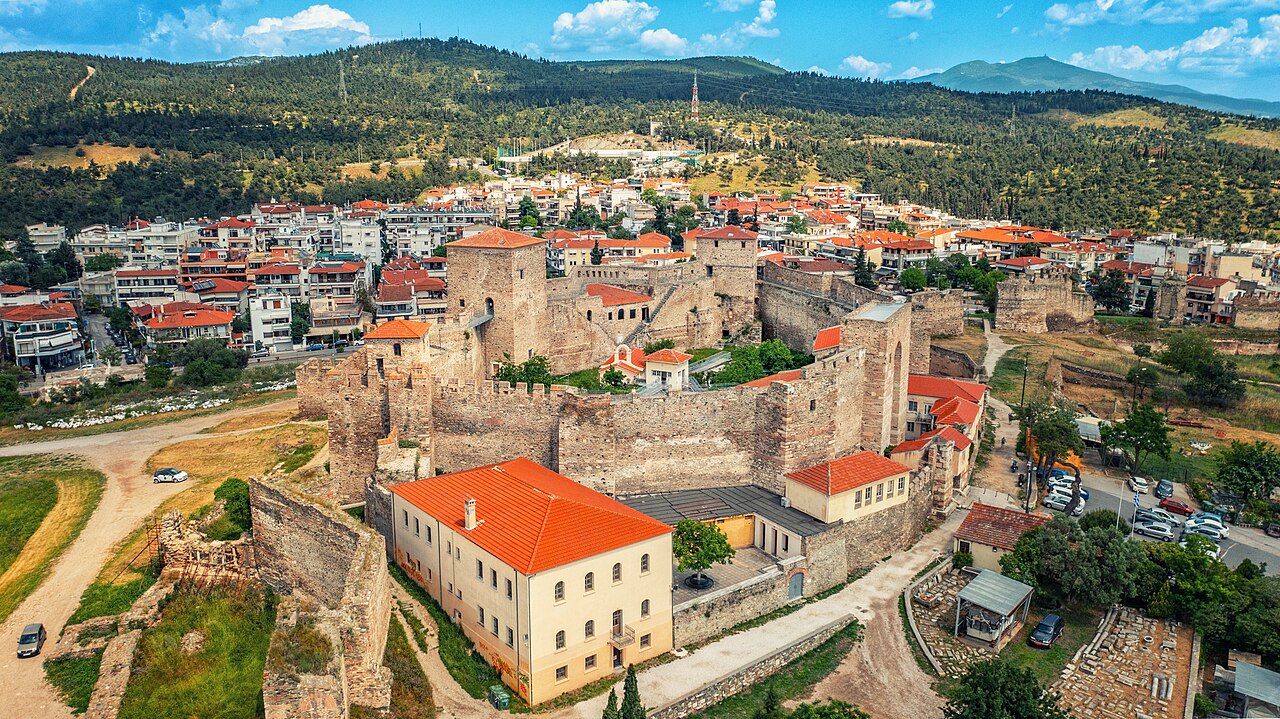
Fort Istibey (Greek: Οχυρό Ιστίμπεη) is a significant bastioned fortress located on Mount Beles in Central Macedonia, Greece. Constructed in the 20th century as part of the extensive Metaxas Line fortifications, the fortress played a crucial role in Greece's defense during World War II. The Metaxas Line was a series of fortified positions built along the Greek-Bulgarian border in the 1930s, named after the then Prime Minister of Greece, Ioannis Metaxas, who sought to strengthen Greece's northern defenses against potential invasions.
Situated at an altitude of 1,339 meters, Fort Istibey lies approximately 16 kilometers north of Neo Petritsi village. Its strategic location on Mount Beles was chosen to monitor and prevent enemy forces from entering Greece from Bulgaria. The fortress was designed as a bastioned fortress, a style characterized by angular bastions projecting outward from the main walls, allowing defenders to cover adjacent walls with gunfire and minimize blind spots. This design was particularly effective in the early 20th century for resisting artillery and infantry assaults.
Construction and architectural features
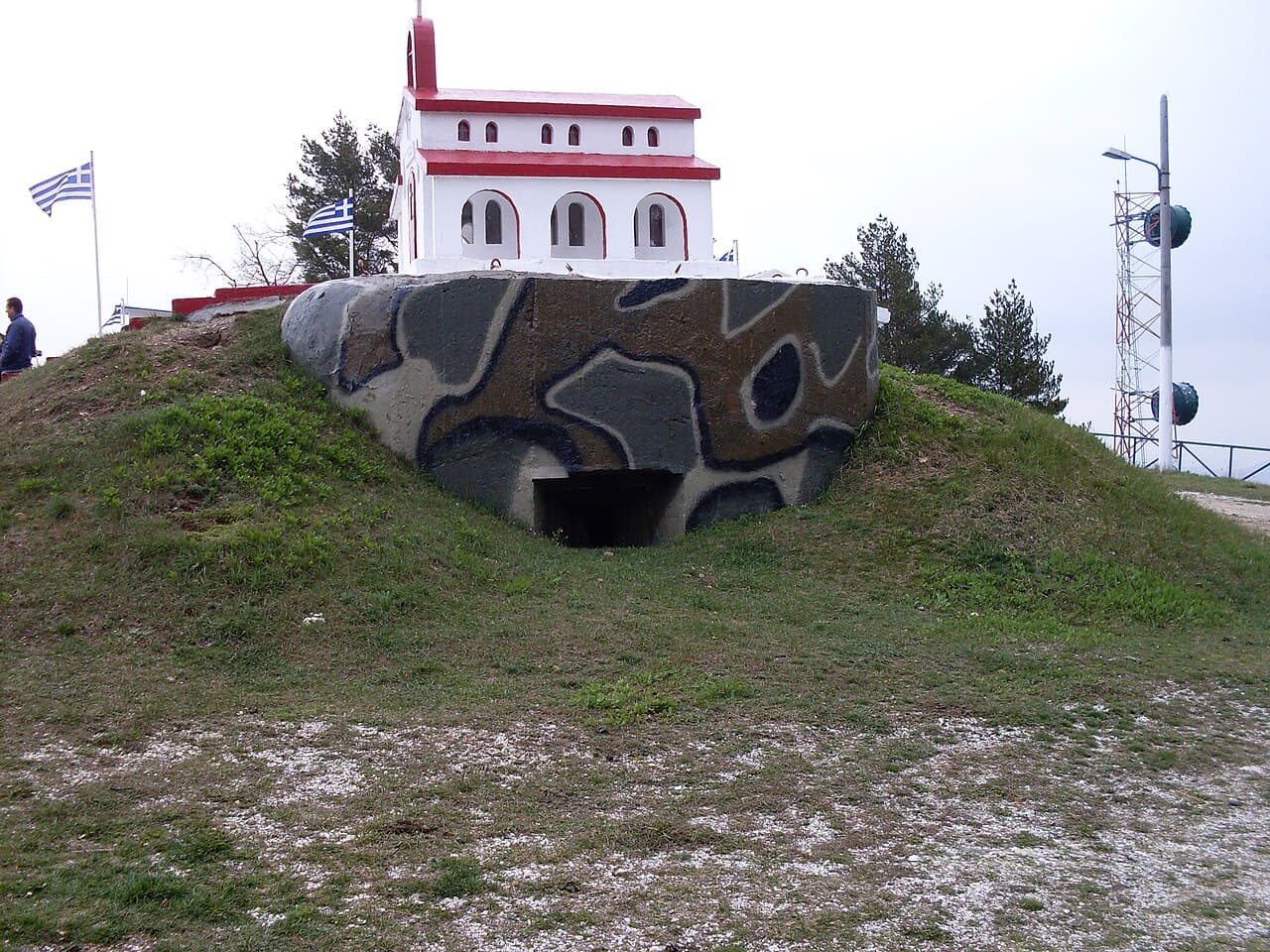
Fort Istibey's construction was part of the broader effort to fortify Greece's northern border in response to rising tensions in Europe during the interwar period. The fortress incorporates reinforced concrete and steel, materials typical of military architecture in the early 20th century, enabling it to withstand heavy bombardment. Its bastions provided overlapping fields of fire, enhancing its defensive capabilities against advancing enemy troops.
The fortress complex included underground tunnels, ammunition depots, living quarters, and command centers, designed to support a garrison for extended periods under siege conditions. The layout facilitated communication and movement within the fortress while maintaining protection from enemy fire.
Historical role in world war ii
During World War II, Fort Istibey was garrisoned by approximately 350 soldiers and 13 officers, under the command of Ksanthos Pikoulakis. Its primary mission was to guard the border and prevent any unauthorized entry from Bulgaria. The fortress was part of the larger defensive strategy that culminated in the Battle of the Forts in April 1941, when German forces launched an offensive against the Metaxas Line.
Despite fierce resistance, Fort Istibey was compelled to surrender in April 1941 following sustained attacks by German troops. The battle demonstrated the resilience and determination of the Greek defenders, who held their positions against a technologically superior enemy for as long as possible.
Post-war commemoration and museum
In 1991, the Panhellenic Association of Combatants and Friends of the Forts of Macedonia and Thrace established a small museum at Fort Istibey to honor its defenders and preserve the memory of the battle. The museum displays a collection of firearms used by both Greek and German forces, including rifles, revolvers, pistols, and machine guns. It also exhibits army uniforms from the era, personal belongings of the soldiers, and a detailed map of the Battle of the Forts.
Visitors to the museum can view a film recounting the story of the battle at Fort Istibey, providing a vivid historical context to the exhibits. The museum serves as a poignant reminder of the sacrifices made by the defenders and the strategic significance of the fortress during the war.
Access and visitor information
Access to Fort Istibey and its museum is restricted due to its location within an active military zone. Visitors must obtain permission from the military unit stationed in Neo Petritsi, located approximately four kilometers west of the Serres-Promachonas National road A25 (Kilkis junction). Foreign nationals require a special permit from the Hellenic Army General Staff to visit the site.
The fortress's remote mountain location and controlled access ensure its preservation but also limit casual tourism. Interested visitors are advised to plan ahead and secure the necessary permissions to experience this important historical site.
Strategic significance and legacy
Fort Istibey remains a notable example of early 20th-century military architecture in Greece, illustrating the transition from traditional fortifications to modern bastioned designs adapted for mechanized warfare. Its role in the Metaxas Line highlights Greece's efforts to defend its sovereignty during a turbulent period in European history.
The fortress stands as a symbol of the bravery and sacrifice of the Greek soldiers who defended their homeland against invasion. Its preservation and the establishment of the museum contribute to the understanding of Greece's military history and the broader context of World War II in the Balkans.
Frequently asked questions (FAQ)
- How do I visit Fort Istibey museum?
- To visit Fort Istibey museum, you must obtain permission from the military unit in Neo Petritsi. Foreign visitors require a special permit from the Hellenic Army General Staff due to the site's military status.
- What was the role of Fort Istibey during World War II?
- Fort Istibey was part of the Metaxas Line fortifications defending Greece's northern border against German invasion in 1941. It housed a garrison that resisted German forces until forced to surrender.
- What architectural features define Fort Istibey?
- Fort Istibey is a bastioned fortress featuring reinforced concrete construction, angular bastions for overlapping fields of fire, underground tunnels, and fortified living quarters.
- Is Fort Istibey accessible to tourists year-round?
- Access to Fort Istibey is restricted due to its location within an active military zone. Visitors must secure permission in advance, and access can be limited depending on military operations.
- Where is Fort Istibey located?
- Fort Istibey is located on Mount Beles in Central Macedonia, Greece, approximately 16 kilometers north of the village of Neo Petritsi near the Greek-Bulgarian border.
Photo gallery

Information
Loading map...
Visitor reviews
No reviews yet. Been here? Write the first review and help other travelers!
Write the first reviewVisited this castle? Share your experience
Your review helps other travelers and adds first-hand knowledge to our encyclopedia.