Fort Geldria
Fort Geldria, also known as Fort Geldaria, is a significant historical bastioned fortress located in Pulicat, Tamil Nadu, India. Constructed in 1613 by the Dutch East India Company, it stands as the company's first permanent settlement in India and served as the capital of Dutch Coromandel. The fort was named after Geldria, the native province of Wemmer van Berchem, the General Director of the company during its establishment.
The fortress was strategically built to secure Dutch trade interests along the Coromandel Coast during the Renaissance period. It became the local governmental center by 1616, overseeing Dutch operations in the region. Unlike other Dutch holdings in India, which were primarily trading posts, Fort Geldria was a fully fortified bastioned structure, regularly garrisoned by 80 to 90 soldiers to defend against rival European powers and local threats.
Architectural design and fortifications
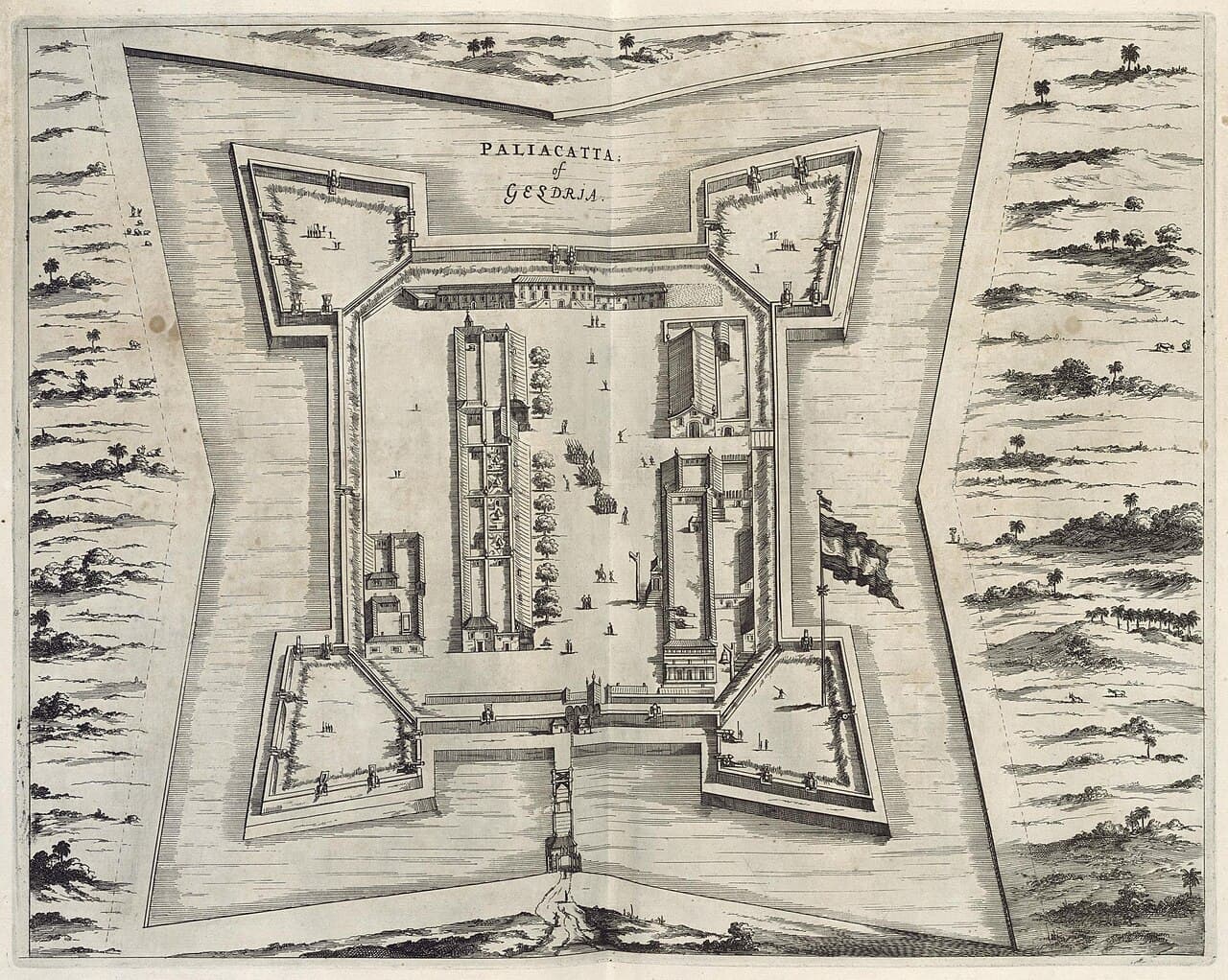
Fort Geldria is a classic example of a bastioned fortress, a style that emerged in Europe during the Renaissance to adapt to the use of artillery in warfare. The fort's design includes angular bastions projecting from the curtain walls, allowing defenders to cover adjacent walls with gunfire, minimizing blind spots. The walls were constructed to withstand cannon fire and provide a strong defensive perimeter around the settlement.
The fort's layout was compact but efficient, enclosing administrative buildings, warehouses, and living quarters within its walls. The bastions were equipped with artillery placements, and the fort was surrounded by a moat or natural water barriers where possible, enhancing its defensive capabilities against sieges.
Strategic location and significance
Situated on the Coromandel Coast near Pulicat Lake, Fort Geldria's location was chosen for its access to maritime trade routes and proximity to local markets and resources. The fort served as a critical node in the Dutch spice trade network and as a base for Dutch naval operations in the Bay of Bengal.
The fort's presence marked the beginning of Dutch colonial influence in southeastern India, competing with Portuguese and later British powers. Its robust fortifications distinguished it from other Dutch establishments, which were mainly commercial outposts without significant military defenses.
Historical context and legacy
The construction of Fort Geldria in the early 17th century coincided with the height of European colonial expansion in Asia. The Dutch East India Company sought to establish fortified bases to protect their commercial interests and assert political control. Fort Geldria was the only fully fortified Dutch stronghold in India, highlighting its importance in the company's regional strategy.
Throughout its active years, the fort witnessed various conflicts and power struggles involving local rulers, the Portuguese, and the British. Its garrison played a vital role in maintaining Dutch dominance in the Coromandel region until the gradual decline of Dutch power in India during the 18th century.
Decline and current condition
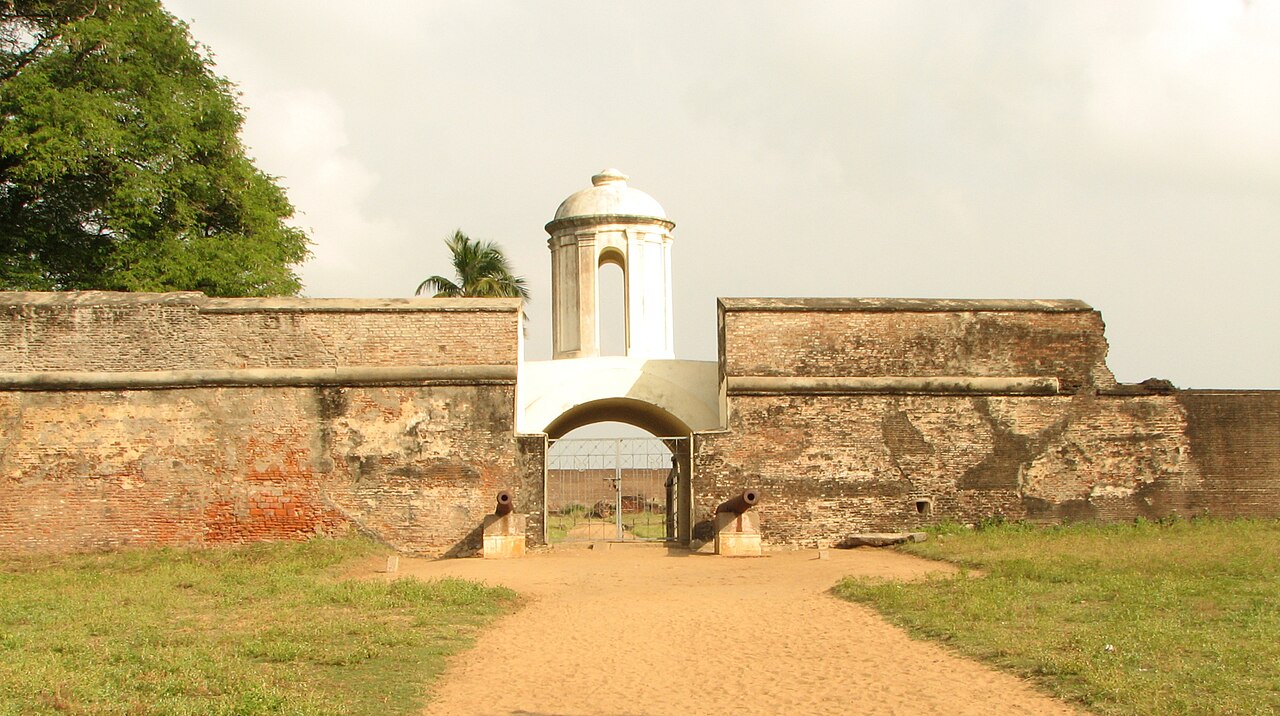
Following the decline of Dutch influence, Fort Geldria lost its military significance and fell into disrepair. Today, it remains a partially preserved historical site, with some bastions and walls still visible, though much of the structure has suffered from erosion and neglect.
Efforts to preserve and study Fort Geldria continue, recognizing its value as a rare example of a Renaissance bastioned fortress in India and its role in the colonial history of the region.
Visiting Fort Geldria
Visitors to Pulicat can explore the remains of Fort Geldria, gaining insight into early European colonial architecture and military engineering in India. The site offers a glimpse into the Dutch East India Company's operations and the complex history of European competition on the Coromandel Coast.
While the fort is in a state of partial preservation, it remains an important cultural and historical landmark, attracting scholars and tourists interested in colonial history and fort architecture.
Frequently asked questions (FAQ)
- How do I get to Fort Geldria?
- Fort Geldria is located in Pulicat, India, and can be reached by road from major cities like Chennai and Tirupati. The nearest railway station is at Chennai, approximately 60 kilometers away, making it convenient for visitors traveling by train.
- What is the historical significance of Fort Geldria?
- Fort Geldria was built in the 17th century by the Dutch East India Company and served as a strategic trading post. It played a vital role in the maritime trade routes of the time and reflects the colonial history of the region.
- When was Fort Geldria constructed?
- Construction of Fort Geldria began in 1660 and was completed in 1664. Its architecture showcases the influence of European military designs adapted to the Indian context.
- Can I explore the interiors of Fort Geldria?
- Yes, visitors can explore the fort's interiors, including its walls and remaining structures. Guided tours are available, providing insights into its history and architecture.
- Why is Fort Geldria an important architectural site?
- Fort Geldria is significant for its unique blend of Dutch and Indian architectural styles, illustrating the cultural exchange during colonial times. The fort's design features thick walls and bastions, typical of European military architecture.
- Is it possible to visit Fort Geldria year-round?
- Yes, Fort Geldria is open for visitors throughout the year. However, the best time to visit is between October and March when the weather is more pleasant.
- What are the opening hours for Fort Geldria?
- Fort Geldria is typically open from 9:00 AM to 5:00 PM, allowing ample time for visitors to explore its grounds. It is advisable to check for any changes in hours during holidays or special events.
- What are the ticket prices for visiting Fort Geldria?
- The entrance fee to Fort Geldria is quite affordable, typically ranging from INR 20 to INR 50 per person. Children and students may receive additional discounts, making it accessible for families and educational trips.
- What nearby attractions should I visit while at Fort Geldria?
- While visiting Fort Geldria, you can also explore the Pulicat Lake, known for its bird sanctuary and scenic beauty. Additionally, the nearby Dutch Cemetery offers a glimpse into the colonial past of the region.
Photo gallery

Photo by Johannes Janssonius Waasbergen (publisher), Anoniem / Anonymous (engraver / etcher)•Public domain
Information
Loading map...
Visitor reviews
No reviews yet. Been here? Write the first review and help other travelers!
Write the first reviewVisited this castle? Share your experience
Your review helps other travelers and adds first-hand knowledge to our encyclopedia.