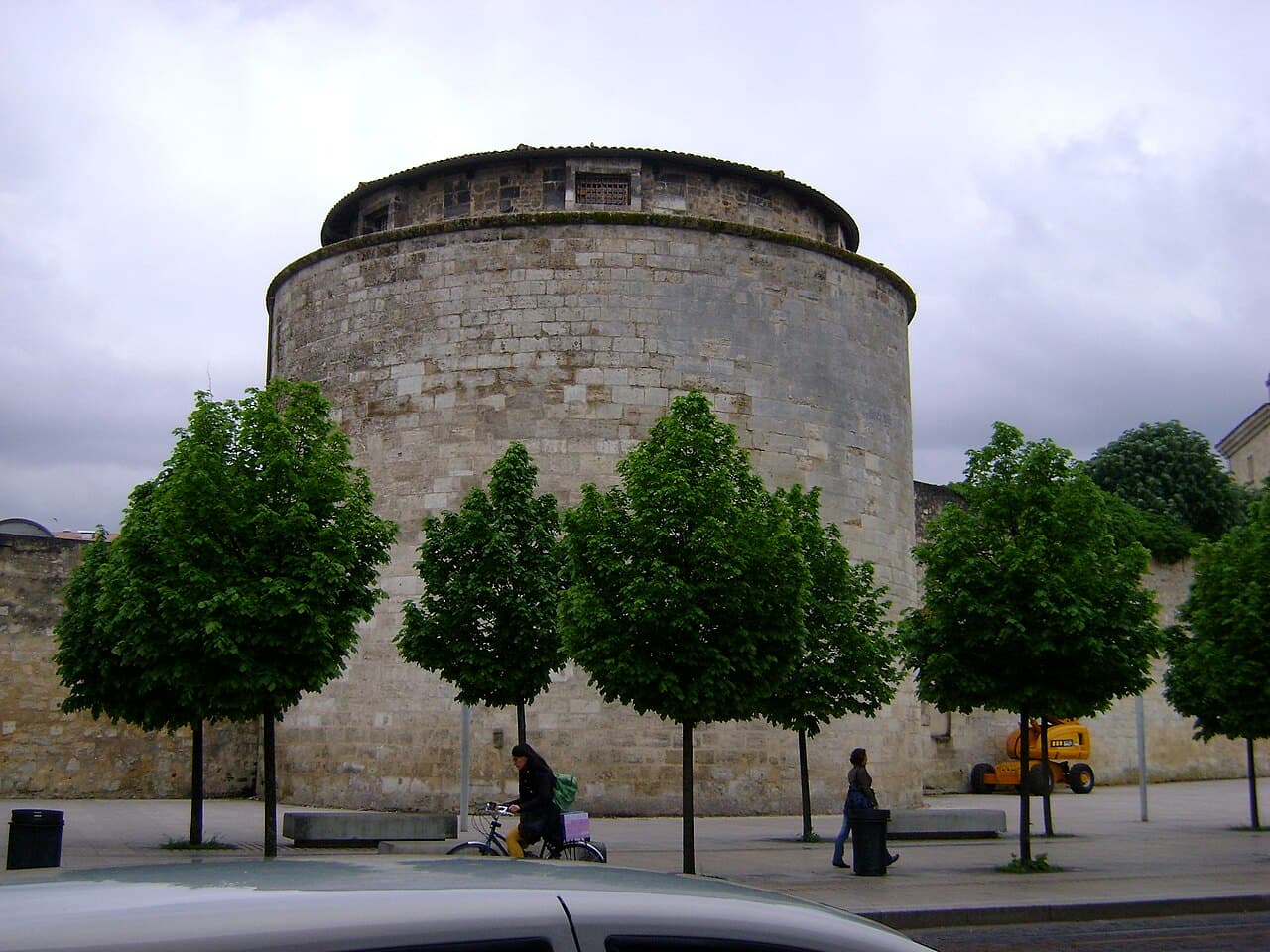
Fort du Hâ
Fort du Hâ in Bordeaux, France, represents a significant historical site combining medieval origins with 19th-century military architecture. Originally constructed as part of the Château du Hâ in the 15th century, the site was later transformed into a fortified prison in 1846 during the Modern period. The castle's initial purpose was to secure the strategic city of Bordeaux and assert control over the Gascon region following the Hundred Years' War, under the orders of Charles VII.
Medieval origins and château du hâ
The original Château du Hâ was a medieval fortress built in the 15th century, serving as a royal residence and military stronghold. Its construction marked an important effort by the French crown to consolidate power in southwestern France after decades of conflict with England. Although much of the château was lost over time, the surviving two towers and sections of the stone walls remain valuable examples of late medieval military architecture in the region.
19th-century transformation into a bastioned fortress prison
In the mid-19th century, the site underwent a major transformation with the construction of Fort du Hâ as a bastioned fortress. This architectural style, characterized by angled bastions designed to deflect artillery fire, was typical of the era's military engineering. The fort was specifically designed to serve as a prison, incorporating robust defensive features to securely detain inmates. The adaptation of the medieval château remains into this modern fortress prison illustrates the evolution of military architecture from the medieval period to the industrial age.
Role during world war ii and political imprisonment
During the German occupation of France in World War II, Fort du Hâ was seized by German forces following the June 1940 invasion. It was repurposed as a prison for political detainees, including members of the French Resistance and other opponents of the Nazi regime. One of the most tragic events linked to the fort occurred on 23 October 1941, when 20 political prisoners were transferred from Fort du Hâ to Camp de Souge and executed in retaliation for the assassination of a German military advisor in Bordeaux. This event underscores the fort's grim role in the repression during the occupation.
Post-war use and demolition
After World War II, Fort du Hâ continued to function as a prison until its closure in 1967. Two years later, in 1969, most of the prison buildings were demolished to make way for the construction of the French National School for the Judiciary. Despite the demolition, the remaining medieval towers and wall fragments preserve the site's historical legacy. Today, a memorial plaque honors the memory of the deported internees and resistants from the Gironde region who perished in Nazi concentration camps between 1940 and 1945.
Architectural significance and heritage preservation
The surviving elements of the Château du Hâ and the 19th-century fortress prison provide a unique architectural palimpsest reflecting centuries of military and penal history. The combination of late medieval stonework and bastioned fortifications offers insight into the changing nature of defensive construction techniques. The site's preservation as a historical monument and memorial ensures that the complex history of Bordeaux's fortifications and the sacrifices made during World War II are not forgotten.
Visiting fort du hâ today
While the majority of the prison complex no longer exists, the remaining towers and walls are accessible to visitors interested in Bordeaux's military and wartime history. The location in the city center makes it a notable point of interest for those exploring the heritage of Nouvelle-Aquitaine. The memorial plaque serves as a poignant reminder of the human stories connected to this site.
Frequently asked questions (FAQ)
- What is the historical significance of Fort du Hâ?
- Fort du Hâ was originally a 15th-century château transformed into a 19th-century bastioned fortress prison. It played a key role during World War II as a German political prison and is a memorial site today.
- Can I visit the remains of Fort du Hâ in Bordeaux?
- Yes, visitors can see the surviving medieval towers and parts of the fortress walls in Bordeaux. The site includes a memorial plaque dedicated to those who suffered during World War II.
- When was Fort du Hâ built and what architectural style does it represent?
- Fort du Hâ was built in 1846 as a bastioned fortress prison, incorporating military architectural features typical of the Modern period, with remnants of the original 15th-century château.
- Why was Fort du Hâ used as a prison during World War II?
- During the German occupation of France, Fort du Hâ was seized and used to incarcerate political prisoners, including members of the French Resistance, reflecting its strategic and secure design.
- What remains of the original Château du Hâ today?
- Today, only two towers and some wall sections from the 15th-century Château du Hâ survive, integrated within the later fortress structures.
Photo gallery

Information
Loading map...
Visitor reviews
No reviews yet. Been here? Write the first review and help other travelers!
Write the first reviewVisited this castle? Share your experience
Your review helps other travelers and adds first-hand knowledge to our encyclopedia.


