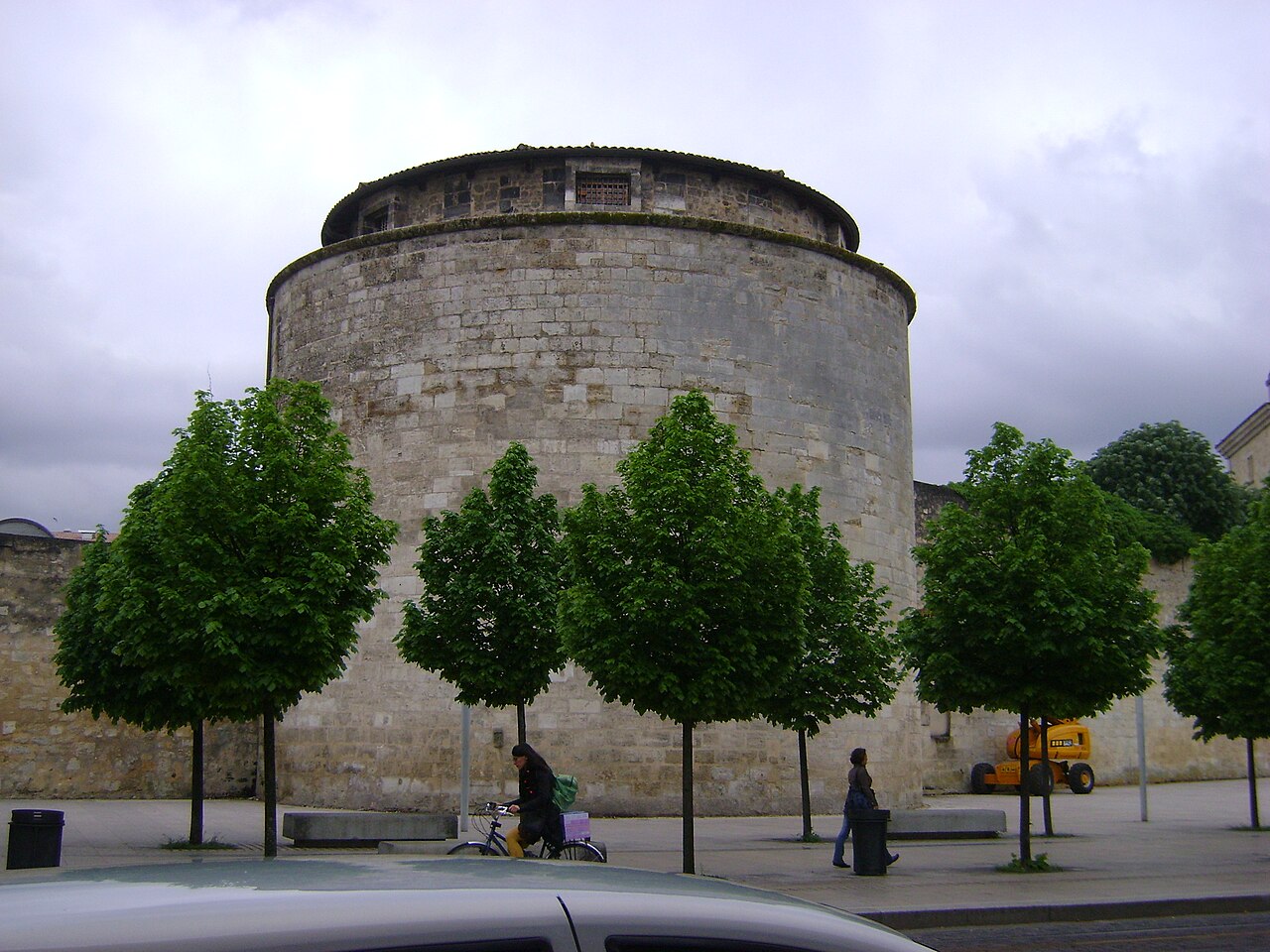
Château de Lormont
The Château de Lormont is a historic fortress located in Bordeaux, France, with origins dating back to around 1060. This high medieval castle has played a significant role in French history, notably as a residence for important figures and as a site for diplomatic negotiations.
Early construction and medieval significance
Constructed in the mid-11th century, the château was built during a period characterized by the establishment of fortified residences by regional lords in southwestern France. Its strategic position overlooking the Garonne River allowed control of river traffic and defense of the surrounding territory. The castle's original design likely included a fortified keep, curtain walls, and defensive towers typical of high medieval fortifications.
Residence of Eleanor of Aquitaine and the Black Prince
During the 12th century, the château is believed to have hosted Eleanor of Aquitaine during her marriage to King Louis VII of France. Eleanor was a powerful duchess and queen whose influence shaped medieval Europe. Later, in the 14th century, the castle was associated with Edward, the Black Prince, the eldest son of King Edward III of England and Prince of Aquitaine. The Black Prince used the château as a residence during the turbulent period of the Hundred Years' War.
Ownership by the archbishops of Bordeaux
In the 14th century, the château came under the possession of the archbishops of Bordeaux. As ecclesiastical lords, the archbishops maintained the castle as a symbol of their temporal power and as a fortified seat. The château likely underwent modifications to accommodate the needs of its clerical owners while retaining its defensive features.
Role in the Hundred Years' War and 1453 negotiations
The château's strategic importance continued through the Hundred Years' War, a prolonged conflict between England and France. In 1453, significant negotiations aimed at concluding the war took place within its walls. This event marked a turning point in French history, leading to the end of English territorial ambitions in the region.
Destruction and reconstruction in the early modern period
Over the centuries, the château suffered damage from military actions and natural decay. In 1626, it was notably rebuilt under the direction of architect Henry Roche for Cardinal Francis d'Escoubleau de Sourdis, a prominent church figure and military leader. The reconstruction included enhancements to the castle's defensive structures and living quarters, reflecting the architectural styles of the early 17th century. Later, Henri de Sourdis, the cardinal's brother, continued to maintain and modify the property.
Post-revolutionary status and modern use
Following the French Revolution in 1789, the château became national property, reflecting the widespread confiscation of aristocratic and ecclesiastical estates. In the modern era, the castle passed into private hands. A major renovation transformed the château into a functional space housing offices and a restaurant, blending historical preservation with contemporary use.
Architectural features and current condition
The Château de Lormont retains elements characteristic of its high medieval origins alongside modifications from the early modern period. Its location on a hillside overlooking the Garonne provides commanding views and natural defensive advantages. The castle's walls, towers, and gatehouses reflect the evolution of military architecture over several centuries. Today, it is well preserved and adapted for modern functions, balancing heritage conservation with practical use.
Visiting and cultural significance
While the château is private property and not regularly open to the public, its historical importance as a residence of medieval nobility and a site of pivotal historical events makes it a notable landmark in the Bordeaux region. The castle contributes to the understanding of medieval and early modern fortifications in southwestern France and the complex history of the Aquitaine region.
Information
Architect
Henry Roche
Current owner
Private owner
Loading map...
Visitor reviews
No reviews yet. Been here? Write the first review and help other travelers!
Write the first reviewVisited this castle? Share your experience
Your review helps other travelers and adds first-hand knowledge to our encyclopedia.