Château Lescombes
Château Lescombes stands as a remarkable example of a 17th-century Renaissance château located in the commune of Eysines, within the Bordeaux region of southwestern France. This château, with its roots tracing back to the medieval period, embodies a rich historical narrative intertwined with architectural evolution, noble lineage, and regional heritage. Its present form, built upon the foundations of earlier structures, reflects the resilience and transformation typical of French rural estates that have endured centuries of conflict and change.
Medieval origins and destruction
The origins of Château Lescombes date back to the medieval era when it was known as Château de la Plane. It was part of the seigneurie de la Plane, a rural estate managed by the Feuillants religious order, which oversaw vineyards and woodland in the area. The estate was originally under the ownership of the prosperous Bordeaux family led by Gratian Mullet, whose coat of arms featuring three ducks, known as the Tierçon de la Plane, symbolized the family’s prominence and was prominently displayed above the château’s main entrance.
This medieval château suffered significant destruction during the Hundred Years’ War, a prolonged conflict between France and England spanning the 14th and 15th centuries. The war's devastating impact led to the château's ruin, necessitating a complete rebuilding in the following centuries. The original medieval structure was largely lost, with only a few elements such as the Mullet family’s coat of arms and the cellar staircase surviving to connect the present château to its medieval past.
Rebuilt in the 17th century: architectural features
The château as it stands today was constructed in the 17th century, built on the foundations of the earlier medieval structure. The design follows a quadrilateral plan, enclosed by four corner towers, each topped with distinctive slate-covered roofs shaped like small pepperpots. This layout, including an interior courtyard, was initially established with expansions in 1537 and further refined under the Feuillants’ stewardship.
The château’s architecture reflects the Renaissance period influences prevalent in France during the 17th century, emphasizing symmetry and classical proportions while retaining defensive features typical of earlier periods. The four towers provide both aesthetic balance and a subtle nod to the château's fortified origins, although the structure primarily served as a noble residence rather than a military fortress at this stage.
Ownership and cultural transformation
In 1724, ownership of Château Lescombes passed to the Duret family, descendants of Benjamin Duret, a Bordeaux merchant and bourgeois figure. This transition marked a shift from traditional noble lineage to affluent merchant families acquiring rural estates, reflecting broader social changes in France during the early modern period.
The château remained in private hands until the late 20th century, when the municipality of Eysines acquired it in 1989. Since then, it has undergone a significant cultural transformation. Architect Marcel Mirande oversaw its conversion into a contemporary art center starting in 1998. Today, Château Lescombes hosts exhibitions focusing on late 20th-century painting and various artistic media, blending its historical ambiance with modern cultural functions.
The dovecote: a unique heritage feature
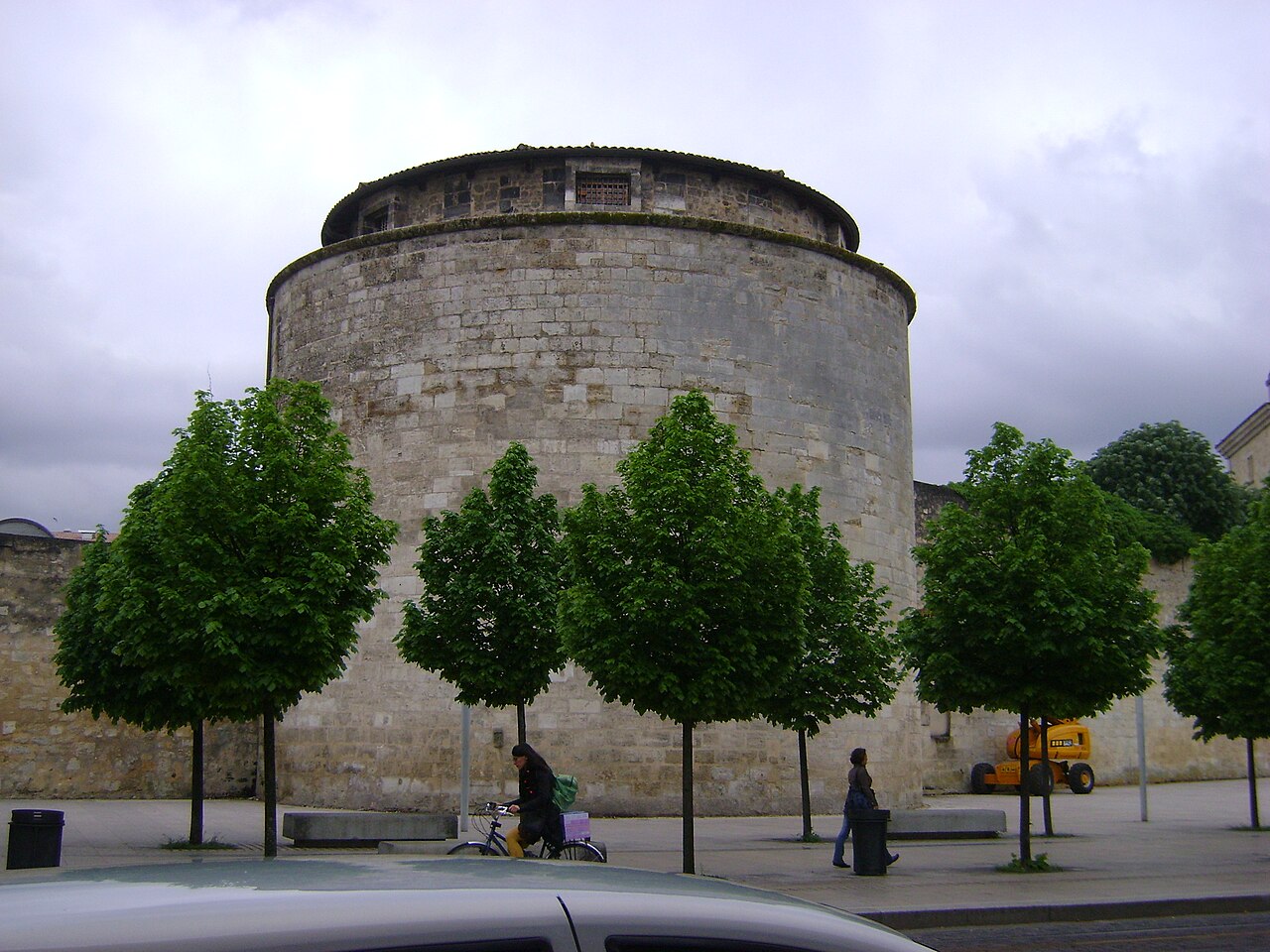
One of the château’s most notable heritage features is its 17th-century dovecote, which received official recognition as a historic monument in 1992. The dovecote is a substantial cylindrical stone tower capped with a domed stone roof, standing apart but adjacent to the main château building.
Unlike typical dovecotes, this structure lacks the traditional nesting boxes (boulins) but retains stone supports that once held a wooden floor about two meters above the base. This design closely resembles the dovecote at Pressac in the nearby Entre-deux-Mers region. Historically, the dovecote was crowned with a metal weather vane shaped like a flame, which was lost in a storm and not restored during repairs.
In the 19th century, the dovecote was ingeniously repurposed as a water tower, utilizing a well beneath it to supply the château with drinking water, demonstrating adaptive reuse of estate structures to meet changing needs.
Preservation and current use
The château’s quadrilateral layout with four corner towers and an interior courtyard has remained consistent since at least the early 19th century, as confirmed by cadastral records from 1811. The Mullet family’s coat of arms above the main entrance and the medieval cellar staircase are tangible links to the château’s earlier incarnations.
Adjacent to the château, a shed attached to the old enclosure now functions as part of an ecomuseum dedicated to market gardening. This museum preserves and displays tools, carts, and harnesses used in local agricultural practices, highlighting the château’s connection to the rural economy and heritage of the region.
The dovecote itself serves as an exhibition venue within the ecomuseum, showcasing collections of gardening implements and preserving the agricultural history tied to the château’s estate.
Today, Château Lescombes exemplifies the successful integration of historical preservation with contemporary cultural use, offering visitors a rich experience that spans centuries of French history, architecture, and art.
Frequently asked questions (FAQ)
- How do I get to Château Lescombes?
- Château Lescombes is located in Eysines, France, approximately 10 kilometers from the center of Bordeaux. You can reach the castle by car, public transport, or even by bicycle, as there are several bike paths leading to the area. If you're using public transport, the nearest tram station is just a short walk away from the castle.
- What is the historical significance of Château Lescombes?
- Château Lescombes dates back to the 18th century and has played an important role in the local wine production of the Bordeaux region. The estate is renowned for its beautiful architecture and its contribution to the cultural heritage of Eysines. It has also served as a venue for various historical events and gatherings throughout its history.
- When was Château Lescombes built?
- Château Lescombes was constructed in the mid-18th century, showcasing the elegance of the classical architectural style of that period. Its construction reflects the rich history of the region and the importance of viticulture in the area. The castle has been meticulously preserved, allowing visitors to appreciate its historical significance.
- Can I visit Château Lescombes year-round?
- Yes, Château Lescombes is open to visitors year-round, although opening hours may vary seasonally. It is advisable to check the official website for the most up-to-date information on visiting hours and any special events. Guided tours are available, allowing you to explore the castle and learn more about its history.
- Why is the architecture of Château Lescombes notable?
- The architecture of Château Lescombes is notable for its elegant classical style, characterized by symmetrical shapes and decorative elements. The castle features beautiful gardens that enhance its grandeur, making it a popular spot for photography and leisurely strolls. Its design reflects the opulence of 18th-century French architecture, attracting architecture enthusiasts.
- Is it possible to host events at Château Lescombes?
- Yes, Château Lescombes offers the possibility to host various events, such as weddings, corporate meetings, and private gatherings. The picturesque setting and historical ambiance make it an ideal location for special occasions. Interested parties should contact the castle management for details on event planning and availability.
- What are the ticket prices for visiting Château Lescombes?
- Ticket prices for Château Lescombes vary depending on the type of tour and any special events being held. Generally, entry fees are modest, making it accessible for most visitors. Discounts may be available for students and seniors, so be sure to inquire when purchasing your tickets.
- When is the best time to visit Château Lescombes?
- The best time to visit Château Lescombes is during the spring and fall seasons when the weather is mild and the gardens are in full bloom. This period also coincides with various wine festivals and cultural events in the region, enhancing your visit. Summer can be busy, while winter offers a quieter experience with fewer crowds.
- What nearby attractions can I explore after visiting Château Lescombes?
- After visiting Château Lescombes, you can explore nearby attractions such as the beautiful Parc Bordelais and the famous vineyards of the Bordeaux region. The city of Bordeaux itself, with its rich history and vibrant culture, is just a short distance away. Don't miss the opportunity to enjoy local cuisine and wine at nearby restaurants.
Information
Website
Visit websiteSources & official resources
Verify the information above using these authoritative references.
Loading map...
Visitor reviews
No reviews yet. Been here? Write the first review and help other travelers!
Write the first reviewVisited this castle? Share your experience
Your review helps other travelers and adds first-hand knowledge to our encyclopedia.