Fort Du Bus
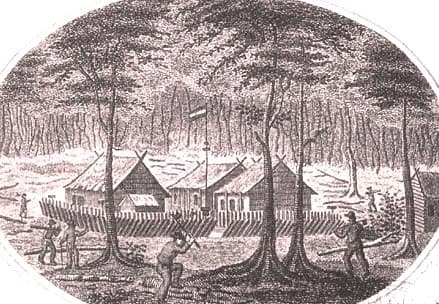
Fort Du Bus represents a significant chapter in the colonial history of Southeast Asia as the first European settlement on the southwest coast of New Guinea. Established in 1828 by the Dutch East Indies administration, the fort was located on Triton Bay in what is now the Kaimana Regency of West Papua, Indonesia. Its foundation marked a strategic move by the Dutch to assert control over the region and to counter British expansion in the Pacific during the early 19th century.
Historical context and establishment
The early 19th century was a period of intense colonial rivalry in the Pacific, with European powers seeking to expand their influence over uncharted territories. The Dutch, having long held sway over the Indonesian archipelago, aimed to solidify their claim to New Guinea amid growing British interest. Fort Du Bus was constructed as an administrative and trading post to establish a Dutch presence and facilitate trade with local indigenous communities.
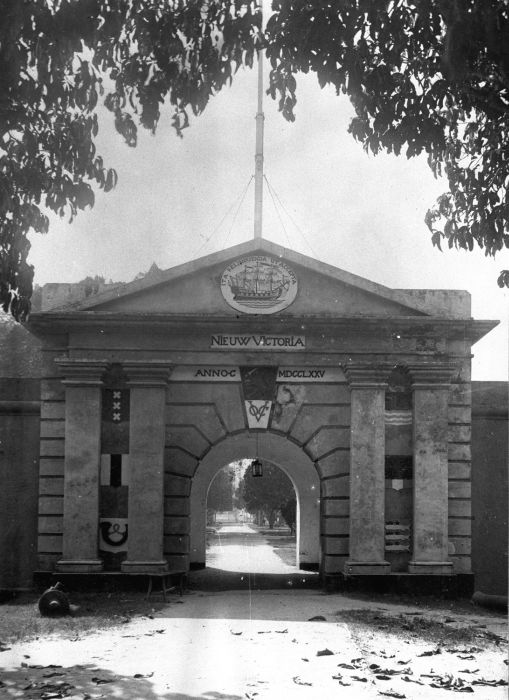
The fort was named after Lieutenant Governor-General Hendrik du Bus de Gisignies, a prominent Dutch colonial administrator who played a key role in its establishment. The location on Triton Bay was chosen for its natural harbor and strategic position along the coast, which was suitable for maritime activities and defense.
Architectural features and fortifications
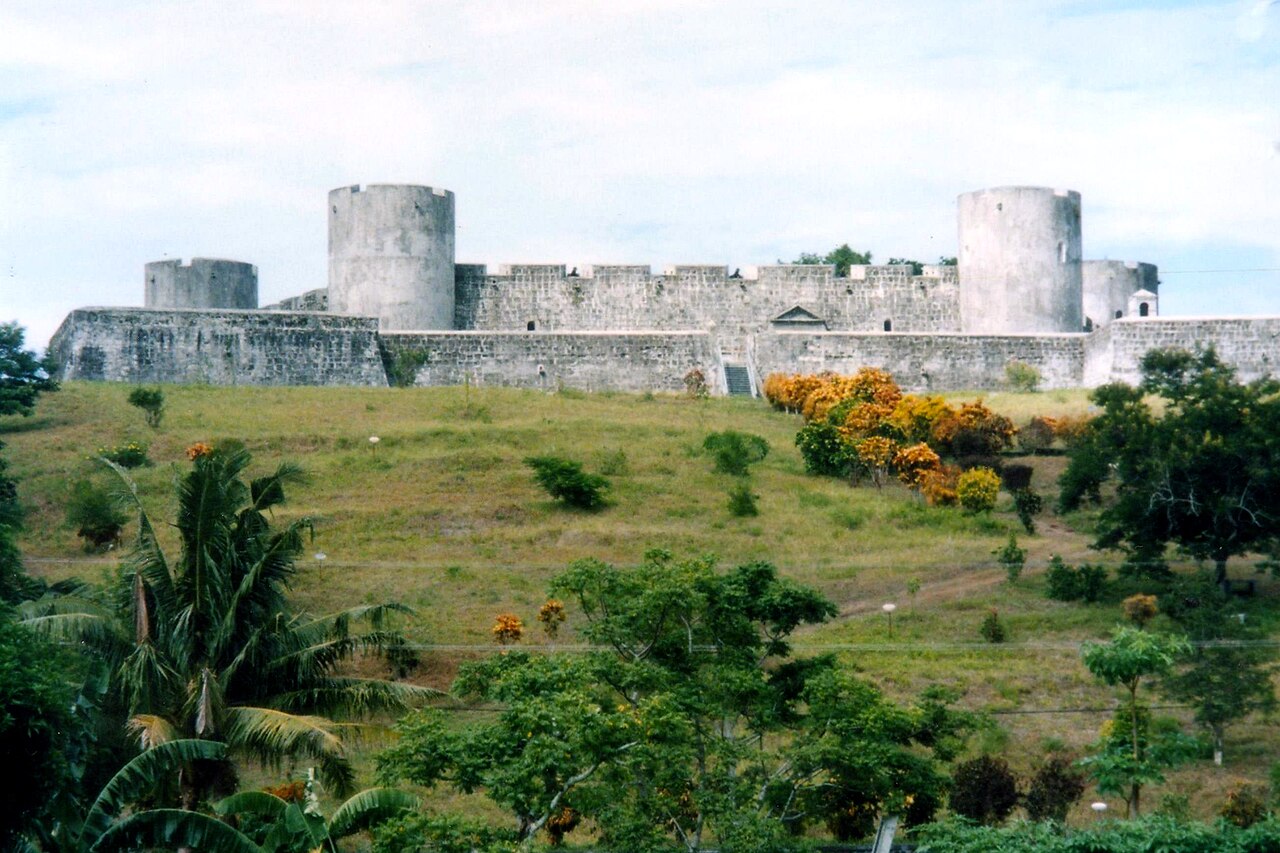
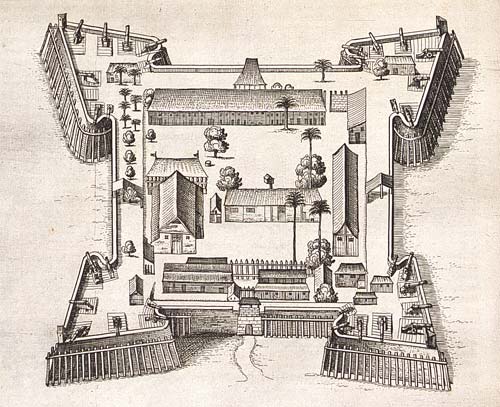
Fort Du Bus was designed as a bastioned fortress, a style typical of European colonial military architecture of the period. The fort's layout included angular bastions at the corners to provide overlapping fields of fire, a perimeter wall constructed from local materials, and a to deter attacks. The bastions were intended to protect the fort against potential assaults from rival European powers or hostile indigenous groups.
The internal structures likely included officers' quarters, a trading hall, storage facilities, and defensive positions. However, detailed architectural records are scarce due to the short-lived nature of the fort and its eventual abandonment.
Challenges and abandonment
Despite its strategic importance, Fort Du Bus faced numerous difficulties. The tropical climate of the region proved harsh for the European settlers, with high humidity, tropical diseases, and limited fresh water supplies impacting their health. Additionally, the fort experienced frequent attacks and resistance from local indigenous groups who opposed the foreign presence.
These challenges culminated in the decision to abandon the fort in 1835, just seven years after its establishment. The Dutch withdrew their personnel, leaving the site to fall into disrepair. The failure of Fort Du Bus highlighted the difficulties European powers encountered when attempting to establish footholds in remote and challenging environments.
Legacy and current status
Today, Fort Du Bus no longer exists as a standing structure, but its historical significance is commemorated by a monument erected on the original site in Triton Bay. The site serves as a reminder of the early colonial ambitions in New Guinea and the complex interactions between European powers and indigenous peoples.
Fort Du Bus holds a unique place in Indonesian history as the earliest European administrative post in West Papua, providing insights into the colonial strategies and challenges of the era. The monument and archaeological remnants attract interest from historians and visitors keen to understand the region's colonial past.
Geographical and cultural significance
Located in the Kaimana Regency, Fort Du Bus was situated in a region rich in indigenous cultures and biodiversity. The fort's establishment introduced new dynamics to local trade networks and cultural exchanges, although these were limited by the brief duration of the settlement.
The area surrounding Triton Bay remains important for understanding the early encounters between Europeans and the diverse peoples of New Guinea. The legacy of Fort Du Bus contributes to broader discussions on colonial history, indigenous resistance, and the geopolitical landscape of the Pacific in the 19th century.
Frequently asked questions (FAQ)
- When was Fort Du Bus established and by whom?
- Fort Du Bus was established in 1828 by the Dutch East Indies administration to assert Dutch presence in New Guinea.
- Why was Fort Du Bus abandoned?
- The fort was abandoned in 1835 due to the unhealthy tropical climate and frequent attacks by local indigenous groups.
- What type of fortification was Fort Du Bus?
- Fort Du Bus was a bastioned fortress designed with angular bastions for defense against attacks.
- Is there anything to see at the site of Fort Du Bus today?
- Today, a monument stands on the original site of Fort Du Bus in Triton Bay, marking its historical significance.
- Where is Fort Du Bus located?
- Fort Du Bus is located on Triton Bay in the Kaimana Regency of West Papua, Indonesia.
Photo gallery

Photo by Unknown authorUnknown author•Public domain
Information
Current owner
Indonesian government
Loading map...
Visitor reviews
No reviews yet. Been here? Write the first review and help other travelers!
Write the first reviewVisited this castle? Share your experience
Your review helps other travelers and adds first-hand knowledge to our encyclopedia.