Fort d'Ivry
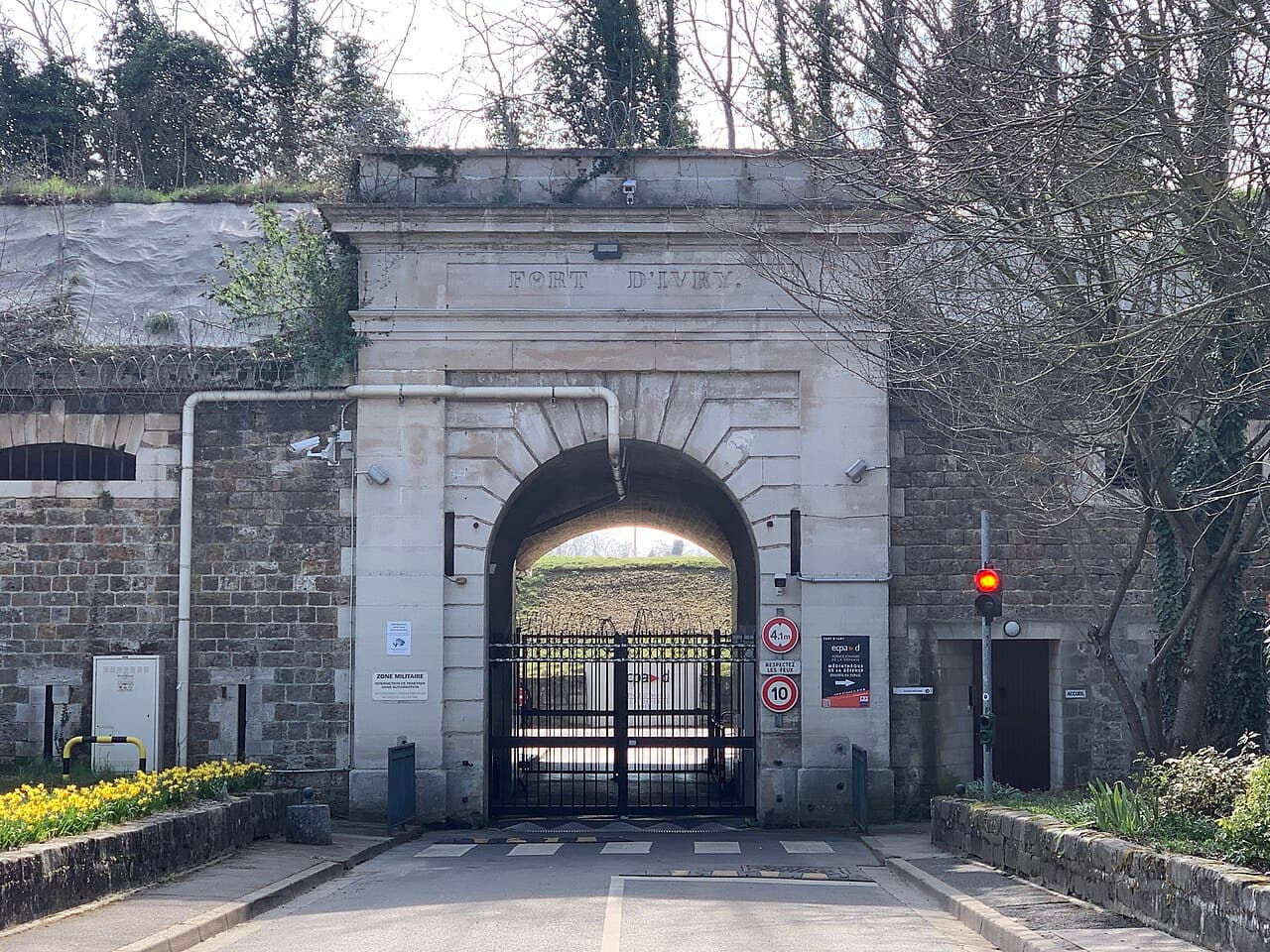
Fort d'Ivry is a notable example of a 19th-century bastioned fortress located in the suburb of Ivry-sur-Seine, just outside Paris. Constructed between 1841 and 1845, it formed part of a defensive ring of forts designed to protect Paris from potential invasions. This ring was built in conjunction with the Thiers Wall, a fortification line that encircled Paris, reflecting the strategic military thinking of the period which emphasized layered defense systems.
Historical context and strategic importance
The construction of Fort d'Ivry was driven by the need to secure the French capital against the threat of foreign armies following the turbulent aftermath of the Napoleonic Wars and the 1830 July Revolution. The Thiers fortifications and associated forts like Fort d'Ivry were part of a broader military modernization effort. Positioned approximately one kilometre beyond the Thiers Wall, Fort d'Ivry served as an advanced defensive point to delay or repel enemy forces before they could reach the city's primary fortifications.
During the mid-19th century, advances in military technology, particularly in artillery range and power, necessitated the construction of such outlying forts. Fort d'Ivry's location was carefully chosen to cover key approaches to Paris and to interlock with other forts in the defensive ring, creating overlapping fields of fire.
Architectural design and features
Fort d'Ivry exemplifies the bastioned fortress design typical of the period, characterized by angular bastions projecting outward from the main enclosure to provide defensive coverage along the walls. This design minimized blind spots and allowed defenders to fire upon attackers from multiple angles.
The fortress was constructed primarily from robust masonry materials, designed to withstand artillery bombardment. Its layout included a central parade ground surrounded by barracks, ammunition magazines, and service buildings. Defensive features such as moats, ravelins, and glacis enhanced its ability to resist assault.
In the 1870s, Fort d'Ivry underwent significant upgrades as part of the Séré de Rivières system, a comprehensive French military program aimed at modernizing fortifications in response to rapid improvements in artillery technology. These enhancements included reinforced walls, improved artillery positions, and updated defensive works to better absorb and respond to more powerful explosive shells.
Military use and later history
Throughout its active military use, Fort d'Ivry functioned as a key component of Paris's layered defense network. It was garrisoned by troops tasked with manning the fortifications and maintaining readiness against potential attacks.
Following the Second World War, the strategic importance of fixed fortifications diminished due to changes in warfare tactics and technology. In 1946, the military vacated Fort d'Ivry, ending its role as an active defense installation.
Modern use and preservation
Today, Fort d'Ivry serves a new purpose as the headquarters of the Établissement de communication et de production audiovisuelle de la Défense (E.C.P.A.D.), the Communication and Audiovisual Production Company for the French Department of Defense. This adaptation reflects the site's continued connection to national defense, albeit in a non-combat capacity.
The fortress remains well preserved, retaining much of its original structure and defensive features. Its robust construction and historical significance make it a valuable example of 19th-century military architecture and the evolution of fortification design in response to technological advancements.
Architectural significance and legacy
Fort d'Ivry represents a transitional phase in fortress design, bridging traditional bastioned layouts with the emerging needs imposed by modern artillery. The integration into the Séré de Rivières system highlights its role in the broader narrative of French military engineering.
Its location near Paris underscores the importance of capital defense in French military strategy during the 19th century. As part of a network of forts, it contributed to a defensive strategy that influenced fortress construction across Europe during this period.
Frequently asked questions (FAQ)
- How do I get to Fort d'Ivry?
- Fort d'Ivry is easily accessible via public transport. Visitors can take the RER C train to Ivry-sur-Seine station, followed by a short walk to the castle. Additionally, several bus routes serve the area, making it convenient for those traveling from nearby locations.
- What is the historical significance of Fort d'Ivry?
- Fort d'Ivry was built in the 19th century as part of a series of fortifications around Paris. It played a crucial role in the defense of the city during various conflicts, including the Franco-Prussian War. Today, it stands as a testament to military architecture and history in France.
- When was Fort d'Ivry constructed?
- Construction of Fort d'Ivry began in 1874 and was completed in 1881. It was designed by architect General Séré de Rivière as part of the larger fortification system surrounding Paris. The fort was strategically important for controlling access to the capital.
- Can I visit Fort d'Ivry?
- Yes, Fort d'Ivry is open to the public for visits. Guided tours are available, allowing visitors to explore the fort's fascinating history and architecture. It is recommended to check the schedule in advance, as tours may vary throughout the year.
- Why is Fort d'Ivry considered an architectural marvel?
- Fort d'Ivry is recognized for its unique blend of military functionality and aesthetic design. The fort features thick walls, a distinctive layout, and well-preserved defensive structures. Its architecture reflects the military strategies and technologies of the 19th century.
- Is it possible to host events at Fort d'Ivry?
- Yes, Fort d'Ivry offers facilities for hosting various events, including private functions and corporate gatherings. The historical setting provides a unique backdrop that can enhance any event. Interested parties should contact the management for details on availability and services.
- What are the opening hours for Fort d'Ivry?
- Fort d'Ivry is generally open to visitors from Tuesday to Sunday, with specific opening hours depending on the season. It is advisable to verify the hours before planning your visit, as they may change for holidays or special events. Always check their official website for the latest information.
- Are there any nearby attractions to visit along with Fort d'Ivry?
- Yes, visitors can explore several other attractions near Fort d'Ivry, including the Parc des Cités Unies and the historic center of Ivry-sur-Seine. Additionally, the proximity to Paris allows for easy access to iconic sites like the Eiffel Tower and the Louvre. Plan your visit to enjoy a full day of sightseeing.
- What are the ticket prices for visiting Fort d'Ivry?
- Ticket prices for Fort d'Ivry vary depending on age and whether you choose a guided tour. Generally, there are discounted rates for students and seniors, while children may enter for free. It’s best to check the official website for the latest pricing information and any special offers.
Photo gallery

Information
Current owner
Établissement de communication et de production audiovisuelle de la Défense (E.C.P.A.D.)
Loading map...
Visitor reviews
No reviews yet. Been here? Write the first review and help other travelers!
Write the first reviewVisited this castle? Share your experience
Your review helps other travelers and adds first-hand knowledge to our encyclopedia.