Château de Vincennes — France castle

Château de Vincennes

Château de Vincennes: historic royal fortress near Paris
Vincennes, France
Late Medieval (14th–15th c.)
Well Preserved

The Château de Vincennes stands as one of the most formidable and historically rich royal fortresses in France, located in the town of Vincennes just east of Paris. Originating as a modest hunting lodge established by King Louis VII around 1150 within the dense forest of Vincennes, the site evolved over centuries into a grand medieval castle and royal residence. Its strategic location near the French capital made it a favored retreat for monarchs and a key defensive stronghold during turbulent periods of French history.

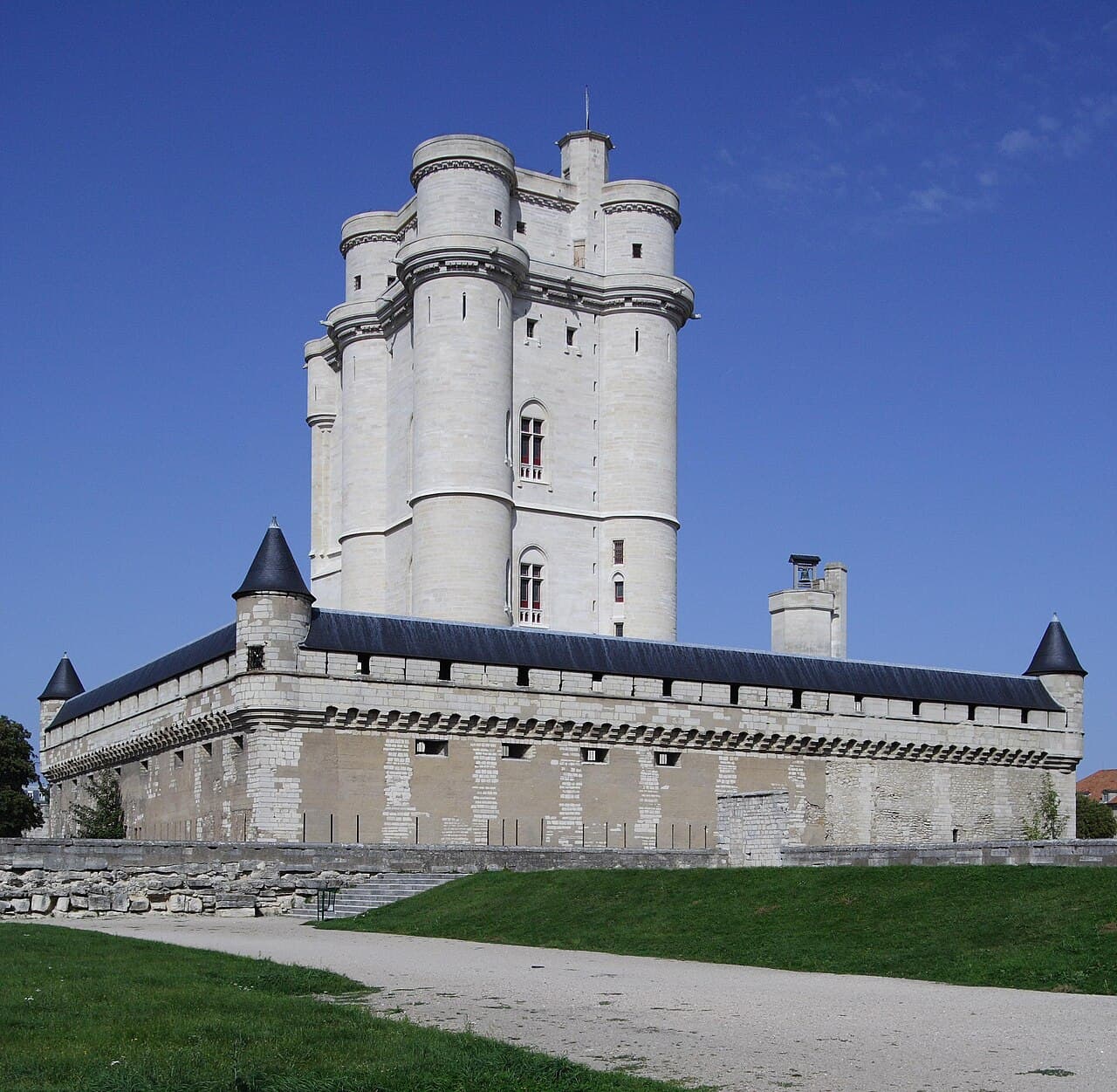
By the mid-14th century, the château underwent a dramatic transformation under King Philippe VI, who initiated the construction of the massive donjon (keep) around 1337. This towering structure, rising to an imposing height of 52 meters, remains the tallest medieval fortified tower in Europe and a prime example of military architecture of the Late Medieval period. The donjon's robust square form, reinforced with pioneering use of iron bars, was designed not only for defense but also as a royal residence, featuring richly decorated apartments and a personal library for King Charles V.

Medieval origins and royal significance

Before the donjon's construction, the site hosted a royal manor established by Louis VII and later expanded by Philip Augustus and Louis IX in the 12th and 13th centuries. The château witnessed several important royal events, including the marriages of Philippe III and Philippe IV, as well as the deaths of three 14th-century kings: Louis X, Philippe V, and Charles IV. The castle was not solely a fortress but also a center of royal life and governance.

Under Charles V, born at Vincennes in 1364, the château saw significant expansion. Between 1372 and 1380, a grand rectangular circuit of fortified walls approximately 330 by 175 meters enclosed the site, featuring six towers and three gates, each originally standing about 13 meters high. This enceinte was designed to protect the donjon and the royal apartments within. The Sainte-Chapelle de Vincennes, commissioned in 1379 and completed in 1552, was built to house sacred relics and stands as a masterpiece of flamboyant Gothic architecture.

Architectural features and defensive design

The château's defensive architecture is exemplary of medieval military engineering. The donjon is a massive square tower with walls up to 3.2 meters thick at the base, anchored by four cylindrical corner towers each 6.6 meters in diameter. The use of over two and a half kilometers of iron reinforcement bars throughout the structure represents an early and innovative application of rebar technology in medieval construction.

Inside, the donjon comprises eight floors arranged around large central rooms approximately 10 meters square. The lower floors served as kitchens and storage, while the first two floors housed the royal apartments adorned with oak paneling, painted stone keystones, and coats of arms. Upper floors accommodated servants, soldiers, and later prison cells, reflecting the building's evolving functions.

The château is surrounded by a deep, stone-lined moat fed by the Ru de Montreuil stream, enhancing its defensive capability. The fortified curtain walls, originally featuring six towers and three main gates, were designed to withstand sieges and assaults. Although several towers were demolished or altered in the 19th century, notable towers such as the Tour du Village remain preserved.

17th-century additions and royal apartments

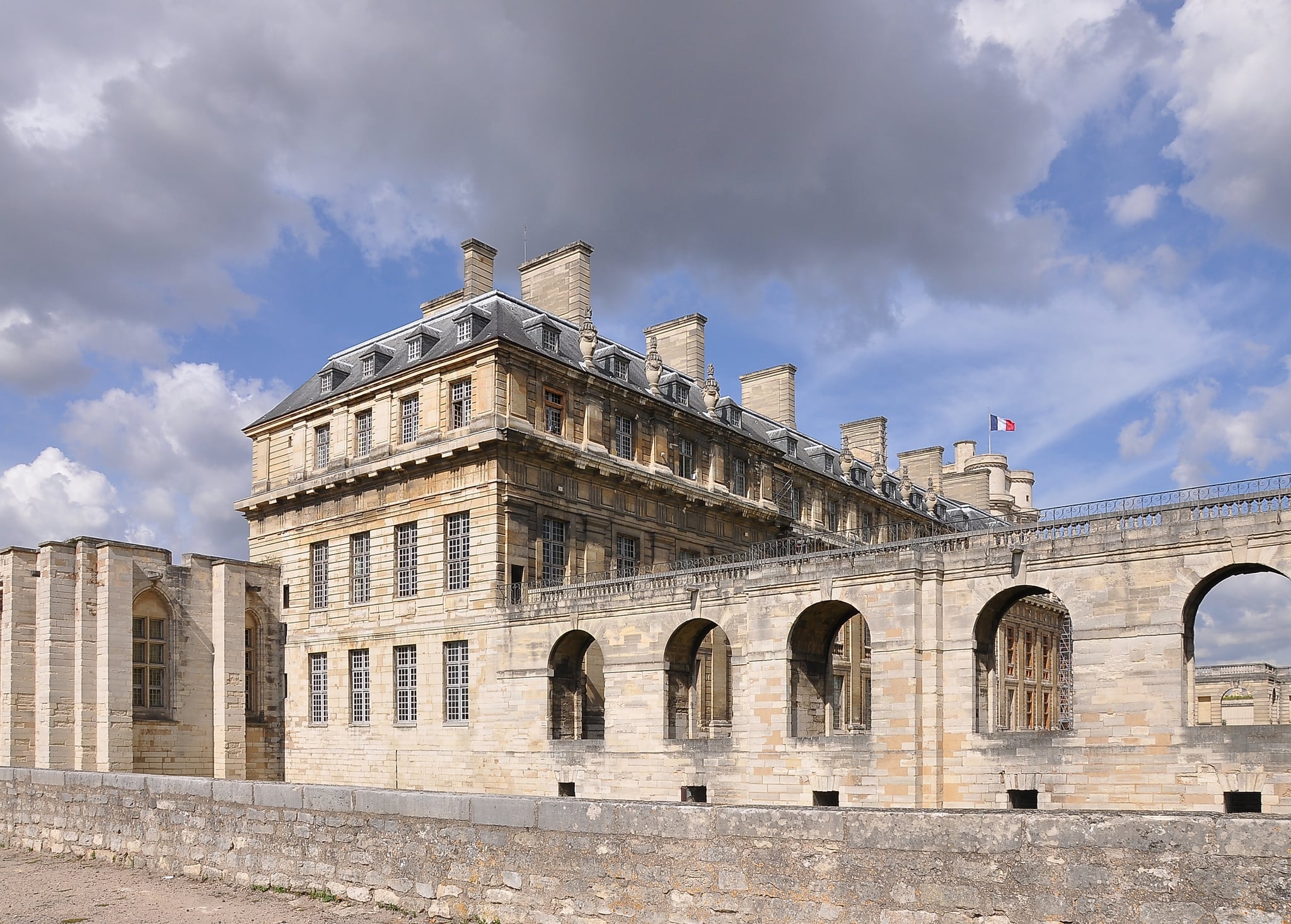
In the 17th century, architect Louis Le Vau added two classical pavilions — the Pavilion of the King and the Pavilion of the Queen — reflecting the emerging Louis XIV style. These three-story buildings, positioned symmetrically across a parterre garden near the donjon, were intended to accommodate the Queen Mother and Cardinal Mazarin. Although the château's redevelopment halted as the court shifted focus to Versailles, these pavilions showcase early examples of the grandeur that would define French Baroque architecture.

The château as prison and military site

From the 17th century onward, the château's role shifted towards that of a state prison and military arsenal. It housed infamous prisoners such as Nicolas Fouquet, the Marquis de Sade, Diderot, Mirabeau, and the confidence man Jean Henri Latude. The château also hosted a porcelain manufactory in the 18th century before being converted into an arms factory in 1796.

The château witnessed significant historical events, including the execution of the duc d'Enghien in 1804 and the execution of Mata-Hari in 1917. During World War II, it was the site of tragic executions by Nazi forces in 1944. Despite these dark chapters, the château has been preserved as a monument of French heritage.

Modern conservation and cultural significance

In the 19th century, under Napoleon III, the château and the surrounding Bois de Vincennes were transformed into a public park. Architect Viollet-le-Duc undertook restoration work on the donjon and chapel, helping to preserve the château's medieval character. Today, the château serves as the headquarters of France's Defence Historical Service, housing a museum within the donjon that showcases its rich military and royal history.

Archaeological excavations conducted in the late 20th century uncovered thousands of medieval artifacts, including terracotta tiles and numerous mason's marks, shedding light on the complex construction processes and craftsmanship involved in the château's creation. Ongoing conservation efforts aim to maintain the château's structural integrity and historical authenticity for future generations.

The Château de Vincennes remains a striking testament to France's medieval and early modern history, combining military innovation, royal grandeur, and cultural heritage. Its towering donjon, extensive curtain walls, and elegant royal apartments continue to attract visitors and scholars alike, offering a vivid window into the evolution of French castle architecture and royal life.

Frequently asked questions (FAQ)

What is the historical significance of Château de Vincennes?
Château de Vincennes is one of the best-preserved medieval castles in France and served as a royal residence and a fortress during the Middle Ages. It played a crucial role in the history of the French monarchy, particularly during the reign of Charles V. Today, it stands as a symbol of France’s architectural heritage and royal history.
When was Château de Vincennes built?
Construction of Château de Vincennes began in the 14th century, with its most significant developments occurring during the 15th century. Originally built as a hunting lodge for King Louis VII, it evolved into a formidable fortress over the years. The castle has witnessed numerous historical events and transformations throughout its long history.
Can I visit Château de Vincennes?
Yes, Château de Vincennes is open to the public, allowing visitors to explore its impressive architecture and expansive grounds. There are guided tours available that provide deeper insights into its history and significance. Be sure to check the official website for any specific visitor requirements or restrictions.
What are the opening hours for Château de Vincennes?
The opening hours for Château de Vincennes can vary depending on the season. Generally, it is open every day except Mondays, with extended hours during the peak tourist season. It’s advisable to check the official website for the most current information on opening times.
Is it possible to access the castle with mobility aids?
Yes, Château de Vincennes is equipped with facilities to assist visitors with mobility challenges. There are ramps and accessible paths throughout the grounds, though some areas may have limited access due to historical preservation. It’s recommended to contact the site in advance for specific accessibility information.
What is the best time to visit Château de Vincennes?
The best time to visit Château de Vincennes is during the spring and fall when the weather is mild and the gardens are in full bloom. Additionally, visiting on weekdays can help you avoid larger crowds during peak tourist seasons. Always check for any special events or programs that may enhance your experience.
Are there nearby attractions to visit while at Château de Vincennes?
Absolutely! Nearby attractions include the Parc Floral de Paris, which offers beautiful gardens and outdoor activities, and the historic town of Vincennes itself, featuring quaint shops and cafes. The Bois de Vincennes park is also close by, providing a scenic area for walks and picnics.
How much do tickets to Château de Vincennes cost?
Tickets to Château de Vincennes are reasonably priced, with discounts available for students and seniors. Children under a certain age may enter for free. For the most accurate pricing, check the official website before your visit.

Photo gallery

Château de Vincennes
Click to view

Photo by ignis•CC BY-SA 3.0

1 photo • Click any image to view in full screen

Information

Hill Castle

Sources & official resources

Verify the information above using these authoritative references.

Loading map...

Visitor reviews

No reviews yet. Been here? Write the first review and help other travelers!

Write the first review

Visited this castle? Share your experience

Your review helps other travelers and adds first-hand knowledge to our encyclopedia.

Write a review

(5/5)

0/2000 characters

Your review will be visible after admin approval

Nearby castles

0.2 km

Sainte-Chapelle de Vincennes

Vincennes, France

The Sainte-Chapelle de Vincennes stands as a remarkable example of Gothic royal chapel architecture within the historic Château de Vincennes complex, located in the commune of Vincennes, just east of Paris, France. Founded in 1379 by King Charles V, the chapel was intended to house sacred relics and serve as a prestigious royal place of worship. Its construction and evolution reflect the turbulent history and artistic achievements of medieval and Renaissance France. The chapel's design was inspired by the famous Sainte-Chapelle in Paris, yet it features a distinctive single-level structure approximately 20 meters high, differing from the two-level Parisian original. Measuring roughly 40 meters long and 12 meters wide, the chapel's nave is divided into four and a half rectangular bays, culminating in a polygonal apse with a unique five-fifteenth angled termination. The exterior is characterized by strong buttresses crowned with pinnacles and spires, and large stained glass windows that fill the bays up to the roofline, creating a luminous interior space. Historical development and royal patronage Construction began under Charles V but was interrupted by his death in 1380. His successor, Charles VI, oversaw significant progress, completing key elements such as the choir, two oratories, sacristy, and treasury. The treasury was designed to hold precious relics of the Passion of Christ, underscoring the chapel's religious and royal significance. The chapel was dedicated to the Virgin Mary and the Holy Trinity, staffed by a chapter of fifteen canons who prayed for the king and royal family. The Hundred Years’ War severely disrupted construction, especially after the English victory at the Battle of Agincourt in 1415, which led to English occupation of the site. The chapel returned to French control in 1437 but remained unfinished for decades. In the 16th century, King Francis I initiated efforts to complete the chapel, with Henry II finishing the work between 1547 and 1552. Henry II added vaults, intricate carved woodwork, and magnificent stained glass windows. He also relocated the seat of the Order of Saint Michael to the chapel in 1555, enhancing its status as a royal ceremonial site. Architectural features and artistic elements Exterior design and structural elements The chapel’s Flamboyant Gothic west façade, completed in 1552, features a large rose window framed by three ornate gables. Although the original roof spire was destroyed during the French Revolution in 1793, the exterior remains notable for its functional gargoyles that serve as rain spouts and its imposing buttresses topped with pinnacles and spires. Interior layout and decoration The interior vaults are adorned with keystones bearing royal monograms and emblems, including the crescent moon and initials of Henry II, Catherine de’ Medici, and Charles IX. The choir once housed exquisitely carved wooden stalls for the Order of Saint Michael, although these were destroyed during the Revolution. Many original sculptures dating from around 1390 to 1410 were lost, but some high and difficult-to-reach pieces survive, such as a 15th-century Virgin and Child over the west portal voussures and a tympanum above the sacristy doorway depicting the Coronation of the Virgin. Stained glass windows Most of the chapel’s original stained glass windows in the nave were destroyed during the Revolution and replaced with clear glass to maximize light. However, the apse retains stunning Renaissance stained glass created between 1551 and 1559 by Nicolas Beaurain. These windows depict scenes from the Book of Revelation, framed with grisaille architectural designs and royal emblems. One window notably shows Henry II kneeling in prayer. These windows underwent restoration in the 19th century, preserving their intricate artistry. Impact of wars and restoration efforts The chapel suffered significant damage during the French Revolution, including the destruction of sculptures, stained glass, and the removal of the Baptistery of Saint Louis to the Louvre. The tomb of Louis Antoine, Duke of Enghien, executed nearby in 1804, was placed inside the chapel in 1816, adding to its historical significance. In the 19th century, renowned architect Eugène Viollet-le-Duc led restoration efforts that revived much of the chapel’s Gothic character. The chapel was declared a historical monument in 1853, ensuring its preservation. Further damage occurred in the 20th century, notably a 1999 windstorm that destroyed several nave windows, which had been replacements for those lost during World War II. Restoration completed by 2009 repaired ceilings, sculptures, and the façade after a gargoyle fell. Layout and functional spaces The chapel includes two oratories attached to the choir: one on the north side for the king and one on the south side for the queen. These oratories feature cross-ribbed vaults, chimneys for heating, and small viewing slits toward the main altar, allowing private royal worship. The two-story sacristy on the north side contains the treasury on the upper floor and clerical storage below, emphasizing the chapel’s dual role as a religious and royal treasury site. Legacy and cultural significance Today, the Sainte-Chapelle de Vincennes remains a symbol of French royal history and Gothic architectural achievement. Despite the losses suffered during revolutionary and wartime upheavals, the chapel’s surviving elements—its soaring stained glass, vaulted ceilings, and royal emblems—offer a glimpse into the spiritual and political life of the French monarchy. Its status as part of the Château de Vincennes complex further enriches its historical context as a fortified royal residence and ceremonial center. Visitors to the chapel can appreciate its architectural elegance, artistic heritage, and the poignant history embedded in its walls, making it a vital cultural landmark in the Paris region.

Late Medieval (14th–15th c.)
Details
0.7 km
Vincennes Castle — France castle

Vincennes Castle

Vincennes, France

Vincennes Castle, located in the eastern suburb of Paris, France, stands as a monumental testament to medieval and early modern French royal power. This massive fortress originated in the 12th century and evolved through centuries of construction, serving variously as a royal residence, military stronghold, prison, and arsenal. Today, it is one of the most significant preserved medieval castles in Europe, renowned for its imposing 52-meter-high donjon, the tallest medieval fortified structure on the continent. Early origins and royal connections The site of Vincennes Castle began as a hunting lodge built around 1150 for King Louis VII amidst the dense forest of Vincennes. This modest beginning laid the groundwork for a complex that would grow into a major royal fortress. By the 13th century, under Philip Augustus and Louis IX, the lodge was replaced by a more substantial manor house. Notably, Louis IX, also known as Saint Louis, is said to have departed from Vincennes on the crusade during which he died, underscoring the site's early royal significance. Vincennes was not only a military site but also a place of royal life and ceremony. Philippe III and Philippe IV were each married at Vincennes in the late 13th century, and three 14th-century kings—Louis X, Philippe V, and Charles IV—died within its walls, marking it as a key royal residence during the medieval period. 14th-century transformation and architectural grandeur The castle underwent its most significant transformation in the 14th century, when it was extensively enlarged to replace the earlier manor. Construction began around 1336 under Philip VI of France, who commissioned the imposing donjon, a massive rectangular keep standing 52 meters tall. This keep remains one of the tallest and best-preserved medieval fortified towers in Europe and was a pioneering example of early use of reinforced masonry. The castle's grand rectangular curtain walls, enclosing a perimeter over one kilometer long (approximately 330 by 175 meters), were completed by the Valois dynasty around 1410. The enceinte featured six towers and three gates, each originally standing 13 meters high, surrounded by a deep, stone-lined moat that enhanced its defensive capabilities. The donjon was designed not only for defense but also as a royal residence, housing the personal library and study of Charles V. The chapel and religious significance Vincennes also held religious importance. The castle temporarily housed the relics of the Crown of Thorns while the famous Sainte-Chapelle in Paris was being prepared to receive them. A dedicated chapel was built within Vincennes, likely by Peter of Montereau, who may have also designed the Sainte-Chapelle. This chapel remains a significant architectural and spiritual feature of the castle complex. Notable historical events and figures Throughout its history, Vincennes Castle played host to numerous pivotal events. During the Wars of Religion in the 16th century, Henri IV was imprisoned there in 1574, and Charles IX died at Vincennes the following month. The castle also served as a prison for notable figures such as the marquis de Sade, Diderot, and Mirabeau. In the 17th century, the architect Louis Le Vau constructed two elegant wings—the Pavillon du Roi and the Pavillon de la Reine—reflecting the early style of Louis XIV. These buildings were intended for the Queen Mother and Cardinal Mazarin but were never fully completed due to the shift of royal focus to Versailles. The castle also witnessed dramatic moments during the Napoleonic era, including the execution of the duc d'Enghien in 1804 in its moat. Later, during the Napoleonic Wars, General Daumesnil, who famously declared he would surrender Vincennes only when he got his leg back, defended the fortress against coalition forces in 1814. Military use and decline After the 18th century, Vincennes Castle's military importance shifted. It was used as an arsenal and a state prison, housing various political prisoners. The castle narrowly escaped destruction during the French Revolution, when a mob attempted to demolish it in 1791 but was stopped by the marquis de Lafayette. In the 19th century, the castle grounds were transformed into an English landscape park, and restoration work was undertaken by Viollet-le-Duc on the keep and chapel under the direction of Napoleon III. The surrounding Bois de Vincennes was gifted to Paris as a public park, enhancing the site's cultural significance. Modern era and preservation During World War II, Vincennes served as the military headquarters for General Maurice Gamelin during the defense against the German invasion in 1940. The castle also witnessed tragic events during the liberation of Paris in 1944, when members of the French Resistance were executed in its eastern moat by the Waffen-SS. Today, Vincennes Castle is restored and maintained as a historic monument and museum. It houses the Defence Historical Service, preserving France's military heritage. Visitors can explore the impressive donjon, the extensive curtain walls, the chapel, and the elegant 17th-century pavilions, experiencing a rich tapestry of French history and architecture spanning the medieval to modern periods. Architectural features and layout The castle's layout is a rectangular enclosure measuring approximately 330 by 175 meters, surrounded by a deep, stone-lined moat. The keep and its enceinte occupy the western side, separated from the rest of the fortress by the moat. The donjon is a marvel of medieval military architecture, notable for its height and early use of reinforced masonry techniques. The curtain walls originally featured six towers, though most were reduced to wall height during 19th-century demolitions, with the exception of the Tour du Village on the north side. The southern end of the castle is dominated by the two wings designed by Louis Le Vau, the Pavillon du Roi and Pavillon de la Reine, which face each other across a formal parterre. Defensive elements The castle's fortifications include three main gates, each approximately 13 meters tall, and a deep moat providing formidable defense. The walls and towers were designed to withstand siege warfare typical of the Late Medieval period, incorporating thick stone construction and strategic placements for archers and artillery. Residential and ceremonial spaces Within the walls, the donjon served as the royal residence and included private chambers, a library, and a chapel. The 17th-century additions by Louis Le Vau introduced more refined residential spaces reflecting the evolving tastes of the French court, blending functionality with early Baroque elegance.

Late Medieval (14th–15th c.)
Details
2.9 km
Beauté-sur-Marne — France castle

Beauté-sur-Marne

, France

Beauté-sur-Marne Castle was a royal fortress located near Vincennes on the territory of what is now the commune of Nogent-sur-Marne in France. This hill castle was constructed during the 14th century, placing it firmly in the late medieval period, a time characterized by the evolution of castle architecture from purely defensive structures to more comfortable royal residences. Historical context and royal significance The castle was built under the reign of King Charles V of France (1338–1380), known as Charles the Wise, who ruled from 1364 to 1380. Beauté-sur-Marne was part of a network of royal residences in the region surrounding Paris, including the more famous Château de Vincennes. It served as a retreat and a symbol of royal authority and prestige. The castle gained literary recognition through the writings of Eustache Deschamps (1346–1406), a notable French poet of the time. In one of his ballads, Deschamps praised the castle's location and beauty, highlighting the pleasantness of the site at the edge of the forest of Vincennes. He attributed the castle's name, "Beauty," to the Dauphin of Viennois, the eldest son of King Charles V, reflecting its association with the royal family. Architectural features and layout As a hill castle, Beauté-sur-Marne was strategically positioned on elevated ground, providing natural defensive advantages. The castle likely featured typical late medieval fortifications such as thick stone curtain walls, towers for surveillance and defense, and possibly a moat or other water defenses, although specific details are scarce. The architecture would have combined military functionality with residential comfort, as was common in the late medieval period. The castle probably included a keep or donjon as a stronghold, living quarters for the royal family and their retinue, chapels, and service buildings arranged around a central courtyard. Relationship to the forest of Vincennes The castle's proximity to the forest of Vincennes was significant both strategically and recreationally. The forest was a royal hunting ground, and castles like Beauté-sur-Marne served as bases for hunting parties and royal leisure activities. The forest also provided a natural barrier and contributed to the castle's scenic setting, which was celebrated in contemporary poetry. Later history and current status Over the centuries, Beauté-sur-Marne did not achieve the enduring fame of nearby Vincennes Castle, and much of its structure has not survived to the present day. The castle's exact remains are limited, and it is considered an archaeological site rather than a standing fortress. Today, the location is part of the modern urban area of Nogent-sur-Marne, and the castle's historical footprint is primarily of interest to historians and archaeologists studying the royal residences of medieval France. Legacy and cultural importance Despite its limited physical remains, Beauté-sur-Marne holds a place in the cultural memory of the French medieval monarchy. Its mention in the poetry of Eustache Deschamps underlines its contemporary reputation as a pleasant and well-designed royal residence. The castle exemplifies the late medieval trend of royal fortresses serving both defensive and residential purposes, blending military architecture with the comforts expected by royalty.

Late Medieval (14th–15th c.)
Details