Château de Choisy
The Château de Choisy was a significant royal residence located in the commune of Choisy-le-Roi in the Val-de-Marne department, just a few kilometers southeast of Paris. This château played an important role in French history, particularly during the 17th and 18th centuries, and its remains today offer a glimpse into the architectural and cultural heritage of the Renaissance and early modern periods in France.
Historical background and royal connections
The origins of the Château de Choisy date back to the early 17th century, when it was constructed as a country residence for French nobility. The estate gained prominence when King Louis XV acquired the manor and château in October 1739. His purchase led to the renaming of the surrounding commune to Choisy-le-Roi, reflecting the royal association.
During Louis XV's ownership, the château was a favored retreat and was frequently visited by the king and his court. The residence was part of a broader network of royal estates near Paris that served both leisure and political purposes. The château's grounds and buildings were adapted and expanded to suit the tastes and needs of the monarchy during this period.
Architectural features and style
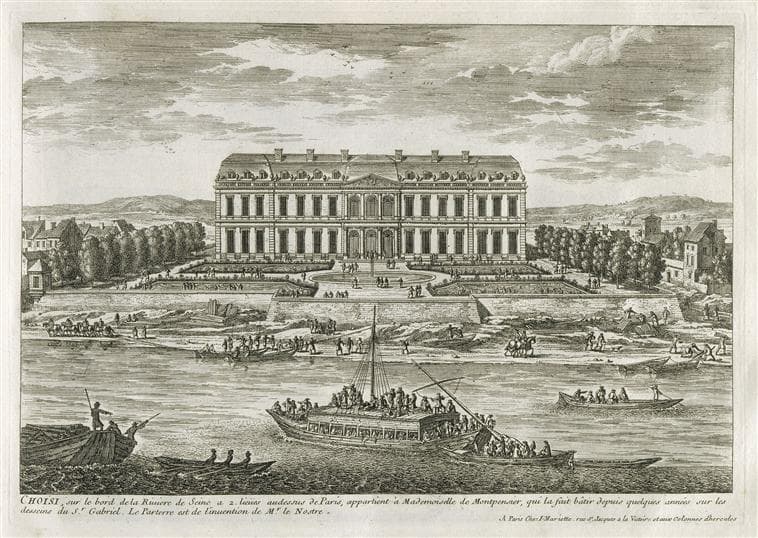
The Château de Choisy was constructed primarily in the Renaissance style, which was characterized by symmetry, classical proportions, and the incorporation of ornamental details inspired by ancient Roman and Greek architecture. The château featured a combination of elegant façades, formal gardens, and auxiliary buildings arranged to create a harmonious estate.
Key architectural elements included a central corps de logis flanked by wings, large windows to maximize natural light, and decorative stonework. The layout was designed to balance aesthetic appeal with functionality, accommodating royal guests and courtly activities.
Gardens and landscape
The château was surrounded by extensive formal gardens, typical of French aristocratic residences of the time. These gardens included geometric parterres, tree-lined avenues, and water features that enhanced the visual impact of the estate. The landscaping was carefully planned to complement the architectural design and provide spaces for leisure and social gatherings.
The château's decline and current state
Following the upheavals of the French Revolution and changes in ownership, the Château de Choisy gradually fell into disrepair. Over time, much of the original structure was demolished or deteriorated, leaving only partial ruins. Today, the site is classified as archaeological ruins, with remnants that reflect its historical significance and architectural heritage.
Despite its ruined condition, the château remains an important cultural landmark. Archaeological efforts and preservation initiatives have aimed to maintain the site's integrity and provide insight into its past grandeur.
Visiting the château and its surroundings
The Château de Choisy is located within the modern urban area of Choisy-le-Roi, making it accessible to visitors interested in French history and architecture. While the ruins do not offer the full experience of a restored château, they provide a tangible connection to the region's royal past.
Nearby attractions include other historic sites in the Val-de-Marne department and the broader Île-de-France region. Visitors can explore the local heritage alongside the château ruins, gaining a deeper appreciation for the area's historical development.
Frequently asked questions (FAQ)
- What is the historical significance of Château de Choisy?
- Château de Choisy is a notable example of French architecture from the 17th century, originally built for King Louis XIV's mother, Anne of Austria. This castle has witnessed significant historical events and served as a royal residence, making it an important landmark in the history of France.
- When was Château de Choisy built?
- Construction of Château de Choisy began in 1640 and was completed in 1656. Over the years, it has undergone various renovations, but it retains much of its original charm and historical features.
- Can I visit Château de Choisy?
- Yes, visitors are welcome to explore Château de Choisy, although access may be limited during certain times due to private functions or restoration work. It is advisable to check the official website for visitor information and any special events that may affect availability.
- What are the opening hours for Château de Choisy?
- Château de Choisy is generally open to the public from Tuesday to Sunday, with varying hours depending on the season. It is best to check the specific opening times on the castle's official website before planning your visit.
- Is it possible to purchase tickets online for Château de Choisy?
- Yes, tickets for Château de Choisy can typically be purchased online through their official website. Buying tickets in advance is recommended to avoid long queues and ensure your preferred visiting time.
- What is the best time to visit Château de Choisy?
- The best time to visit Château de Choisy is during the spring and early autumn months when the weather is pleasant and the gardens are in full bloom. Visiting during weekdays may also help you avoid larger crowds.
- Are there any nearby attractions to Château de Choisy?
- Yes, the area surrounding Château de Choisy offers several attractions, including the Parc de Choisy and the beautiful banks of the Seine River. Additionally, visitors can explore nearby towns with rich histories and charming architecture.
- Is Château de Choisy accessible for visitors with disabilities?
- Château de Choisy strives to be accessible for all visitors, including those with disabilities. However, it is advisable to contact the castle in advance to inquire about specific accessibility features and assistance available during your visit.
Photo gallery

Photo by Pérelle•Public domain
Information
Current owner
Municipality
Loading map...
Visitor reviews
No reviews yet. Been here? Write the first review and help other travelers!
Write the first reviewVisited this castle? Share your experience
Your review helps other travelers and adds first-hand knowledge to our encyclopedia.