Fort d'Embourg
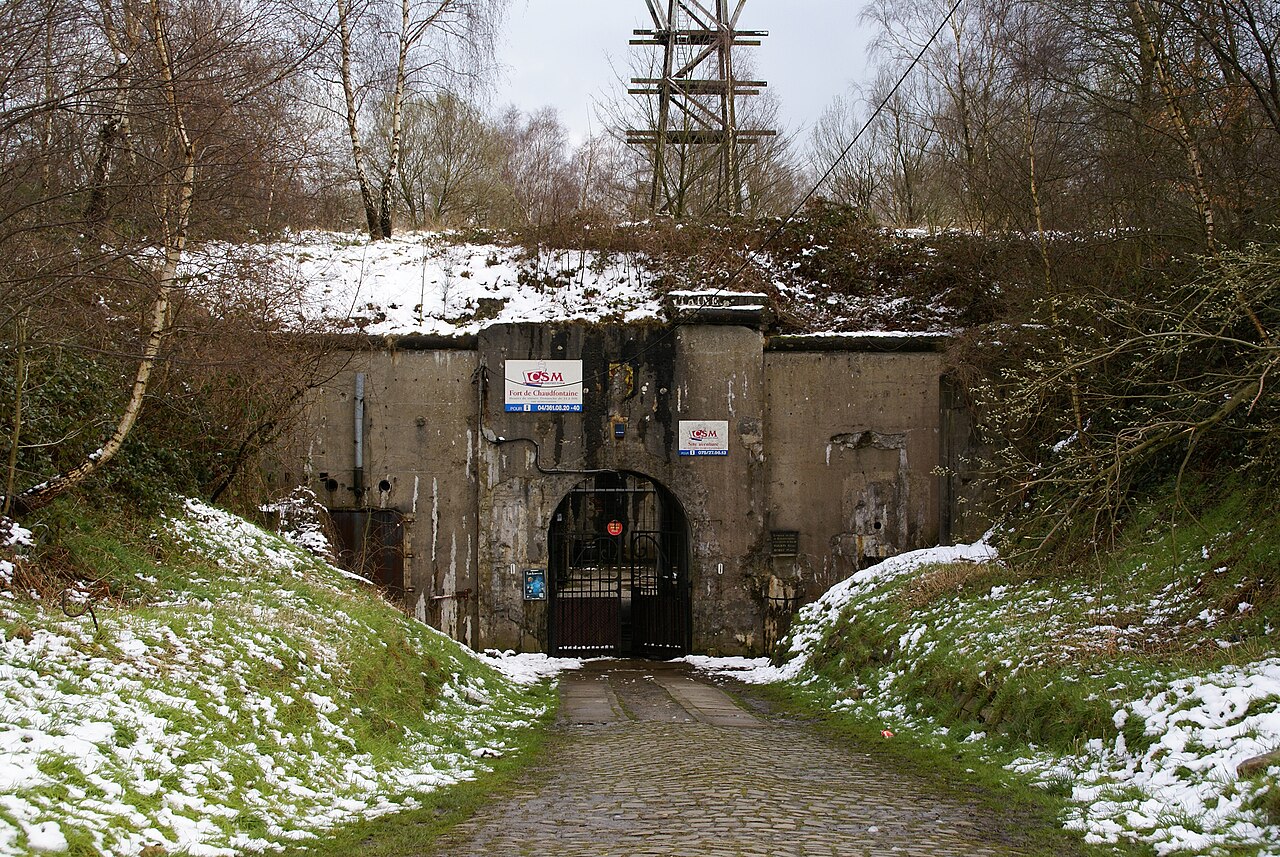
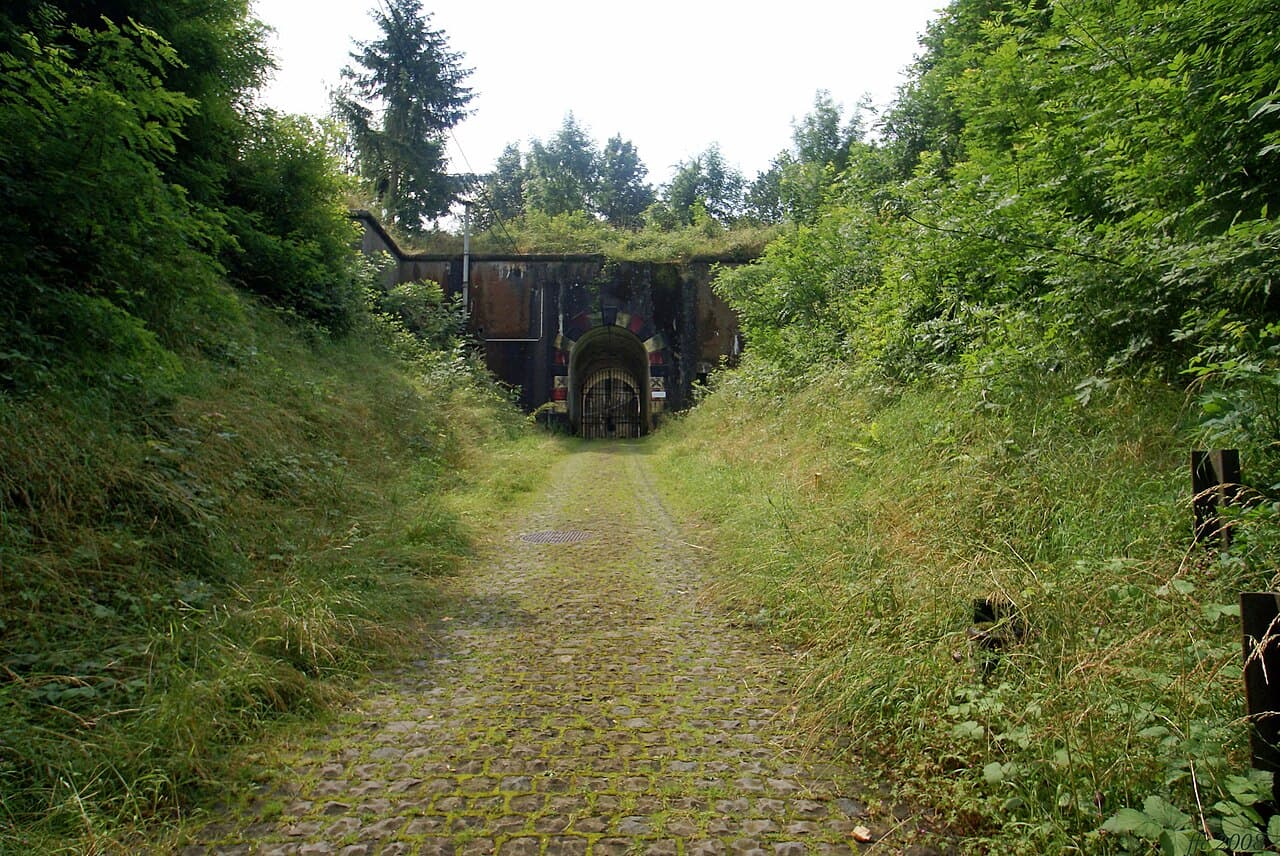
Fort d'Embourg is a significant bastioned fortress constructed in the late 19th century as part of the Fortified Position of Liège, a defensive ring of twelve forts surrounding the city of Liège, Belgium. Designed by the renowned military engineer General Henri Alexis Brialmont, the fort was built between 1881 and 1884 to strengthen Belgium's National Redoubt, a strategic defense system intended to protect the country from invasion.
Innovative construction and architectural design
Unlike contemporary French forts designed by Raymond Adolphe Séré de Rivières that primarily used masonry, Fort d'Embourg was pioneering in its exclusive use of unreinforced concrete. This material was novel at the time and represented a significant advancement in military architecture, offering improved resistance to artillery bombardment. The fort's layout follows the bastioned fortress model, featuring angular defensive walls designed to cover all approaches with overlapping fields of fire.
Structural features and defenses
The fort includes a central massif housing the main armaments, surrounded by a ditch and protected by caponiers—fortified structures projecting into the ditch to provide flanking fire. Its defensive perimeter is reinforced with battlements and gun emplacements designed for both artillery and infantry defense. The use of concrete allowed for thicker, more resilient walls and roofs compared to traditional masonry forts.
Historical significance and military engagements
Fort d'Embourg played a critical role during the Battle of Liège in World War I, where it endured intense bombardment by German artillery. The fort's robust construction delayed German advances, contributing to the overall resistance of the Liège fortifications. Despite heavy damage, it remained a symbol of Belgian resilience.
During the opening of World War II, the fort again faced German attacks, reaffirming its strategic importance even as military technology evolved. The fort's ability to withstand repeated assaults highlights the effectiveness of Brialmont's design and the pioneering use of concrete in fortifications.
Preservation and current status
Today, Fort d'Embourg is well preserved and serves as a museum open to the public. It offers visitors insight into late 19th and early 20th-century military engineering and the history of Belgium's national defenses. Exhibits include the fort's original artillery, defensive structures, and interpretive materials explaining its role in both World Wars.
The site is an important cultural and historical landmark, providing educational opportunities and commemorating Belgium's military heritage.
Visiting Fort d'Embourg
The museum welcomes visitors interested in military history, architecture, and the evolution of fortifications. Guided tours often cover the fort's construction techniques, armaments, and the experiences of soldiers stationed there. The surrounding landscape also offers context for the fort's strategic placement within the Liège defensive network.
Visitors are advised to check opening hours and ticket prices in advance, as these can vary seasonally. The fort is accessible to those with a keen interest in historical military sites and is a notable destination for heritage tourism in Belgium.
Photo gallery

Information
Current owner
Museum authority
Loading map...
Visitor reviews
No reviews yet. Been here? Write the first review and help other travelers!
Write the first reviewVisited this castle? Share your experience
Your review helps other travelers and adds first-hand knowledge to our encyclopedia.