Fort de Bèrnia
Fort de Bèrnia stands as a significant example of mid-16th-century military architecture in Spain, located near the municipality of Xaló in the Valencian Community. Constructed in 1562 by order of King Philip II of Spain, the fort was part of a broader defensive strategy to protect Spanish coastal territories from Ottoman and Moorish pirate raids while maintaining control over the remaining Muslim population following the Reconquista.
The fort’s design was entrusted to Giovanni Battista Antonelli, a prominent military engineer whose expertise in fortifications was influential across the Spanish Empire. Antonelli’s plans, inspired by his 1560 treatise on military architecture, emphasized geometric shapes optimized for defense against the increasingly dominant threat of artillery. The fort’s star-shaped layout, featuring four pentagonal bastions at each corner, was designed to provide overlapping fields of cannon fire and eliminate blind spots, a hallmark of the emerging trace italienne style of fortification.
Strategic location and construction
Fort de Bèrnia was strategically positioned on the southern slope of the Sierra de Bernia mountain range at approximately 800 meters above sea level. This elevated location allowed it to serve as an effective lookout point overseeing vital mountain passes and water sources, including the nearby natural spring known as Font del Fort. The fort’s placement was intended to monitor and control the movements of the local Muslim population, who used these paths as refuges during periods of unrest.
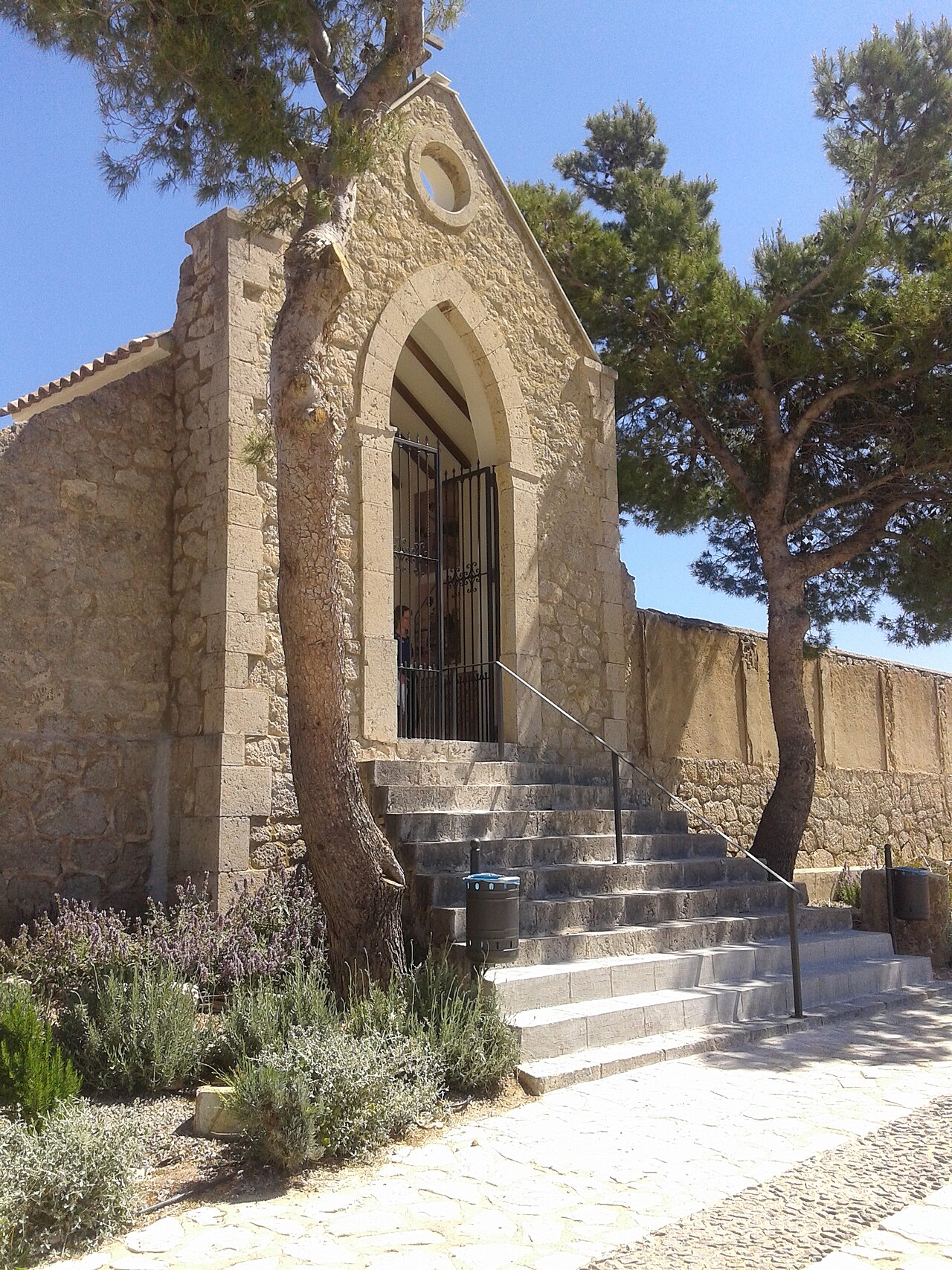
The construction utilized local stone and materials, integrating the fort organically into the rugged mountainous terrain. The fort’s core consisted of a square plan centered around a courtyard, surrounded by two-story buildings that housed soldiers’ quarters, storage rooms, a kitchen, and a chapel. This arrangement balanced defensive needs with the practical requirements of sustaining a military garrison in a remote location.
Architectural features and defensive elements
The fort’s defenses included a double line of walls with an outer wall shaped as a four-pointed star to complicate enemy approach angles. Between these walls, a dry moat was constructed to hinder attackers without the need for water, which was scarce at the altitude. The bastions provided robust platforms for artillery, allowing defenders to cover the walls and moat effectively.
Access to the fort was controlled through a main gate on the southern facade, designed to be defensible and restrict entry. Water management was a critical consideration; two cisterns collected rainwater, supplementing the fresh supply from the nearby spring. These features ensured the fort could sustain its garrison during sieges or prolonged isolation.
Operational challenges and historical context
Despite its innovative design, Fort de Bèrnia faced significant operational challenges. The mountainous terrain limited the effectiveness of Antonelli’s geometric design, which was better suited to flatter landscapes. Key water sources and escape routes remained vulnerable, undermining the fort’s strategic control over the region.
Maintaining the fort and its garrison proved costly and logistically difficult. Notable military engineers such as Vespasiano I Gonzaga and Giovan Giacomo Paleari Fratino evaluated the fort’s weaknesses in the decades following its construction. Their assessments highlighted the impracticalities of sustaining the fort’s defensive role in such a challenging environment.
The fort’s military relevance declined sharply after the 1609 expulsion of the Moriscos (Muslims forcibly removed from Spain under King Philip III). With the original threat diminished, authorities deemed the fort unnecessary and decided to demolish it to prevent its use by hostile forces. The dismantling was completed by 1613, ending the fort’s active military role.
Ruins and cultural heritage
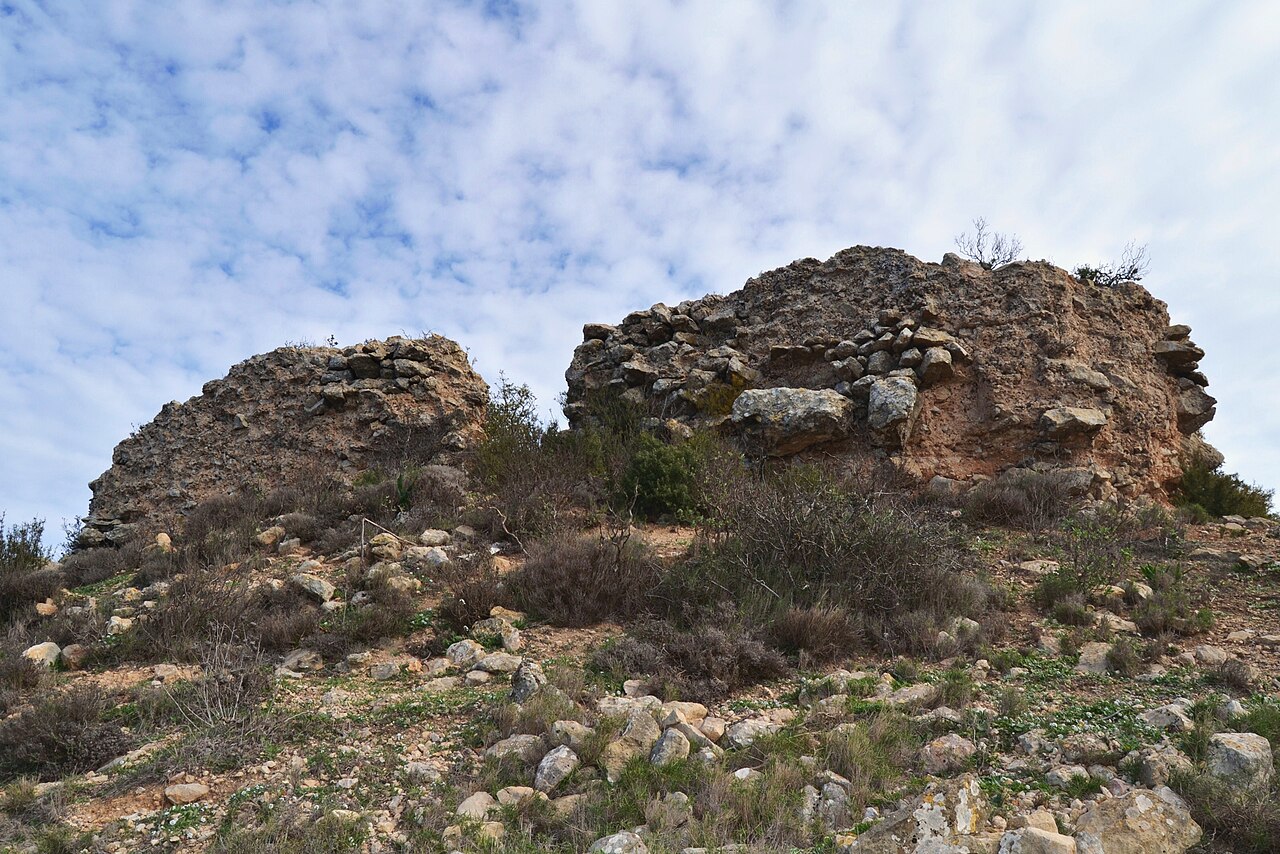
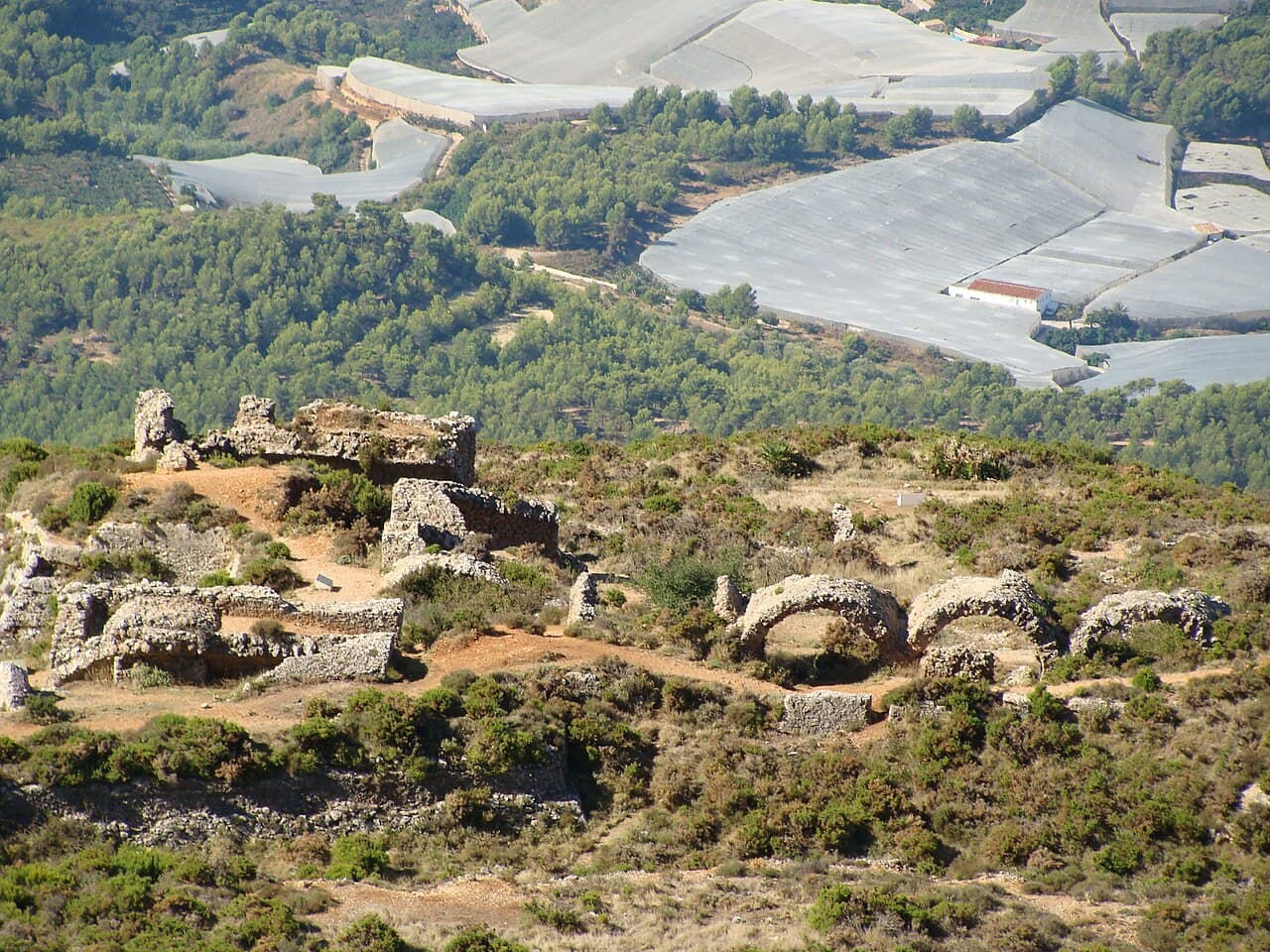
Today, Fort de Bèrnia remains as ruins that clearly outline its original layout and defensive features. Visitors can explore the remains of the dry moat, the star-shaped outer walls, and the foundations of the internal buildings including partial vaulted roofs from the soldiers’ quarters. The site is accessible via hiking trails, offering panoramic views of the surrounding landscape and insight into 16th-century military engineering.
Recognized for its historical and cultural significance, Fort de Bèrnia was granted heritage protection status in 1997. The ruins serve as a tangible reminder of Spain’s complex history during the Renaissance period, reflecting the intersection of military innovation, religious conflict, and territorial defense.
Legacy of Giovanni Battista Antonelli
Antonelli’s work at Fort de Bèrnia exemplifies the broader evolution of fortification design in response to the advent of gunpowder artillery. His emphasis on geometric bastions and star-shaped plans influenced numerous fortresses throughout Spain and its territories, marking a shift from medieval castle designs to modern bastioned fortresses.
Visiting Fort de Bèrnia
Visitors to the site can appreciate both the natural beauty of the Sierra de Bernia and the historical significance of the fort. The ruins provide a unique opportunity to study Renaissance military architecture in a mountainous setting. Interpretive signage and guided tours help contextualize the fort’s history and architectural innovations.
Frequently asked questions (FAQ)
- How do I get to Fort de Bèrnia?
- Fort de Bèrnia is accessible by hiking trails from the nearby town of Xaló. The trails are well-marked and offer scenic views of the Sierra de Bernia mountain range.
- What is the historical significance of Fort de Bèrnia?
- Fort de Bèrnia was built in 1562 to protect Spanish coastal territories from Ottoman and Moorish pirate attacks and to control the local Muslim population after the Reconquista.
- Can I explore the ruins of Fort de Bèrnia?
- Yes, the ruins of Fort de Bèrnia are open to the public. Visitors can explore the remains of the walls, bastions, dry moat, and internal buildings, gaining insight into 16th-century military architecture.
- When was Fort de Bèrnia built and by whom?
- The fort was constructed in 1562 by order of King Philip II of Spain, with design by military engineer Giovanni Battista Antonelli.
- Is there an entrance fee to visit Fort de Bèrnia?
- No, visiting Fort de Bèrnia is free of charge. The site is open daily from sunrise to sunset.
Photo gallery

Information
Opening hours
Open daily, sunrise to sunset
Ticket prices
Free
Current owner
Municipality
Loading map...
Visitor reviews
No reviews yet. Been here? Write the first review and help other travelers!
Write the first reviewVisited this castle? Share your experience
Your review helps other travelers and adds first-hand knowledge to our encyclopedia.