Castillo del Ocaive
The Castillo del Ocaive stands as a remarkable example of a hill castle with deep historical roots in the post-caliphal period of Spain. Located near the town of Pedreguer, this fortress originally served as a Muslim watchtower designed to oversee and protect the surrounding territory during a time of political fragmentation following the decline of the Caliphate of Córdoba. The castle’s strategic position atop the Muntanya Gran rocky prominence provided commanding views over the Valencian landscape, crucial for early warning and defense.
Initially constructed to serve a solitary defensive function, the site underwent significant transformation in the late 13th century, evolving into a more complex fortified stronghold shortly before the Christian Reconquest. This adaptation reflected the shifting military and political realities as Christian forces advanced into Muslim-held territories, necessitating stronger defensive structures to protect the local alquerias—small rural communities—and agricultural settlements such as La Llosa de Camatxo.
Historical context and ownership
The castle’s origins are closely tied to the Muslim presence in the Iberian Peninsula, particularly after the fragmentation of the Caliphate around the early 11th century. It formed part of a network of fortifications including the nearby fortress of Dénia, which collectively served to secure the region against both internal strife and external incursions.
Following the Christian conquest of 1244, the castle passed through the hands of several notable figures and noble families. Initially, the admiral Pere Ximén Carroç took possession and granted the castle and its lands to Andrés and Albero Flix in 1249. Over the next decades, ownership transferred to Sancho Ruiz de Corella and subsequently to Pere Rodríguez de Corella in 1271. Later, the castle became associated with the noble Pujadas family, holders of the title Counts of Anna, and eventually came under the control of the Cervelló family.
The fortress retained strategic importance into the early 16th century, notably during the War of the Germanies, a significant conflict in the Valencian region. However, following the expulsion of the Moriscos in 1609, the area experienced demographic shifts as Christian settlers from the Balearic Islands and Valencia repopulated the region. Despite these changes, the castle itself was largely abandoned not long after the Reconquest, with historical records indicating a decline in its military and residential use.
Architectural features and defensive structures
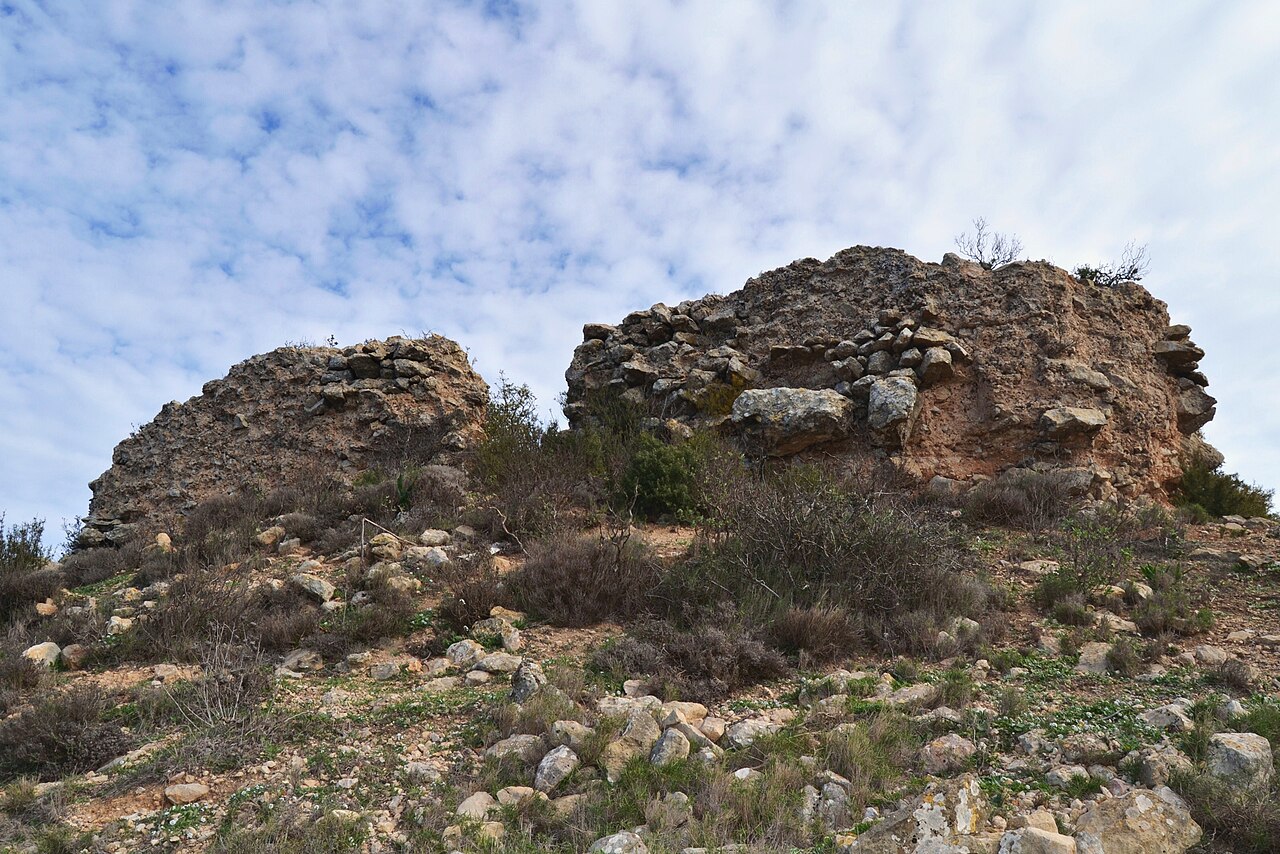
The remains of the Castillo del Ocaive reveal a modest yet well-conceived fortified complex. Central to the site is the tower of homage, or main keep, which functioned as the primary defensive and residential structure within the fortress. This tower reflects the castle’s initial role as a watchtower, later reinforced to serve as a refuge during periods of conflict.
Surrounding the tower are fragments of defensive walls that once enclosed the fortress, adapting to the natural contours of the rocky outcrop on which it stands. These walls would have provided protection against attackers and controlled access to the interior spaces.
Water supply and underground features
A notable architectural element is the underground cistern, locally known as an aljub. This cistern was essential for storing water, ensuring the fortress could sustain its occupants during sieges or extended isolation. The presence of the aljub highlights the careful planning involved in transforming the site from a simple lookout into a self-sufficient defensive structure.
Strategic location and landscape integration
The castle’s placement atop the Muntanya Gran offers expansive views over the surrounding terrain, a critical factor in its defensive utility. This elevated position allowed for early detection of enemy movements and facilitated communication with other fortifications in the region.
The architectural layout of the castle closely follows the natural features of the rocky hill, demonstrating an adaptive design approach typical of Muslim military architecture in the Iberian Peninsula during the post-caliphal period. This integration of natural landscape and built environment enhanced the fortress’s defensive capabilities while minimizing construction challenges.
Preservation and cultural significance
Today, the Castillo del Ocaive is recognized as a monument of cultural importance in Spain. It was officially registered as a Bien de Interés Cultural in 2016, a designation that protects the site under heritage laws and acknowledges its historical and architectural significance.
Although the castle’s remains are fragmentary, they provide valuable insights into the military strategies and architectural practices of the Muslim and early Christian periods in the Valencian region. The site stands as a testament to the complex history of territorial control, cultural exchange, and conflict that shaped medieval Spain.
Visitors to the site can observe the surviving elements of the tower of homage, the defensive walls, and the underground cistern, all set within a dramatic natural landscape that underscores the castle’s original strategic purpose. The preservation efforts ensure that this historic fortress continues to offer educational and cultural value for future generations.
Frequently asked questions (FAQ)
- How do I get to Castillo del Ocaive?
- Castillo del Ocaive is located near Pedreguer in the Valencian Community of Spain. Visitors can reach the site by car or local transport, followed by a hike up the Muntanya Gran hill where the castle ruins are situated.
- What is the historical significance of Castillo del Ocaive?
- The castle played a crucial role as a Muslim watchtower and later a fortress during the post-caliphal period, guarding rural communities and agricultural settlements before and after the Christian Reconquest.
- Can I visit the castle ruins?
- Yes, the ruins of Castillo del Ocaive are accessible to the public. Visitors can explore the remains of the tower of homage, defensive walls, and the underground cistern, although facilities may be limited due to the site's rugged terrain.
- When was Castillo del Ocaive built?
- The castle originated in the post-caliphal period, with significant transformations occurring in the late 13th century, shortly before the Christian Reconquest of 1244.
- Why is the underground cistern important?
- The underground cistern, or aljub, was vital for storing water to sustain the fortress's occupants during sieges or isolation, reflecting advanced planning in the castle's design.
Information
Website
Visit websiteSources & official resources
Verify the information above using these authoritative references.
Loading map...
Visitor reviews
No reviews yet. Been here? Write the first review and help other travelers!
Write the first reviewVisited this castle? Share your experience
Your review helps other travelers and adds first-hand knowledge to our encyclopedia.