Fort d'Andoy
Fort d'Andoy is a significant example of late 19th-century military architecture located near Namur, Belgium. Constructed between 1888 and 1892, it is one of the nine forts forming the defensive ring around Namur, designed by the renowned Belgian military engineer General Henri Alexis Brialmont. These forts were part of Belgium's strategic efforts to protect its territory against potential invasions, particularly from neighboring Germany and France.
Innovative construction and design
Unlike many contemporary French forts designed by Raymond Adolphe Séré de Rivières, which used traditional masonry, Fort d'Andoy was built exclusively using unreinforced concrete. This material was a pioneering choice at the time, representing a major shift in fortress construction techniques. The use of concrete allowed for stronger, more resilient defensive structures capable of better withstanding artillery bombardment.
The fort's design is classified as a bastioned fortress, a style characterized by angular bastions projecting outward from the main walls, enabling defenders to cover adjacent walls with gunfire and eliminate blind spots. The layout includes thick concrete walls, underground galleries, and armored gun turrets designed to provide overlapping fields of fire.
Military significance and engagements
During the Battle of Namur in 1914, Fort d'Andoy was subjected to intense bombardment by German artillery. Despite its innovative concrete construction, the fort sustained significant damage but played a crucial role in delaying German forces. The experience revealed vulnerabilities in the fort's design, particularly against the heaviest artillery of the time.
In response, the fort was upgraded in the 1930s as part of the fortified position of Namur initiative. These upgrades included reinforced concrete, improved armaments, and enhanced defensive features aimed at slowing or halting a German advance during the growing tensions leading up to World War II.
In 1940, during the Battle of Belgium, Fort d'Andoy again saw combat and was ultimately captured by German forces. The fort's role in both world wars underscores its strategic importance in Belgium's national defense system.
Architectural features and layout
The fort's structure includes bastions arranged to cover all approaches with overlapping fields of fire. Its armored turrets housed artillery pieces capable of firing in multiple directions. The interior featured underground barracks, ammunition magazines, and command posts connected by protected corridors to shield personnel and supplies from bombardment.
The use of unreinforced concrete was experimental and represented a transition in fortress engineering. While providing better resistance to shelling than masonry, it also had limitations, such as vulnerability to cracking under sustained heavy fire.
Current status and preservation
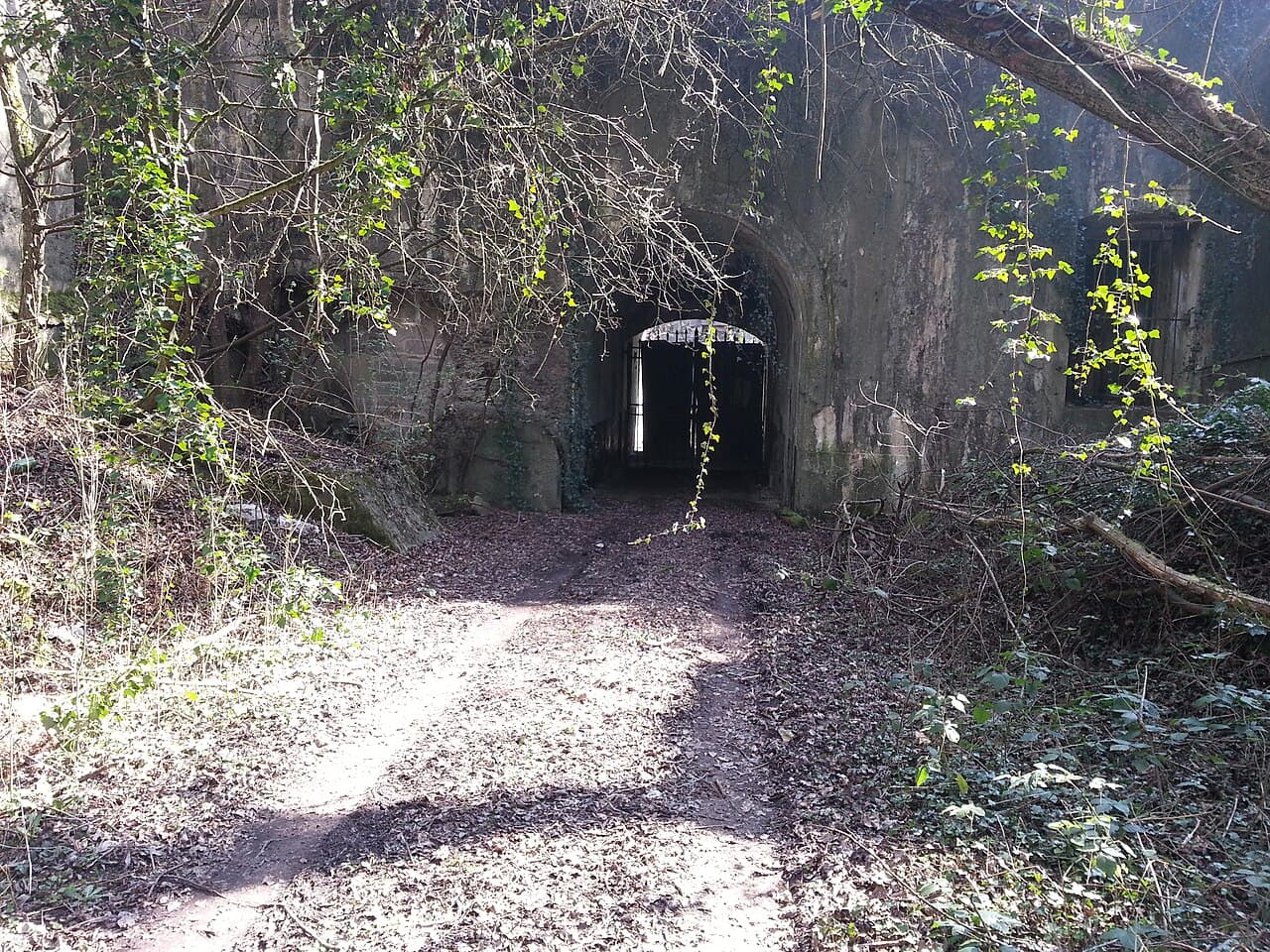
Today, Fort d'Andoy stands abandoned on private property. It is in a state of disrepair but remains a valuable historical monument reflecting the evolution of military fortifications in Belgium. Although not generally open to the public, the fort attracts interest from historians, military enthusiasts, and architects studying late 19th and early 20th-century defensive structures.
Frequently asked questions (FAQ)
- How do I get to Fort d'Andoy?
- Fort d'Andoy is easily accessible by car and public transport. If you're driving, there are parking facilities nearby. For those using public transport, you can take a train to the nearest station and then a short bus ride to reach the castle.
- What is the historical significance of Fort d'Andoy?
- Fort d'Andoy was built in the 19th century as part of Belgium's defense system. It played a crucial role during various conflicts and showcases the military architecture of its time. Today, it stands as a monument reflecting the region's rich history.
- When was Fort d'Andoy constructed?
- Construction of Fort d'Andoy began in the late 1800s and was completed in 1892. It was designed to fortify the area against potential invasions. The fort reflects the military strategies and architectural styles prevalent during that era.
- Can I take guided tours of Fort d'Andoy?
- Yes, guided tours are available at Fort d'Andoy, offering visitors a detailed insight into its history and architecture. These tours are led by knowledgeable guides who share fascinating stories and facts. It's advisable to check the schedule and book in advance, especially during peak tourist seasons.
- Why is Fort d'Andoy a popular attraction?
- Fort d'Andoy attracts visitors due to its unique historical significance and impressive architecture. The fort's well-preserved structures provide a glimpse into military life in the 19th century. Additionally, its scenic location offers beautiful views, making it a popular spot for both history enthusiasts and casual visitors.
- Is it possible to visit Fort d'Andoy year-round?
- Yes, Fort d'Andoy is open to visitors throughout the year, although hours may vary by season. It’s best to check the official website for specific opening times and any seasonal events. Visiting in the spring and autumn can provide a more pleasant experience with milder weather.
- What are the ticket prices for Fort d'Andoy?
- Ticket prices for Fort d'Andoy are generally affordable, with discounts available for students and seniors. Children under a certain age may enter for free, making it a great family-friendly destination. Always check the official site for the most current pricing and any special offers.
- What are the best times to visit Fort d'Andoy?
- The best times to visit Fort d'Andoy are during the spring and early autumn when the weather is typically mild and pleasant. These seasons also tend to have fewer crowds, allowing for a more enjoyable experience. Special events and exhibitions may be scheduled during peak summer months, which can also be a great time to visit.
- Are there any nearby attractions to Fort d'Andoy?
- Yes, there are several attractions near Fort d'Andoy, including beautiful parks and historical sites. Visitors can explore local museums and charming villages that showcase Belgian culture. A visit to the fort can easily be combined with a day of exploring the surrounding area.
Photo gallery

Information
Loading map...
Visitor reviews
No reviews yet. Been here? Write the first review and help other travelers!
Write the first reviewVisited this castle? Share your experience
Your review helps other travelers and adds first-hand knowledge to our encyclopedia.