Fort Beneden Lent

Fort Beneden Lent: 19th-century Dutch military fortification in Nijmegen
Nijmegen, Gelderland, Netherlands
Modern (19th–20th c.)
Partially Preserved

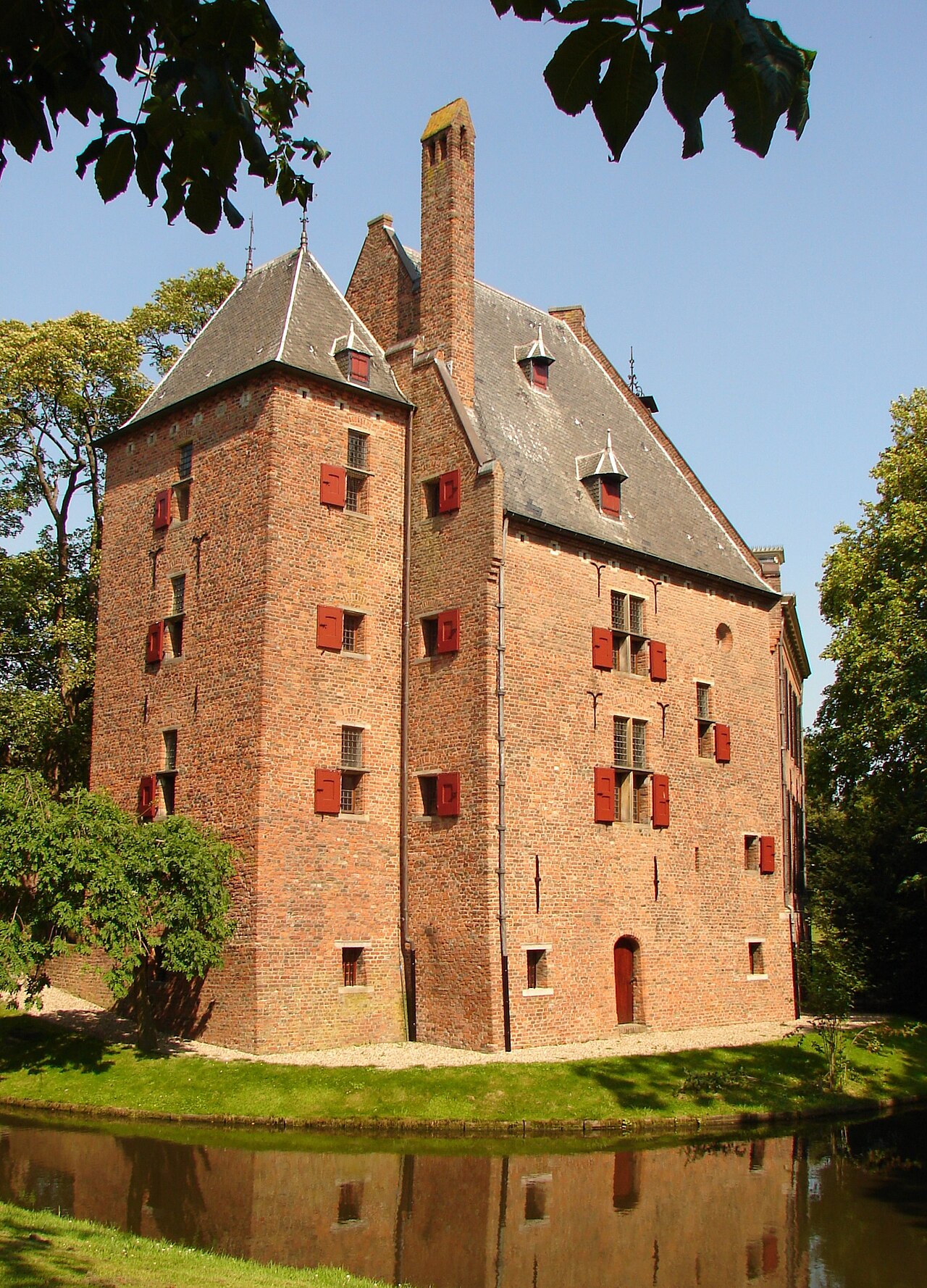
Fort Beneden Lent is a significant 19th-century military fortification located near Nijmegen in the Netherlands. Constructed in 1862, it was part of the Dutch defensive works designed to protect the city and its strategic infrastructure, notably the railway bridge over the Waal River. This fortification reflects the military engineering approaches of the Modern period, emphasizing defense against increasingly powerful artillery and the protection of vital transportation routes.

Historical context and strategic importance

The mid-19th century was a period of rapid military and technological change in Europe, with the rise of industrialization impacting warfare. The Netherlands, situated at a crossroads of European powers, invested in a series of forts to safeguard its borders and key urban centers. Fort Beneden Lent was constructed as part of this broader defensive network around Nijmegen, a city with a long military history due to its location near the German border and along the Waal River, a major Rhine distributary.

The fort's primary role was to defend the railway bridge, a critical asset for troop movements and supply lines. Control of this bridge meant control of a vital transit point, making the fort's position essential for regional security.

Architectural design and features

Fort Beneden Lent exemplifies military architectural principles of the Modern period, focusing on robust defensive structures capable of withstanding artillery bombardment. The fort's design includes thick earthen ramparts and masonry walls that absorb and deflect cannon fire, a common feature in forts of this era.

The layout typically features a polygonal shape, minimizing blind spots and providing overlapping fields of fire. Defensive ditches or moats surround the fort, adding an obstacle to enemy infantry and siege equipment. The fort likely included gun emplacements, barracks, ammunition storage, and command posts arranged to optimize defense and operational efficiency.

Construction materials and techniques

The fort was constructed using brick and stone masonry combined with earthworks to provide both strength and camouflage. The use of earthen embankments was a response to advances in artillery, as earth absorbs impact better than solid stone alone. This hybrid construction technique was standard for forts built in the mid-19th century.

Military use and later history

While Fort Beneden Lent was built for defense, its active military use was limited by changes in warfare and political circumstances. The fort's strategic location remained important through both World Wars, although by the 20th century, advances in military technology rendered such fixed fortifications less effective against modern mechanized forces and air power.

After its military relevance declined, the fort may have been repurposed or preserved as a historical site. Its current condition reflects its historical value, with parts of the structure still visible and accessible, offering insight into 19th-century military architecture in the Netherlands.

Visiting Fort Beneden Lent today

Today, Fort Beneden Lent stands as a heritage site that attracts visitors interested in military history and architecture. Its location near Nijmegen makes it accessible for day trips and educational tours. Visitors can explore the remaining ramparts and ditches, gaining a tangible sense of the fort's defensive capabilities and historical context.

The site offers an opportunity to learn about the evolution of military fortifications and the strategic importance of the Waal River crossings in Dutch history.

Preservation and cultural significance

The fort is valued for its role in the defense of Nijmegen and as an example of Modern period military architecture. Preservation efforts aim to maintain its structural integrity and promote awareness of its historical importance within the region.

Frequently asked questions (FAQ)

How do I get to Fort Beneden Lent?
Fort Beneden Lent is easily accessible by public transport, with regular bus services connecting Nijmegen city center to the castle. If you prefer to drive, there is parking available nearby, and you can enjoy a scenic walk to the castle.
What is the historical significance of Fort Beneden Lent?
Fort Beneden Lent was built in the 19th century as part of a defensive ring around the city of Nijmegen. Its strategic location played a crucial role in the military history of the region, particularly during conflicts involving the Netherlands.
When was Fort Beneden Lent constructed?
Construction of Fort Beneden Lent began in 1869 and was completed in 1879. The fort was part of the New Dutch Waterline, a series of fortifications designed to protect the country from invasion.
Can I take guided tours of Fort Beneden Lent?
Yes, guided tours are available and offer a deeper understanding of the fort's history and architecture. It is recommended to check the official website for tour schedules and availability before your visit.
Why is the architecture of Fort Beneden Lent unique?
The architecture of Fort Beneden Lent is characterized by its robust earthworks and traditional military design, which includes thick walls and strategic vantage points. This design reflects the military engineering practices of the 19th century and showcases the importance of fortifications during that era.
Is it possible to visit Fort Beneden Lent with limited mobility?
Yes, Fort Beneden Lent strives to be accessible to all visitors. However, due to its historical nature, some areas may have limited accessibility; it is advisable to contact the site in advance for specific accommodations.
What are the best times to visit Fort Beneden Lent?
The best times to visit Fort Beneden Lent are during the spring and fall when the weather is mild and the surrounding nature is vibrant. Summer can also be enjoyable, but it may be busier with tourists.
What are the ticket prices for visiting Fort Beneden Lent?
Ticket prices for Fort Beneden Lent vary depending on the type of tour and age group. Discounts may be available for children, seniors, and groups, so it's best to check the official website for the most current pricing.
What are the opening hours of Fort Beneden Lent?
Fort Beneden Lent typically opens to visitors from Tuesday to Sunday, with varying hours throughout the year. It's advisable to check the official website for the most accurate and up-to-date information on opening times and any seasonal changes.
Are there any nearby attractions to visit while in Nijmegen?
Yes, Nijmegen is rich in history and culture, with nearby attractions such as the Valkhof Museum, which showcases Roman artifacts and modern art. Additionally, visitors can explore the beautiful parks and the river Waal, making for a full day of sightseeing.

Information

Lowland Castle

Loading map...

Visitor reviews

No reviews yet. Been here? Write the first review and help other travelers!

Write the first review

Visited this castle? Share your experience

Your review helps other travelers and adds first-hand knowledge to our encyclopedia.
Write a review

(5/5)

0/2000 characters

Your review will be visible after admin approval

Nearby castles

4.3 km
Kinkelenburg Castle — Netherlands castle

Kinkelenburg Castle

Bemmel, Netherlands

Kinkelenburg Castle, locally known as Kasteel Kinkelenburg, is a historic moated manor located in the town of Bemmel within the province of Gelderland, Netherlands. This castle uniquely combines its medieval origins with significant 18th-century architectural transformations, reflecting the layered history of Dutch noble residences. The early history and medieval origins The earliest documented mention of Kinkelenburg Castle dates back to 1403, when it was recorded as a house and homestead with waterways and a moat at Bemmel, lent to Johan van Ambe. Although the castle's precise construction date is uncertain, architectural and archaeological evidence suggests that the original structure was a square stone tower-house built around 1300 AD. This tower-house likely served as a fortified residence typical of the medieval period, characterized by its defensive moat and strategic location. Initially, the castle held the status of a village castle but was soon reclassified as the "Huis te Bemmel," indicating a shift from purely defensive functions to a more residential and administrative role. The castle was owned by the family of Johan van Aem or Ambe before being presented to the Counts of Guelders. The counts used Kinkelenburg primarily as a hunting lodge, which suggests that the castle was more of a leisure retreat than a military fortress. Architectural evolution and 18th-century transformation In the 18th century, Kinkelenburg underwent significant reconstruction, particularly on the east side of the building. This section was rebuilt and converted into a residential wing, reflecting the architectural tastes and domestic needs of the period. The transformation marked a departure from the castle's medieval defensive origins toward a more stately manor house, typical of the post-Renaissance era. Today, only the west side of the castle retains its medieval appearance, preserving the historical character of the original tower-house. The castle's moat remains a defining feature, emphasizing its status as a water castle, a common type in the Netherlands where water defenses were integral to fortification strategies. The combination of medieval and 18th-century elements creates a unique architectural dialogue within the structure. World War II impact and post-war restoration During World War II, Kinkelenburg Castle suffered considerable damage due to wartime activities in the region. In 1944, the building was heavily affected, but its sturdy construction meant it was the only large building in Bemmel that still had a watertight roof after the destruction of the town hall on Dorpsstraat. The municipality commandeered Kinkelenburg as emergency accommodation and later decided to make it the permanent town hall. The post-war restoration focused on repairing the castle in the style of the 18th century, preserving the manor house character rather than attempting to reconstruct the medieval fortress elements fully. Despite the castle's rich history, restorers found few original artifacts during renovation, including only some coins in the attic and a dented tin can in the ditch. The interior was enhanced with beautiful wall panels acquired from Huize Heyendaal in Nijmegen, originally from an Amsterdam canalside house, adding a refined 18th-century ambiance. A notable feature inside is a ceiling painting by Hubert Estourgie (1924-1982), which artistically narrates the origin of the Betuwe region, linking the castle to the local cultural heritage. Architectural features and current use Kinkelenburg Castle is classified as a water castle due to its moat and water defenses. The remaining medieval west wing showcases traditional stone masonry and the fortified tower-house structure, while the east wing reflects the post-Renaissance residential style with its elegant living quarters. The castle's layout includes a courtyard surrounded by the two contrasting wings, blending defensive medieval architecture with the comfort and style of an 18th-century manor. The moat continues to encircle the castle, maintaining its historic defensive characteristic and enhancing its picturesque setting. Currently, Kinkelenburg Castle serves as the town hall of Bemmel, integrating its historical significance with civic functionality. The building is well preserved and restored, allowing visitors and locals alike to appreciate its architectural evolution and cultural importance. Significance and heritage Kinkelenburg Castle stands as a testament to the adaptive reuse of medieval structures in the Netherlands, illustrating how noble residences evolved over centuries from fortified towers to elegant manor houses. Its survival through wartime damage and subsequent restoration reflects the community's commitment to preserving local heritage. The castle's connection to the Counts of Guelders and its role as a hunting lodge provide insight into the lifestyle of regional nobility during the late medieval and early modern periods. The blend of architectural styles and historical layers makes Kinkelenburg a valuable cultural landmark in Gelderland. Visitors to Kinkelenburg can explore a site that encapsulates over seven centuries of history, from its medieval defensive origins to its present-day civic role, enriched by artistic and architectural details that celebrate the Betuwe region's heritage.

Post-Renaissance (17th–18th c.)
Details
5.6 km

Blankenburg Castle

Beuningen, Netherlands

Blankenburg Castle, also known locally as Kasteel Blankenburg and historically referred to as Blanckenborch Castle, is a medieval castle ruin situated near Beuningen in the province of Gelderland, Netherlands. The castle's site boasts a rich history of continuous habitation spanning over two millennia, including evidence of a Roman villa and a Carolingian settlement, highlighting its strategic and residential importance long before the castle's construction. Early history and origins The earliest known fortification on this site was Wildenberg Castle, dating back to the 12th and 13th centuries. This predecessor served as the residence of the Boninghe knights, a noble family whose influence marked the region during the high medieval period. The transition from Wildenberg to Blankenburg Castle reflects the evolving defensive and residential needs of the local nobility during the Middle Ages. Architectural features and layout The original Blankenburg Castle complex featured a main castle accompanied by a bailey and was protected by double moats, a common defensive feature in medieval Dutch castles. The surviving structure today is primarily the gate tower that once guarded the entrance to the bailey. This tower is a significant architectural remnant, illustrating the castle's defensive design and medieval construction techniques. Gate tower The gate tower remains a prominent feature within the castle grounds and is integrated into a public park. Historically, this tower served as the fortified gateway controlling access to the bailey and the castle's inner areas. Despite its ruinous state, the tower retains elements of its original masonry and defensive character. At times, it has been repurposed for modern uses, including reportedly serving as office space for motivational speakers, though it currently stands largely unused. Ownership and historical significance Throughout its history, Blankenburg Castle witnessed several changes in ownership that reflect the broader political and social shifts in the region. In 1447, the castle was sold by the Van Appeltern family to Lady Ot van Egmond. The Van Egmond family maintained possession until 1462, when Frederik van Egmond, the great-grandfather of Anna van Egmond van Buren—notably the first wife of William I, Prince of Orange—sold the castle. This connection places Blankenburg within the network of noble families influential in Dutch history. By the 18th century, the castle had fallen into decline. The Van Wijhe family, who owned it for several centuries, sold the property in 1774 when it was already in a dilapidated state. The deterioration culminated in the castle's partial demolition in 1863, sparing only the gate tower. The stones from the demolished sections were repurposed to construct a nearby farm, which still stands today adjacent to the castle grounds. Current condition and public access Today, Blankenburg Castle exists primarily as ruins, with the gate tower as the most intact structure. The site is classified as a ruin and forms part of a public park, offering visitors a glimpse into the medieval past of the Gelderland region. While the castle no longer functions as a residence or fortress, its remnants provide valuable insights into medieval Dutch castle architecture and noble life. Visitor experience Visitors to the castle can explore the grounds where the main castle, bailey, and double moats once stood. The preserved gate tower stands as a testament to the castle's former defensive strength and architectural style. The surrounding parkland enhances the visitor experience, allowing for leisurely walks and contemplation of the historical landscape. Historical and cultural importance Blankenburg Castle holds an important place in Dutch medieval history due to its long-standing habitation, noble ownership, and architectural features. Its connection to the Van Egmond family and indirectly to the House of Orange adds significant cultural value. The castle's ruins serve as a tangible link to the region's feudal past and the evolution of medieval fortifications in the Netherlands. Although much of the castle has been lost, the surviving structures and archaeological evidence continue to attract historians, archaeologists, and visitors interested in medieval architecture and Dutch heritage. Preservation efforts focus on maintaining the gate tower and the surrounding landscape to ensure this historical site remains accessible and informative for future generations.

High Medieval (11th–13th c.)
Details
7.3 km

Doddendael Castle

Ewijk, Netherlands

Doddendael Castle is a notable example of a late medieval moated castle located in Ewijk, Netherlands. Constructed in the 1430s, this castle is surrounded by a moat and has witnessed a turbulent history marked by sieges, fires, and restorations. Its strategic position made it a valuable military and residential site throughout the centuries. Construction and architectural features The castle was originally built in the 15th century with the primary defensive feature of a surrounding water-filled moat, typical of late medieval fortifications in the region. The moat served both as a defensive barrier and a status symbol. The castle's structure included heavy base walls constructed from local stone, designed to withstand attacks and fires. Although much of the upper structure suffered damage over time, the base walls remain a testament to the robust medieval masonry techniques. Historical ownership and significance Initially, Doddendael Castle was owned by various families before being acquired by the Van Stepraedt family in 1489 for 4,000 gold guilders. This purchase marked a significant period in the castle's history, as the Van Stepraedt family were responsible for multiple restorations and adaptations of the castle over the following centuries. In 1526, Duke Charles of Gelre purchased the castle and used it as a military base. That same year, the castle was attacked during a revolt by the people of Nijmegen, who plundered and set it ablaze. The Van Stepraedt family repurchased the castle in 1528 despite its damaged condition and undertook restoration efforts. Sieges, fires, and restoration efforts The castle's strategic importance made it a target during regional conflicts. In 1585, it was occupied by Spanish forces during the turbulent period of the Eighty Years' War. Subsequently, during the Siege of Nijmegen, Prince Maurits recaptured the castle and set it on fire again, leaving only the heavy base walls intact. Despite these setbacks, the Van Stepraedt family tirelessly restored the castle, demonstrating resilience and commitment to preserving their ancestral home. The castle ceased to be their main residence by the mid-17th century but remained significant in local history. Religious significance and secret worship Following the prohibition of Roman Catholicism in the region, the Van Stepraedt family allowed the castle's vault to be used as a conventicle, a secret meeting place for Roman Catholics to attend mass. This aspect of the castle's history highlights its role not only as a military and residential structure but also as a site of religious refuge. Remnants of this conventicle are still visible today, offering insight into the clandestine religious practices during periods of persecution. Modern restoration and current use The last major restoration of Doddendael Castle took place in 1977, focusing on preserving the structural integrity and historical character of the building. Today, the castle is well-preserved and serves as a popular venue for parties, weddings, dinners, meetings, and conferences. Its picturesque setting and historical ambiance make it a favored backdrop for various cultural and social events. Architectural style and classification Doddendael Castle exemplifies the late medieval architectural style common in the Netherlands during the 15th century. Its classification as a water castle is due to the defining moat that encircles the structure, providing both defense and aesthetic appeal. The castle's robust stone base walls reflect the practical military architecture of the period, designed to resist sieges and fires. Location and accessibility Situated in the village of Ewijk, within the province of Gelderland, Doddendael Castle is accessible to visitors interested in medieval architecture and Dutch history. While it remains privately owned and used for events, the castle's grounds and historical significance attract tourists and scholars alike. Frequently asked questions When was Doddendael Castle built? The castle was constructed in the 1430s during the late medieval period. What is the architectural style of Doddendael Castle? It is a late medieval water castle featuring a moat and heavy stone base walls. Who owned the castle historically? Various families owned it, notably the Van Stepraedt family from 1489, and Duke Charles of Gelre briefly in 1526. What significant events affected the castle? The castle was plundered and burnt in 1526, occupied by Spanish forces in 1585, and burned again during the Siege of Nijmegen. Is the castle open to the public? While primarily used for private events, the castle grounds can be visited during special occasions. What is a conventicle? A conventicle is a secret meeting place for forbidden religious worship, which the castle vault served for Roman Catholics. When was the last restoration? The last extensive restoration occurred in 1977 to preserve the castle's structure.

Late Medieval (14th–15th c.)
Details

