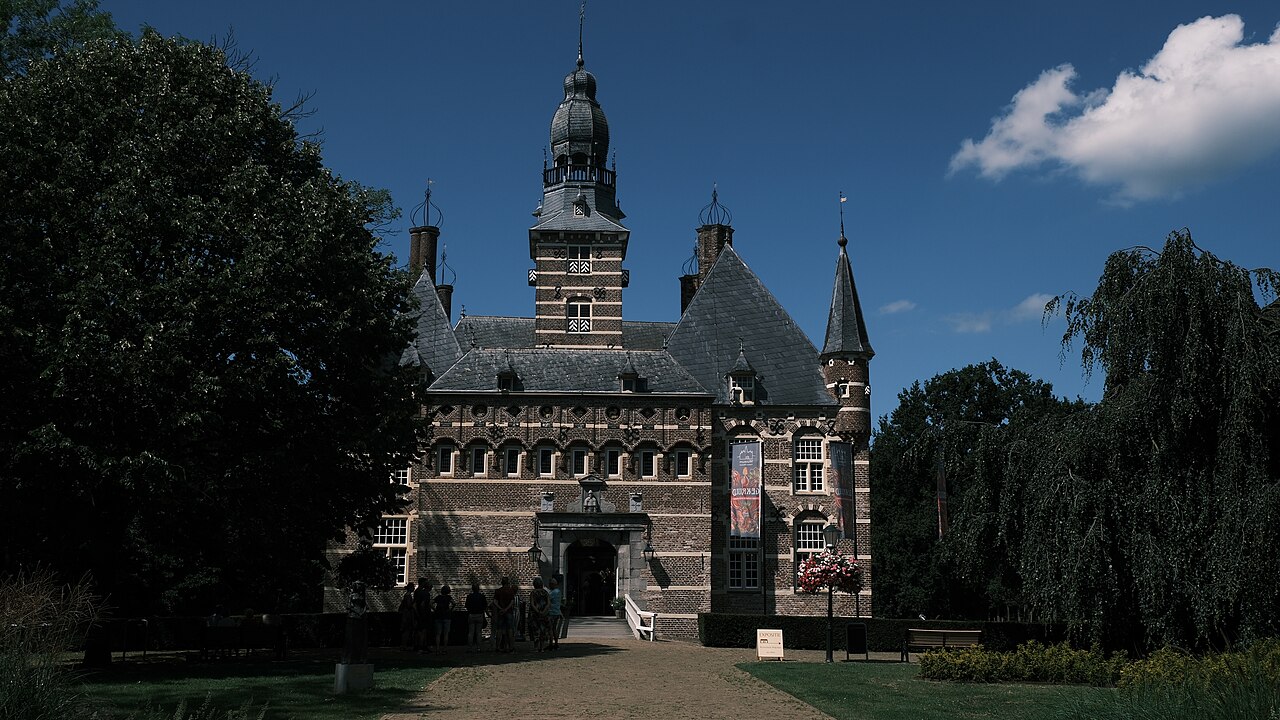
Blankenburg Castle
Blankenburg Castle, also known locally as Kasteel Blankenburg and historically referred to as Blanckenborch Castle, is a medieval castle ruin situated near Beuningen in the province of Gelderland, Netherlands. The castle's site boasts a rich history of continuous habitation spanning over two millennia, including evidence of a Roman villa and a Carolingian settlement, highlighting its strategic and residential importance long before the castle's construction.
Early history and origins
The earliest known fortification on this site was Wildenberg Castle, dating back to the 12th and 13th centuries. This predecessor served as the residence of the Boninghe knights, a noble family whose influence marked the region during the high medieval period. The transition from Wildenberg to Blankenburg Castle reflects the evolving defensive and residential needs of the local nobility during the Middle Ages.
Architectural features and layout
The original Blankenburg Castle complex featured a main castle accompanied by a bailey and was protected by double moats, a common defensive feature in medieval Dutch castles. The surviving structure today is primarily the gate tower that once guarded the entrance to the bailey. This tower is a significant architectural remnant, illustrating the castle's defensive design and medieval construction techniques.
Gate tower
The gate tower remains a prominent feature within the castle grounds and is integrated into a public park. Historically, this tower served as the fortified gateway controlling access to the bailey and the castle's inner areas. Despite its ruinous state, the tower retains elements of its original masonry and defensive character. At times, it has been repurposed for modern uses, including reportedly serving as office space for motivational speakers, though it currently stands largely unused.
Ownership and historical significance
Throughout its history, Blankenburg Castle witnessed several changes in ownership that reflect the broader political and social shifts in the region. In 1447, the castle was sold by the Van Appeltern family to Lady Ot van Egmond. The Van Egmond family maintained possession until 1462, when Frederik van Egmond, the great-grandfather of Anna van Egmond van Buren—notably the first wife of William I, Prince of Orange—sold the castle. This connection places Blankenburg within the network of noble families influential in Dutch history.
By the 18th century, the castle had fallen into decline. The Van Wijhe family, who owned it for several centuries, sold the property in 1774 when it was already in a dilapidated state. The deterioration culminated in the castle's partial demolition in 1863, sparing only the gate tower. The stones from the demolished sections were repurposed to construct a nearby farm, which still stands today adjacent to the castle grounds.
Current condition and public access
Today, Blankenburg Castle exists primarily as ruins, with the gate tower as the most intact structure. The site is classified as a ruin and forms part of a public park, offering visitors a glimpse into the medieval past of the Gelderland region. While the castle no longer functions as a residence or fortress, its remnants provide valuable insights into medieval Dutch castle architecture and noble life.
Visitor experience
Visitors to the castle can explore the grounds where the main castle, bailey, and double moats once stood. The preserved gate tower stands as a testament to the castle's former defensive strength and architectural style. The surrounding parkland enhances the visitor experience, allowing for leisurely walks and contemplation of the historical landscape.
Historical and cultural importance
Blankenburg Castle holds an important place in Dutch medieval history due to its long-standing habitation, noble ownership, and architectural features. Its connection to the Van Egmond family and indirectly to the House of Orange adds significant cultural value. The castle's ruins serve as a tangible link to the region's feudal past and the evolution of medieval fortifications in the Netherlands.
Although much of the castle has been lost, the surviving structures and archaeological evidence continue to attract historians, archaeologists, and visitors interested in medieval architecture and Dutch heritage. Preservation efforts focus on maintaining the gate tower and the surrounding landscape to ensure this historical site remains accessible and informative for future generations.
Frequently asked questions (FAQ)
- What is the best time to visit Blankenburg Castle?
- The best time to visit Blankenburg Castle is during the spring and summer months when the weather is mild and the surrounding park is lush and green. These seasons offer the most pleasant conditions for exploring the ruins and enjoying outdoor activities.
- Is Blankenburg Castle accessible to the public?
- Yes, Blankenburg Castle is part of a public park and is accessible to visitors year-round. The site offers open grounds for walking and viewing the remaining gate tower and ruins.
- Are there guided tours available at Blankenburg Castle?
- Currently, there are no regular guided tours at Blankenburg Castle. Visitors can explore the site independently and use informational leaflets or local resources to learn about its history.
- What remains of Blankenburg Castle today?
- Today, only the gate tower and some fragments of the original castle remain. The rest of the castle was demolished in the 19th century, with stones repurposed for nearby buildings.
- How did Blankenburg Castle relate to Dutch noble families?
- Blankenburg Castle was owned by several noble families, including the Van Appeltern, Van Egmond, and Van Wijhe families. It also has historical ties to the House of Orange through Anna van Egmond van Buren, the first wife of William I, Prince of Orange.
Information
Address
Near Wilhelminalaan 8, Beuningen, Gelderland, Netherlands
Loading map...
Visitor reviews
No reviews yet. Been here? Write the first review and help other travelers!
Write the first reviewVisited this castle? Share your experience
Your review helps other travelers and adds first-hand knowledge to our encyclopedia.