Fort Anjediva
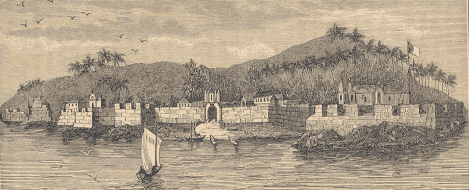
Fort Anjediva is a historic bastioned fortress located on Anjadip Island, a small island off the coast of the Indian state of Karnataka but administratively part of the state of Goa. The island covers an area of approximately 1.5 square kilometres (0.58 mi2) and holds significant maritime and colonial importance due to its strategic location in the Arabian Sea near the western coast of India.
Historical context and portuguese colonial era
The fort was constructed in the 16th century during the renaissance period, a time when the Portuguese empire was expanding its maritime trade routes and colonial holdings in Asia. Fort Anjediva was established as a key military outpost to secure Portuguese dominance over the Arabian Sea and protect their naval interests along the western coast of India. The fortification played a crucial role in safeguarding the shipping lanes and served as a defensive bastion against rival colonial powers and local kingdoms.
Portuguese rule on Anjadip Island lasted for several centuries, during which the fort underwent various phases of construction and reinforcement to adapt to evolving military technologies and threats. The fort's design reflects typical bastioned fortress architecture of the Renaissance era, incorporating angled bastions that allowed defenders to cover all approaches with overlapping fields of fire, a significant advancement over earlier medieval fortifications.
Architectural features and fortifications
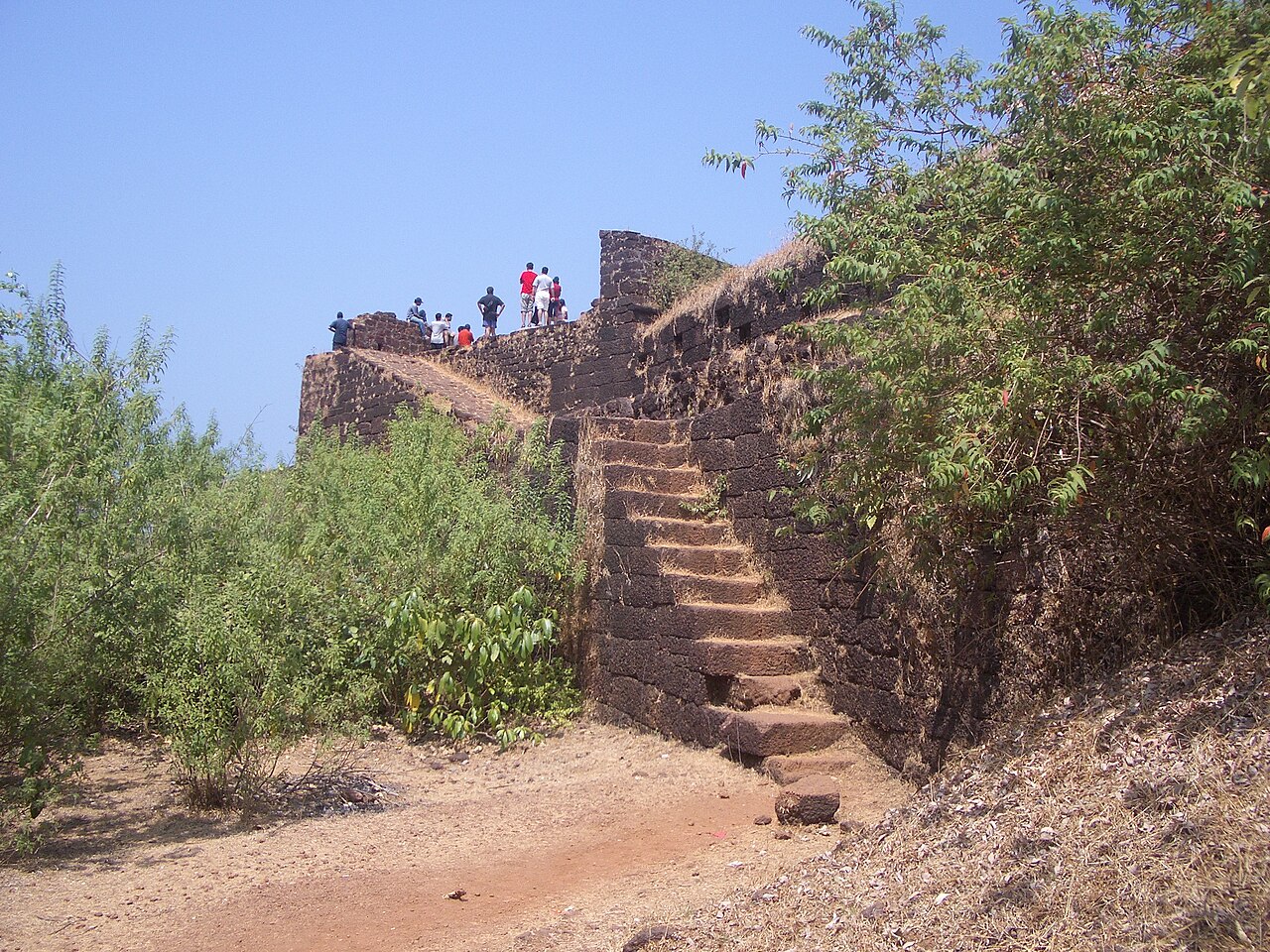
The fortress is characterized by its massive stone walls, designed to withstand cannon fire and sieges. The bastions are strategically positioned at the corners of the fort, enabling a comprehensive defensive perimeter. Inside the fort, remnants of various structures such as barracks, storage facilities, and defensive gun emplacements can still be discerned despite its current ruined state.
The fort’s layout was planned to maximize defense, with thick walls, narrow entrances, and limited access points to hinder enemy advances. The presence of a moat or water defenses is not clearly documented but the island’s natural coastal features provided additional protection.
Religious structures and cultural heritage
Within the vicinity of the fort are significant religious sites that reflect the Portuguese colonial influence on the island. The Church of Our Lady of Springs, built in 1505, stands as one of the oldest Christian religious structures in the region. This church served the spiritual needs of the Portuguese settlers and military personnel stationed at the fort.
Another notable religious site is the Chapel of Francis of Assisi, which today remains in ruins. These religious buildings underscore the cultural and religious imprint left by the Portuguese during their occupation of Anjadip Island.
Current condition and preservation
Today, Fort Anjediva is largely in ruins, with much of its original structure deteriorated due to centuries of exposure to the elements and lack of continuous maintenance. Despite this, the site remains a place of historical interest for scholars, tourists, and those interested in the colonial history of India.
Efforts to preserve the fort and its associated religious sites have been limited, but the ruins continue to attract visitors who explore the remnants of the bastioned walls and the historic churches. The island’s remote location and restricted access have helped protect it from extensive modern development.
Strategic maritime significance
The location of Fort Anjediva on Anjadip Island was chosen for its strategic maritime advantage. It provided the Portuguese navy with a critical base for monitoring and controlling shipping routes along the western coast of India. The fort's position enabled early warning against naval threats and served as a supply and repair station for Portuguese vessels navigating the Arabian Sea.
This strategic importance diminished with the decline of Portuguese power in India, but the fort remains an important symbol of the era of European colonial expansion in the Indian Ocean.
Frequently asked questions (FAQ)
- What is the historical significance of Fort Anjediva?
- Fort Anjediva, built by the Portuguese in the 17th century, served as a strategic military outpost to protect the coastline against invasions. It played a crucial role during the colonial era and is a testament to the maritime history of India, showcasing the blend of Portuguese and Indian architectural styles.
- When was Fort Anjediva constructed?
- Construction of Fort Anjediva began in 1680 and was completed in the early 18th century. The fort was strategically located on Anjediva Island, which further enhanced its military importance in the region.
- How do I get to Fort Anjediva?
- Fort Anjediva is accessible by boat from the nearby coastal town of Karwar. Visitors can hire local boats or take guided tours that often include informative sessions about the fort's history and significance.
- Is it possible to visit Fort Anjediva year-round?
- Yes, Fort Anjediva is open for visitors throughout the year. However, the best time to visit is during the winter months, from November to February, when the weather is cooler and more pleasant for exploration.
- What are the opening hours for Fort Anjediva?
- Fort Anjediva does not have specific opening hours as it is an open fort; however, it is advisable to visit during daylight hours for safety reasons. Most visitors choose to arrive in the morning to enjoy the views and explore the site.
- Can I take photographs at Fort Anjediva?
- Yes, photography is allowed at Fort Anjediva, and it is a popular spot for capturing stunning views of the sea and the fort's architecture. Visitors are encouraged to bring their cameras to document their experience.
- Are there any nearby attractions to visit after Fort Anjediva?
- Yes, nearby attractions include the beautiful beaches of Karwar, the Sadashivgad Fort, and the Kali River. These sites offer a chance to explore more of the region's natural beauty and historical significance.
- What are the ticket prices to visit Fort Anjediva?
- There is no entry fee for visiting Fort Anjediva, making it an accessible destination for all travelers. However, boat rides to the island may have associated costs that vary depending on the operator.
- How can I ensure a comfortable visit to Fort Anjediva?
- To ensure a comfortable visit, it is advisable to wear comfortable shoes and bring water, sunblock, and a hat. The fort has uneven surfaces and limited shade, so being prepared will enhance your experience.
Photo gallery

Photo by Unattributed•Public domain
Information
Loading map...
Visitor reviews
No reviews yet. Been here? Write the first review and help other travelers!
Write the first reviewVisited this castle? Share your experience
Your review helps other travelers and adds first-hand knowledge to our encyclopedia.