Cabo de Rama — India castle

Cabo de Rama

Cabo de Rama fort in Goa, India
Khola, Goa, India
Partially Preserved

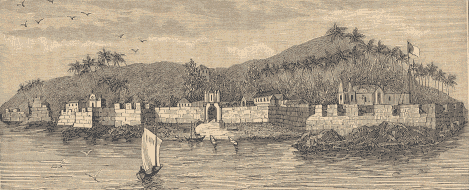
Cabo de Rama Fort, located in the village of Khola in Canacona, Goa, India, is a prominent example of a medieval hillfort strategically perched on a cliff overlooking the Arabian Sea. This historic fortification offers commanding views of the surrounding coastline and hinterland, reflecting its importance as a military stronghold in the region's turbulent history.

Historical significance and origins

The origins of Cabo de Rama Fort are somewhat obscure, but it is widely believed to have been constructed during the medieval period, possibly by local rulers or early colonial powers aiming to control the coastal trade routes. The fort changed hands multiple times, notably under the rule of the Portuguese colonial administration who fortified and expanded it in the 16th century after their arrival in Goa. Its name is linked to the Hindu epic Ramayana, with local legend associating the site with Lord Rama, adding cultural and mythological significance to its military role.

Architectural features and layout

Cabo de Rama is classified as a hill castle due to its elevated position on a rocky promontory. The fort's architecture includes robust stone walls that follow the natural contours of the hill, providing formidable defensive capabilities. The fortifications include bastions and ramparts designed to withstand artillery attacks, a feature typical of fortifications adapted during the early modern period.

The entrance to the fort is marked by a large gatehouse with remnants of a defensive moat and drawbridge system, emphasizing the fort’s defensive priorities. Inside, the fort contains ruins of barracks, granaries, and armories, along with a chapel built during Portuguese occupation, reflecting the blend of military and religious functions.

Natural defenses and strategic location

The fort’s position on a steep cliff provides natural defenses on three sides, making it difficult for invaders to mount a direct assault. The panoramic views from the fort allowed defenders to monitor maritime activity and potential threats from the sea, underscoring its role in coastal defense and trade route control.

Role during Portuguese rule

During the Portuguese colonial period, Cabo de Rama Fort was an important military outpost guarding the southern frontier of Portuguese Goa. The Portuguese enhanced the fort’s defenses to protect against both local uprisings and external threats from other colonial powers and pirates. The fort was also used as a prison at various times, which contributed to its layered history.

Current condition and tourism

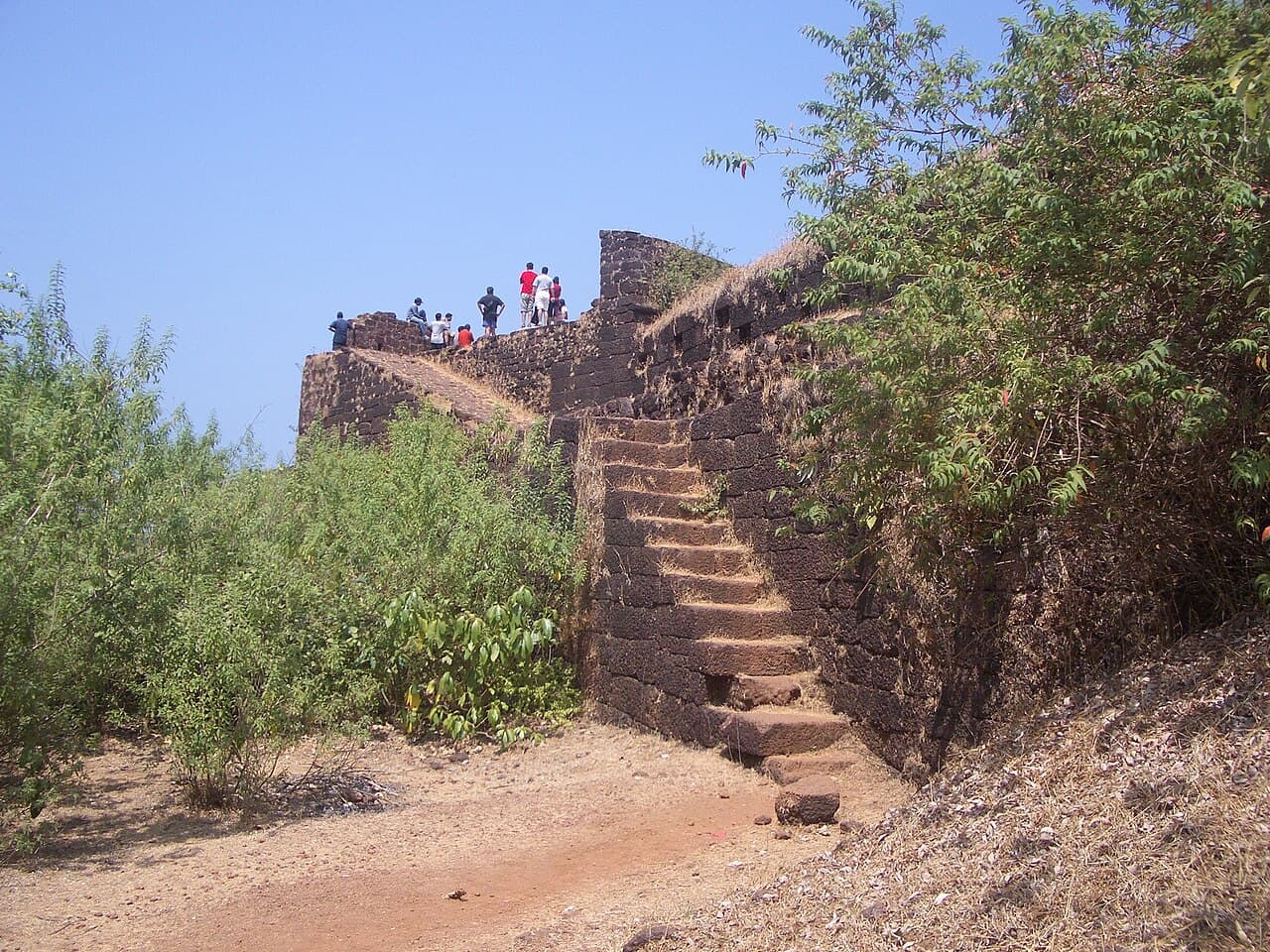
Today, Cabo de Rama Fort remains partially preserved, with many sections in ruins but still accessible to visitors. The site attracts tourists for its historic ambiance, spectacular views of the Arabian Sea, and its cultural significance in Goan history. Efforts to maintain and promote the fort as a heritage site have increased, recognizing its value as a symbol of Goa’s diverse past.

Visitor experience and accessibility

Visitors can explore the fort’s extensive ruins, including the walls, bastions, and the chapel. The site offers hiking opportunities along the hill and panoramic photo spots. The fort is accessible by road from Canacona and nearby towns, making it a popular day-trip destination for those interested in history and coastal landscapes.

Frequently asked questions (FAQ)

What is the best time to visit Cabo de Rama Fort?
The best time to visit Cabo de Rama Fort is during the cooler months from November to February when the weather is pleasant for exploring the hilltop ruins and enjoying the coastal views.
How do I get to Cabo de Rama Fort?
Cabo de Rama Fort is accessible by road from the town of Canacona in Goa. Visitors can hire taxis or use local buses to reach the village of Khola, from where the fort is a short hike.
Is there an entrance fee to visit Cabo de Rama Fort?
Currently, there is no entrance fee to visit Cabo de Rama Fort, making it an attractive destination for budget travelers interested in history and nature.
What can I see inside Cabo de Rama Fort?
Inside the fort, visitors can explore the remains of the fortifications, including bastions, ramparts, a chapel built during Portuguese rule, and ruins of barracks and granaries.
Can I hike around Cabo de Rama Fort?
Yes, hiking around Cabo de Rama Fort is popular. The trails offer scenic views of the Arabian Sea and surrounding landscapes, suitable for moderate fitness levels.

Photo gallery

Cabo de Rama
Click to view

Photo by Klaus Nahr from Germany•CC BY-SA 2.0

1 photo • Click any image to view in full screen

Information

Hill Castle

Loading map...

Visitor reviews

No reviews yet. Been here? Write the first review and help other travelers!

Write the first review

Visited this castle? Share your experience

Your review helps other travelers and adds first-hand knowledge to our encyclopedia.
Write a review

(5/5)

0/2000 characters

Your review will be visible after admin approval

Nearby castles

25.9 km
Rachol Fort — India castle

Rachol Fort

, India

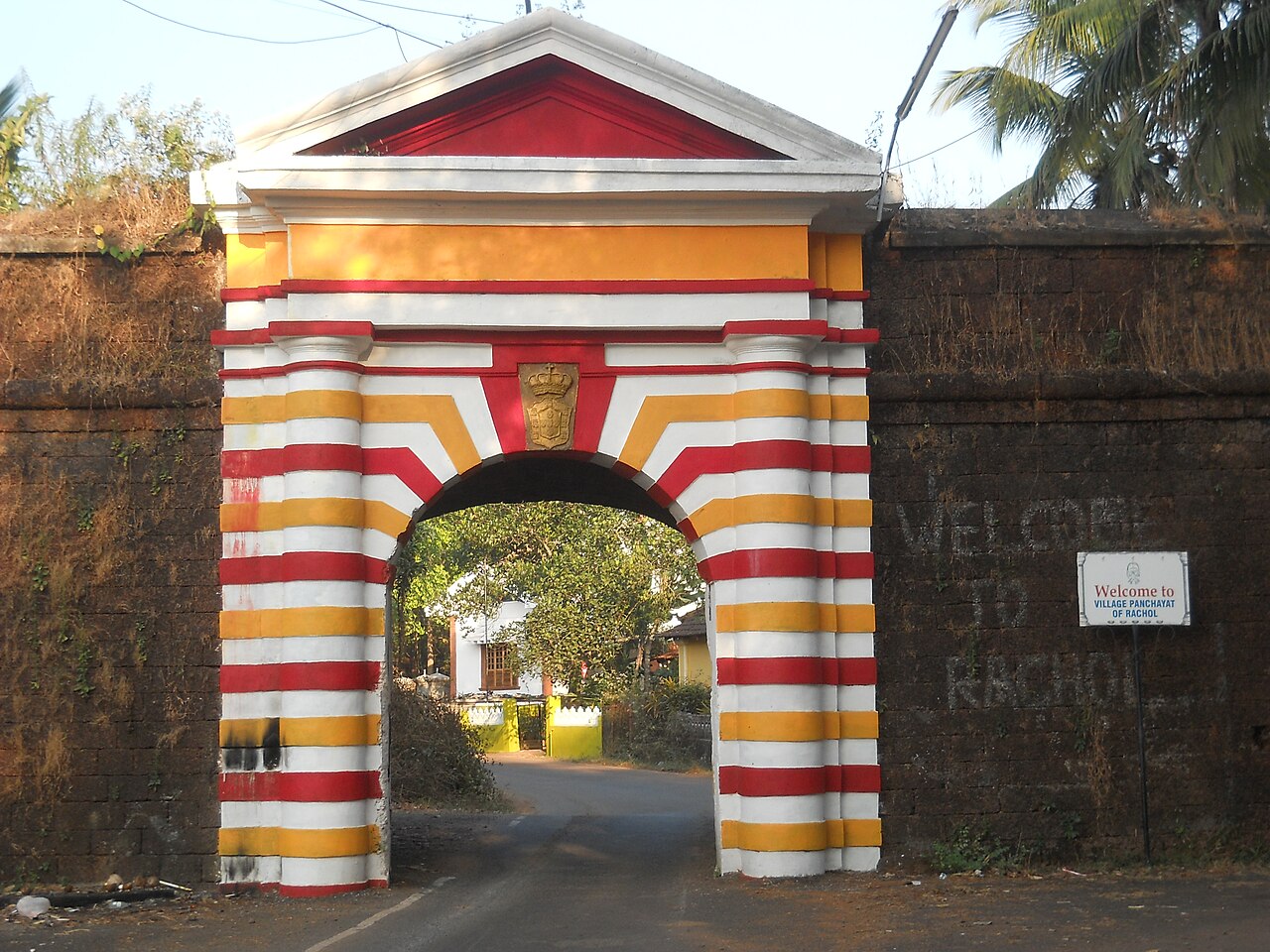
Rachol Fort is a significant Portuguese era bastioned fortress situated in the village of Rachol, within the Salcette concelho of Goa, on the west coast of India. This fortification reflects the strategic military architecture employed by the Portuguese during their colonial rule in India, which lasted from the early 16th century until the mid-20th century. Historical context and strategic importance The construction of Rachol Fort took place during the period when the Portuguese were consolidating their hold over the coastal regions of India. The fort was built to protect the surrounding territory and to serve as a defensive bulwark against invasions by regional powers and rival European colonizers. Its position in Salcette was crucial for controlling inland access and securing the important trade routes that passed through Goa. Throughout its history, the fort witnessed several military engagements and played a role in the defense system of Portuguese Goa. It was part of a network of fortifications that included other notable forts such as Aguada and Reis Magos, which together formed a defensive perimeter around the colony. Architectural features and design Bastioned fortress layout Rachol Fort exemplifies the bastioned fortress style, which was a prevalent military architectural form in the 16th and 17th centuries. This design features angular bastions projecting outward from the main walls, allowing defenders to cover adjacent walls with cannon and musket fire, eliminating blind spots and enhancing the fort's defensive capabilities. The fort's walls are constructed from laterite stone, a common building material in the region, known for its durability and resistance to tropical weather conditions. The bastions are robust and designed to withstand artillery attacks, with thick walls and embrasures for cannons. Entrances and internal structures The main entrance of Rachol Fort is fortified with a heavy gate and defensive features such as guardhouses and loopholes for firing. Inside, the fort once housed barracks, ammunition storage, and quarters for officers, although many of these structures are now in ruins or have been repurposed. The layout includes a courtyard that would have served as a muster point for troops and a space for supplies and equipment. The fort's design reflects the military engineering principles of the Portuguese colonial period, emphasizing functionality and defense. Role in Portuguese Goa and subsequent history During the height of Portuguese power in Goa, Rachol Fort was a key military installation. It helped maintain Portuguese dominance in the region and safeguarded the colony against both local resistance and foreign threats. The fort's presence contributed to the stability of Portuguese administration in Salcette and the surrounding areas. After the decline of Portuguese rule and the eventual annexation of Goa by India in 1961, the fort lost its military significance. Today, it stands as a historical monument, reflecting the colonial past and military heritage of Goa. Current condition and preservation efforts Rachol Fort is currently classified as partially preserved. While some sections of the fort remain intact, others are in a state of ruin, with walls and bastions showing signs of weathering and neglect. Efforts have been made by local authorities and heritage organizations to conserve the fort and promote it as a cultural and tourist attraction. Visitors to the fort can observe the characteristic bastioned walls and imagine the strategic importance it held during the Portuguese era. The fort's location also offers views of the surrounding landscape, including the nearby village and the Sal River. Visiting information and cultural significance The fort is accessible to visitors interested in the military history of Goa and Portuguese colonial architecture. It provides insight into the defensive strategies employed by European powers in India and the adaptation of European fortification styles to the tropical environment. Nearby attractions include the historic Rachol Seminary and the Church of Our Lady of Snows, which together with the fort form part of the rich cultural tapestry of the region.

Post-Renaissance (17th–18th c.)
Details
36.8 km
Ponda Fort — India castle

Ponda Fort

, India

Ponda Fort is situated near the town of Ponda in the Indian state of Goa, along the country's west coast. This fortification originally served as a strategic bastioned fortress, a type of fortification characterized by angular bastions designed to improve defensive capabilities against artillery fire. Although the present-day structure is a modern reconstruction, the site holds significant historical importance in the region. Historical background and strategic importance The original Ponda Fort was constructed using traditional materials such as stone and mud, typical of fortifications built in this region during earlier centuries. Its location near Ponda was strategically chosen to control movement and defend the hinterlands of Goa, especially during periods of conflict involving regional powers and European colonial forces. The fort played a role in the military history of Goa, which was a contested territory between the Portuguese and local rulers. Architectural features of the original fort The fort was designed as a bastioned fortress, a style that emerged in the late medieval to early modern period, characterized by projecting bastions at the corners of the walls. These bastions allowed defenders to cover adjacent walls with gunfire, reducing blind spots and increasing the fort's defensibility. Constructed primarily from stone and mud, the fort's walls were originally left bare without plaster or paint, reflecting the utilitarian nature of the structure. Defensive structures The fort's defensive system included thick walls reinforced with bastions, which were essential for withstanding sieges and artillery attacks. The walls were likely surrounded by a moat or natural barriers, common in Indian fortifications of the time, although specific details about these features at Ponda Fort are sparse. The fort's layout would have included gates, ramparts, and possibly internal chambers for troops and supplies. Modern reconstruction and current condition In recent decades, the original fort fell into disrepair. A renovation effort in 1977 used poor-quality materials, which contributed to structural weaknesses. By 2017, parts of the fort's lower walls had collapsed due to neglect and material degradation. Subsequently, the site was redeveloped into a park, featuring a modern reconstruction of the fort using a combination of stone, concrete, and plaster. This reconstructed fort is painted red, distinguishing it from the original bare stone and mud appearance. Preservation challenges The use of modern materials and the park conversion have altered the historical authenticity of the fort. While the reconstruction serves to commemorate the site's heritage and provide a public space, it does not fully replicate the original architectural techniques or materials. Preservation efforts continue to face challenges related to material durability and maintaining the balance between historical integrity and public accessibility. Cultural and heritage significance Ponda Fort remains a point of interest for visitors to Goa, offering insights into the region's military history and colonial past. Although the original structure no longer stands intact, the site symbolizes the defensive architecture of its era and the strategic importance of Goa in Indian and Portuguese history. The fort's conversion into a park allows for community engagement and tourism, contributing to the local cultural landscape.

Details
39.8 km
Fort Anjediva — India castle

Fort Anjediva

, India

Fort Anjediva is a historic bastioned fortress located on Anjadip Island, a small island off the coast of the Indian state of Karnataka but administratively part of the state of Goa. The island covers an area of approximately 1.5 square kilometres (0.58 mi2) and holds significant maritime and colonial importance due to its strategic location in the Arabian Sea near the western coast of India. Historical context and portuguese colonial era The fort was constructed in the 16th century during the renaissance period, a time when the Portuguese empire was expanding its maritime trade routes and colonial holdings in Asia. Fort Anjediva was established as a key military outpost to secure Portuguese dominance over the Arabian Sea and protect their naval interests along the western coast of India. The fortification played a crucial role in safeguarding the shipping lanes and served as a defensive bastion against rival colonial powers and local kingdoms. Portuguese rule on Anjadip Island lasted for several centuries, during which the fort underwent various phases of construction and reinforcement to adapt to evolving military technologies and threats. The fort's design reflects typical bastioned fortress architecture of the Renaissance era, incorporating angled bastions that allowed defenders to cover all approaches with overlapping fields of fire, a significant advancement over earlier medieval fortifications. Architectural features and fortifications The fortress is characterized by its massive stone walls, designed to withstand cannon fire and sieges. The bastions are strategically positioned at the corners of the fort, enabling a comprehensive defensive perimeter. Inside the fort, remnants of various structures such as barracks, storage facilities, and defensive gun emplacements can still be discerned despite its current ruined state. The fort’s layout was planned to maximize defense, with thick walls, narrow entrances, and limited access points to hinder enemy advances. The presence of a moat or water defenses is not clearly documented but the island’s natural coastal features provided additional protection. Religious structures and cultural heritage Within the vicinity of the fort are significant religious sites that reflect the Portuguese colonial influence on the island. The Church of Our Lady of Springs, built in 1505, stands as one of the oldest Christian religious structures in the region. This church served the spiritual needs of the Portuguese settlers and military personnel stationed at the fort. Another notable religious site is the Chapel of Francis of Assisi, which today remains in ruins. These religious buildings underscore the cultural and religious imprint left by the Portuguese during their occupation of Anjadip Island. Current condition and preservation Today, Fort Anjediva is largely in ruins, with much of its original structure deteriorated due to centuries of exposure to the elements and lack of continuous maintenance. Despite this, the site remains a place of historical interest for scholars, tourists, and those interested in the colonial history of India. Efforts to preserve the fort and its associated religious sites have been limited, but the ruins continue to attract visitors who explore the remnants of the bastioned walls and the historic churches. The island’s remote location and restricted access have helped protect it from extensive modern development. Strategic maritime significance The location of Fort Anjediva on Anjadip Island was chosen for its strategic maritime advantage. It provided the Portuguese navy with a critical base for monitoring and controlling shipping routes along the western coast of India. The fort's position enabled early warning against naval threats and served as a supply and repair station for Portuguese vessels navigating the Arabian Sea. This strategic importance diminished with the decline of Portuguese power in India, but the fort remains an important symbol of the era of European colonial expansion in the Indian Ocean.

Renaissance (15th–17th c.)
Details