Fort Amsterdam (Ghana)
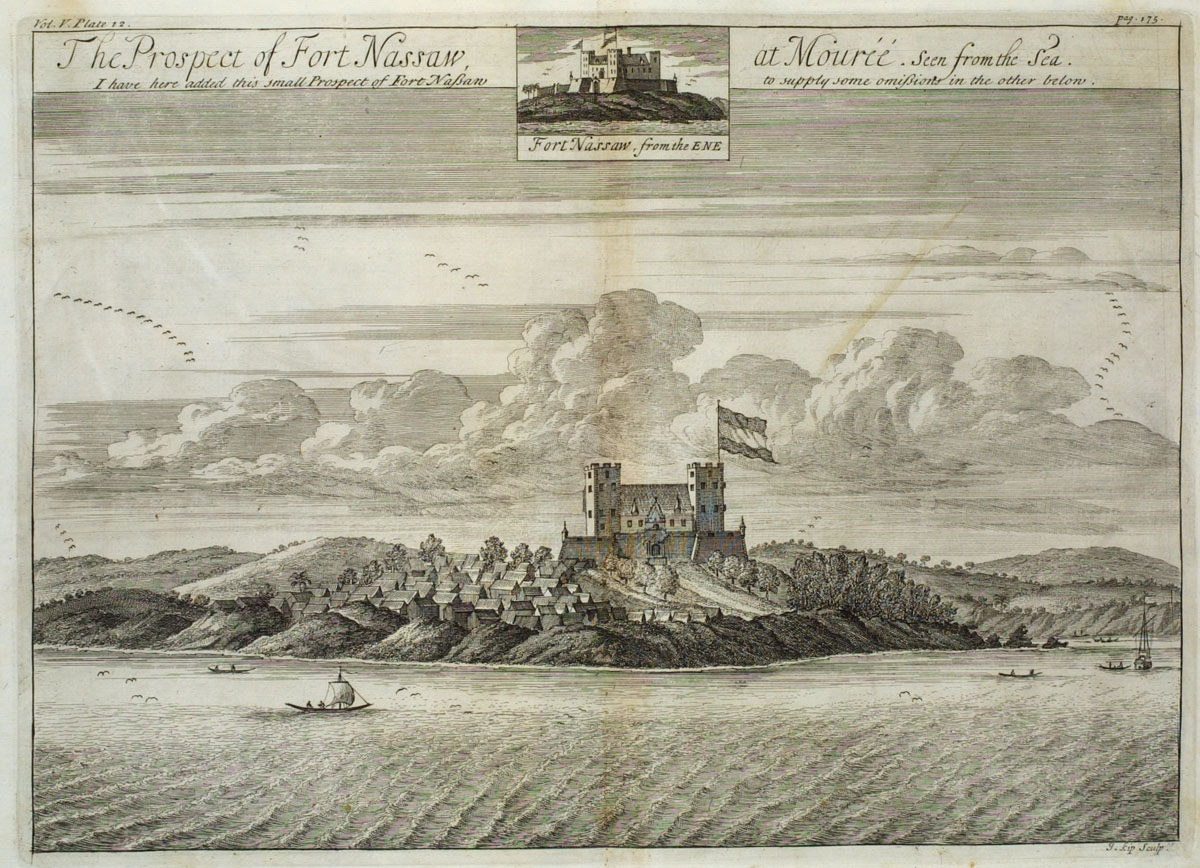
Fort Amsterdam, located in Abandze in the Central Region of Ghana, is a prominent example of a 17th-century bastioned fortress on the West African coast. Originally constructed by the English between 1638 and 1645, it was initially known as Fort Cormantin or Fort Courmantyne. This fortification was part of the network of European forts that played a critical role in the trade dynamics of the Gold Coast during the Renaissance period.
Historical context and construction
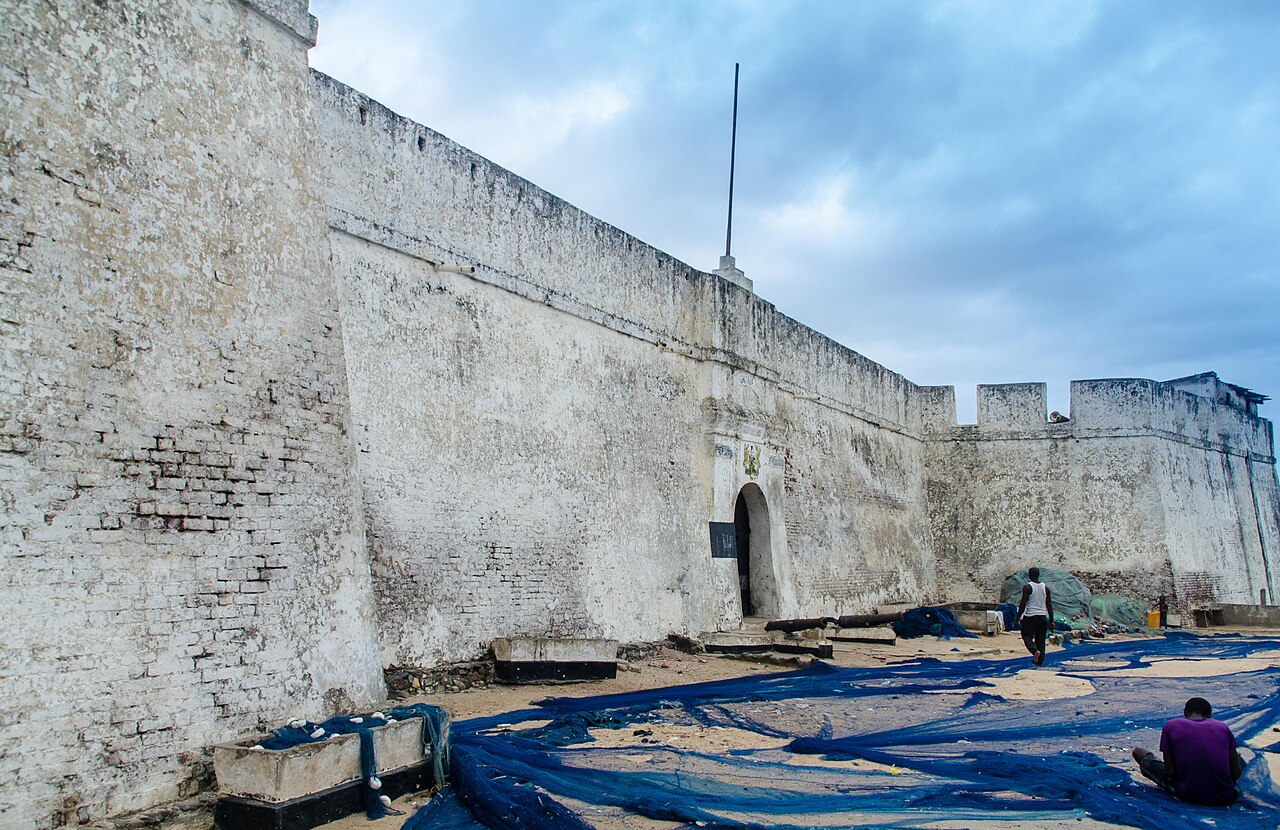
The fort was built by the English as a strategic trading post and military stronghold to assert control over the lucrative trade routes along the West African coast. Its construction reflects the typical bastioned fortress design of the period, characterized by angled bastions that allowed defenders to cover all approaches with cannon fire, a key feature in early modern military architecture. The fort's location in Abandze, northeast of Cape Coast, was chosen for its strategic position overlooking the Atlantic Ocean and access to inland trade routes.
Architectural features
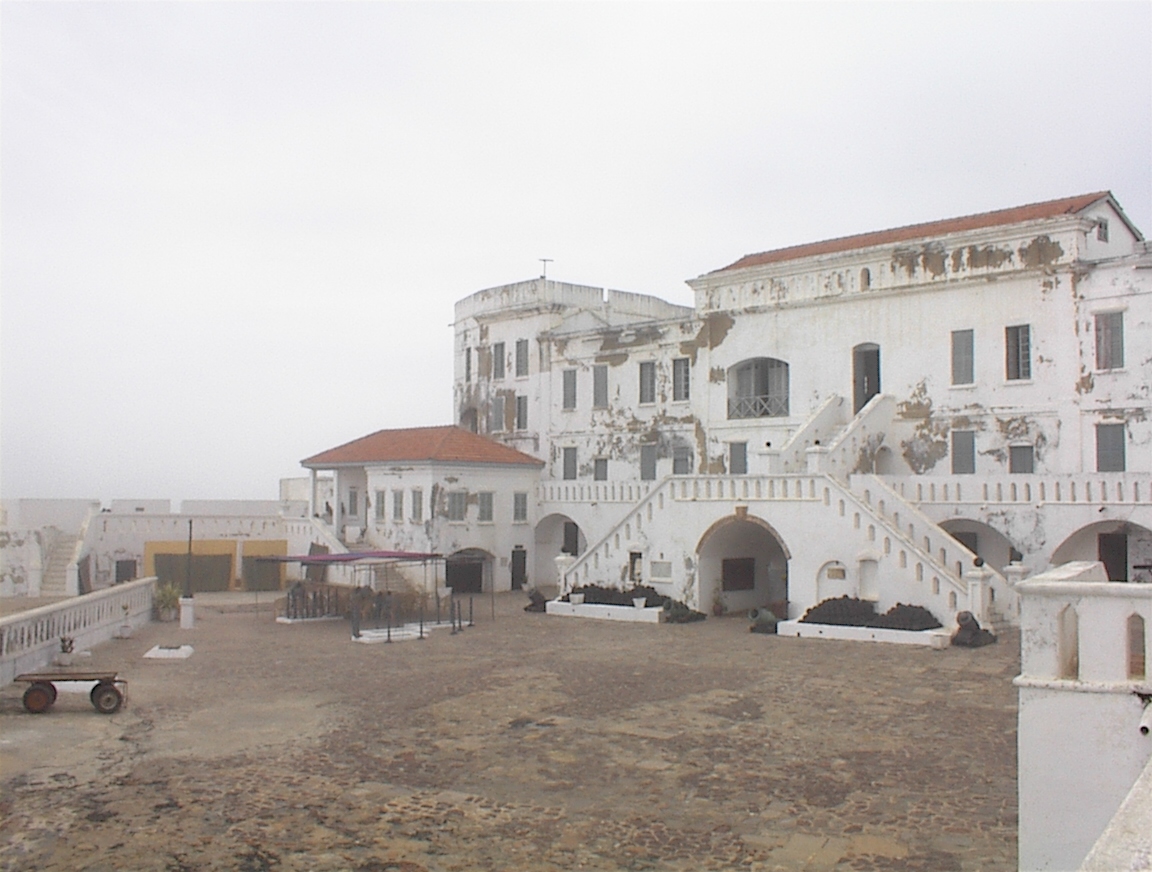
The design of Fort Amsterdam includes thick stone walls, bastions at the corners for artillery placement, and a central courtyard. The bastions provided overlapping fields of fire, enhancing the fort's defensive capabilities against naval and land attacks. The fort also contained living quarters, storage facilities, and dungeons, which were used during the dark period of the Atlantic slave trade.
Change of control and colonial significance
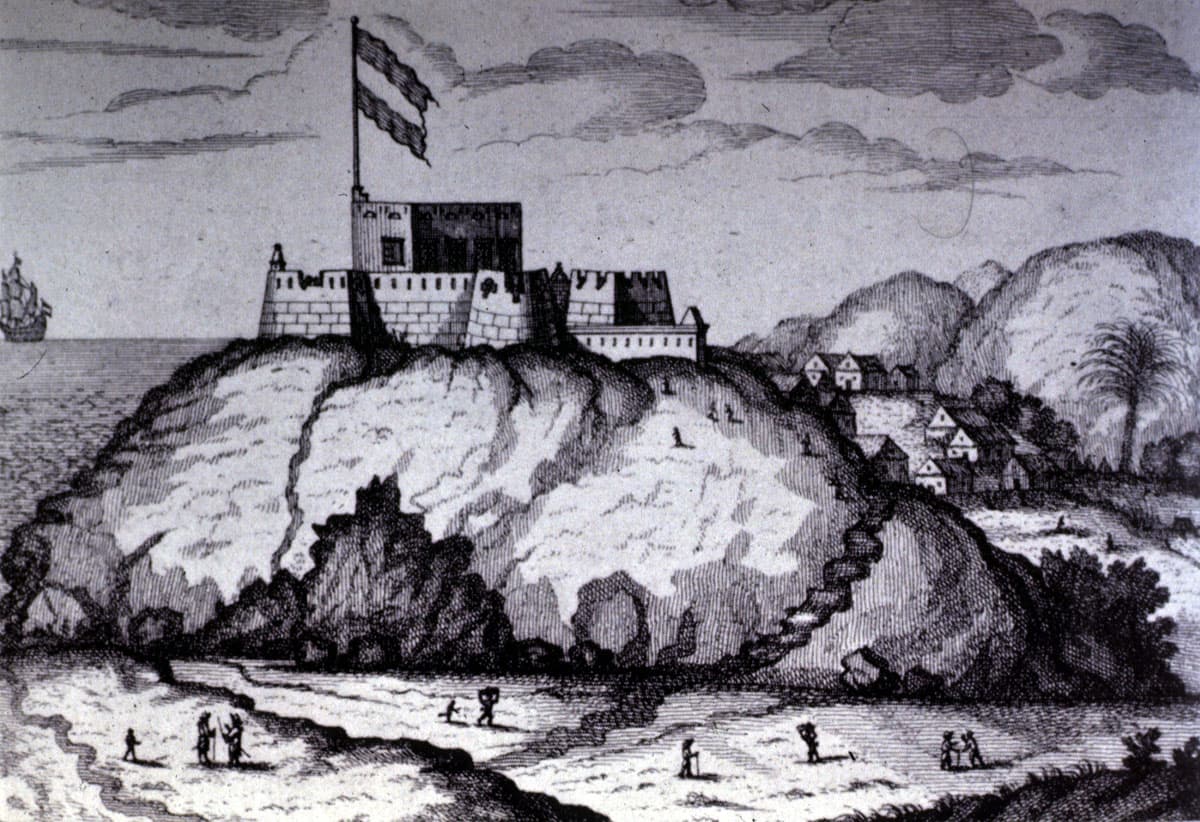
In 1665, the fort was captured by the Dutch admiral Michiel de Ruyter of the Dutch West India Company during a campaign to reclaim Dutch possessions lost to the English. This event was part of the larger conflicts between European powers competing for dominance in West Africa. After its capture, the fort was renamed Fort Amsterdam and became part of the Dutch Gold Coast.
The fort remained under Dutch control until 1868, when it was traded back to the British as part of a treaty that exchanged various forts along the Gold Coast. This transfer marked the end of Dutch influence in the region and solidified British colonial presence.
Role in the Atlantic slave trade
Fort Amsterdam was one of many forts along the Gold Coast used in the transatlantic slave trade. It served as a holding and trading point where enslaved Africans were confined before being shipped across the Atlantic. The fort's dungeons and holding cells bear witness to this grim chapter of history, reflecting the human suffering associated with European colonial and economic ambitions in West Africa.
Preservation and cultural heritage
Today, Fort Amsterdam stands as a well-preserved bastioned fortress and a significant cultural heritage site. It is part of the collection of forts and castles along the Ghanaian coast inscribed on the UNESCO World Heritage List since 1979. This designation recognizes its importance as a symbol of European colonial history and the Atlantic slave trade, as well as its architectural and historical value.
The fort attracts visitors interested in the history of European colonialism, military architecture, and the transatlantic slave trade. Its location in the Mfantseman District of the Central Region makes it accessible for educational tours and cultural tourism.
Visiting Fort Amsterdam
Visitors to Fort Amsterdam can explore the fort's bastions, walls, courtyard, and dungeons. Interpretive displays and guided tours provide context about the fort's construction, its role in colonial conflicts, and its involvement in the slave trade. The site offers insight into the complex history of European competition in West Africa and the human cost of the Atlantic slave trade.
Architectural and historical significance
The fort exemplifies Renaissance military architecture adapted to the West African coastal environment. Its bastioned design reflects advances in fortification technology aimed at countering artillery attacks. The fort’s history encapsulates the shifting control between European powers and the economic motivations driving their presence in Africa.
As a preserved monument, Fort Amsterdam contributes to understanding the broader narrative of European colonization, the transatlantic slave trade, and their enduring legacies in Ghana and beyond.
Frequently asked questions (FAQ)
- What is the historical significance of Fort Amsterdam?
- Fort Amsterdam, built in the 17th century, played a crucial role in the transatlantic slave trade, serving as a key trading post for European powers. It is a symbol of Ghana's colonial history and reflects the strategic importance of the Gold Coast in global trade during that era.
- When was Fort Amsterdam constructed?
- Fort Amsterdam was constructed in 1631 by the Dutch West India Company. It was originally built to protect the Dutch trade interests in the region and to serve as a military outpost.
- What are the opening hours for Fort Amsterdam?
- Fort Amsterdam is open to visitors daily from 9:00 AM to 5:00 PM. It is advisable to check for any seasonal variations in opening hours or potential closures before your visit.
- Can I take photographs inside Fort Amsterdam?
- Yes, visitors are allowed to take photographs within the grounds of Fort Amsterdam. However, it is recommended to respect any specific guidelines provided by the staff to ensure the preservation of the site.
- Is Fort Amsterdam accessible for individuals with disabilities?
- Access to Fort Amsterdam may pose challenges for individuals with mobility issues due to its historical structure and terrain. It is advisable to contact the management in advance to inquire about specific accessibility options available at the site.
- What is the best time to visit Fort Amsterdam?
- The best time to visit Fort Amsterdam is during the dry season, from November to March, when the weather is more pleasant. Visiting during this period also allows you to explore the surrounding area comfortably.
- Are there any nearby attractions to explore after visiting Fort Amsterdam?
- Yes, there are several attractions near Fort Amsterdam, including the picturesque beaches of Abandze and the nearby fishing villages. You can also explore other historical forts along the coast, making for a rich cultural experience.
- How much is the ticket price for visiting Fort Amsterdam?
- The ticket price for visiting Fort Amsterdam is quite affordable, typically ranging from a few cedis for locals to a slightly higher fee for international tourists. It's best to check the latest pricing information upon arrival or on the official website.
Photo gallery

Public domain
Information
Current owner
Government of Ghana
Loading map...
Visitor reviews
No reviews yet. Been here? Write the first review and help other travelers!
Write the first reviewVisited this castle? Share your experience
Your review helps other travelers and adds first-hand knowledge to our encyclopedia.