Fort Aguada
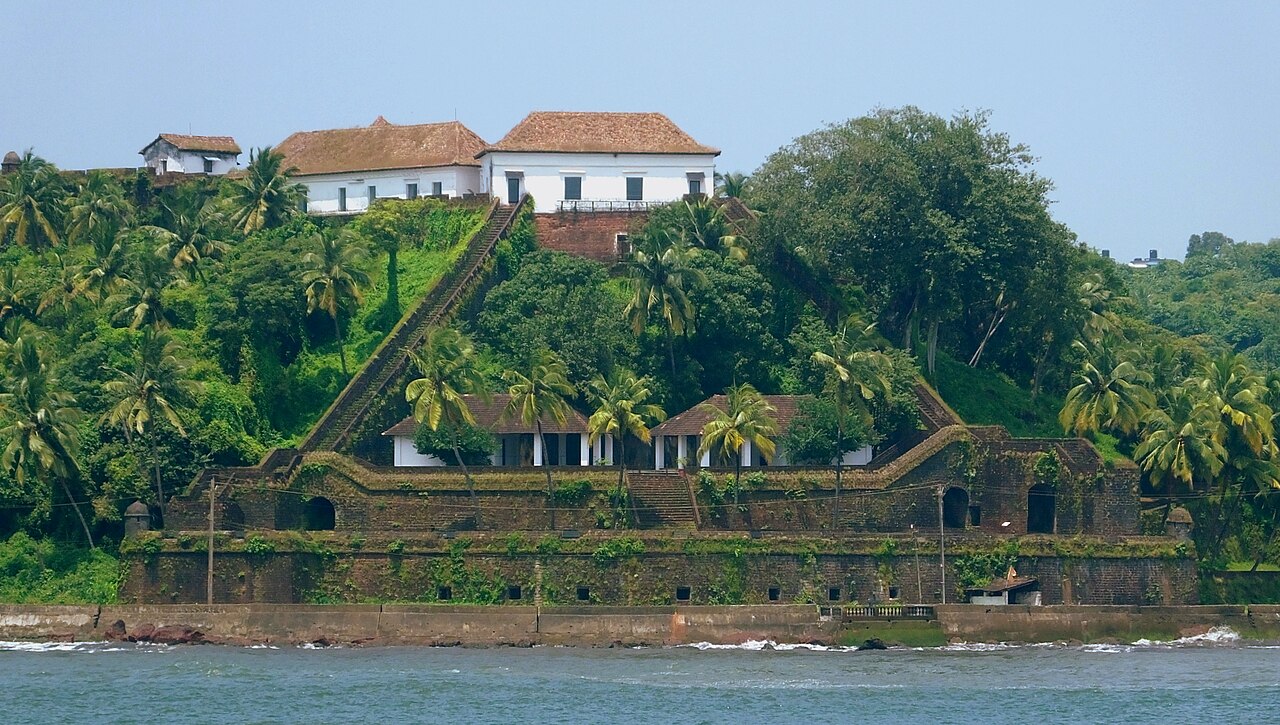
Fort Aguada is a prominent 17th-century Portuguese bastioned fortress located on Sinquerim Beach in Goa, India. Constructed in 1612, it was strategically built to guard the Arabian Sea coast and to serve as a crucial water source for Portuguese ships. The fort's name "Aguada" translates to "watering place," highlighting its original function as a freshwater reservoir for vessels sailing along the western coast of India.
Strategic location and historical context
Situated at the mouth of the Mandovi River, Fort Aguada's coastal position offered a commanding view over the Arabian Sea, enabling early detection of enemy ships and protecting the vital sea route to the Portuguese colony of Goa. This fortification was part of a broader network of Portuguese defenses established during the Renaissance period to secure their colonial interests in India.
The fort played a significant role during the Portuguese colonial era, serving both military and logistical purposes. It was a key defense point against the Dutch and Maratha incursions and later functioned as a prison during British rule.
Architectural features and design
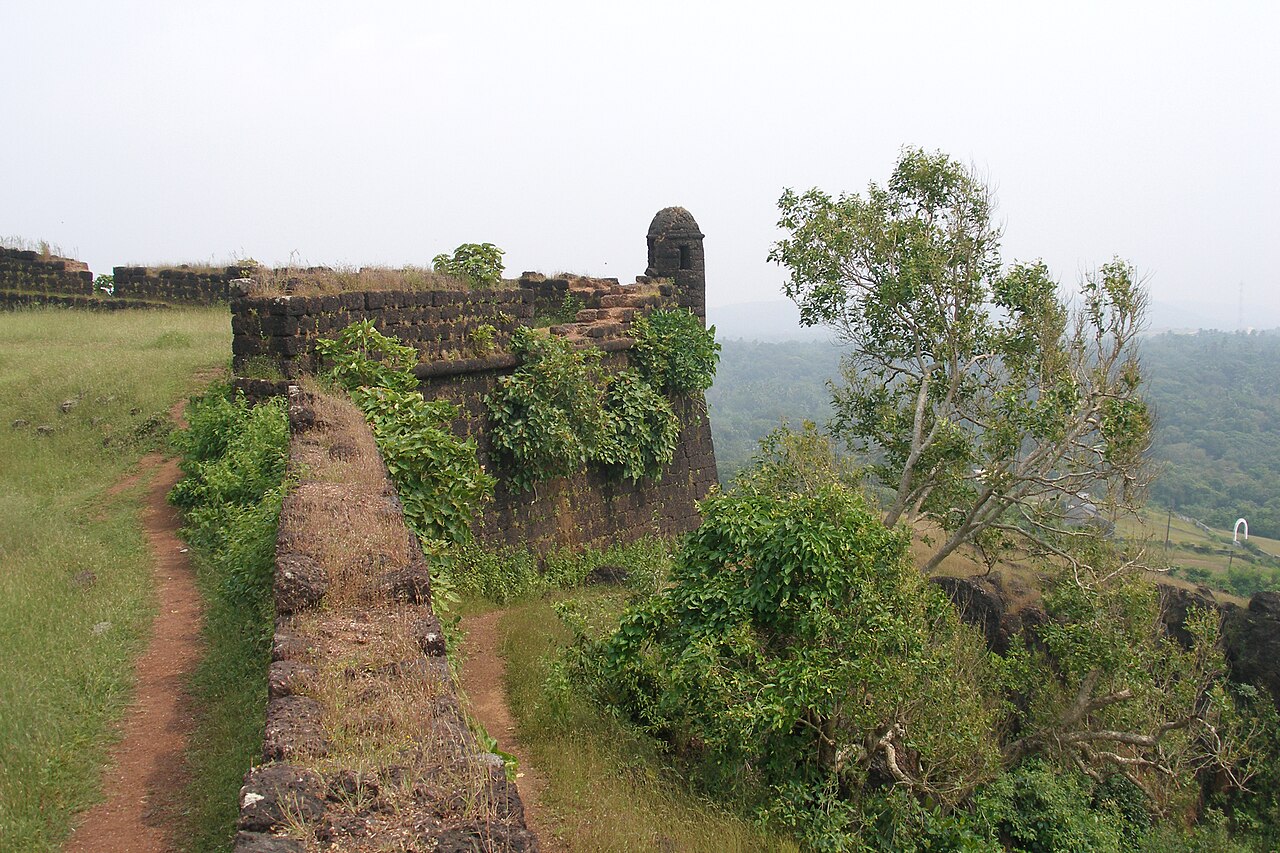
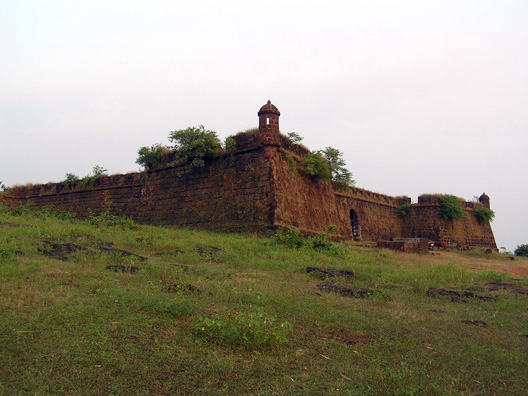
Fort Aguada exemplifies the bastioned fortress style, a military architectural design that emerged in Europe during the Renaissance to counter the threat posed by artillery. Its thick laterite stone walls and bastions were designed to withstand cannon fire and provide overlapping fields of fire.
The fort's walls extend over 600 meters and enclose an area of approximately 12 acres. It features a large circular bastion at the seaward end, which housed cannons to fend off naval attacks. The fort's defensive structures include ramparts, parapets, and a moat, which was originally filled with water from the nearby river.
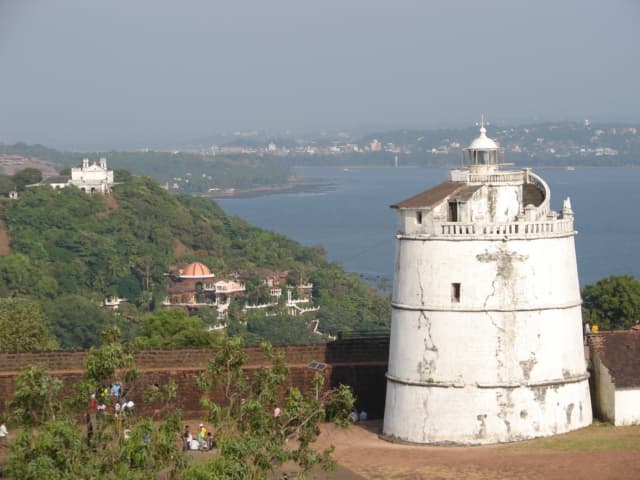
One of the fort's most notable structures is the lighthouse, built in 1864 atop the fort's highest point. This lighthouse is one of the oldest of its kind in Asia and remains operational, guiding ships along the Arabian Sea coast.
Inside the fort, there is a large freshwater spring and a reservoir that supplied water to the ships, a rare feature that underlines the fort's strategic importance as a replenishment station.
Preservation and current status
Today, Fort Aguada is a well-preserved monument protected by the Archaeological Survey of India (ASI) and is classified as a Monument of National Importance. The fort attracts numerous tourists each year who come to explore its historical ramparts, bastions, and the lighthouse.
The site offers panoramic views of the Arabian Sea and the surrounding beaches, making it a popular destination for history enthusiasts and visitors interested in colonial architecture and military history.
Visitor experience and accessibility
The fort is accessible from the city of Panaji, the capital of Goa, and is located near the popular Sinquerim Beach. Visitors can walk along the fort's ramparts, explore the bastions, and visit the lighthouse area. Informational plaques provide historical context, enhancing the educational experience.
While the fort's interior structures are limited, the expansive grounds and coastal views provide a unique experience of a Renaissance-era bastioned fortress adapted to the tropical environment of India.
Frequently asked questions (FAQ)
- What is the historical significance of Fort Aguada?
- Fort Aguada, built in 1612 by the Portuguese, served as a vital defense against Dutch and Maratha invasions. It played a crucial role in protecting the vital shipping routes along the Arabian Sea and is one of the best-preserved coastal forts in India.
- When was Fort Aguada constructed?
- The construction of Fort Aguada began in 1609 and was completed in 1612. It was strategically built on the Aguada Hill to overlook the sea and safeguard the region from enemy attacks.
- What are the opening hours of Fort Aguada?
- Fort Aguada is open to visitors every day from 9:30 AM to 6:00 PM. It is advisable to check for any special timings during public holidays or local festivals.
- Is it possible to access Fort Aguada with public transport?
- Yes, Fort Aguada is accessible via public transport, including buses and taxis. Local transport options are available from major cities in Goa, making it easy to visit the fort without a private vehicle.
- Can I take photographs inside Fort Aguada?
- Yes, visitors are allowed to take photographs inside Fort Aguada. The stunning architecture and scenic views provide excellent opportunities for photography enthusiasts.
- What is the best time to visit Fort Aguada?
- The best time to visit Fort Aguada is between November and February when the weather is pleasant and ideal for outdoor exploration. Visiting during this period allows you to enjoy the fort's beauty without the intense heat of summer.
- Are there any nearby attractions to explore after visiting Fort Aguada?
- Yes, after exploring Fort Aguada, you can visit nearby attractions such as the Aguada Lighthouse and Sinquerim Beach. Both locations offer beautiful views and additional opportunities for relaxation and exploration.
- What are the ticket prices for entering Fort Aguada?
- Entry to Fort Aguada is generally free for Indian citizens, while foreign tourists may have to pay a nominal fee. It's advisable to check for any changes in ticket pricing before planning your visit.
Photo gallery

Information
Loading map...
Visitor reviews
No reviews yet. Been here? Write the first review and help other travelers!
Write the first reviewVisited this castle? Share your experience
Your review helps other travelers and adds first-hand knowledge to our encyclopedia.