Chapora Fort is a historic bastioned fortress situated in the Bardez region of Goa, India, perched strategically above the Chapora River. This fortification dates back to the 18th century and was originally constructed under the rule of the Adil Shahi dynasty, specifically by ruler Adil Shah. Its original name was Shahpoora, which later evolved into Shapora and eventually Chapora due to linguistic changes influenced by the Portuguese and local communities.
Historical background and strategic importance
The fort's location was of considerable strategic value, overseeing the confluence of the Chapora River and the Arabian Sea, which made it a critical point for controlling maritime and inland trade routes. The fort changed hands multiple times, reflecting the turbulent history of the region marked by conflicts between the Adil Shahi sultanate, the Mughal Empire, and later the Portuguese colonial powers. The fort's control was vital for dominance over northern Goa and its surrounding territories.
After the decline of the Adil Shahi dynasty, the fort came under the influence of the Maratha Empire. The Malvankar naval forces, associated with Shivaji Maharaj, maintained a presence in the surrounding villages, which influenced the fort's name adaptation to Chapora. Eventually, the Portuguese took control, modifying the fort and using it as a military outpost to secure their colonial interests in Goa.
Architectural features and design
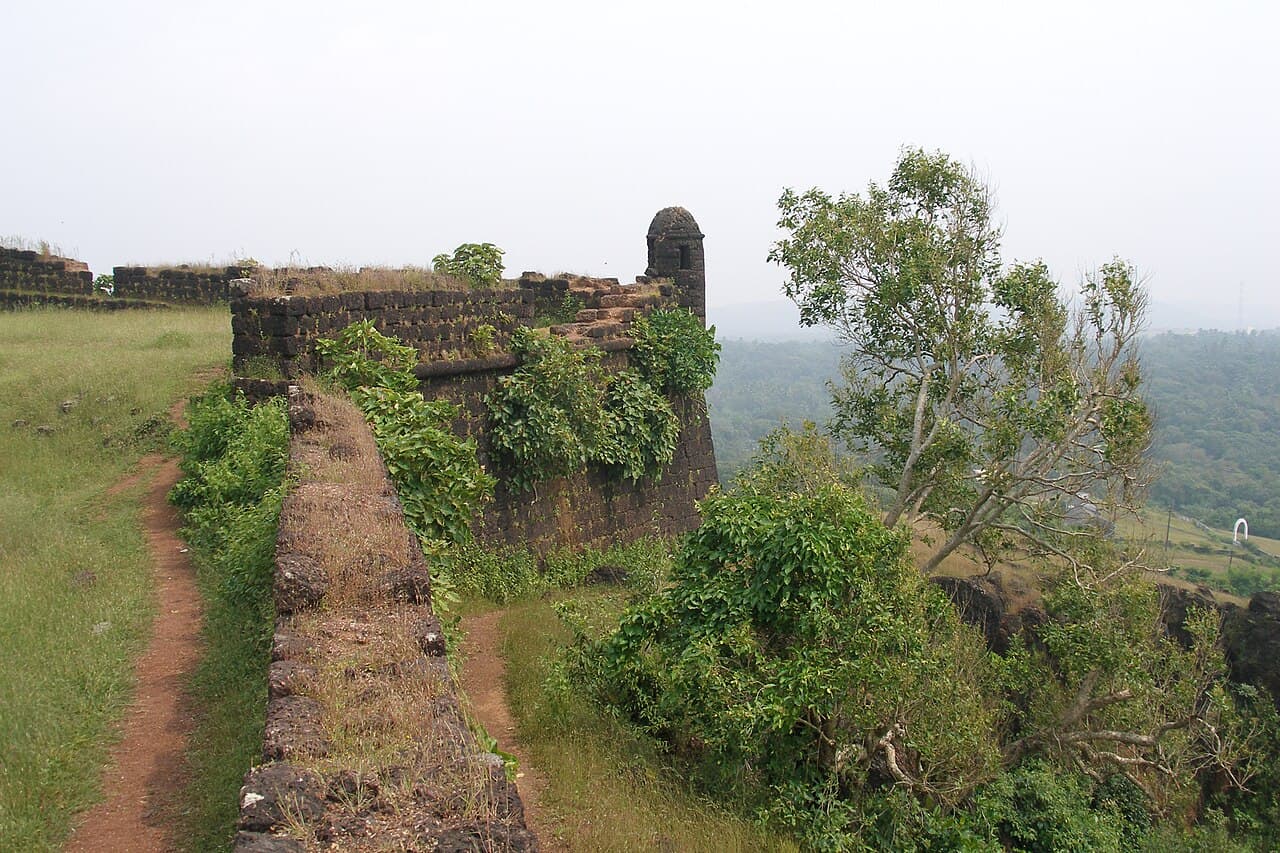
Chapora Fort is classified as a bastioned fortress, a style characterized by angular bastions designed to withstand cannon fire and provide overlapping fields of defensive fire. The fort's walls are thick and robust, constructed primarily from laterite stone, a common building material in the region known for its durability and resistance to tropical weather.
The fortress features multiple bastions positioned at strategic points along the walls, allowing defenders to cover all approaches. The design includes a main entrance gate, which historically would have been fortified with heavy wooden doors and possibly a drawbridge or moat, though these features have not survived intact. Inside, the fort contained barracks, storage rooms, and a cistern for water storage, essential for withstanding sieges.
Location and surroundings
Chapora Fort is located on a hillock overlooking the Chapora River estuary, providing commanding views of the surrounding landscape, including the Arabian Sea coastline and the nearby Morjim beach. This vantage point was crucial for spotting incoming ships and potential threats from the sea.
Today, the fort is a popular tourist destination, known for its panoramic views and the dramatic ruins that evoke its martial past. The site is accessible by road and is frequented by visitors interested in history, architecture, and scenic photography.
Current condition and preservation
The fort is in a state of ruins, with many of its original structures partially collapsed or eroded due to centuries of exposure to the coastal climate and lack of continuous maintenance. Despite this, significant portions of the bastions and walls remain standing, allowing visitors to appreciate the scale and defensive design of the fortress.
Efforts have been made to preserve the site as a cultural heritage landmark, although it remains largely an open-air ruin without extensive restoration. The fort's condition offers a tangible connection to Goa's layered history of indigenous dynasties, Maratha influence, and Portuguese colonization.
Visitor information and tourism
Chapora Fort is open to the public and does not charge an entrance fee, making it an accessible destination for tourists and locals alike. The best time to visit is during the cooler months from November to February, when the weather is more comfortable for exploring the fort's extensive grounds.
Visitors can enjoy walking along the ramparts, exploring the remains of the fortifications, and taking in views of the Chapora River and the Arabian Sea. The fort's proximity to popular beaches like Morjim also makes it a convenient stop for those touring northern Goa.
Frequently asked questions
- What is the historical significance of Chapora Fort? Chapora Fort was a strategic military outpost controlling access to northern Goa and played a role in regional conflicts between the Adil Shahi dynasty, Marathas, and Portuguese.
- Can visitors explore the entire fort? While much of the fort is in ruins, visitors can walk along the surviving bastions and walls and explore accessible interior areas safely.
- Is there an entrance fee to visit Chapora Fort? No, the fort is free to enter and open year-round.
- When is the best time to visit Chapora Fort? The cooler months from November to February offer the most pleasant weather for visiting.
- How do I reach Chapora Fort? The fort is accessible by road from nearby towns in Bardez, Goa, with parking available close to the site.
Frequently asked questions (FAQ)
- What is the historical significance of Chapora Fort?
- Chapora Fort was a strategic military outpost controlling access to northern Goa and played a role in regional conflicts between the Adil Shahi dynasty, Marathas, and Portuguese.
- Can visitors explore the entire fort?
- While much of the fort is in ruins, visitors can walk along the surviving bastions and walls and explore accessible interior areas safely.
- Is there an entrance fee to visit Chapora Fort?
- No, the fort is free to enter and open year-round.
- When is the best time to visit Chapora Fort?
- The cooler months from November to February offer the most pleasant weather for visiting.
- How do I reach Chapora Fort?
- The fort is accessible by road from nearby towns in Bardez, Goa, with parking available close to the site.
Photo gallery

Information
Loading map...
Visitor reviews
No reviews yet. Been here? Write the first review and help other travelers!
Write the first reviewVisited this castle? Share your experience
Your review helps other travelers and adds first-hand knowledge to our encyclopedia.