Fort 52a Łapianka
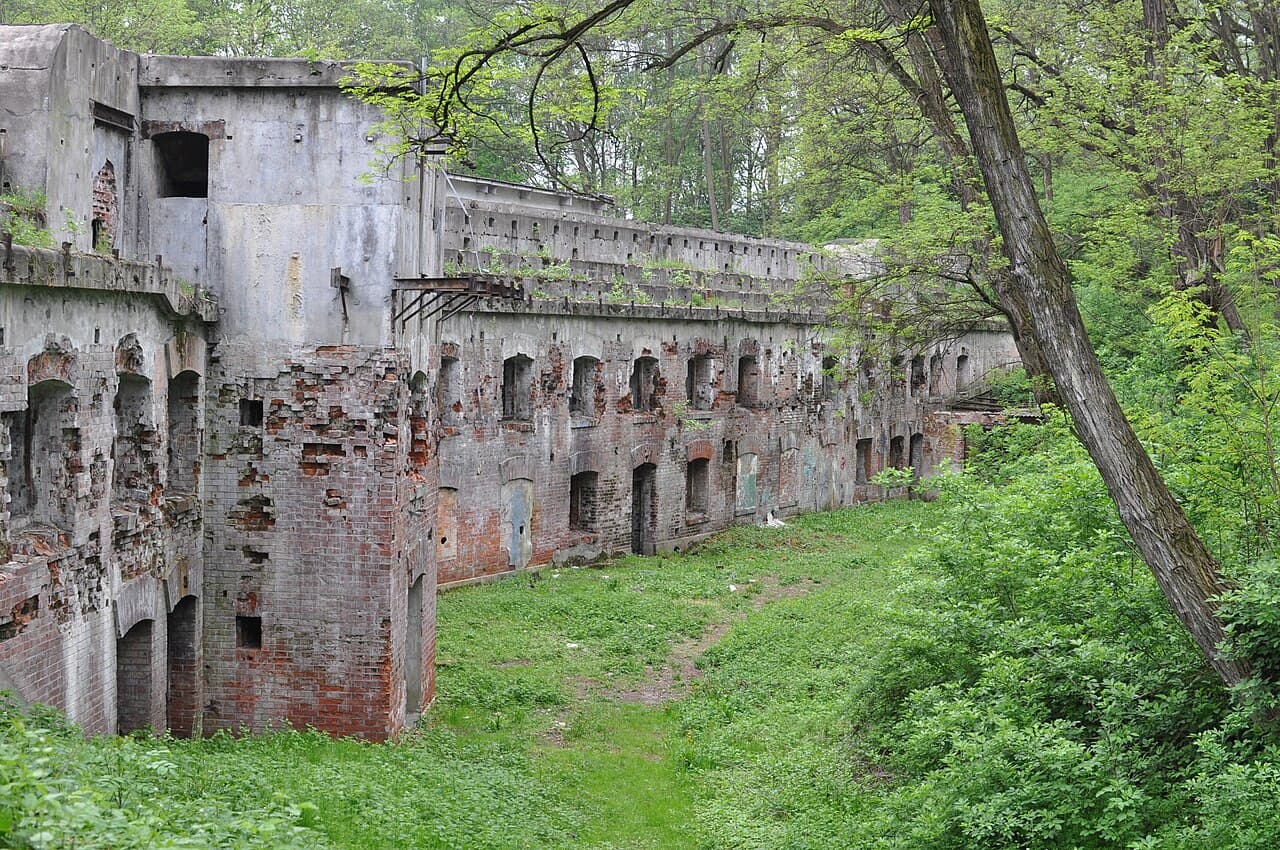
Fort 52a Łapianka, also known as "Łapianka" or Jugowice, is a significant example of a bastioned fortress constructed as part of the extensive Kraków Fortress system. Built between 1896 and 1902 (with some sources citing 1897–1898), this fortification was designed to strengthen the southern flank of Kraków's defensive perimeter. Strategically positioned to oversee and protect the vital road connecting Vienna and Lviv, Fort 52a played a crucial role in the city's outer defense during the late 19th and early 20th centuries.
Historical context and strategic importance
The construction of Fort 52a Łapianka was part of a larger effort by the Austro-Hungarian Empire to modernize and reinforce Kraków's fortifications. This effort resulted in a network of 14 similar forts forming an outer defensive ring around the city. These fortifications were intended to protect Kraków from potential military threats and to control key transportation routes. The fort's location near the road between Vienna and Lviv highlights its strategic importance in controlling movement and defending against invasions from the south.
Architectural features and armaments
Fort 52a is characterized by its bastioned design, a style that incorporates angled bastions projecting outward from the main walls to provide overlapping fields of fire and eliminate blind spots. The fortress includes four towers, each equipped with 8 cm M94 artillery guns, which were standard artillery pieces of the period. These guns allowed the fort to engage enemy forces at medium ranges effectively.
In addition to the main fort structure, there was an adjacent artillery battery intended for long-range defense. This battery extended the fort's firepower and coverage but is no longer in use today. The combination of bastioned walls, towers, and artillery placements made Fort 52a a formidable defensive position in its time.
Role within the Kraków Fortress system
The Kraków Fortress was a comprehensive defensive network designed to protect the city from modern warfare threats emerging in the late 19th century. Fort 52a Łapianka was one of 14 forts built simultaneously to form a cohesive outer ring. This ring was intended to delay or prevent enemy advances, giving the city's defenders time to mobilize and respond.
Each fort in the system, including Fort 52a, was designed to cover specific sectors and routes. The forts worked in unison, providing overlapping fields of fire and mutual support. This integrated defense approach was typical of military engineering in the Austro-Hungarian Empire during this period.
Preservation and current status
Today, Fort 52a Łapianka remains a well-preserved example of late 19th-century military architecture. While the adjacent artillery battery is no longer operational, the main fort structure, including its bastions and towers, retains much of its original form. The fort stands as a historical monument reflecting the military strategies and architectural techniques of its time.
Although not widely known as a tourist destination, Fort 52a offers insights into the defensive systems that protected Kraków and the broader region during a period of significant geopolitical tension. Its preservation allows for study and appreciation of bastioned fortress design and Austro-Hungarian military history.
Frequently asked questions (FAQ)
- What is the historical significance of Fort 52a Łapianka?
- Fort 52a Łapianka is a significant part of the Kraków Fortress system, built in the late 19th century as a defensive structure for the Austro-Hungarian Empire. It showcases the military architecture of the time and played a crucial role in the region's history, particularly during World War I.
- When was Fort 52a Łapianka built?
- Construction of Fort 52a Łapianka began in 1889 and was completed in the early 1890s. This fort is one of the many fortifications that were established around Kraków to protect the city from potential invasions.
- Can I visit Fort 52a Łapianka?
- Yes, Fort 52a Łapianka is open to visitors. It offers guided tours that delve into its history and architectural features, allowing guests to explore its historical significance and learn more about its role in military history.
- What are the opening hours for Fort 52a Łapianka?
- Fort 52a Łapianka is typically open to visitors from 10 AM to 6 PM during the tourist season. It's advisable to check the official website or contact the fort directly for updates on opening hours, especially during off-peak seasons.
- Is it possible to access Fort 52a Łapianka by public transport?
- Yes, Fort 52a Łapianka can be reached by public transport from Kraków city center. Several bus routes connect the area, making it convenient for visitors to access this historical site without the need for a car.
- What is the best time to visit Fort 52a Łapianka?
- The best time to visit Fort 52a Łapianka is during the spring and summer months when the weather is pleasant, and the fort is fully operational. Additionally, this is when special events and guided tours are more frequently offered.
- Are there any nearby attractions to Fort 52a Łapianka?
- Yes, there are several nearby attractions, including the stunning Vistula Boulevards and the historic center of Kraków. Visitors can enjoy a day of exploration by combining their visit to the fort with a stroll through the beautiful city and its rich cultural sites.
- What are the ticket prices for visiting Fort 52a Łapianka?
- Ticket prices for Fort 52a Łapianka are generally affordable, with discounts available for students and seniors. It's recommended to check the official website for the most current pricing and any special offers.
Photo gallery

Information
Loading map...
Visitor reviews
No reviews yet. Been here? Write the first review and help other travelers!
Write the first reviewVisited this castle? Share your experience
Your review helps other travelers and adds first-hand knowledge to our encyclopedia.