Flint Castle
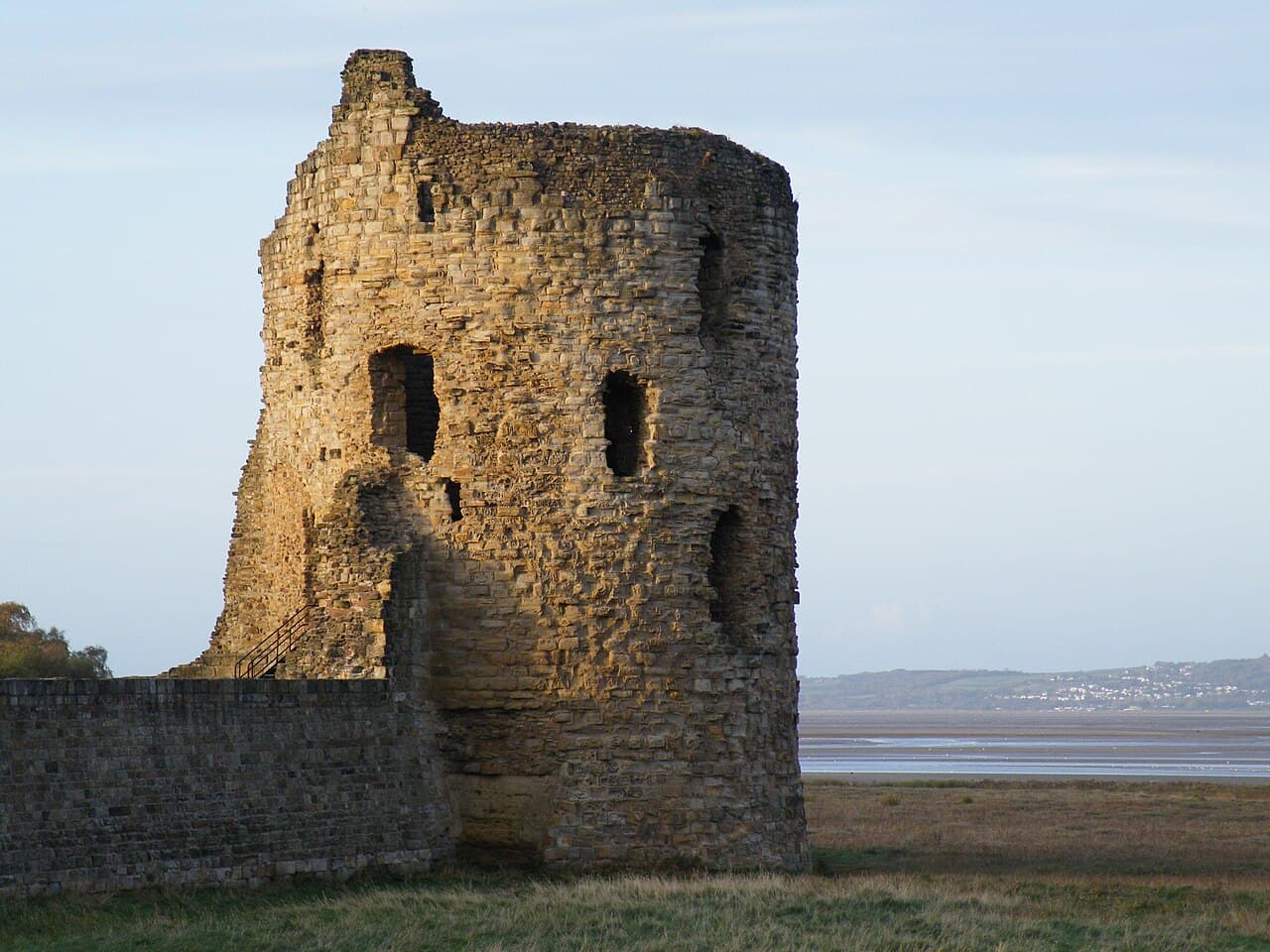
Flint Castle stands as a remarkable example of high medieval military architecture constructed during the late 13th century under the reign of King Edward I of England. Built in 1277, it was the first fortress in Edward's campaign to conquer and control Wales, forming a key part of the so-called "Iron Ring" of castles designed to dominate North Wales. Strategically positioned on the western shore of the River Dee estuary in the town of Flint, Wales, the castle's location was chosen for its tactical advantages, including proximity to Chester, access to river and sea supply routes, and a nearby ford allowing passage to England at low tide.
The castle's construction began under the direction of Richard L'engenour, a prominent figure who later became Mayor of Chester, and was accelerated by the master mason James of Saint George from Savoy between 1280 and 1282. This collaboration introduced innovative design elements influenced by continental fortifications, making Flint Castle's layout unique within the British Isles. The castle's design notably features a detached circular keep, or donjon, with exceptionally thick walls and a dry moat, an architectural concept inspired by Savoyard models but not replicated in Edward's other Welsh castles.
Historical context and military significance
The castle was built as a forward base for Edward I's military campaigns during the conquest of Wales. Its position allowed control over the Dee estuary and served as a supply point for troops marching from England. Flint Castle was part of a network of fortresses intended to subdue Welsh resistance and establish English authority. In 1282, the castle was besieged by Welsh forces led by Dafydd ap Gruffydd, illustrating its role in the turbulent conflicts of the period.
Following the conquest, an English plantation town was established beyond the outer bailey, protected by a ditch and wooden palisade, reflecting Edward's strategy of colonization through military and civilian settlement. This early town layout still influences the modern street patterns of Flint.
Flint Castle also played a role in later historical events. In 1399, it was the prison of King Richard II after his capture by Henry Bolingbroke. During the English Civil War, the castle was held by Royalists until a three-month siege led to its capture by Parliamentarian forces in 1647. Subsequently, it was slighted on the orders of Oliver Cromwell to prevent further military use, leaving the ruins visible today.
Architectural features and layout
Castle structure and defenses
Flint Castle is characterized by its division into an inner ward and an outer bailey, separated by a tidal moat approximately six meters deep, connected to the estuary's waterways. The moat provided a formidable natural defense and facilitated supply by river or sea. Access between the wards was controlled by a gatehouse with a drawbridge, which was simpler in design compared to Edward's later castles, lacking twin flanking towers but equipped with a portcullis and thick wooden doors.
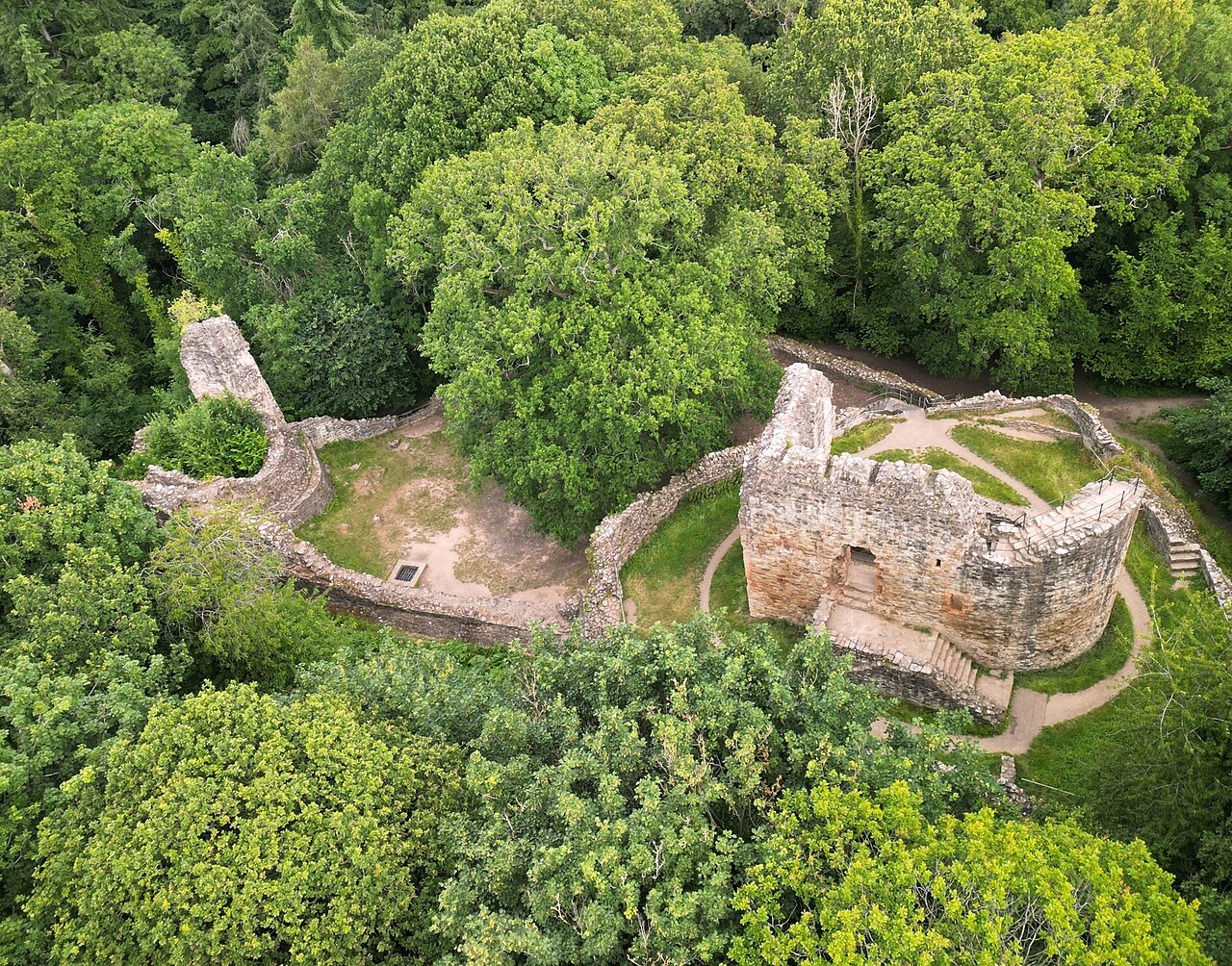
The inner ward is defended by three large round towers at its corners, each with distinct preservation states. The northeast tower retains two spiral staircases, arrow slits for archers, built-in latrines, and fireplaces, indicating its dual defensive and domestic use. The southwest and northwest towers show remnants of staircases and chimneys.
The detached keep
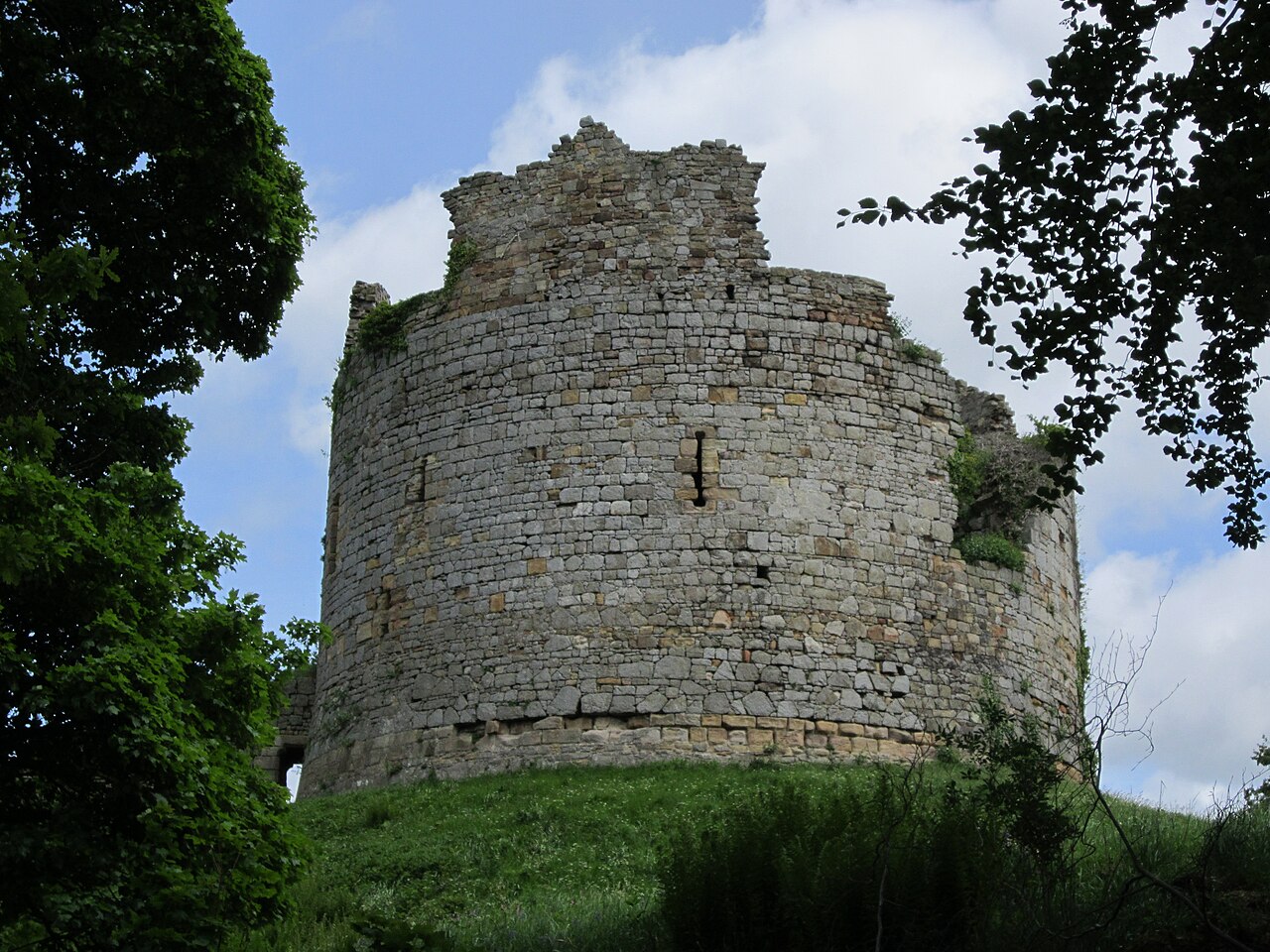
The castle's most distinctive feature is its freestanding circular keep, or donjon, which stands isolated from the curtain walls. This tower has walls approximately seven meters thick at the base, tapering to five meters above, and spans over 21 meters in diameter. Originally accessed via a drawbridge into a central first-floor chamber, the keep contained multiple floors with small rooms embedded within the thick walls. The ground floor features a vaulted passage encircling the interior, providing structural strength and internal circulation.
In 1301, a timber gallery was constructed atop the keep to accommodate a visit by Edward, Prince of Wales. The keep was surrounded by a dry moat, enhancing its defensive isolation within the castle complex.
Materials and construction techniques
The castle was primarily built using locally sourced Millstone Grit ashlar and sandstone. The keep's exterior walls were originally faced with smooth stonework, presenting a neat and imposing appearance. The curtain walls enclosing the wards included arrow slits, battlements with walkways, and latrines, some of which have been partially reconstructed.
Later uses and preservation
After its military importance waned, parts of Flint Castle's outer bailey were repurposed in the 19th century as the Flintshire County Jail, and a quarry operated nearby. The castle's ruins have been managed as a public monument for over 90 years and are currently maintained by Cadw, the Welsh government's historic environment service.
Visitors today can explore most parts of the castle, including the isolated keep, which has been made accessible via a recently installed spiral staircase in the northeast tower leading to a viewing platform overlooking the Dee Estuary. Access to the site is free, with pathways guiding visitors through the evocative remains of this significant medieval fortress.
Unique architectural legacy
Flint Castle's design stands out among the castles constructed by Edward I in Wales due to its incorporation of continental influences, particularly from Savoy and France. The isolated keep concept and the overall layout reflect the expertise of James of Saint George and mark a departure from typical English castle designs of the era. This architectural innovation contributes to the castle's cultural and historical significance as a pioneering example of medieval fortification in the British Isles.
The castle's relationship with the surrounding landscape, including its tidal moat and proximity to the River Dee, demonstrates a sophisticated understanding of defensive strategy and logistics. The plantation town's defensive earthworks and palisade further illustrate the integration of military and civilian planning in Edwardian colonization efforts.
Frequently asked questions (FAQ)
- How do I get to Flint Castle?
- Flint Castle is easily accessible by road and rail. If you are traveling by car, it is located just off the A548 road, and there is parking available nearby. For those using public transport, Flint train station is a short walk away from the castle.
- What is the historical significance of Flint Castle?
- Flint Castle, built in 1277 by Edward I, is a key example of medieval military architecture. It played a crucial role in the Welsh Wars and is one of the best-preserved castles in Wales. Its strategic location on the banks of the River Dee helped control trade and military movements in the region.
- When was Flint Castle built?
- Flint Castle was constructed between 1277 and 1284 as part of Edward I's campaign to conquer Wales. The castle was designed to dominate the surrounding area and serve as a stronghold against Welsh uprisings. Its construction marked a significant period in British history during the expansion of English rule into Wales.
- Can I enter Flint Castle for free?
- Access to Flint Castle is free for all visitors, making it an excellent destination for those looking to explore history without spending money. However, there may be charges for special events or guided tours, so it’s best to check in advance. The site is open to the public year-round.
- Why is Flint Castle a popular tourist destination?
- Flint Castle attracts visitors due to its rich history, stunning architecture, and picturesque location. The castle offers breathtaking views of the surrounding landscape and is a perfect spot for photography. Additionally, it is close to other attractions in North Wales, making it a great stop for tourists.
- Is it possible to visit Flint Castle with mobility issues?
- Yes, Flint Castle is accessible for visitors with mobility issues. The grounds are generally flat, and there are pathways that allow for easier navigation. However, some areas may have uneven surfaces, so it is advisable to take care when exploring.
- What are the opening hours of Flint Castle?
- Flint Castle is open to visitors every day, with varying hours depending on the season. Typically, the castle opens at 9:00 AM and closes at dusk. It’s recommended to check the official website for specific times as they may change throughout the year.
- What are some nearby attractions to Flint Castle?
- In addition to exploring Flint Castle, visitors can enjoy nearby attractions such as the Flintshire Record Office and the beautiful Flint Town Park. The town of Mold and the scenic North Wales coastline are also within a short drive. These sites offer additional cultural and natural experiences for visitors.
- What are the ticket prices for Flint Castle?
- Entry to Flint Castle is free of charge, allowing visitors to explore its historic grounds without any cost. However, be aware that special events or educational programs may have associated fees. Always check the official website for the latest information on events and any potential charges.
Photo gallery

Information
Website
Visit websiteSources & official resources
Verify the information above using these authoritative references.
Loading map...
Visitor reviews
No reviews yet. Been here? Write the first review and help other travelers!
Write the first reviewVisited this castle? Share your experience
Your review helps other travelers and adds first-hand knowledge to our encyclopedia.