Ewloe Castle
Ewloe Castle is a remarkable example of a native Welsh castle constructed in the early 13th century by the Kingdom of Gwynedd. Situated near the village of Ewloe in Flintshire, Wales, the castle stands on a steep, wooded promontory overlooking converging streams, commanding a strategic position close to the contentious border between Wales and England. This location within the historic cantref of Tegeingl (also known as Perfeddwlad) was crucial for controlling the borderlands, a region frequently contested during the High Medieval period.
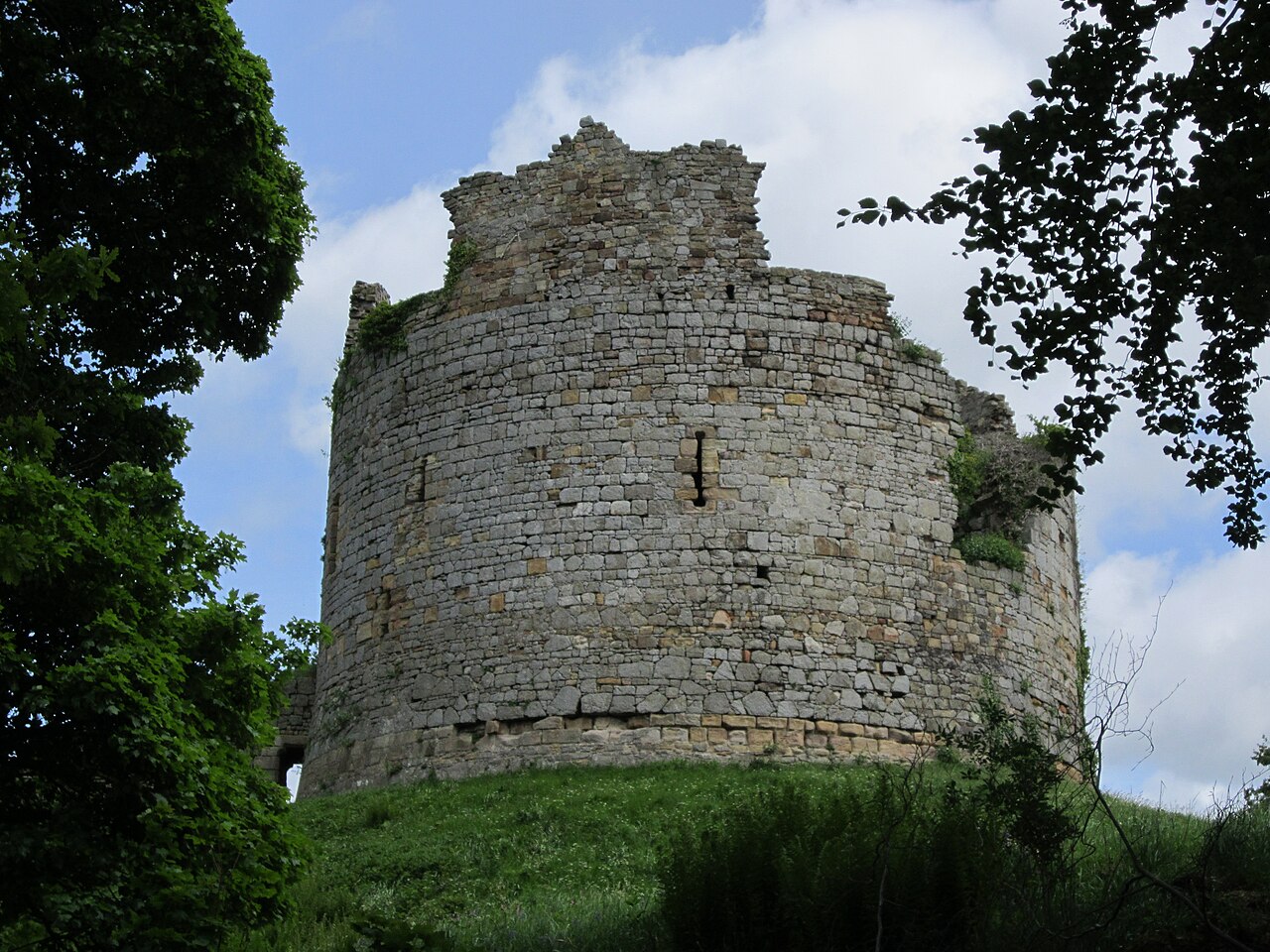
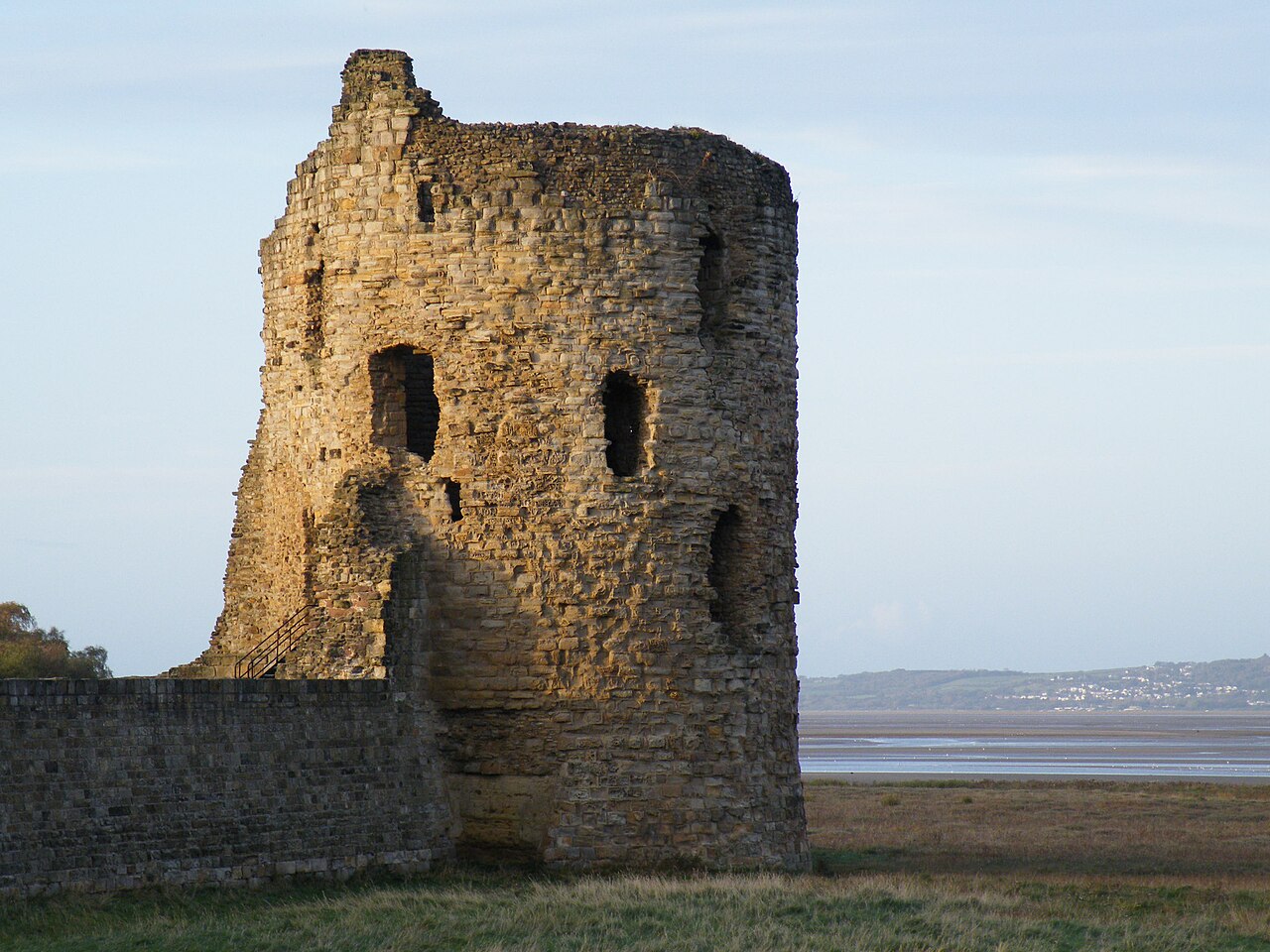
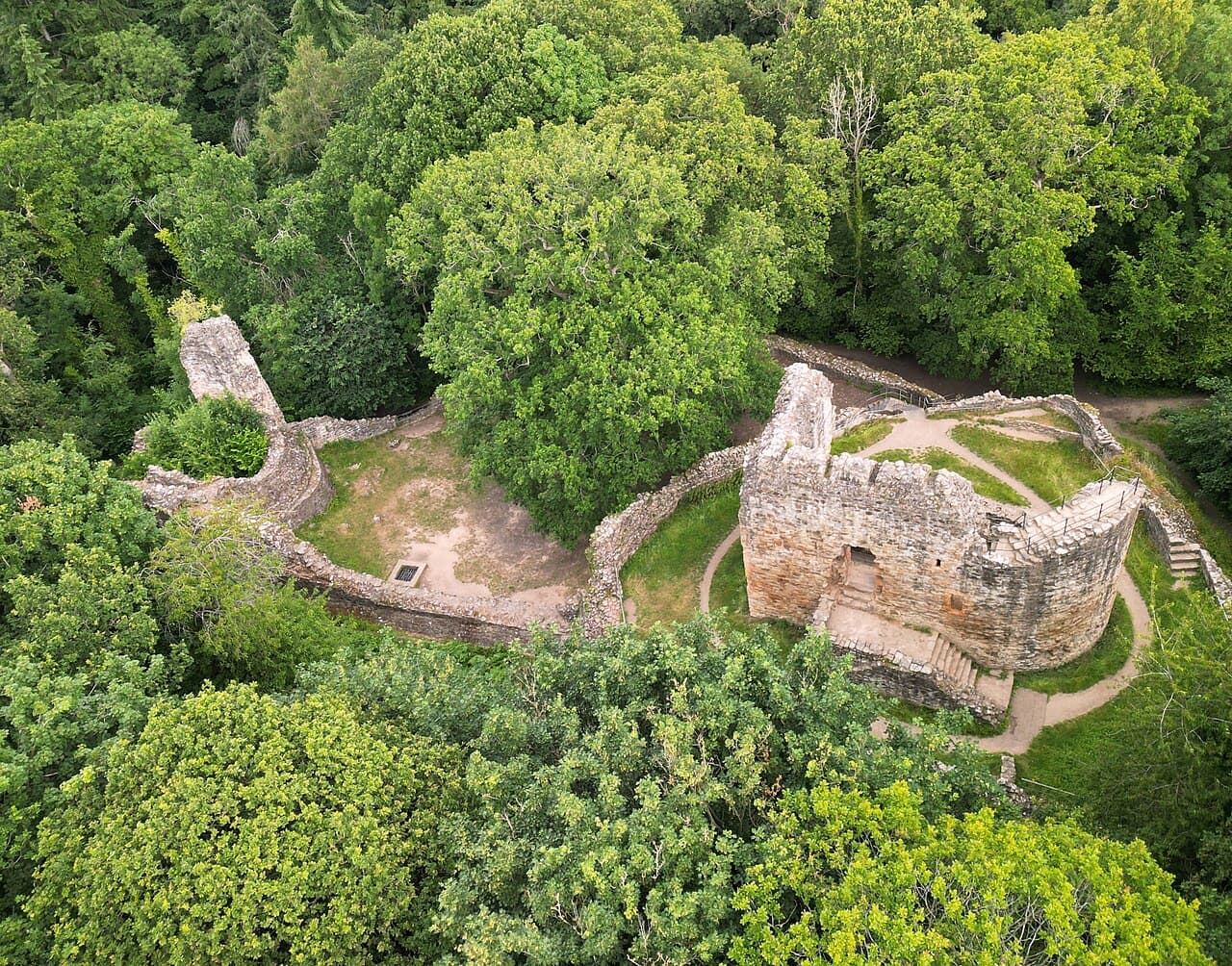
Constructed primarily from locally quarried sandstone, Ewloe Castle exhibits a blend of architectural features characteristic of both motte-and-bailey and enclosure castles. Its irregular curtain wall encloses two distinct courtyards: an upper triangular inner ward and a larger lower outer ward. The castle's most iconic feature is the large D-shaped stone tower within the inner ward, often referred to as the "Welsh keep". This tower rests on a natural stone outcrop serving as the motte, with walls approximately two meters thick rising to about eleven meters high, topped by a defensive parapet. The tower's curved sides contain narrow arrow slits for defense, while the flat face overlooking the outer ward features a Romanesque-style window, showcasing a blend of military and stylistic elements unique to native Welsh fortifications.
Historical context and significance
The origins of Ewloe Castle are closely tied to the ambitions of Llywelyn ab Iorwerth, known as Llywelyn the Great, who ruled Gwynedd in the early 13th century. The castle was built as part of his efforts to consolidate power and defend Welsh territories against English encroachment. The site may have earlier military significance, with a fortification possibly established following Owain Gwynedd's victory at the Battle of Ewloe in 1157.
Throughout the mid-13th century, Ewloe Castle played a role in the ongoing power struggles between Welsh princes and English rulers. It served as a base for Dafydd ap Llywelyn during his disputes with England in the 1240s. Later, Llywelyn ap Gruffudd, the grandson of Llywelyn the Great, undertook further construction around 1257, aiming to strengthen Welsh control over the region. After the English initially seized the castle in 1246, Llywelyn ap Gruffudd successfully recaptured and refurbished it, reinforcing its military importance.
Despite its strategic location, Ewloe Castle was overshadowed by larger and more heavily fortified castles such as Flint and Rhuddlan, constructed by the English Crown. When Edward I invaded Wales in 1277, he captured Ewloe Castle but deemed it of limited military value compared to these neighboring fortresses. Consequently, the castle was allowed to fall into ruin, with much of its dressed stone later scavenged for local building projects. The last known historical record mentioning Ewloe Castle dates to 1311, after which it gradually faded from prominence.
Architectural features and layout
The curtain walls and wards
Ewloe Castle's layout is defined by an asymmetrical stone curtain wall which encloses two courtyards. The upper triangular inner ward is the heart of the castle, dominated by the D-shaped keep. The lower outer ward is larger and enclosed by two separate stone curtain walls that converge on a circular fortified tower perched on a rocky knoll. Notably, these curtain walls are not physically connected, requiring wooden ladders to move between their parapets. The absence of stone gateways linking the two wards indicates that access was controlled through wooden ramps, emphasizing defensive considerations.
The d-shaped keep
The D-shaped tower, known as the "Welsh keep," reflects native Welsh military architectural traditions distinct from the typical English square keeps. Its robust base walls, about two meters thick, rise to approximately eleven meters, capped by a protective parapet. The tower contains defensive arrow slits on its curved sides and a Romanesque-style window on its flat face overlooking the outer ward. Internally, the tower features a ground-floor chamber with a first-floor hall accessed by stairs leading to a gateway also situated on the first floor. Above this, roof spaces include storage slots built into the structure. This design suggests a combination of residential and defensive functions.
Defensive features
Defense was a key element in Ewloe Castle's design. The southern approach is protected by a rock-cut neck ditch, a deep trench carved directly into the bedrock, which would have been difficult for attackers to cross. Above this ditch, an additional outer rampart on higher ground provided further protection. The castle's position on a steep promontory overlooking streams enhanced its natural defenses, making it a formidable stronghold despite its relatively modest size.
Materials and construction
The castle was constructed using local sandstone, a material readily available in the surrounding area. The use of locally quarried stone reflects regional building practices and the logistical considerations of medieval castle construction. Over time, much of the finely dressed stonework from Ewloe Castle was removed and repurposed in nearby towns, contributing to its current ruined state.
Later history and preservation
Following its capture by Edward I in 1277, Ewloe Castle was considered strategically obsolete and was allowed to deteriorate. The English Crown did not invest in its maintenance, focusing instead on larger, more modern fortifications. By the early 14th century, the castle was largely abandoned, and its stones were quarried for other uses.
Today, Ewloe Castle stands as a ruined hill castle nestled within Wepre Woods. The site is protected and managed by Cadw, the Welsh historic environment agency, ensuring its preservation as an important heritage landmark. Visitors can explore the remains of the curtain walls, the distinctive D-shaped keep, and the natural defensive features that highlight the castle's strategic significance during the turbulent medieval period.
The castle's combination of native Welsh architectural elements and its historical role as a border fortress make it a valuable site for understanding Welsh medieval military architecture and the complex history of Welsh-English relations during the High Medieval era.
Frequently asked questions (FAQ)
- How do I get to Ewloe Castle?
- Ewloe Castle is located near the village of Ewloe in Flintshire, Wales. It is accessible by car and public transport, with parking available nearby. The castle is situated within Wepre Woods Country Park, which offers walking paths leading to the site.
- What is the historical significance of Ewloe Castle?
- Ewloe Castle was built in the early 13th century by the Kingdom of Gwynedd as a native Welsh fortress along the contested border with England. It played a key role in the military and political struggles of the High Medieval period and showcases unique Welsh architectural features.
- Can I explore the ruins of Ewloe Castle?
- Yes, visitors can explore the ruins of Ewloe Castle, including the distinctive D-shaped keep and curtain walls. The site is managed by Cadw and open to the public, offering a glimpse into medieval Welsh castle architecture amidst a woodland setting.
- When is the best time to visit Ewloe Castle?
- The best time to visit Ewloe Castle is during the spring and summer months when the weather is mild and the surrounding Wepre Woods are lush and accessible. Early autumn is also a pleasant time to explore the castle and its natural surroundings.
- Are there any guided tours available at Ewloe Castle?
- While Ewloe Castle does not regularly offer guided tours, visitors can find information panels on site that explain its history and architectural features. Local heritage organizations occasionally provide special tours or events during the year.
Photo gallery

Information
Sources & official resources
Verify the information above using these authoritative references.
Loading map...
Visitor reviews
No reviews yet. Been here? Write the first review and help other travelers!
Write the first reviewVisited this castle? Share your experience
Your review helps other travelers and adds first-hand knowledge to our encyclopedia.