Fjell Fortress
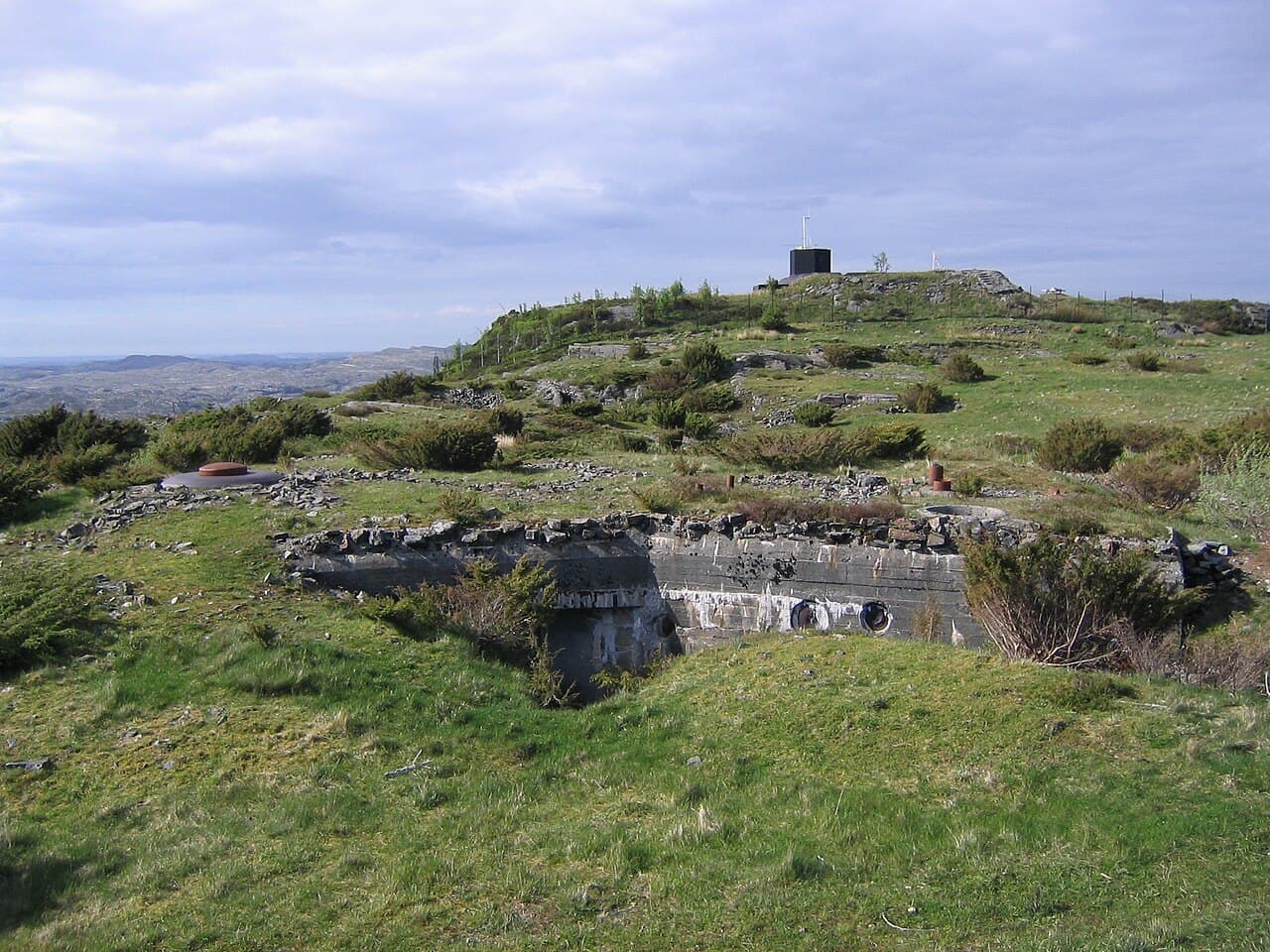
Fjell Fortress stands as a prominent example of a World War II bastioned fortress constructed by the German occupation forces during their control of Norway. Located on the island of Sotra in what is now Øygarden Municipality in Vestland county, the fortress played a critical role in the German coastal defense system designed to protect the strategically important city of Bergen and the surrounding maritime approaches.
The construction of Fjell Fortress began in the late summer of 1942, amid the height of the German occupation. The fortress was rapidly developed, with the main artillery gun becoming operational by June to July 1943. This swift construction timeline reflects the urgency and strategic importance placed on the site by German military planners. The fortress was designated as Marine-Küsten-Batterie 11./504 (Marine Coastal Battery 11/504), a key element within the German Kriegsmarine's coastal artillery network.
Strategic importance and military role
Fjell Fortress was a vital component of the German coastal defenses along the Norwegian west coast. Its primary mission was to secure the approaches to the port city of Bergen, a significant naval and commercial hub during the war. The fortress's powerful artillery was intended to deter and, if necessary, engage Allied naval forces attempting to penetrate the fjords and coastal waters.
In addition to its naval defense role, the fortress's main gun was occasionally used to intercept foreign aircraft conducting raids against Bergen. This dual role highlights the fortress's integration into the broader air and sea defense network operated by the German military in Norway.
Architectural and structural features
Fortress layout and construction
The design of Fjell Fortress reflects the principles of a bastioned fortress, with robust fortifications optimized for coastal defense. The complex includes extensive areas both above ground and underground, allowing for protection against aerial bombardment and naval artillery fire.
One of the most remarkable features of the fortress is its extensive network of tunnels, stretching approximately two miles (around 3.2 kilometers). These tunnels penetrate the surface and extend into the surrounding mountain terrain, providing secure passageways for personnel, ammunition storage, and command centers. The subterranean design ensured operational continuity even under heavy attack.
Main artillery and armaments
The fortress's centerpiece was its main gun, a large-caliber coastal artillery piece capable of engaging enemy ships at significant distances. The gun was mounted in a fortified emplacement designed to withstand counter-battery fire and aerial attacks. Supplementary defensive structures included smaller artillery batteries, machine gun nests, and observation posts strategically positioned to provide comprehensive coverage of the surrounding sea approaches.
Post-war history and preservation
After the conclusion of World War II, Fjell Fortress was taken over by the Norwegian Armed Forces. While it no longer serves an active military role, the site remains under their ownership. Preservation efforts have been undertaken to maintain the fortress as a historical monument and cultural heritage site.
The responsibility for the conservation, maintenance, and public engagement at the fortress has been largely undertaken by the Sotra og Øygarden Forsvarsforening (Sotra and Øygarden Defence Association). This organization works to preserve the fortress's structures and tunnels, ensuring that visitors can explore and learn about this significant piece of Norway's wartime history.
Visitor experience and significance
Today, Fjell Fortress offers visitors a unique opportunity to explore a well-preserved example of German coastal fortifications from World War II. The extensive tunnel system and the imposing artillery emplacements provide insight into the military engineering and strategic planning of the era.
The fortress's location on Sotra island also offers scenic views of the surrounding fjords and coastline, adding a natural dimension to the historical experience. Interpretive signage, guided tours, and preserved military equipment enhance the educational value for visitors interested in military history, architecture, and World War II heritage.
Frequently asked questions (FAQ)
- When was Fjell Fortress built and by whom?
- Fjell Fortress was constructed by German occupation forces starting in late summer 1942 during World War II, with its main gun operational by mid-1943.
- What was the primary purpose of Fjell Fortress during World War II?
- The fortress served as a key coastal defense installation protecting the approaches to Bergen and was used to intercept foreign aircraft raids.
- Can visitors explore the tunnels and artillery positions at Fjell Fortress?
- Yes, visitors can explore the extensive network of tunnels and the main artillery emplacements, which are maintained by the Sotra and Øygarden Defence Association.
- Who manages and maintains Fjell Fortress today?
- The fortress is owned by the Norwegian Armed Forces, with preservation and maintenance handled by the Sotra and Øygarden Defence Association.
- Where is Fjell Fortress located?
- Fjell Fortress is located on the island of Sotra in Øygarden Municipality, Vestland county, Norway.
Photo gallery

Information
Current owner
Norwegian Armed Forces
Loading map...
Visitor reviews
No reviews yet. Been here? Write the first review and help other travelers!
Write the first reviewVisited this castle? Share your experience
Your review helps other travelers and adds first-hand knowledge to our encyclopedia.