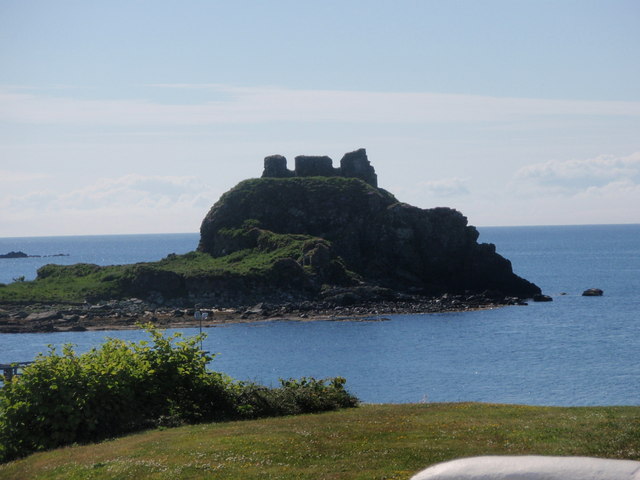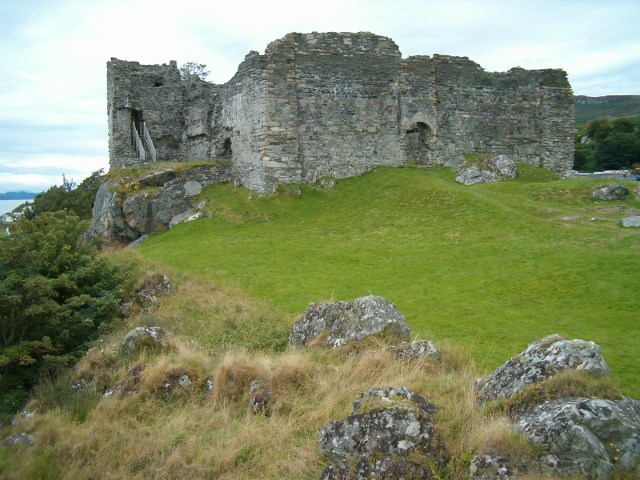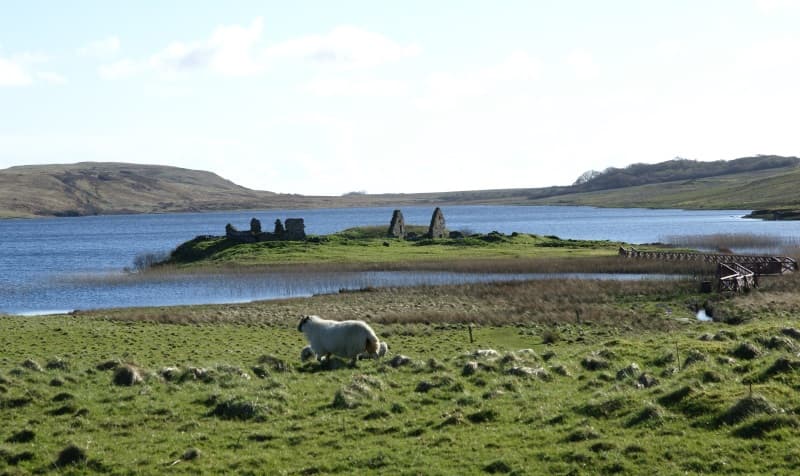
Finlaggan Castle is a significant historic site located on Eilean Mòr, an island in Loch Finlaggan on the western Scottish island of Islay. This site served as the principal seat of the Lords of the Isles, a powerful Gaelic lordship that controlled much of the western Scottish coast and islands during the High Medieval and Late Medieval periods. The castle's ruins lie approximately 4 km west of the ferry terminal at Port Askaig, making it accessible to visitors interested in Scotland's medieval history and clan heritage.
Historical significance of Finlaggan
The site of Finlaggan was the administrative and ceremonial center for the MacDonald Lords of the Isles, who ruled the Hebrides and parts of western Scotland from the 12th century until the late 15th century. The Lords of the Isles wielded considerable autonomy, often rivaling the Scottish crown in influence. Finlaggan was both a residence and a court where clan chiefs met, disputes were settled, and important decisions were made.
While the original fortifications date back to the medieval era, the site remained a symbol of Gaelic power and culture long after the lordship was dissolved in 1493. The ruins on Eilean Mòr include remains of a fortified manor house and a chapel, reflecting the complex social and religious life of the time.
Architecture and layout
Finlaggan Castle is classified as a hill castle, situated strategically on Eilean Mòr, which is one of the larger islands in Loch Finlaggan. The castle's location on an island within a freshwater loch provided natural defenses against attack. The remains include stone walls and foundations indicating a fortified structure with defensive features typical of medieval Scottish castles.
The castle complex included a great hall, living quarters, and a chapel dedicated to religious observance. The defensive walls were likely complemented by ditches or natural water barriers. The architectural style is predominantly medieval Scottish, with simple but sturdy stone construction designed for both defense and habitation.
Fortifications and defensive features
The castle's walls, though now mostly ruins, suggest a robust fortification system. The strategic placement on an island meant that any assault would require crossing water, adding to the castle's defensibility. The remains of battlements and gate structures indicate controlled access points.
Cultural and archaeological importance
Finlaggan is not only architecturally significant but also an important archaeological site. Excavations have uncovered artifacts and structural foundations that shed light on the lifestyle and governance of the Lords of the Isles. The site is a key location for understanding the Gaelic lordship system and medieval Scottish clan culture.
Today, Finlaggan is managed as a heritage site, with ongoing preservation efforts to maintain the ruins and interpretive displays for visitors. It offers a tangible connection to Scotland's medieval past and the unique history of the western isles.
Visiting Finlaggan Castle
Visitors to Finlaggan can explore the ruins on Eilean Mòr by boat or from the nearby shores of Islay. The site provides scenic views of Loch Finlaggan and the surrounding landscape, enhancing the historical experience. Informational signage and guided tours help contextualize the significance of the castle and the Lords of the Isles.
The castle's remote location and natural setting make it a popular destination for those interested in Scottish history, archaeology, and clan heritage.
Access and facilities
Access to Finlaggan involves traveling to Islay, typically via ferry to Port Askaig, followed by a short journey to Loch Finlaggan. The site is accessible to the public, though facilities are limited due to its preservation as a historic ruin. Visitors are advised to prepare for outdoor conditions and bring suitable footwear for uneven terrain.
Best time to visit
The best time to visit Finlaggan Castle is during the late spring to early autumn months when weather conditions are more favorable for outdoor exploration. This period offers longer daylight hours and milder weather, enhancing the visitor experience.
Frequently asked questions (FAQ)
- How do I get to Finlaggan Castle?
- Finlaggan Castle is located on Eilean Mòr in Loch Finlaggan on Islay. Visitors typically reach Islay by ferry, arriving at Port Askaig, then travel approximately 4 km west to the site.
- What is the historical significance of Finlaggan Castle?
- Finlaggan Castle was the seat of the Lords of the Isles, a powerful Gaelic lordship that controlled parts of western Scotland during the medieval period. It served as an administrative and ceremonial center.
- Can I visit the ruins of Finlaggan Castle?
- Yes, the ruins of Finlaggan Castle are open to the public. Visitors can explore the site and enjoy scenic views of Loch Finlaggan. Facilities are limited, so appropriate footwear and preparation for outdoor conditions are recommended.
- When is the best time to visit Finlaggan Castle?
- The best time to visit is from late spring to early autumn when the weather is milder and daylight hours are longer, providing a better experience for outdoor exploration.
- Is there an admission fee to visit Finlaggan Castle?
- No, entry to Finlaggan Castle is free of charge, allowing visitors to explore the historic site without an admission fee.
Photo gallery

Information
Opening hours
10:00-16:00, daily (seasonal)
Ticket prices
Free
Current owner
Historic Environment Scotland
Loading map...
Visitor reviews
No reviews yet. Been here? Write the first review and help other travelers!
Write the first reviewVisited this castle? Share your experience
Your review helps other travelers and adds first-hand knowledge to our encyclopedia.