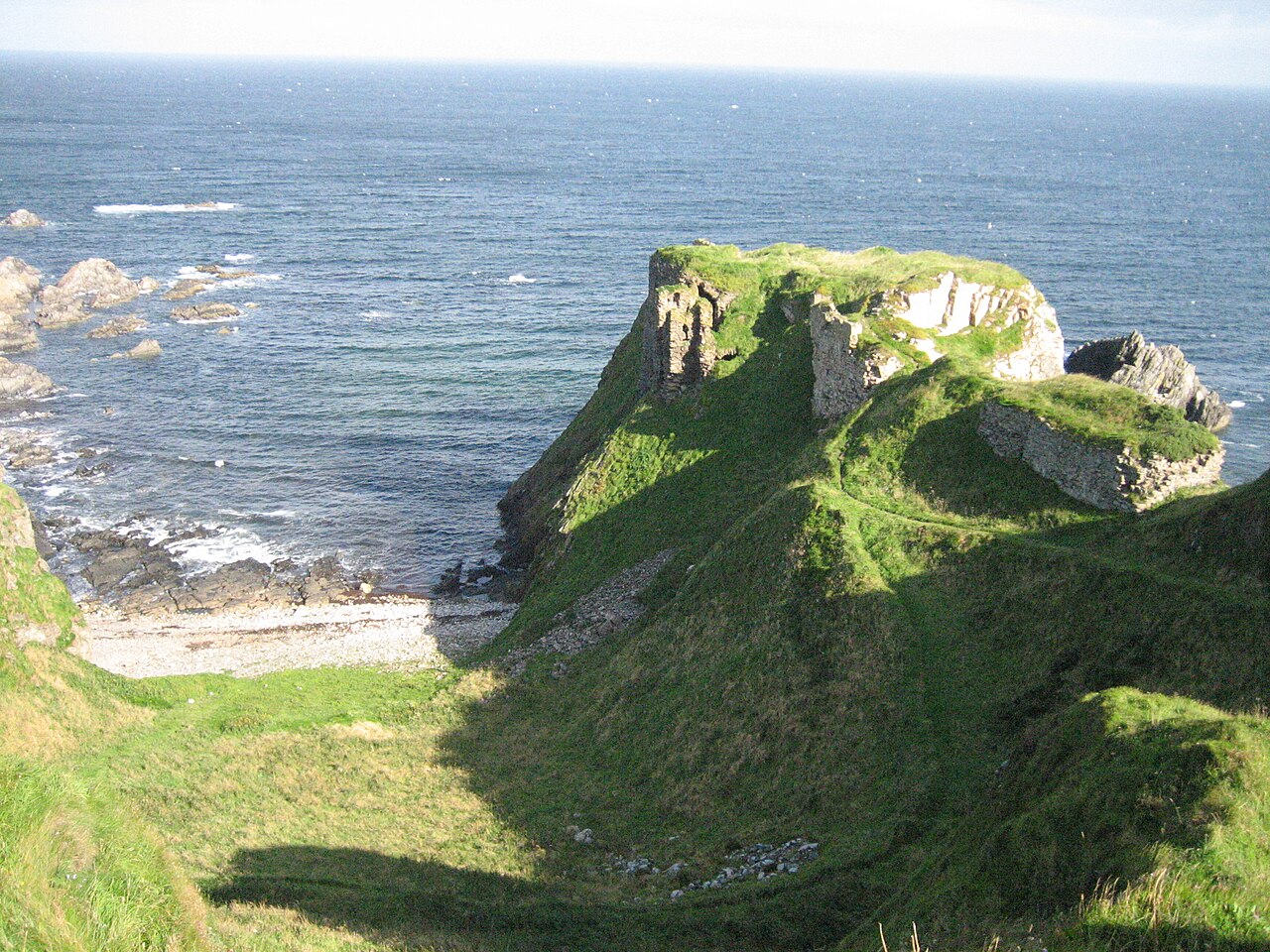
Findochty Castle
Findochty Castle is a ruined 16th century L-plan tower house located near the coastal village of Findochty in Scotland. This historic structure stands prominently on a rocky outcrop at the end of a drained loch, offering insight into the defensive and domestic architecture of the Renaissance period in northern Scotland. The castle's strategic position reflects its original purpose as a fortified residence with commanding views over the surrounding landscape and the sea.
Historical background and ownership
The castle was initially constructed by the influential Gordon family in the 16th century, a time marked by regional clan conflicts and the need for fortified homes. Ownership later passed to the Ogilvie family, before being acquired in 1568 by the Ord family. The Ords played a significant role in the local economy by developing the nearby village of Findochty into a thriving fishing port, which contributed to the area's maritime heritage.
By the late 18th century, specifically around 1794, Findochty Castle had fallen into ruin, reflecting broader social and economic changes that reduced the importance of such fortified residences. Some restoration efforts were undertaken in the 1880s to stabilize the remains, preserving what little survived for future generations.
Architectural features and layout
The castle was designed as an L-plan tower house, a common Scottish architectural form during the Renaissance, combining residential comfort with defensive capabilities. The main structure was an oblong block, although much of this has been lost over time. Presently, only parts of the north wall and the west wing remain standing.
The west wing, historically used as the kitchen, and the tower survive up to a height of approximately 8 meters. The castle's construction utilized harl-pointed rubble masonry with roughly tooled dressings, typical of Scottish tower houses, providing both strength and weather resistance.
Internally, the castle featured a vaulted basement, likely used for storage and service functions, while the main hall was situated on the first floor, serving as the principal living and reception area. The entrance was modest, with a narrow door located on the south front, framed by a relieving arch to distribute structural weight and enhance durability.
Significance and current condition
Findochty Castle represents a typical example of a Renaissance Scottish tower house, reflecting the social and military needs of the Scottish gentry during the 16th century. Its position near the coast and above a loch emphasizes the importance of natural defensive features in castle siting.
Today, the castle is classified as a ruin, with only partial walls and the west wing surviving. Despite its ruined state, it remains an important cultural landmark, contributing to the historical narrative of Findochty village and the wider Moray coastline. The site offers valuable archaeological and architectural insights into the construction techniques and domestic arrangements of Scottish tower houses during the Renaissance.
Findochty village and the castle's legacy
The development of Findochty village as a fishing port by the Ord family links the castle to the maritime history of the region. The castle's proximity to the village underscores its role not only as a defensive stronghold but also as a center of local governance and economic activity.
Although the castle itself is no longer habitable, its remains continue to attract interest from historians, archaeologists, and visitors intrigued by Scotland's rich heritage of fortified dwellings. The castle's ruins, set against the backdrop of the Moray Firth, provide a tangible connection to the region's past and the families who shaped its history.
Loading map...
Visitor reviews
No reviews yet. Been here? Write the first review and help other travelers!
Write the first reviewVisited this castle? Share your experience
Your review helps other travelers and adds first-hand knowledge to our encyclopedia.