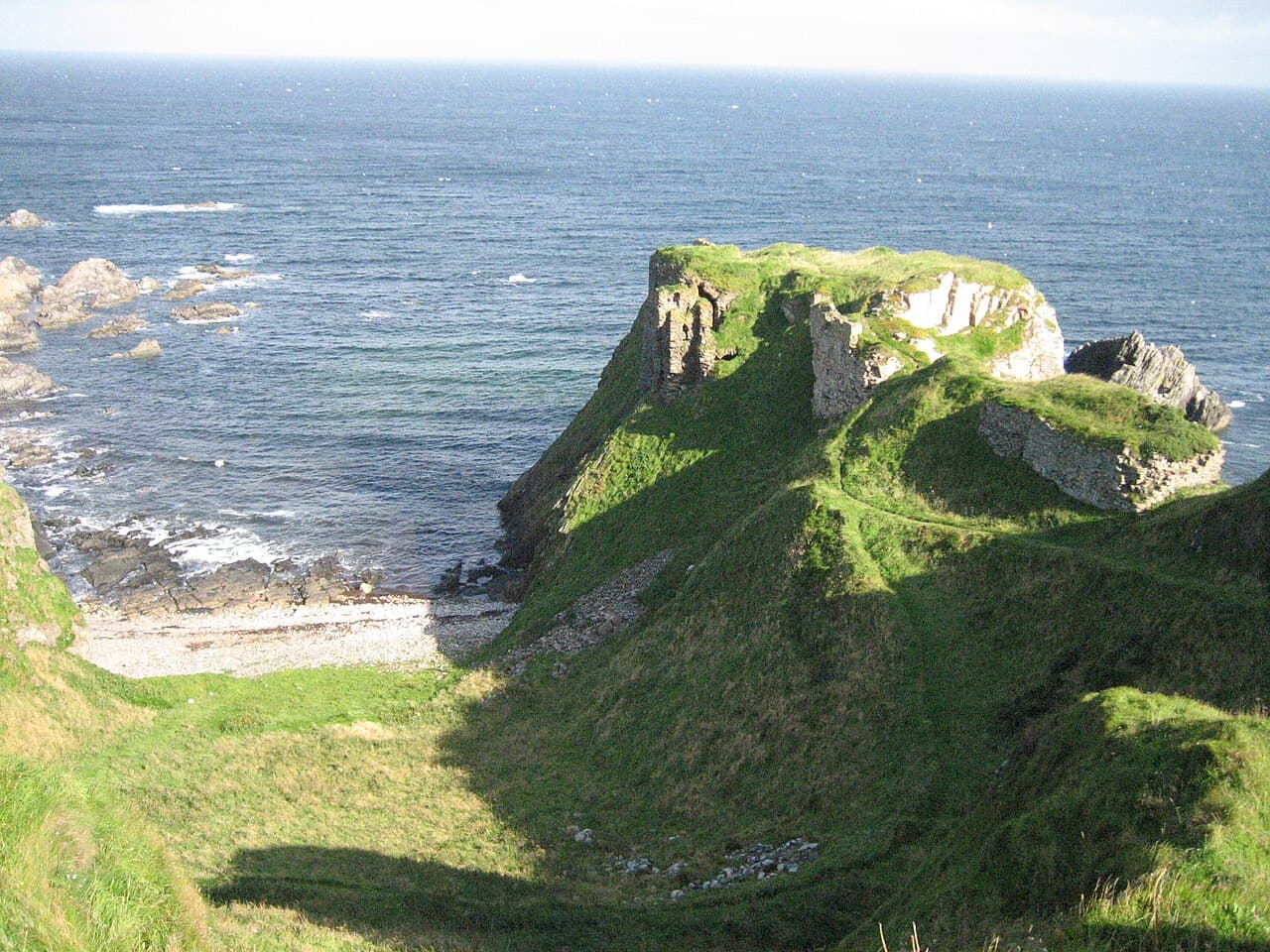
Findlater Castle
Findlater Castle is a striking medieval fortress perched dramatically on a 15-meter high cliff overlooking the Moray Firth in the scenic region of Scotland. This hill castle dates back to the 13th century and is renowned for its commanding views and strategic location on a rocky promontory near Portsoy. Its ruins, built into the cliff edge on a small peninsula, rise some 50 feet above the water and rocky beach below, offering spectacular vistas of the surrounding Scottish landscape.
The castle's name is derived from the Scots Gaelic words 'fionn' (white) and 'leitir' (cliff or steep slope), referring to the distinctive quartz found in the cliffs beneath the site. This etymology corrects earlier assumptions of a Norse origin and highlights the castle's intimate connection to its natural environment. The earliest historical mention of Findlater Castle dates to 1246, establishing its significance in medieval Scottish history.
Medieval origins and strategic importance
Findlater Castle was originally constructed in the high medieval period, serving as a critical defensive stronghold on Scotland's northeastern coast. Its position on a cliffside promontory made it naturally defensible, with the sea forming a natural barrier on three sides and a narrow isthmus controlling land access. The castle's location allowed control over maritime routes in the Moray Firth and served as a lookout point against potential invaders.
During the 1260s, King Alexander III of Scotland undertook significant repairs and fortifications to the castle in preparation for an anticipated invasion by King Haakon IV of Norway. Despite these efforts, the castle was captured and held for a period by Norwegian forces, underscoring its strategic value in the medieval power struggles of the region.
14th-century reconstruction and architectural influences
The existing ruins primarily date from a 14th-century reconstruction following the castle's capture and damage during the Viking incursions. This rebuilding phase was likely initiated by the Sinclair family and extended into the late 14th or mid-15th century, reflecting the evolving military architecture of the period.
Findlater Castle's design during this period was influenced by contemporary Scottish fortifications, notably Roslyn Castle. The castle features a robust tower keep accompanied by auxiliary buildings arranged around a central courtyard. Defensive features included a water-filled moat, a trench, and a bastion guarding the narrow isthmus that connected the castle to the mainland. Two drawbridges spanned the moat on a raised stone causeway, allowing defenders to control access effectively.
A raised walkway led from the landward side to the castle, enhancing its defensibility by providing an elevated route protected from attackers. The architectural style incorporates elements reminiscent of Eilean Donan Castle, suggesting the builders adopted successful defensive strategies from notable Scottish strongholds.
Historical conflicts and noble ownership
Throughout its history, Findlater Castle was closely tied to the fortunes of prominent Scottish noble families. The Ogilvy family became key owners in the 15th century, with Walter Ogilvy receiving permission in 1445 (or possibly 1455) to repair and restore the castle, reinforcing its fortifications.
The 16th century was marked by political turmoil and local rivalries, particularly between the Ogilvys and the Gordons. In 1562, forces loyal to Mary, Queen of Scots besieged the castle to oust John Gordon, who had refused to surrender control. Following his capture and execution after the Battle of Corrichie, the castle returned to Ogilvy hands.
By 1638, James Ogilvy was elevated to the title of Earl of Findlater. He constructed Cullen House nearby and relocated the family seat, leading to Findlater Castle's gradual abandonment and decline throughout the mid-17th century.
Architectural remains and site features
Today, Findlater Castle stands as evocative ruins that reflect its former grandeur and military significance. The core remains include a substantial tower keep and several auxiliary buildings arranged around the courtyard. The castle occupies the entire end of the headland, surrounded by the sea on all sides except the isthmus, which was heavily fortified.
The defensive system of the castle is notable for its water-filled moat and bastion guarding the isthmus entrance. The two drawbridges and raised causeway are key features illustrating medieval defensive ingenuity. The site's layout and surviving structures provide valuable insights into late medieval Scottish castle design and fortification techniques.
Findlater doocot
Close to the castle stands the Findlater Doocot, a well-preserved medieval dovecote dating from the 16th or 17th century. This tower was used to house pigeons or doves, which were an important source of food in medieval Scotland. The doocot underwent restoration in 1992 and remains a prominent feature of the site, highlighting the domestic and economic aspects of castle life.
Cultural significance and preservation
Findlater Castle is a significant cultural landmark in Scotland, embodying centuries of military history, noble lineage, and architectural evolution. Its dramatic cliffside setting and well-preserved ruins attract historians, archaeologists, and visitors interested in Scotland's medieval heritage.
The castle is currently under the guardianship of the Earl of Seafield, who oversees its preservation. While the ruins show signs of natural decline, they remain largely intact in their core structure, continuing to dominate the coastal landscape and offering a tangible connection to Scotland's turbulent medieval past.
Visitors to Findlater Castle can explore the rugged terrain, appreciate the castle's strategic location, and learn about the complex history of feudal Scotland. The site remains an important testament to medieval military architecture and the enduring legacy of Scotland's noble families.
Frequently asked questions (FAQ)
- How do I get to Findlater Castle?
- Findlater Castle is located near Portsoy in the United Kingdom. You can reach it by car, with parking available nearby. The castle is also accessible via public transport, but be sure to check local bus schedules for the best options.
- What is the historical significance of Findlater Castle?
- Findlater Castle dates back to the 13th century and served as a stronghold for the Clan Gordon. Its strategic position on a cliff overlooking the sea made it an important defensive site throughout its history. Today, it is recognized for its historical architecture and picturesque ruins.
- When was Findlater Castle built?
- Construction of Findlater Castle began in the late 1200s, with significant modifications made over the centuries. The castle reflects various architectural styles due to the changes it underwent, especially during the Renaissance period. Its long history makes it a fascinating site for those interested in medieval architecture.
- Can I explore the grounds of Findlater Castle?
- Yes, visitors are welcome to explore the grounds of Findlater Castle. While the ruins can be accessed freely, please be cautious as some areas may be unstable. Enjoy the stunning coastal views and take in the history of this remarkable site.
- Why is Findlater Castle a popular tourist destination?
- Findlater Castle is popular due to its dramatic cliffside location and rich history. The scenic beauty surrounding the castle, along with the opportunity to explore its ruins, attracts many visitors. It also offers a glimpse into Scotland's medieval past, making it a must-visit for history enthusiasts.
- Is it possible to visit Findlater Castle year-round?
- Yes, Findlater Castle is open to visitors year-round. However, it's recommended to check local weather conditions and be prepared for variable terrain. The best time to visit is during the spring and summer months when the weather is milder and the landscape is in full bloom.
- What are the opening hours for Findlater Castle?
- Findlater Castle does not have specific opening hours, as it is accessible to the public at all times. It is advisable to visit during daylight hours for safety reasons and to fully enjoy the surroundings. Always check for any local advisories before planning your visit.
- Are there any nearby attractions to visit?
- Yes, there are several nearby attractions, including the charming town of Portsoy, known for its historic harbor and picturesque streets. You can also explore the Moray Coast Trail, which offers stunning views and hiking opportunities. Don't miss out on the local seafood restaurants that showcase the region's culinary delights.
- What are the ticket prices for visiting Findlater Castle?
- There are no ticket prices for visiting Findlater Castle, as it is free to explore the grounds. However, donations are appreciated to help with the preservation of the site. Check local tourism websites for any special events or guided tours that may have associated costs.
Photo gallery

Photo by Ingo Wölbern•Public domain
Information
Website
Visit websiteSources & official resources
Verify the information above using these authoritative references.
Loading map...
Visitor reviews
No reviews yet. Been here? Write the first review and help other travelers!
Write the first reviewVisited this castle? Share your experience
Your review helps other travelers and adds first-hand knowledge to our encyclopedia.



