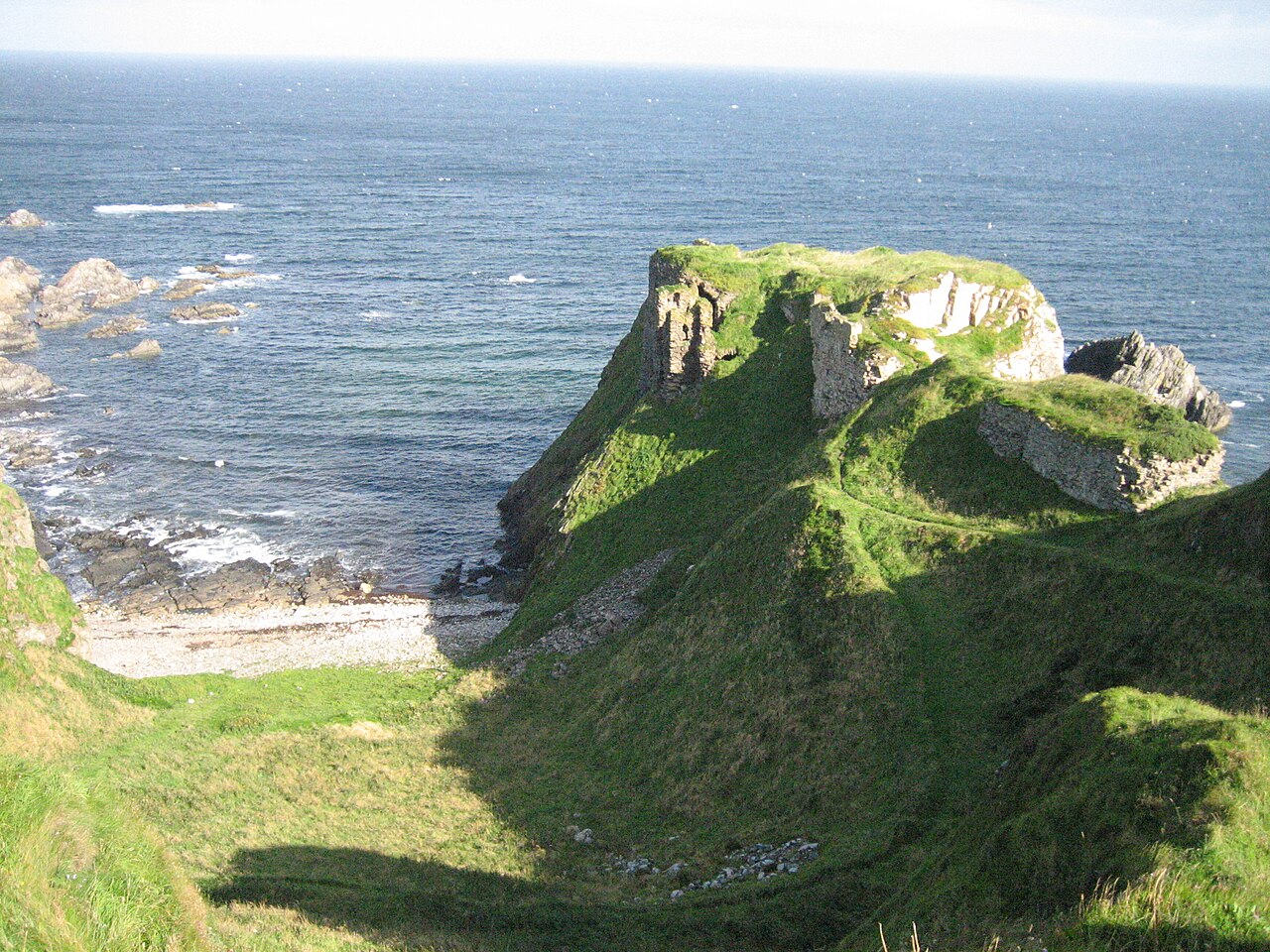
Boyne Castle
Boyne Castle stands prominently above a bend of the Burn of Boyne in Aberdeenshire, Scotland, a location naturally fortified by the surrounding steep gorge which protects it on three sides. This strategic position made the castle easily defensible during its active use. The site is further secured by a dry moat to the south, originally about 18 meters wide, enhancing its defensive capabilities.
Although now a dangerously crumbling ruin, historical accounts describe Boyne Castle as an impressive medieval dwelling featuring fine rooms built over vaulted basements and containing large windows that would have allowed ample light for its inhabitants. The castle's architectural design reflects the defensive needs of the period while also providing comfortable living quarters.
Architectural features and layout
The castle's remains reveal a structure that was once fortified with four round corner towers, a design typical of Scottish castles aiming to provide overlapping fields of fire and eliminate blind spots. These towers still stand to the west, although the overall condition is ruinous and overgrown.
South of the main structure lies a twin-turreted gatehouse, a significant defensive feature that controlled access to the castle. The entrance was approached via a causeway, which remains raised and walled, indicating the importance of controlled entry and defense against invaders.
Surrounding the castle are the remains of two walled gardens. While now heavily overgrown and difficult to discern, these gardens would have served both practical and aesthetic purposes, reflecting the lifestyle of the castle's inhabitants.
Historical context and significance
Boyne Castle dates back to the late medieval period, a time when Scottish nobility fortified their residences to protect against frequent conflicts and raids. Its location in Aberdeenshire places it within a region known for numerous castles and fortified houses, many of which played roles in Scotland's turbulent history.
The castle's architecture, featuring vaulted basements and large windows, suggests it was more than a military stronghold; it was also a residence designed for comfort and status. The presence of extensive gardens further supports this dual function.
Current condition and preservation
Today, Boyne Castle is classified as a ruin. The structure is dangerously unstable, with many walls and features crumbling or heavily overgrown. The surviving towers and gatehouse provide valuable insight into the castle's original form and defensive design.
Visitors should exercise caution when exploring the site due to its precarious condition. Despite this, the ruins remain a compelling example of medieval Scottish castle architecture and offer a glimpse into the region's feudal past.
Access and visitor information
The castle is located in a rural area of Aberdeenshire and is accessible by local roads. As it is a ruin without formal facilities, visitors should prepare accordingly and respect the site's fragile state.
Architectural style and classification
Boyne Castle is best classified as a hill castle due to its elevated position above the gorge and river bend. Its architectural style aligns with late medieval Scottish defensive structures, characterized by round towers, vaulted basements, and fortified gatehouses.
The castle's design reflects practical military considerations combined with residential comfort, a hallmark of Scottish noble residences of the period.
Frequently asked questions (FAQ)
- How do I get to Boyne Castle in Aberdeenshire?
- Boyne Castle is located in rural Aberdeenshire, Scotland. Visitors can reach the site by car via local roads, but there are no formal visitor facilities or signage, so using a detailed map or GPS is recommended.
- What is the historical significance of Boyne Castle?
- Boyne Castle is a late medieval Scottish fortress known for its strategic location above the Burn of Boyne and its defensive round towers. It reflects the architectural and feudal history of Aberdeenshire during turbulent periods.
- Is Boyne Castle safe to explore?
- Boyne Castle is a ruin and considered dangerous due to crumbling walls and overgrowth. Visitors should exercise caution and avoid climbing on unstable structures to ensure their safety.
- What architectural features are notable at Boyne Castle?
- Notable features include the four round corner towers, a twin-turreted gatehouse, vaulted basements, and the remains of walled gardens. These elements showcase typical late medieval Scottish castle design.
- Can I visit the gardens at Boyne Castle?
- The walled gardens at Boyne Castle are overgrown and difficult to identify. While the area can be explored, the gardens are not maintained and may be challenging to access safely.
Information
Loading map...
Visitor reviews
No reviews yet. Been here? Write the first review and help other travelers!
Write the first reviewVisited this castle? Share your experience
Your review helps other travelers and adds first-hand knowledge to our encyclopedia.