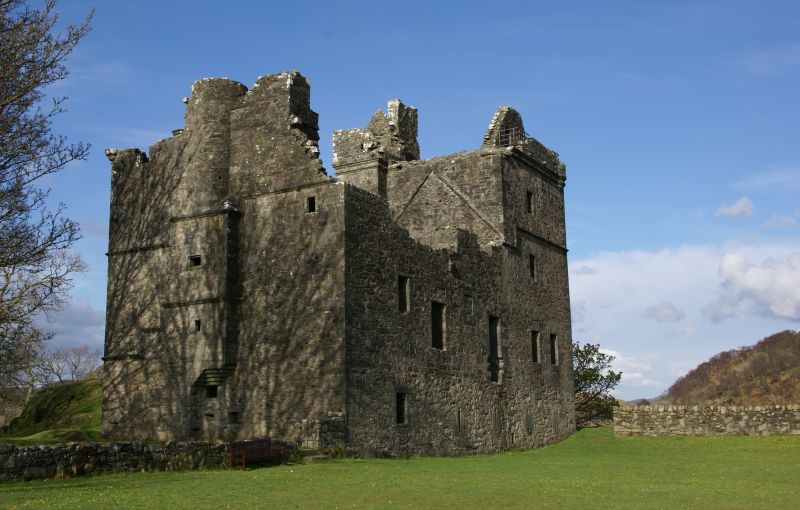
Fincharn Castle
Fincharn Castle is a medieval ruin located in Argyll and Bute, Scotland, dating back to the 13th century. Originally constructed around 1240 by the Lord of Glassary, the castle's surviving remains likely represent a later phase of construction rather than the initial fortress. This site offers insight into the architectural and clan history of medieval Scotland, particularly the power struggles and territorial control in the western Highlands.
Historical background and ownership
The castle is traditionally associated with the MacMartins and MacIains, two prominent Scottish clans who held influence in the region during the High Medieval period. While the original builder was the Lord of Glassary, the castle's control shifted over time, reflecting the turbulent dynamics between competing clans. The MacMartins, a branch of the powerful Clan MacGregor, are believed to have occupied the castle at some point, as were the MacIains, who were part of the larger Clan Donald confederation.
Architectural features and layout
Though now in ruins, Fincharn Castle's remains suggest a typical High Medieval hill castle design, strategically positioned on elevated ground to command views of the surrounding landscape. The castle likely featured a stone curtain wall enclosing a courtyard, with defensive towers and a gatehouse controlling access. The surviving masonry indicates the use of locally sourced stone, with thick walls designed to resist siege weaponry of the period.
The castle's layout would have included essential structures such as a keep or donjon, residential quarters, storage buildings, and possibly a chapel. Defensive elements such as battlements, arrow slits, and a surrounding ditch or moat may have been present to enhance protection.
Strategic location and landscape
Situated in the rugged terrain of Argyll and Bute, Fincharn Castle's placement on a hill provided natural defense advantages. The elevated position allowed defenders to monitor movement along nearby routes and waterways, crucial for controlling local trade and military activity. The surrounding landscape of forests and hills added further layers of security, making the castle a formidable stronghold in its time.
Role in regional conflicts and clan dynamics
During the High Medieval period, the western Scottish Highlands were marked by frequent clan disputes and shifting allegiances. Fincharn Castle served as a military and administrative center for its occupants, playing a role in local power struggles. Its possession by the MacMartins and MacIains reflects the contested nature of territory in this part of Scotland.
The castle may have witnessed skirmishes or sieges, although specific historical records are limited. Its defensive features and strategic location underscore its importance in asserting clan dominance and protecting lands from rival factions.
Current condition and preservation
Today, Fincharn Castle stands as a ruin, with only portions of its stone walls and foundations remaining. The site is accessible to visitors interested in Scottish medieval history and castle architecture. While the castle is not extensively restored, its ruins offer valuable archaeological insights into construction techniques and defensive strategies of the period.
Preservation efforts focus on maintaining the stability of the remaining structures and protecting the site from natural deterioration. Fincharn Castle is a culturally significant landmark within Argyll and Bute, contributing to the understanding of Scotland's feudal past and clan heritage.
Visiting Fincharn Castle
The castle is located in a remote area of Argyll and Bute, requiring visitors to plan for rural travel conditions. There are no formal visitor facilities on site, so visitors should come prepared for a self-guided exploration. The surrounding landscape offers opportunities for hiking and appreciating the natural beauty of the Scottish Highlands.
Accessibility and best time to visit
Access to the castle involves walking over uneven terrain, so appropriate footwear is recommended. The best time to visit is during late spring to early autumn when weather conditions are more favorable. Visitors should check local conditions before planning their trip.
Frequently asked questions (FAQ)
- How do I get to Fincharn Castle?
- Fincharn Castle is located in Argyll and Bute, easily accessible by car or public transport. The nearest major city is Oban, from where you can take a scenic drive or bus service that leads to the castle.
- What is the historical significance of Fincharn Castle?
- Fincharn Castle dates back to the 13th century and is a notable example of medieval Scottish architecture. It served as a stronghold for the MacDougall family and played a vital role in the region's history, reflecting the tumultuous times of clan rivalries and battles.
- When was Fincharn Castle built?
- Construction of Fincharn Castle began in the early 1200s, making it one of the oldest structures in the area. Over the centuries, it has undergone various modifications, but its core features remain a testament to its historical origins.
- Can I visit Fincharn Castle?
- Yes, Fincharn Castle is open to the public, allowing visitors to explore its rich history and stunning architecture. Guided tours are available, providing insights into the castle's past and the surrounding landscape.
- Why is Fincharn Castle a popular tourist attraction?
- Fincharn Castle attracts visitors due to its captivating history, picturesque setting, and architectural beauty. The castle's ruins offer a unique glimpse into Scotland's medieval past and are surrounded by breathtaking landscapes, making it a perfect spot for photography and exploration.
- Is it possible to access Fincharn Castle for those with mobility issues?
- While Fincharn Castle is a historic site, access may be challenging for those with mobility issues due to uneven terrain and stairs. It is advisable to contact the visitor center for specific accessibility options and assistance.
- What are the opening hours for Fincharn Castle?
- Fincharn Castle typically opens from 10 AM to 5 PM during the peak tourist season, which runs from April to October. Off-peak hours may vary, so it's best to check the official website for the most current information before planning your visit.
- Are there any nearby attractions to visit while at Fincharn Castle?
- Yes, there are several nearby attractions worth visiting, including the stunning landscapes of Loch Awe and the historic Inveraray Castle. Outdoor enthusiasts can also enjoy hiking trails and scenic walks in the surrounding Argyll countryside.
- What are the ticket prices for Fincharn Castle?
- Tickets for Fincharn Castle are reasonably priced, with discounts available for children, seniors, and families. Special rates may apply for group bookings, so be sure to check the official website for the latest pricing information before your visit.
Loading map...
Visitor reviews
No reviews yet. Been here? Write the first review and help other travelers!
Write the first reviewVisited this castle? Share your experience
Your review helps other travelers and adds first-hand knowledge to our encyclopedia.