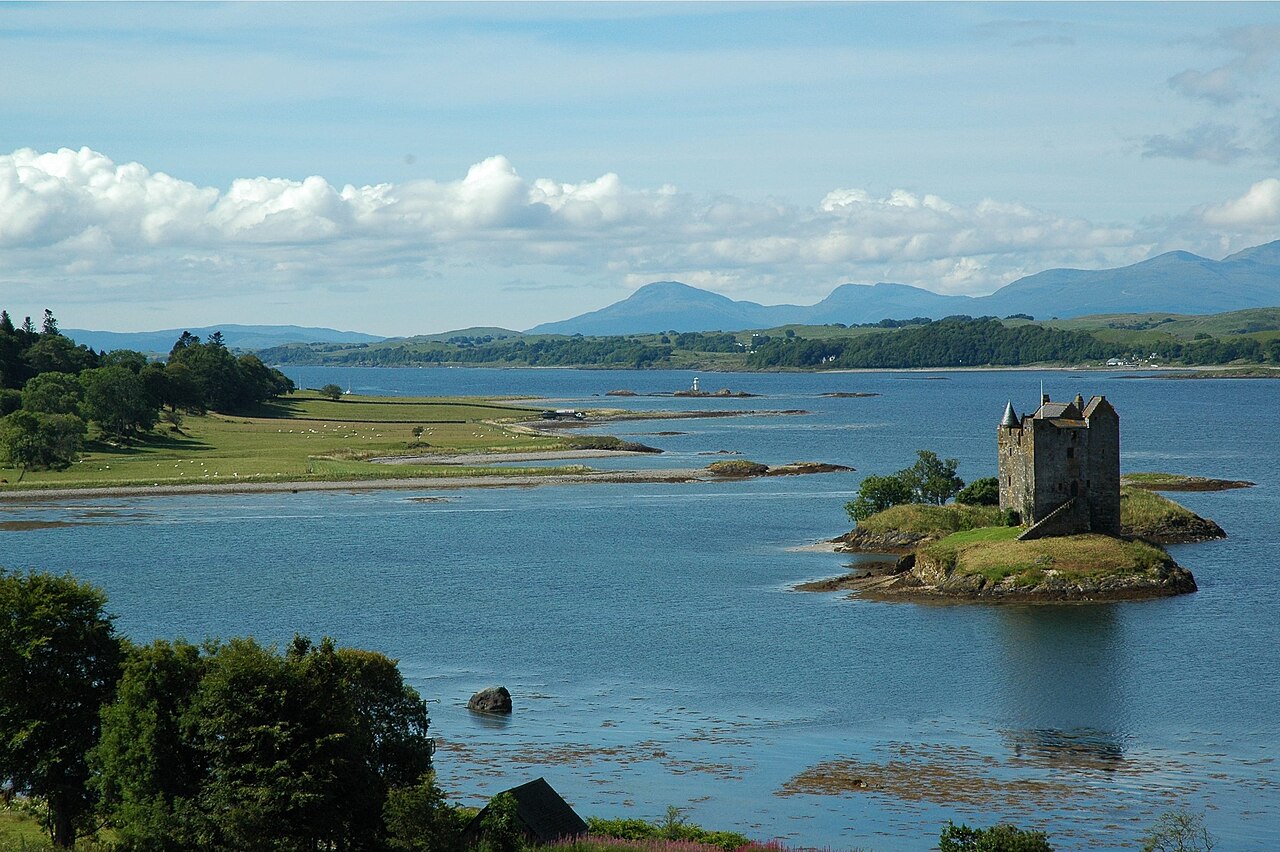
Innes Chonnel Castle Ruins
Innes Chonnel Castle stands as a remarkable example of a medieval Scottish fortress, located on the island of Innis Chonnell in Loch Awe, near Dalavich in Argyll and Bute. This 13th-century hill castle was a significant stronghold of the powerful Clan Campbell, whose influence shaped much of Scottish history during the Middle Ages. The castle's ruins today offer a vivid glimpse into the architectural evolution and turbulent history of Scotland's clan system.
The castle's earliest surviving structure is the inner bailey, a small, rectangular enceinte constructed in the first half of the 13th century. This core area, measuring approximately 25.7 by 25.1 meters, formed the heart of the fortress, with various buildings arranged around a central courtyard. Over the centuries, the castle underwent extensive remodeling, particularly in the 15th century, reflecting changes in defensive needs and residential comfort. The 15th-century gatehouse on the eastern side replaced the original entrance but retained its strategic position, emphasizing the importance of controlling access to the island fortress.
Historical significance and clan heritage
Innes Chonnel Castle was constructed by the Campbells during the High Medieval period and served as their principal seat for several centuries. The Campbells’ presence in the region dates back to at least the 11th century, making them one of Scotland's oldest and most influential clans. The castle witnessed numerous clan conflicts and political alliances that shaped Scottish history.
One of the most notable figures associated with the castle was Cailean Mór (Sir Colin Campbell), who held the fortress until his death in 1296 during a battle against the rival Clan MacDougall. His son, Sir Neil Campbell, further elevated the clan's status through a strategic alliance with Robert the Bruce, marrying into his family and supporting his claim to the Scottish throne. This alliance was crucial during the Battle of Bannockburn in 1314, a pivotal moment in Scotland’s fight for independence.
By the 15th century, the Campbells shifted their main residence to Inveraray Castle, reflecting their growing power and changing political landscape. However, Innes Chonnel remained in use by allied clans such as the MacLachlans and served various functions, including as a prison. Notably, it held Domhnall Dubh, heir to the Lordship of the Isles, after his defeat at the Battle of Bloody Bay in 1484. Despite his imprisonment, Domhnall Dubh escaped before being recaptured, illustrating the castle’s role in Scotland’s complex feudal conflicts.
Architectural features and layout
The inner bailey and defensive structures
The castle's layout is a testament to medieval Scottish fortification techniques, adapted to the island setting. The inner bailey is the oldest part of the castle, retaining much of its original 13th-century footprint. Its rectangular shape and stone masonry walls provided a formidable defense. The eastern gatehouse, dating from the 15th century, replaced the original gateway and likely featured battlemented walls on its northern and southern faces, overseeing the approach to the entrance.
To the south of the inner bailey lies the southeastern tower and south façade, some of the oldest surviving structures. These 13th-century elements highlight the castle’s initial defensive priorities, with thick walls and limited openings designed to withstand siege warfare.
15th-century expansions and residential quarters
The 15th century brought significant additions, including a large four-story building in the southeastern corner and a smaller three-story structure nearby. These buildings likely served residential and administrative purposes, reflecting the castle’s dual role as a fortress and noble residence.
The western section of the inner bailey was extensively rebuilt during this period, featuring a hall and kitchen above vaulted cellars. These cellars included a small prison area, consistent with the castle's known use for detention. The southwest tower housed private chambers, indicating a degree of comfort and privacy for the castle’s inhabitants.
Outer and middle baileys
The middle bailey, situated west of the outer court, had walls mainly constructed in the 15th century. These walls, still standing up to 2.4 meters high in places, enclosed an intermediate courtyard that added a further layer of defense. The outer bailey, on the eastern approach, is now largely fragmentary but once formed the first line of defense for the island fortress.
Together, these baileys illustrate a complex, multi-layered defensive system typical of Scottish island castles, designed to protect against both land and water-based attacks.
Later history and current condition
Following its decline as the principal Campbell seat, Innes Chonnel Castle gradually fell into disuse. By the early 19th century, it was largely in ruins, its stone walls weathered by centuries of exposure to the elements. Today, the site is a Scheduled Monument, recognized for its cultural and historical importance within Scotland’s heritage.
The ruins remain a popular destination for visitors interested in medieval architecture and Scottish clan history. The castle’s island location on Loch Awe adds to its dramatic appeal, offering picturesque views and a tangible connection to Scotland’s feudal past.
Visiting Innes Chonnel Castle
Access to the castle requires a boat trip to the island, as it is situated on Loch Awe. Visitors can explore the ruins, which include the inner bailey, gatehouse, towers, and remnants of the outer defenses. The site provides insight into medieval Scottish castle construction and the strategic importance of island fortresses.
While the castle is in a ruined state, its well-preserved walls and distinctive layout make it an invaluable resource for understanding medieval Scottish military architecture and the history of the Clan Campbell. Interpretive signage and local guides often provide additional context for visitors, enhancing the educational experience.
Architectural significance in Scottish castle heritage
Innes Chonnel Castle exemplifies the evolution of Scottish island fortresses from the High Medieval period through the late Middle Ages. Its combination of a compact rectangular inner bailey, multi-story residential buildings, and layered baileys reflects broader trends in castle design, balancing defense and domestic needs.
The castle’s use of stone masonry, vaulted cellars, and defensive towers demonstrates the adaptation of continental European castle-building techniques to the Scottish context. Its strategic location on Loch Awe highlights the importance of waterways in medieval Scottish defense and transportation.
As a former seat of the Campbells, one of Scotland’s most powerful clans, Innes Chonnel holds a special place in the narrative of Scottish feudal history. The castle’s remains continue to inspire interest among historians, architects, and visitors, preserving the legacy of medieval Scotland’s clan dynamics and architectural ingenuity.
Frequently asked questions (FAQ)
- How do I get to Innes Chonnel Castle Ruins?
- Innes Chonnel Castle Ruins is located in Argyll and Bute, easily accessible by car. The nearest town is Inveraray, and from there, you can follow local signs leading to the castle. Parking is available nearby, making it convenient for visitors.
- What is the historical significance of Innes Chonnel Castle?
- Innes Chonnel Castle, dating back to the 15th century, played a crucial role in the region's history, serving as a stronghold for the Campbell family. It is a fine example of medieval architecture and has witnessed many historical events over the centuries. The ruins offer a glimpse into Scotland's feudal past and its architectural evolution.
- When was Innes Chonnel Castle built?
- Innes Chonnel Castle was constructed in the mid-15th century, around 1450. It was strategically built on an island in Loch Awe, providing both defense and a commanding view of the surrounding area. The castle has remained a significant historical landmark since its establishment.
- Can I visit Innes Chonnel Castle Ruins year-round?
- Yes, visitors can explore Innes Chonnel Castle Ruins throughout the year. However, it is advisable to check local weather conditions and accessibility as some paths may be less favorable during winter months. The best time to visit is during the spring and summer when the weather is milder.
- Why is Innes Chonnel Castle a popular attraction?
- Innes Chonnel Castle is popular due to its stunning location on Loch Awe and its intriguing history. Visitors are drawn to the picturesque scenery and the opportunity to explore the unique architectural features of the ruins. It is also a great spot for photography and enjoying the natural beauty of Argyll.
- Is it possible to access the castle by foot?
- Yes, visitors can reach Innes Chonnel Castle Ruins on foot from the nearby shore of Loch Awe. A short walk across a causeway leads to the castle, making it an enjoyable trek for those who appreciate nature. Please wear appropriate footwear as the terrain can be uneven.
- What are the opening hours for Innes Chonnel Castle Ruins?
- Innes Chonnel Castle Ruins is open to the public year-round, with no specific opening hours. However, it is recommended to visit during daylight hours for safety and to fully enjoy the surroundings. Always check local guidelines before your visit.
- Are there any ticket prices for visiting the castle ruins?
- There is no admission fee to visit Innes Chonnel Castle Ruins, making it an accessible attraction for everyone. Donations to preserve the site are appreciated but not mandatory. This allows visitors to enjoy the historical site without any financial barriers.
- What are some nearby attractions to visit?
- In addition to Innes Chonnel Castle, nearby attractions include the picturesque town of Inveraray, the historic Inveraray Castle, and the scenic Loch Awe itself. Visitors can also explore the surrounding landscapes, including hiking trails and other historical sites. These attractions make for a well-rounded day trip in the area.
Information
Website
Visit websiteSources & official resources
Verify the information above using these authoritative references.
Loading map...
Visitor reviews
No reviews yet. Been here? Write the first review and help other travelers!
Write the first reviewVisited this castle? Share your experience
Your review helps other travelers and adds first-hand knowledge to our encyclopedia.