Finavon Castle
Finavon Castle stands as a significant historical site in Finavon, Scotland, reflecting centuries of architectural evolution and noble lineage. Originally constructed in the late medieval period around 1375, the castle was the ancestral seat of the Lindsay Earls of Crawford. This estate witnessed notable events, including the 1546 marriage of David Lindsay, 10th Earl of Crawford, to Margaret Beaton, daughter of Cardinal David Beaton, marking an important alliance among Scottish nobility.
The medieval origins and architectural features
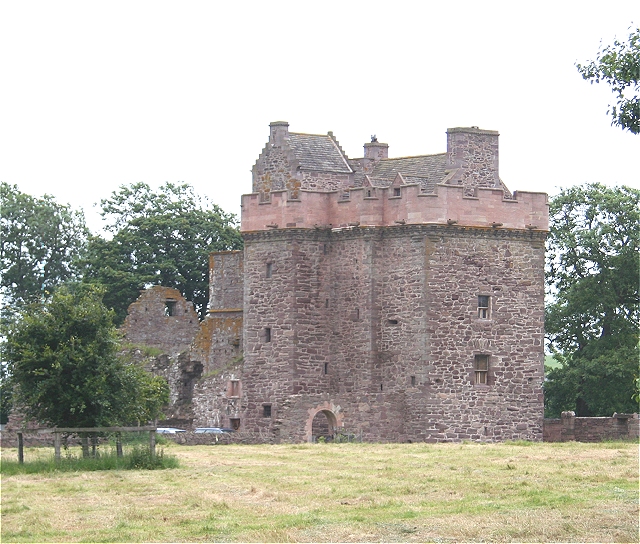
The core of Finavon Castle was an L-plan tower house, a common Scottish defensive residence style during the late medieval era. The tower rose to five storeys with a garret, accompanied by a surrounding courtyard. Excavations have revealed that the tower visible today, dating from about 1600, was appended to the north-east corner of a much older and more extensive structure, indicating a layered construction history. The original medieval castle would have featured thick stone walls, narrow windows for defense, and battlements typical of the period's fortifications.
The Lindsay family and changes in ownership
The Lindsay family maintained ownership of the Finavon estate for centuries, but their fortunes declined due to extravagance. By 1625, the barony was forcibly sold to Alexander Lindsay, 2nd Lord Spynie. Subsequently, the estate passed through several prominent Scottish families, including the Carnegies, the Gordon Earls of Aboyne, and the Gardynes. In 1843, Thomas Gardyne of Middleton purchased the castle, reconnecting the estate with the Lindsay lineage through an 18th-century marriage.
19th-century Scottish baronial mansion
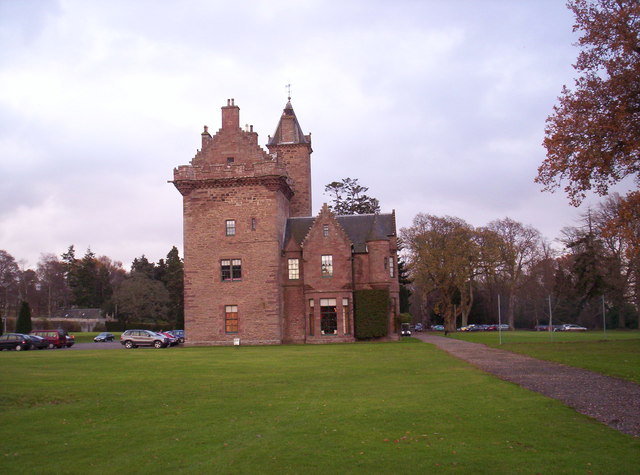
In 1865, a new chapter began with the construction of a Scottish baronial style mansion on the estate. Commissioned by the then laird, David Greenhill Gardyne, the mansion was designed and built by the firm Carver and Symon of Arbroath. This architectural style is characterized by its revival of medieval Scottish castle elements, including turrets, crow-stepped gables, and ornamental stonework, blending romantic historicism with Victorian-era domestic comfort.
Architectural significance and estate features
The juxtaposition of the late medieval tower house with the 19th-century mansion illustrates the evolution of Scottish aristocratic residences from fortified strongholds to stately homes. The estate also includes the Finavon Doocot, the largest dovecot in Scotland, containing 2400 nesting boxes. Believed to have been constructed in the 16th century for the Earl of Crawford, the doocot exemplifies the agricultural and economic practices of the period. It is currently maintained by the National Trust for Scotland.
Historical and archaeological context
Above the castle on Finavon Hill lies a vitrified Iron Age hillfort, dating from the mid-1st millennium BCE. This ancient fortification is notable for its vitrified stone walls, created by intense heat fusing the rocks, a rare archaeological feature in Scotland. The proximity of this prehistoric site to Finavon Castle highlights the long history of strategic occupation in the area.
Preservation and current status
Today, the remains of the original tower house are ruined, yet they remain an important monument illustrating Scottish late medieval military architecture. The Scottish baronial mansion from the 19th century stands as a testament to the Victorian reinterpretation of medieval forms. The estate's historical layers, from Iron Age fortifications to Renaissance alliances and Victorian revivalism, make Finavon Castle a site of rich cultural heritage and architectural interest.
Frequently asked questions (FAQ)
- What is the historical significance of Finavon Castle?
- Finavon Castle was the ancestral home of the Lindsay Earls of Crawford from 1375, witnessing key historical events such as the marriage of David Lindsay, 10th Earl of Crawford, to Margaret Beaton in 1546. Its layered architecture reflects Scotland's medieval and Victorian history.
- Can I visit the Finavon Doocot and what makes it special?
- Yes, the Finavon Doocot is the largest dovecot in Scotland with 2400 nesting boxes, built in the 16th century for the Earl of Crawford. It is maintained by the National Trust for Scotland and is a unique example of historic agricultural architecture.
- What architectural styles are represented at Finavon Castle?
- Finavon Castle features a combination of late medieval Scottish tower house architecture and a 19th-century Scottish baronial mansion, showcasing both defensive medieval design and Victorian revivalist aesthetics.
- Is the original medieval tower house at Finavon Castle still standing?
- The original tower house is now in ruins, with the visible tower dating from about 1600 being an addition to an older structure. Despite its ruined state, it remains an important example of late medieval Scottish castle architecture.
- What is the significance of the Iron Age hillfort near Finavon Castle?
- Located on Finavon Hill above the castle, the vitrified Iron Age hillfort dates from the mid-1st millennium BCE and is notable for its rare vitrified stone walls, indicating ancient strategic occupation in the area.
Information
Loading map...
Visitor reviews
No reviews yet. Been here? Write the first review and help other travelers!
Write the first reviewVisited this castle? Share your experience
Your review helps other travelers and adds first-hand knowledge to our encyclopedia.