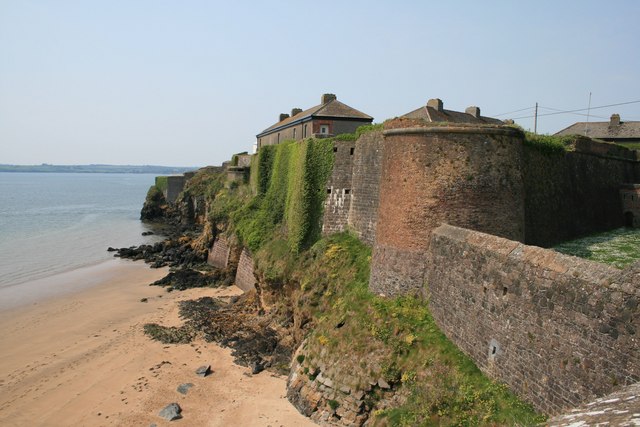
Fethard Castle
Fethard Castle stands as a significant historical site near the village of Fethard-on-Sea in Ireland, embodying a rich legacy that spans Norman military architecture and ecclesiastical residence. Originating in the late 12th century during the Anglo-Norman invasion of Ireland, the castle's earliest incarnation was a classic motte-and-bailey fortification, a hallmark of Norman defensive design. This initial structure was likely established by Raymond le Gros, a leading Norman commander whose role was pivotal in the conquest and settlement of the region. The motte—a large artificial earth mound—was topped with a wooden fort, while the bailey served as a fortified courtyard housing essential service buildings, all protected by a surrounding ditch and a clay wall.
Norman military architecture and early history
The motte-and-bailey design of Fethard Castle reflects the strategic priorities of the Norman invaders, emphasizing rapid construction and strong defensive capabilities. The wooden fort atop the motte provided a vantage point and refuge, while the bailey contained vital infrastructure such as halls, kitchens, stables, workshops, and a chapel. These features were typical of Norman castles designed to establish control over newly conquered territories. The castle’s location in the County Wexford area, near the southeastern coast of Ireland, was strategically significant for overseeing land and maritime routes.
Transition to ecclesiastical ownership
Following its initial military function, the castle site transitioned into the hands of the Church of Canterbury, marking a shift from purely martial to ecclesiastical control. This change reflects broader patterns in medieval Ireland where religious authorities acquired lands and fortifications, often repurposing them for residential and administrative uses. In the 14th or 15th century, the original wooden structures were replaced by a more durable stone castle, constructed under the authority of the Bishop of Ferns. This stone building served primarily as a summer residence for the bishops, blending defensive features with domestic comfort.
Architectural features of the stone castle
The surviving ruins of Fethard Castle reveal an L-shaped stone structure rising four stories high, a design that provided both residential space and defensive advantages. A notable feature is the circular tower, which historically housed a medieval clock mechanism, indicating the castle's importance and the sophistication of its occupants. The presence of a gatehouse on the eastern side, considered the oldest stone element, highlights the castle’s fortified entrance and control over access.
Defensive and residential elements
The castle’s stone construction replaced the earlier timber fortifications, enhancing its durability and status. The L-shaped plan allowed for effective defense and internal organization, separating living quarters from service areas. The circular tower not only served as a lookout but also likely contained private chambers or storage. The gatehouse functioned as both a defensive barrier and a symbol of authority.
Later history and decline
In the 17th century, ownership of Fethard Castle passed to the Loftus family, who shifted their primary residence to Loftus Hall. The castle was leased to tenants and remained inhabited for several centuries. However, the turbulent period of the early 20th century, marked by the Irish War of Independence and the subsequent Civil War, brought destruction to the site. In 1922, the castle was set on fire amid local conflicts, leading to its abandonment and ruinous state.
Current condition and preservation
Today, the ruins of Fethard Castle stand as a testament to its layered history, with the L-shaped layout and circular tower still clearly visible. The original Norman motte remains nearby as an earthwork mound, preserving the memory of the castle's earliest phase. Although structural risks prevent public entry, the site is accessible for external viewing, allowing visitors to appreciate the castle’s medieval origins and its evolution from a military fortress to an ecclesiastical residence.
Significance and heritage value
Fethard Castle offers valuable insights into the Norman conquest of Ireland, medieval ecclesiastical architecture, and the social transformations of the region. Its combination of military and residential features illustrates the adaptability of castle design over centuries. The site’s preservation as ruins enables ongoing study and public engagement with Ireland’s complex medieval past.
Frequently asked questions (FAQ)
- How do I get to Fethard Castle?
- Fethard Castle is located in the village of Fethard, accessible by car and public transport. The nearest train station is approximately 10 miles away, and local bus services frequently operate in the area. Detailed directions can be found on our website to assist you in planning your visit.
- What is the historical significance of Fethard Castle?
- Fethard Castle dates back to the 12th century and is a prime example of medieval military architecture in Ireland. It played a crucial role in the defense against invasions and has witnessed significant historical events over the centuries. The castle's history offers a glimpse into the feudal system and the strategic importance of fortifications during its time.
- When was Fethard Castle built?
- Fethard Castle was constructed in the late 12th century, around the year 1170. It was built by the Anglo-Norman families who settled in Ireland during that period. The castle has undergone various renovations and restorations, preserving its historical integrity.
- Can I visit Fethard Castle?
- Yes, Fethard Castle is open to the public for tours and exploration. Visitors can enjoy guided tours that delve into the castle's history, architecture, and legends. Be sure to check our website for any seasonal events or special openings.
- Why is Fethard Castle an important architectural site?
- Fethard Castle showcases a unique blend of Norman and Irish architectural styles, reflecting the cultural influences of its time. Its impressive stone walls, towers, and defensive structures illustrate the military strategies of the medieval era. The castle is also a designated historical site, emphasizing its architectural significance within the region.
- Is it possible to access Fethard Castle with a wheelchair?
- Yes, Fethard Castle strives to be accessible to all visitors. While some areas may have limited access due to their historical nature, we offer alternative routes and assistance for those with mobility challenges. Please contact us in advance to ensure a smooth visit.
- What are the best times to visit Fethard Castle?
- The best times to visit Fethard Castle are during the spring and summer months when the weather is pleasant, and the gardens are in full bloom. Peak tourist season is typically from June to August, so visiting during the shoulder months of May or September can provide a more tranquil experience. Special events and historical reenactments also occur during these times.
- What are the ticket prices for Fethard Castle?
- Ticket prices for Fethard Castle vary depending on the age of the visitor and any ongoing promotions. Generally, adult tickets are priced at £10, while concessions for students and seniors are available at £7. Family tickets can also be purchased for a discounted rate, making it affordable for all.
- What are the opening hours for Fethard Castle?
- Fethard Castle is open from 10 AM to 5 PM daily, with extended hours during the peak season. It is advisable to check our website for any changes in hours due to seasonal variations or special events. We recommend arriving early to fully enjoy the castle and its surroundings.
Information
Loading map...
Visitor reviews
No reviews yet. Been here? Write the first review and help other travelers!
Write the first reviewVisited this castle? Share your experience
Your review helps other travelers and adds first-hand knowledge to our encyclopedia.